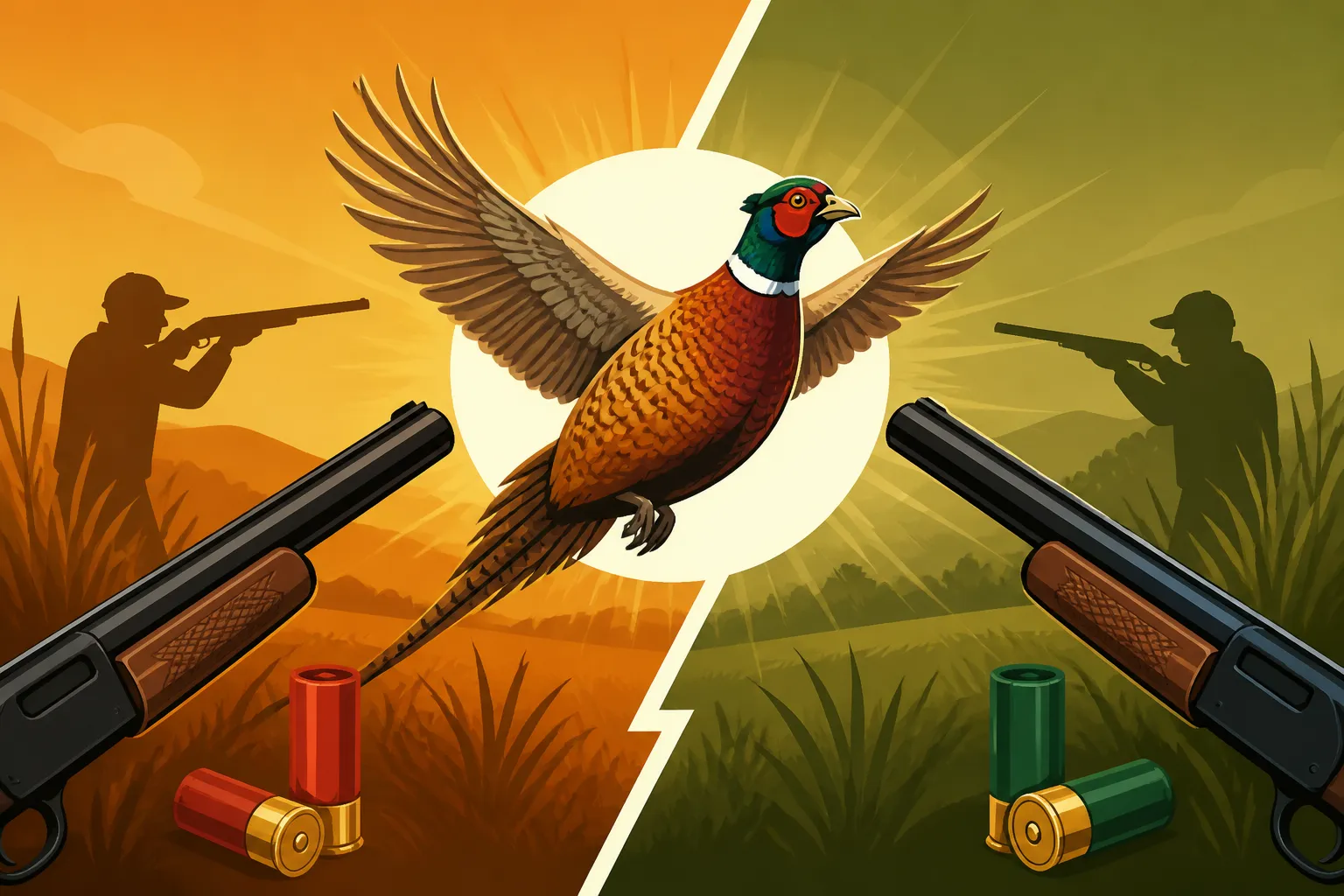
12 Gauge Versus 20 for Stocked Pheasants
When you're gearing up for a pheasant hunt here in Pennsylvania, especially for our abundant stocked birds, one of the first questions that often pops into a hunter's mind revolves around the shotgun in their hands. It's not just about hitting the bird; it’s about comfort, effectiveness, and enjoying the experience. Many of us grapple with the classic dilemma: should I grab my trusty 12 gauge, or would the lighter, quicker 20 gauge be a better fit for the job? This guide aims to thoroughly explore the nuances of each option, helping you decide which gauge might be your perfect companion for chasing those colorful pheasants across our Pennsylvania fields.
Understanding the Challenge of Stocked Pheasants in Pennsylvania
Hunting stocked pheasants in Pennsylvania presents a unique set of challenges and opportunities. These aren't always your wild, cagey birds that have survived generations in the wild, though sometimes they can be surprisingly resilient. Understanding their behavior and the typical hunting environments is key to choosing the right gear.
The Nature of Stocked Birds
Pennsylvania’s pheasant program is robust, releasing thousands of birds across various State Game Lands and designated pheasant hunting areas. The nature of these birds often differs significantly from their wild cousins. When first released, some birds might be a bit disoriented, holding incredibly tight in cover, almost allowing you to step on them before flushing. This can lead to very close-range shots. Others, however, can wise up quickly, especially after a few days of hunting pressure. They might run for long distances, flush at the absolute edge of shotgun range, or even take to the air well ahead of your dog or walking party. It’s this unpredictable mix that makes selecting a versatile firearm so important. You might encounter a bird at 15 yards one minute and then have a long, crossing shot at 40 yards the next.
Typical Hunting Scenarios
Most pheasant hunting for stocked birds in Pennsylvania involves walking. You might be traversing open fields of corn stubble, dense switchgrass, tangled briar patches, or even light woodlands near agricultural areas. Often, hunters work in groups, perhaps with a line of walkers pushing cover towards blockers, or simply a few friends and a good bird dog working strategically through a field. The terrain can be relatively flat in farm country or involve some rolling hills on larger public tracts. All of this walking means carrying your shotgun for extended periods, and that’s where the weight of your firearm can really start to make a difference in your comfort and endurance. Thinking about how much ground you'll cover, and what type of cover you'll be slogging through, is crucial. You can find excellent pheasant habitat by Reading Aerial Photos for Big Woods Deer or by using tools like GoHunt to scout open field locations.
Pressure and Public Land
It's no secret that many of Pennsylvania's prime stocked pheasant release sites, particularly on State Game Lands, can see considerable hunting pressure, especially on opening day and early in the season. Opening Day Crowds on Pennsylvania Game Lands are a common sight. This pressure influences bird behavior dramatically. Birds that were initially "tame" quickly become "educated," learning to run, hide, or flush earlier. This means that while some shots might be close, many others will be at the farther end of your effective range as birds try to escape the commotion. Being prepared for these longer shots is important, but so is being able to react quickly to a bird that bursts out of the brush right at your feet. Understanding how to navigate these environments is part of the charm and challenge of Hunting Stocked Pheasants in Pennsylvania.
The Venerable 12 Gauge: Power and Versatility
The 12 gauge shotgun is, without a doubt, the most popular and widely used shotgun in America, and for good reason. It offers a fantastic balance of power, versatility, and ammunition availability, making it a strong contender for any type of hunting, including pheasants.
Advantages of the 12 Gauge for Pheasants
When it comes to putting a bird down, the 12 gauge simply offers more. Its primary advantage is its larger shell capacity, meaning it can hold a greater payload of shot. This translates directly into denser patterns downrange, which increases the likelihood of hitting a fast-flying pheasant, especially at longer distances. With more pellets in the air, you get a larger effective pattern and a greater margin for error on those challenging shots. This extra knockdown power can be a real confidence booster when a big rooster flushes hard and fast at the edge of the field.
Furthermore, the 12 gauge is incredibly versatile. It can handle a huge range of shot sizes and loads, from light target loads to heavy magnum waterfowl loads. For pheasants, you can choose anything from lighter 1 1/8 oz loads of #6 shot for closer range, or step up to 1 1/4 oz or even 1 3/8 oz loads of #5 or #4 shot for those longer shots or tougher birds. This versatility means your 12 gauge can pull double duty for Waterfowl Hunting on Pennsylvania Waters or even Spring Gobbler Hunting in Pennsylvania, simply by changing ammunition. If you only own one shotgun, a 12 gauge will handle nearly any upland hunting scenario you throw at it in Pennsylvania.
Disadvantages and Considerations
While the power of the 12 gauge is a clear advantage, it also comes with a notable drawback: recoil. Heavier loads in a lighter shotgun can deliver a real thump to the shoulder, especially after a full day of shooting. If you're sensitive to recoil, or if you're planning on shooting many birds over a weekend, this can lead to discomfort and potentially affect your shooting accuracy later in the day. Modern shotgun designs and recoil pads have certainly mitigated this, but it's still a factor.
Another consideration is the weight of the shotgun itself. A 12 gauge, particularly an over/under or a semi-auto with a long barrel, can be heavier than its 20 gauge counterpart. If you're walking miles of fields and dense cover throughout the day, that extra pound or two can feel like a ton by the afternoon. This added weight can also make the gun feel slower to swing and get on target, particularly when a pheasant explodes from underfoot and you need to react instantly. For those who find themselves constantly hunting Thick Brush and Briars for rabbits or other small game, the weight might be a consistent annoyance.
Recommended Loads and Chokes for 12 Gauge
For stocked pheasants with a 12 gauge, a great starting point is a 1 1/4 oz load of #5 shot. This combination provides a good balance of pellet count and individual pellet energy to cleanly take down pheasants out to 40-45 yards. If you expect closer shots or are hunting early in the season when birds might hold tighter, 1 1/8 oz of #6 shot can be very effective. For late-season birds or hunting pressured areas where longer shots are more common, some hunters might even opt for 1 3/8 oz of #4 shot for maximum reach and punch.
As for chokes, a Modified choke is arguably the most versatile for all-around pheasant hunting. It offers a good balance between pattern density and spread, effective at both medium and slightly longer ranges. If you're working with a close-flushing dog in heavy cover, an Improved Cylinder choke might be beneficial. Conversely, if you're primarily blocking or anticipating longer shots, a Light Modified or even a Full choke could be considered, though Full can be a bit tight for those unexpected close flushes. Remember to pattern your specific load and choke combination before hitting the fields to see how it performs. You can always refer to resources from reputable hunting publications or tools like GoHunt for insights into how different loads perform.
The Nimble 20 Gauge: Lighter and Lively
The 20 gauge, often thought of as the younger sibling to the 12, has earned its stripes as a highly capable and enjoyable upland hunting shotgun, especially for pheasants. Many seasoned hunters are making the switch, and for good reason.
Advantages of the 20 Gauge for Pheasants
The most immediate and obvious advantage of the 20 gauge is its lighter weight. Carrying a 20 gauge all day through fields and brush is significantly less fatiguing than lugging a heavier 12 gauge. This lighter weight also translates to quicker handling; the gun feels livelier in your hands, making it faster to swing and get on target when a pheasant busts out unexpectedly. This speed can be a major asset for snap shots in thick cover or when a bird flushes quickly.
Reduced recoil is another significant benefit. While not entirely recoil-free, the felt recoil from a 20 gauge is noticeably softer than a 12 gauge, particularly when shooting standard upland loads. This makes for a much more comfortable day of hunting, allowing you to focus on the birds rather than anticipating the next kick. For younger hunters, those new to shotguns, or anyone sensitive to recoil, the 20 gauge is an excellent choice. This can be especially important if you're planning on Filling a Second Antlerless Tag later in the season, which might involve carrying your gun for extended periods.
Disadvantages and Limitations
The main limitation of the 20 gauge compared to the 12 is its smaller shot payload. A typical 20 gauge pheasant load might carry 7/8 oz or 1 oz of shot, compared to the 1 1/8 oz or 1 1/4 oz of a 12 gauge. This means fewer pellets in the pattern, which can translate to less dense patterns at longer ranges. For some, this demands a bit more precision in their shooting. You simply have a smaller "cone of death" to work with, and those pellets need to be placed more accurately on the bird.
While modern 20 gauge ammunition has come a long way, especially with advancements in shot technology, there's still a perception that it lacks the "punch" of a 12 gauge on those really long shots. While this might be true at the absolute fringes of shotgun range, for most ethical pheasant hunting distances (within 40-45 yards), a well-placed 20 gauge load is perfectly lethal. The key is to know your limits and the effective range of your chosen load and choke.
Recommended Loads and Chokes for 20 Gauge
For the 20 gauge, a 1 oz load of #6 shot is a fantastic all-around choice for Pennsylvania pheasants. It provides a good balance of pellet count and energy for solid kills within typical hunting ranges. If you're consistently getting closer shots or hunting over a fantastic pointing dog, 7/8 oz of #7.5 shot can work well, offering a denser pattern with smaller pellets. For those looking to extend their range or hunt more pressured birds, 1 oz or 1 1/8 oz loads of #5 shot are available and offer a bit more individual pellet energy.
Just like with the 12 gauge, a Modified choke is generally the most versatile choice for the 20 gauge pheasant hunter. It provides a good balance for most scenarios. If you're hunting very thick cover where birds are flushing extremely close, an Improved Cylinder might be a better option for a wider pattern. For more open fields and anticipated longer shots, a Light Modified or even a Full choke can extend your effective range, but again, be mindful of those close-range blow-ups. Always pattern your shotgun to see how your chosen ammunition performs with different chokes. For comprehensive data on patterning different loads, many hunters find digital tools like those available through GoHunt helpful for reviewing field performance.
Making Your Decision: Factors Beyond Gauge
While the 12 gauge vs. 20 gauge debate is central, your ultimate decision should also be influenced by a few other critical factors that go beyond just the numbers on the side of the barrel.
Hunter Comfort and Fit
This might be the single most important factor, regardless of gauge. A shotgun that fits you well will point naturally, swing smoothly, and allow you to acquire targets quickly and consistently. If your gun doesn't fit, you'll be fighting it with every shot, regardless of whether it's a 12 or a 20 gauge. Factors like length of pull, drop at comb, and cast-on/off all play a role. A shotgun that’s too long will feel clunky; one that’s too short will have you lifting your head. Recoil management also ties into fit; a properly fitting gun distributes recoil more effectively. Don’t underestimate the value of spending time at a range or with a qualified gun fitter to ensure your shotgun feels like an extension of yourself. This is far more critical than an extra ounce of shot.
Hunting Style and Environment
Consider how you typically hunt pheasants and where. Are you primarily walking miles of flat, open agricultural fields, or are you slogging through dense, hilly Pennsylvania Clearcuts and Regrowth? Do you use a fast-working flushing dog, or a deliberate pointer that holds birds tight?
- Long Walks in Open Fields: If you're covering vast expanses, the lighter weight of a 20 gauge will be a blessing by the end of the day. The slightly smaller pattern size might not be a huge disadvantage if most of your shots are in open air where you have time for a smooth swing.
- Thick Cover and Quick Flushes: For dense briar patches, tall switchgrass, or heavy creek bottoms, a nimble 20 gauge that can be swung quickly and brought to bear on a sudden flush can be a real advantage. Here, many shots might be closer, where the 20 gauge performs exceptionally well.
- Block-and-Drive Hunts: In situations where you're a blocker, anticipating longer shots as birds are pushed towards you, the denser patterns and greater range potential of a 12 gauge might give you more confidence. However, if you're one of the drivers, still walking all day, the 20 gauge remains a solid choice.
Your personal hunting style – whether you're a fast-swinger, a deliberate pointer, or somewhere in between – will also dictate which gauge feels more natural in your hands.
Group Dynamics and Safety
If you often hunt in a group, especially on public land like the stocked pheasant areas, safety is paramount. Communication about your choice of firearm isn't usually a direct safety concern, but awareness of your effective range is crucial. For instance, if you're using a 12 gauge with heavy loads and someone else is using a 20 gauge with lighter loads, ensure everyone understands their safe shooting lanes and the effective ranges for their particular setup. While both gauges are incredibly effective, knowing your own and your companions' limitations will lead to a safer, more enjoyable day afield. Additionally, always wear appropriate Pennsylvania Hunter Orange Rules to ensure visibility to others.
Comparison: 12 Gauge vs. 20 Gauge for Stocked Pheasants
Let’s lay out the key differences side-by-side to help you visualize the pros and cons.
| Feature | 12 Gauge | 20 Gauge |
|---|---|---|
| Shot Payload | Generally 1 1/8 oz to 1 3/8 oz | Generally 7/8 oz to 1 1/8 oz |
| Pattern Density | Denser patterns, especially at longer ranges | Slightly less dense, requires more precision |
| Recoil | More pronounced, can be tiring over time | Lighter, more comfortable for extended shooting |
| Weight | Heavier, can be fatiguing for long walks | Lighter, quicker to handle, less tiring |
| Versatility | Extremely versatile for many game types | Very capable for upland, less so for heavy fowl |
| Ammunition Cost | Generally widely available and affordable | Often slightly more expensive per box, less variety |
| Ideal Scenarios | Open fields, longer shots, blocking duties | Thick cover, close flushes, long walks, new hunters |
| Confidence Factor | Often provides a feeling of more "power" | Builds confidence through quick, accurate handling |
Final Thoughts on Your Pheasant Gun
Ultimately, both the 12 gauge and the 20 gauge are highly capable firearms for hunting stocked pheasants in Pennsylvania. There's no single "best" option, as the ideal choice truly depends on your personal preferences, physical build, hunting style, and the specific conditions you encounter.
If you value maximum power, denser patterns, and the versatility to tackle any game bird, the 12 gauge might be your preferred choice. It offers that extra margin for error on those tougher, longer shots and is a reliable workhorse for a wide range of hunting pursuits.
However, if you prioritize lighter weight, reduced recoil, quicker handling, and a more comfortable experience during long days afield, the 20 gauge is an outstanding option. It forces you to be a slightly more precise shooter, but rewards you with a lively, enjoyable gun that you won't dread carrying through miles of cover. For many, the pure pleasure of carrying and swinging a lighter gun outweighs any perceived deficiency in range.
My advice? If you have access to both, try them both out! Pattern different loads, feel how they swing, and simulate some field conditions. Pay attention to how the gun feels and how confidently you can make your shots. Whether you choose the booming reliability of a 12 gauge or the nimble grace of a 20 gauge, what truly matters is that you're comfortable, confident, and enjoy your time pursuing those beautiful pheasants in our Pennsylvania fields. Just remember to have your Pennsylvania Pheasant Permit in order before heading out!
Disclaimer
This article is for general informational purposes only and does not constitute professional advice. Laws, prices and regulations vary by location and change over time. Consult a qualified professional for guidance on your specific situation.