Hunting Pennsylvania Farm Country Edges
Hunting the vast farmlands of Pennsylvania can be incredibly rewarding, but many hunters find themselves frustrated trying to decipher deer movement in these unique landscapes, especially along those elusive farm country edges. It's not the deep woods, and it's not suburban backyards; it's a special beast of its own. This guide will help you understand how deer utilize these transition zones, offering practical strategies and gear advice to increase your success when hunting Pennsylvania farm country edges.
Understanding Farm Country Edges
Farm country presents a distinct challenge and opportunity for deer hunters. Unlike the dense, continuous cover of big woods, deer in agricultural areas thrive on the interface between crop fields, woodlots, hedgerows, and brushy creek bottoms. Understanding these "edges" is paramount to consistent success. It’s where food, cover, and travel corridors all intersect in dynamic ways.
Defining the "Edge" Habitat
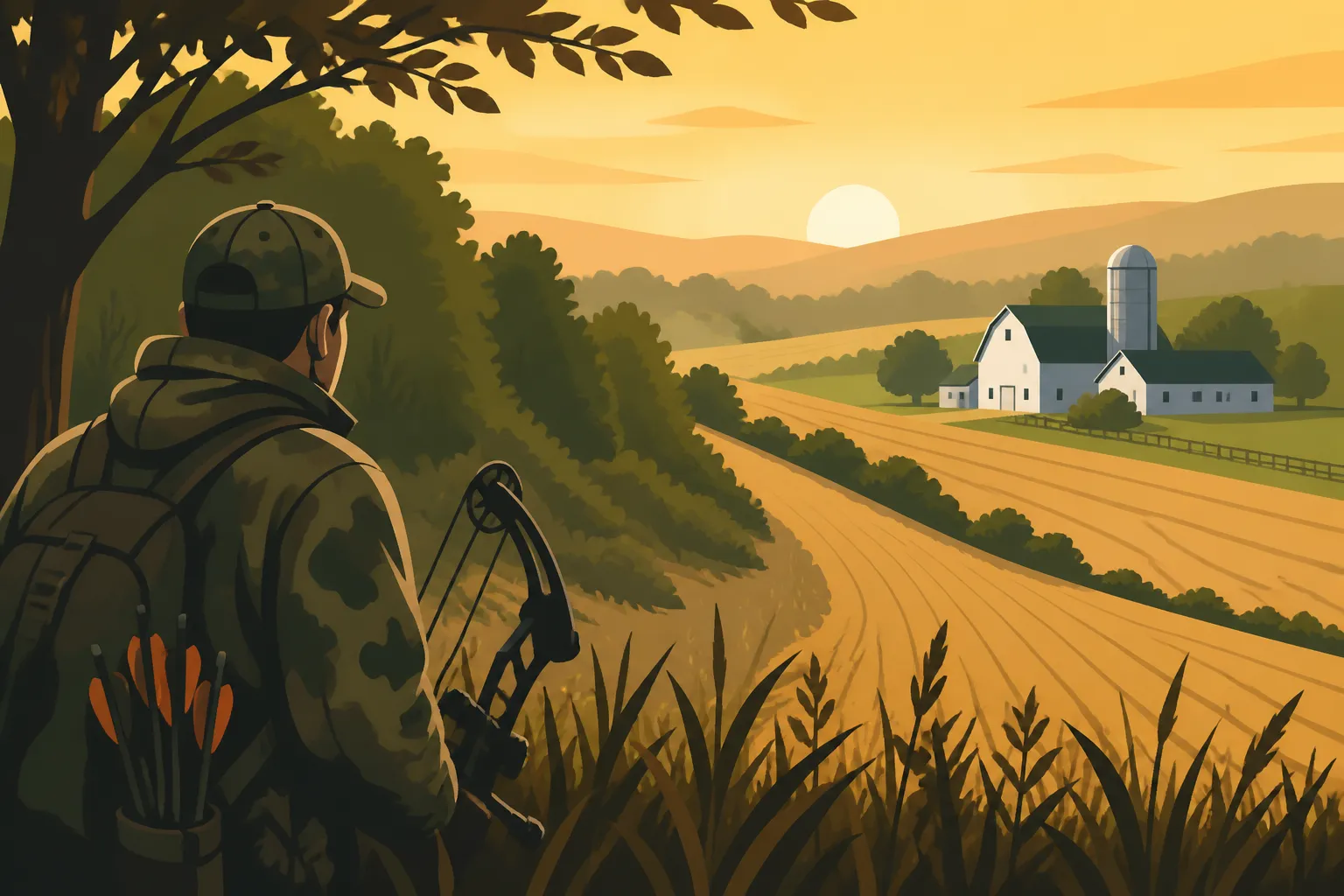
When we talk about "farm country edges," we're not just talking about the precise line where a cornfield meets a forest. It's a much broader, more complex concept. An edge can be a narrow strip of tall weeds between a soybean field and a small woodlot, a brushy fence line separating two different crops, or even the gradual transition from an open pasture to a thicket of multi-flora rose. These aren't just boundaries; they are vibrant ecosystems in themselves, often offering a richer diversity of food and cover than either the open field or the mature forest alone. Think of the transition zone where a freshly mowed hayfield meets a thick fencerow, or a stand of mature oaks on the edge of a harvested wheat field. These are prime locations where deer feel safe enough to stage before entering open areas or to bed down close to a ready food source. Deer rely heavily on these linear features for security while moving from bedding to feeding, especially during daylight hours.
Deer Movement and Behavior in Farm Country
Deer behavior in farm country is highly influenced by two main factors: food availability and cover security. During much of the year, especially from late summer through fall, agricultural crops like corn, soybeans, alfalfa, and winter wheat provide an abundant, high-energy food source. Deer will often bed in thick cover (woodlots, swamps, dense creek bottoms, even tall standing crops like corn) and move to these fields to feed, typically under the cover of darkness. However, they're not just running into the middle of a field. Their approach and exit routes are almost always along these "edges." As the sun begins to set, deer will often "stage" along the field edge, nibbling on browse, rubbing saplings, or working a scrape line before fully committing to the open field. This staging behavior is your golden opportunity, as it keeps deer within shooting range for a longer period. Understanding these patterns is key, and it often means adjusting your timing and stand placement compared to a deep woods strategy.
Key Food Sources Along Edges
While the primary draw might be the vast agricultural crops, don't overlook the incredible diversity of food available right on the edges themselves. These transition zones often harbor a mix of natural browse, soft mast, and even forgotten remnants of previous crops. Think about blackberry brambles, sumac, wild grapes, multiflora rose, and honeysuckle that often line old fence rows or unkempt field margins. During the early archery season, these natural browse options can be just as attractive as a standing bean field, especially if the beans aren't quite ready or the deer are seeking variety. Later in the season, after crop harvest, deer will gravitate to dropped corn or soybeans, or even newly sprouted winter wheat. Knowing what forage is available and when it's most attractive is critical. A field of standing corn might hold deer through the early season, but once that corn is cut, the edges of the remaining stubble, especially where it meets a small woodlot, become a hotbed of activity.
Scouting Strategies for Farm Edges
Effective scouting in farm country is a year-round endeavor, not just a few weeks before the season. It requires a combination of high-tech mapping, boots-on-the-ground investigation, and smart use of trail cameras. You're looking for patterns, pinch points, and the subtle signs that indicate regular deer activity along these crucial edges.
Pre-Season Aerial Reconnaissance
Before you even step foot in the woods or fields, grab your phone or computer and start with some aerial reconnaissance. Tools like GoHunt mapping applications are invaluable for this. You can overlay satellite imagery, topo maps, and even public/private land boundaries right from your couch. Look for:
- Irregular field shapes: Straight lines are easy for deer to bypass; irregular edges, points, and coves offer more cover and often funnel deer.
- Isolated woodlots or thickets: These are often bedding areas. How do deer get from these to the feeding fields? Look for the thinnest cover that connects them – that’s your edge.
- Fencerows, hedgerows, and ditch lines: These provide linear cover and act as natural travel corridors, shielding deer from view as they move from one area to another.
- Creek bottoms or small drainages: Even if dry, these depressions offer low-profile travel routes and often harbor thicker cover.
- Access points: Note roads, farm tracks, and human dwellings. Deer often avoid heavily trafficked areas, though they can become surprisingly tolerant of human presence in some suburban deer hunting in southeast Pennsylvania situations.
By digitally scouting, you can identify potential ambush points and high-traffic areas, saving valuable time once you're on the ground. This also helps you understand the bigger picture of how deer move across larger agricultural tracts.
On-the-Ground Sign Reading
Once you've identified promising areas from above, it's time to put boots on the ground, preferably in the late winter or early spring after snow melt, or again in late summer before crops get too tall. You're looking for concrete evidence of deer activity along those edges.
- Trails: Follow well-worn deer trails along the edge of fields. Note where they enter and exit the field or dive into thicker cover. Look for the most defined trails, as these indicate consistent use.
- Scrapes and rubs: These are especially common along fencerows, small points of woods jutting into fields, or within small woodlots adjacent to feeding areas. A fresh scrape line along a logging road or field edge can be a prime indicator of buck activity during the rut.
- Droppings: Look for clusters of fresh deer droppings, indicating a preferred feeding or staging area. Different types of droppings can also tell you what they're eating – pelletized droppings for browse, or looser, clumped droppings for a diet heavy in greens or soft mast.
- Bedding areas: In the dense cover just off the field edge, look for flattened spots where deer have been lying. These will often be strategically located for wind advantage and easy escape.
Remember to pay attention to details. A rub line leading into a specific corner of a field, or a series of fresh scrapes under a low-hanging branch, are much more valuable than a single, isolated sign.
Utilizing Trail Cameras Effectively
Trail cameras are your eyes and ears when you're not there, providing crucial intel on deer movement patterns, preferred times, and even specific bucks. For farm country edges, strategic placement is key:
- Entry/Exit Points: Set cameras on established deer trails where they enter or exit a crop field or a woodlot. This will show you exactly when and how deer are using these paths.
- Pinch Points: Any narrow strip of cover, a fence line gap, or a choke point where deer are funneled is a prime camera location.
- Scrapes and Rubs: If you find a fresh, active scrape or rub, place a camera there to see who's making it and when.
- Food Sources: Position cameras overlooking specific food sources along the edge, like a patch of wild apples or a transition from standing corn to a brushy fencerow.
When hunting a standing cornfield in farm country, for example, cameras can show you exactly which trails deer use to enter the standing crop, allowing you to intercept them before they disappear into the stalks. Make sure your camera is well-concealed, especially on private land where landowners might not want to see visible gear. If using a cellular camera, the intel can be invaluable, but regular SD card checks are often sufficient.
Effective Hunting Tactics on Farm Edges
Hunting farm country edges demands a combination of patience, strategic thinking, and adaptability. The open nature of many farm settings means deer are often more alert and wary, requiring precise setups and impeccable execution.
Ambush Hunting from Stands and Blinds
Ambush hunting is the most common and often most effective tactic for farm country edges. Whether you're in a treestand or a ground blind, the goal is to intercept deer as they move between bedding and feeding areas, or as they stage along the edge.
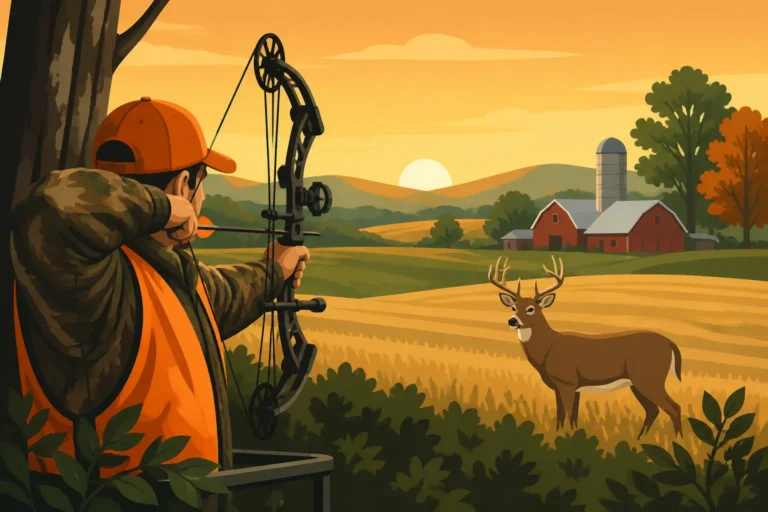
- Treestand Placement: For treestands, focus on mature trees (oaks, maples, sycamores) that offer good concealment and a clear view of the field edge and potential travel corridors. Look for trees along fencerows, on points of timber that jut into a field, or overlooking a natural funnel. Your stand should be positioned for the prevailing wind, typically 20-25 yards into the timber from the field edge, allowing you to catch deer before they fully commit to the open field. Consider using two stands, one for a north wind and one for a south wind, to maximize your options.
- Ground Blind Placement: Ground blinds are excellent for farm edges, offering superior concealment and mobility, especially where large trees for treestands are scarce. They are perfect for hunting a bench above a creek bottom or a field edge where cover is limited. Place your blind well in advance of the season, ideally brushing in a blind on a field edge to allow deer to get accustomed to it. Choose a spot that breaks up the blind's outline, such as against a thick fencerow, a stand of tall weeds, or a pile of brush. Make sure you have clear shooting lanes from the blind without having to move much.
Regardless of your choice, remember that deer in farm country are often less tolerant of mistakes due to less cover, so minimizing movement and noise is critical.
Still-Hunting the Transition Zones
While ambush hunting dominates, still-hunting can be incredibly effective in specific farm country scenarios, particularly in woodlots or thickets adjacent to crop fields, or along expansive fencerows that offer continuous cover. This method involves moving slowly and deliberately, taking a few steps, then pausing for several minutes to scan for deer.
- Focus on Cover: Rather than walking the field edge itself, focus your still-hunt on the thicker, brushier strips just inside the woodline, or along dense hedgerows. These are where deer will often bed during the day or move cautiously before evening feeding.
- Wind and Thermals: Pay extreme attention to wind direction, especially in areas where fields create thermal drafts. Wind and thermals on a ridge or an open field can be tricky, so always try to move into the wind or with a quartering wind that carries your scent away from where you expect deer to be.
- Slow Pace is Key: Think of it more as "walking a little, looking a lot." You're looking for parts of deer: an ear flick, a horizontal backline against vertical trees, or a subtle movement. This tactic requires immense patience, but it allows you to cover more ground and potentially stumble upon bedded deer or bucks moving mid-day. This is especially good for hunting the second week of rifle season when deer might be pressured into thicker cover.
Understanding Wind and Thermals in Open Areas
Wind and thermals are always important, but they behave differently in open farm country compared to dense woods.
- Prevailing Wind: This is your primary concern. Always try to position yourself downwind of where you expect deer to approach. In open fields, the wind tends to be more consistent, but swirling can still occur, especially near tree lines or topographical changes.
- Thermals: In areas with slight elevation changes (even a gentle slope), thermals can be a major factor. In the morning, cool air sinks, carrying scent downhill. In the evening, warm air rises, carrying scent uphill. If you're hunting an edge at the bottom of a slope, your morning hunt might need to be higher up, and your evening hunt lower down to keep your scent out of the deer's nose.
- Edge Effect: The interaction between open fields and forested edges can create localized wind currents. The sun heating an open field faster than a shaded woodlot can cause air to rise over the field and be replaced by cooler air from the woods, creating an eddy current along the edge. Always confirm wind direction with a powder bottle or milkweed seeds, and be prepared to adjust your setup. Learning to read a Pennsylvania hollow for deer or understanding how wind interacts with terrain can apply equally to farm country.
Gear and Setup Considerations
Hunting farm country edges often means longer sightlines, less forgiving cover, and different environmental challenges than deep timber. Your gear and setup need to reflect these realities.
Optics and Rangefinders for Longer Shots
The open nature of many farm fields means shot opportunities can sometimes be at longer ranges than typical deep woods encounters.
- Binoculars: A good pair of 8×42 or 10×42 binoculars is essential. They allow you to scan field edges, identify deer subtle movements, and assess antler points from a distance. In farm country, you'll be doing a lot more glassing across open spaces, so clear, bright optics are critical, especially during those low-light transition periods at dawn and dusk.
- Rangefinders: A rangefinder is not optional; it's a necessity. Knowing the exact distance to a deer standing on the edge of a cornfield or across a hayfield is paramount for an ethical shot. Practice using it quickly and quietly. When setting up, range various landmarks (e.g., a specific tree, a fence post, a rock) within your expected shooting lanes so you can quickly estimate distance when a deer appears. Rangefinders under 100 yards are common, but for farm country, one that accurately ranges out to 200-300 yards is a wise investment.
Concealment and Scent Control
With less forgiving cover, concealment and scent control become even more critical when hunting farm country edges.
- Camo Patterns: While any camo works to break up your outline, patterns with more open, natural elements tend to blend better in the mixed environment of fields and fencerows. Think about patterns that mimic sparse brush, corn stubble, or fall foliage.
- Scent Control: Deer in farm country are often exposed to more human scent (from farmers, recreationalists, etc.), but that doesn't mean they're less wary of hunter scent. Play the wind religiously. Use scent-eliminating sprays, wash your hunting clothes in scent-free detergent, and store them properly. Rubber boots are highly recommended to minimize scent transfer while walking to your stand, especially if you're crossing open ground or muddy areas. Scent control on small Pennsylvania tracts is always important, but even more so on heavily used farm properties.
- Quiet Movement: The rustle of clothes or the clanking of gear can easily give you away in the quieter, more open environment of a field edge. Choose quiet fabrics and ensure your gear is organized to prevent unnecessary noise.
Choosing the Right Weapon for Farm Edges
Your choice of weapon should match the potential shot distances and the specific regulations of the area you're hunting.
- Rifles: For rifle season, you'll want a caliber that can handle shots out to 200+ yards if necessary. A .270, .30-06, or .308 are all excellent choices for eastern timber deer, but also capable in open farm country. A 6.5 Creedmoor for eastern timber deer is also a fantastic option, offering flat trajectory and excellent terminal performance. Consider a scope with variable magnification (e.g., 3-9x or 4-12x) for versatility. Always zero your rifle for woods distances, perhaps 150-200 yards, giving you confidence for both close and longer shots.
- Shotguns/Muzzleloaders: In areas with special regulations, or during muzzleloader season, a shotgun with slugs or an inline muzzleloader might be your only option. Practice extensively with your chosen load to understand its effective range. Modern slugs and muzzleloader loads are incredibly accurate out to 150 yards and beyond, but it requires diligent practice.
- Archery: For archery, ensure your bow is tuned, and you're proficient at various ranges. While most shots will still be under 40 yards, the open nature of farm country means deer can appear at unexpected angles or distances. Consider arrow weight for short shots to ensure kinetic energy and penetration.
No matter your weapon, practice, practice, practice. Confidence in your equipment is crucial for success and ethical hunting.
Dealing with Hunting Pressure and Property Access
Farm country, particularly in developed areas of Pennsylvania, often means navigating private land and dealing with more hunting pressure than you might find deep in the state forests. This requires both legal understanding and interpersonal skills.
Navigating Private Land Permission
Most prime farm country hunting is on private land. Gaining permission is crucial and often requires a courteous, proactive approach.
- Start Early: Don't wait until the week before the season. Approach landowners in the late winter or early spring, long before hunting is on their minds. This shows respect and foresight.
- Be Presentable and Polite: Dress neatly, speak clearly, and be respectful of their time and property. Farmers are busy people.
- Offer Help: Offer to help with chores around the farm – fixing fences, moving hay, clearing brush. Sometimes, a little hard work is the best currency for permission.
- Respect Their Rules: If they grant permission, ask about any specific rules (e.g., no trucks in certain fields, stay out of specific areas, don't hunt near livestock, report to them before and after a hunt). Adhere to these rules meticulously. This helps build trust and ensures you might get permission again next year.
- Build a Relationship: Many landowners appreciate regular communication. A quick text before you head out, and a thank-you afterward, goes a long way. Consider sharing some processed venison with them as a gesture of appreciation. Knocking on doors in Pennsylvania farm country is a skill that takes practice, but the rewards are significant.
Hunting Public Land Edges in Farm Country
While much farm country is private, Pennsylvania does have some excellent public land scattered throughout, including State Game Lands and designated Hunter Access Program properties that border agricultural areas.
- Hunter Access Program: This program incentivizes private landowners to allow public hunting. These areas are often adjacent to working farms, providing those crucial edge habitats. Use the Pennsylvania Mapping Center or GoHunt to identify these properties and their boundaries. Look for signage indicating public access.
- State Game Lands: Many State Game Lands, especially in the southern and eastern parts of the state, are interspersed with agricultural fields. These areas can offer fantastic hunting, but they often see more pressure. Look for portions of game lands that jut into private farms or that have food plots specifically planted to draw deer to the edges. Using a ground blind on Pennsylvania Game Lands can be effective in these areas, particularly if you can scout and set it up well in advance.
- Scouting is Key: Even on public land, good scouting will reveal overlooked corners, natural funnels, and less-pressured sections of field edges. Don't be afraid to walk a little further from parking areas to find these hidden gems.
Handling Increased Hunter Activity
Farm country, especially on easily accessible private land or smaller public parcels, can see significant hunting pressure.
- Be a Stealth Master: Early morning entry and late evening exit become even more critical. Use terrain and thick cover to conceal your approach and departure. Avoid silhouetting yourself on open field edges.
- Hunt Mid-Day: Many hunters clear out after the morning rush. Deer often adjust their movements to mid-day in heavy pressure areas, seeking sanctuary in thickets or woodlots adjacent to fields. This is when still-hunting those thick transition zones can really pay off.
- Find Hidden Pockets: Deer will find the smallest, most overlooked pockets of cover in heavily hunted areas. A small, brushy ditch, a thick fencerow that's too small to bother with for most, or a dense briar patch in a woodlot corner – these are where pressured deer will hide. Scouting for these areas that others walk past is paramount.
- Know Your Neighbors: If hunting private land, be aware of where other hunters might be. Communication with neighboring landowners or hunters can help prevent conflicts and ensure safety.
By understanding the unique dynamics of farm country edges, employing smart scouting techniques, and adapting your hunting strategies, you can unlock some of the most consistent and exciting deer hunting Pennsylvania has to offer. Whether it's the thrill of an early season archery hunt or the challenge of the firearms season, those edges are where the action often happens.
| Feature Type | Description | Hunting Strategy | Key Considerations |
|---|---|---|---|
| Woodlot Edge | Where mature timber meets a crop field. Provides bedding & staging cover. | Treestand 20-30 yards into woods; morning entry, evening exit. | Wind direction crucial; watch for deer staging. |
| Fencerow/Hedgerow | Linear strip of brush, small trees between fields. Travel corridor. | Ground blind or portable stand where fencerow connects cover. | Concealment due to narrowness; scent control. |
| Creek Bottom/Drainage | Low-lying, often brushy area with denser cover. | Ambush on trails leading out of drainage; still-hunt during mid-day. | Thermals are strong here; potential for bedding. |
| Standing Crops | Corn, beans, alfalfa still in field. Excellent bedding & food. | Ambush trails on field edge before deer enter/exit. | Be aware of harvest dates; limited visibility. |
| Cut Fields (Stubble) | Harvested crop fields with remaining waste grain. Primary food source. | Ambush trails near adjacent cover after harvest. | Deer feed mostly at night; target staging areas at dawn/dusk. |
Disclaimer
Please remember that hunting regulations, seasons, and licensing requirements can change. Always consult the most current Pennsylvania Game Commission Digest and local regulations before heading afield. Safety should always be your top priority.