Hunting Pennsylvania Bear on Acorns
Hunting black bears in Pennsylvania can be one of the most exciting and rewarding experiences afield, but it also presents a unique challenge: finding these elusive giants, especially when their primary food source, acorns, can be scattered and unpredictable. It's a common frustration to spend days glassing open hillsides or still-hunting thick timber, only to wonder if you're even in the right zip code for a bear that day. This guide is here to unravel the mysteries of Pennsylvania bear behavior when the woods are full of acorns, giving you the insights and actionable strategies you need to increase your chances of a successful hunt.
Understanding Bear Biology and Acorn Dependence
Pennsylvania's black bears are incredible creatures, and their annual cycle is intrinsically linked to the availability of natural foods. When it comes to putting on critical weight for winter hibernation, acorns are king. Bears are opportunistic omnivores, but in a good mast year, acorns will make up a significant portion of their diet. If you want to find a bear, you absolutely need to understand this connection and how it dictates their movements and feeding patterns.
The Nutritional Power of Acorns for Bears
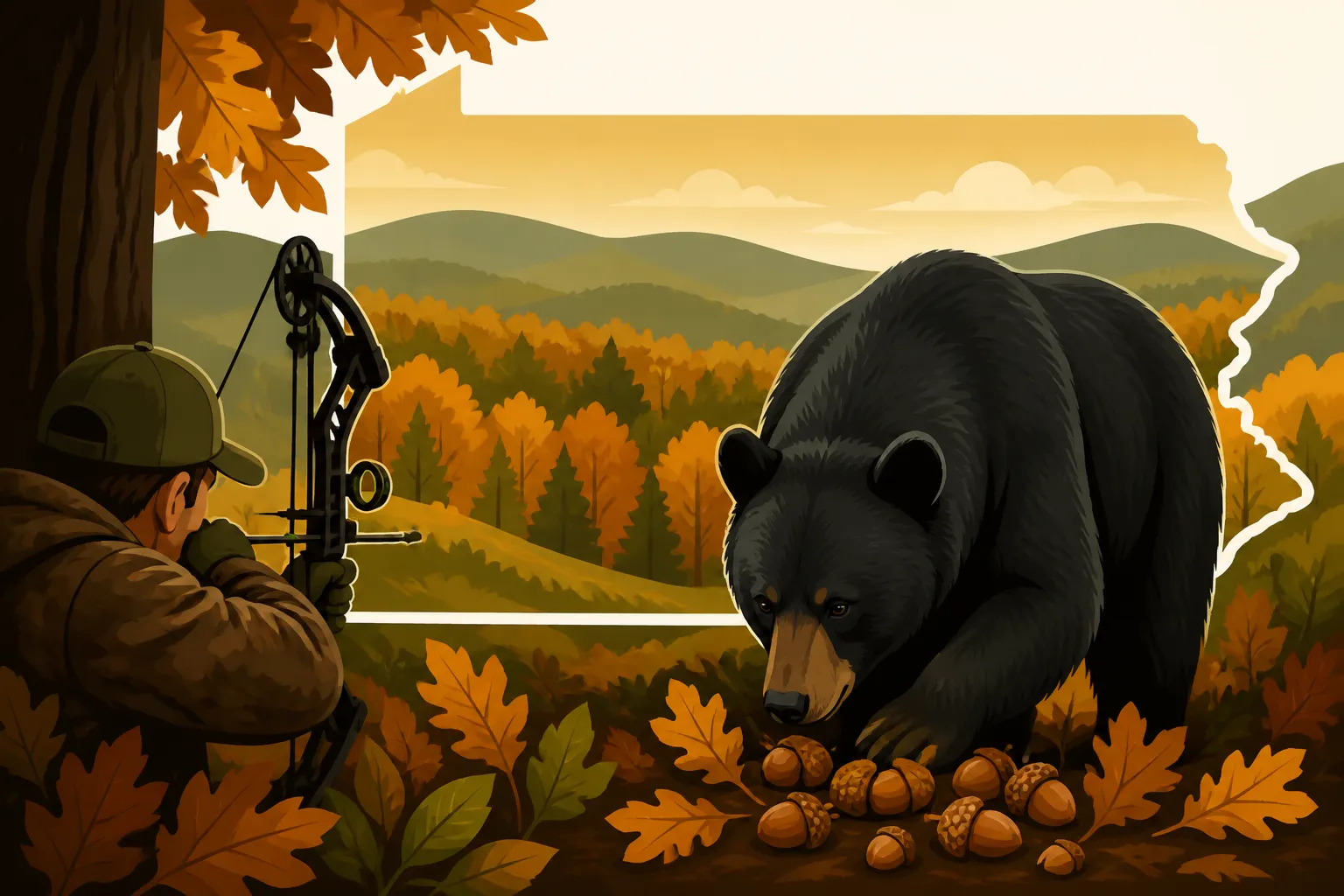
Think of acorns as nature's energy bar for bears. These little nuts are packed with carbohydrates and fats, providing a dense caloric punch that bears need to build up their fat reserves for the long winter ahead. A single bear can consume thousands of acorns in a day, spending hours in a prime oak flat. They're not just snacking; they're on a mission to bulk up. When a bear finds a prolific oak stand, especially one that's dropping fresh, palatable nuts, it's often all they'll focus on for days, even weeks, at a time. This intense focus makes these areas hotspots for hunters.
Red Oaks vs. White Oaks: A Bear's Preference
Not all acorns are created equal in the eyes (or stomachs) of a black bear. Pennsylvania is home to numerous oak species, but for hunting purposes, understanding the general difference between the white oak group and the red oak group is crucial.
White oak acorns, such as those from white oaks, chestnut oaks, and swamp white oaks, typically have lower tannin content. This makes them less bitter and more palatable to bears, as well as deer and turkeys. These acorns usually ripen and drop earlier in the fall, often starting in late September and continuing through October. When white oaks are dropping, bears will hit them hard and fast. If you're hunting during the early archery bear season in October, these are the acorns bears will be gorging on.
Red oak acorns, coming from species like red oaks, black oaks, scarlet oaks, and pin oaks, contain higher tannin levels, making them more bitter. However, they also tend to persist longer on the tree and on the ground, often dropping later in the fall and into winter. Bears will absolutely eat red oak acorns, especially after the white oak supply has been depleted. The bitterness is less of a deterrent when other food sources are scarce. This means red oak flats can be prime spots for later bear seasons, like the general firearms season or even the extended seasons in some WMUs. Knowing which kind of oak is dropping and when can help you predict where bears might be feeding at any given point in the season.
Scouting for Productive Acorn Areas
You can't just wander into the woods hoping to stumble upon a bear feeding on acorns. Effective bear hunting, especially on public land, requires diligent pre-season scouting. This isn't just a suggestion; it's a non-negotiable step if you want consistent success. You need to know where the food is, and equally important, how the bears are accessing it.
Identifying Oak Concentrations and Mast Production
Before the leaves even start to turn, you should be out there, looking up. Early summer and into fall, pay attention to the oak canopies. Are the branches heavy with developing acorns? A good pair of binoculars can save you miles of walking. Look for clusters of acorns, not just a few here and there. Remember, bears need a lot of food. You’re looking for areas that could sustain a bear or multiple bears for a period.
Utilizing resources like aerial photos and public land mapping tools, such as the ones found on the GoHunt platform, can be incredibly valuable. These tools can help you identify large stands of oaks, differentiate between potential white oak and red oak areas based on canopy shape and bark texture if you get good enough, and even highlight changes in elevation that might hold different oak species. Once you've identified potential hotspots on a map, it's time to put boots on the ground. When scouting in the months leading up to the season, also look for clearings, logging roads, and old logging cuts near these oak stands. These can often be avenues of travel for bears and also provide other food sources.
Interpreting Bear Sign in Acorn Flats
Once you're in a promising oak stand, you need to read the ground like a detective. Bears are messy eaters, and they leave plenty of clues.
- Scat: Fresh bear scat in an oak flat is a huge indicator. It will often be dark, loose, and clearly show digested acorn hulls. The freshness of the scat tells you how recently a bear has been in the area.
- Acorn Cuttings: Bears don't just pick up acorns; they'll often break off small branches to get to clusters of nuts. Look for small, freshly broken twigs on the ground, sometimes with acorns still attached. You might even find small piles of acorn caps where a bear has sat and cleaned them.
- Tracks: Look for large, five-toed tracks in soft ground or mud near streams, especially where bears might be heading to water after feeding. The size and freshness of the tracks can give you an idea of the bear's presence and travel patterns.
- Torn-Up Logs and Stumps: While not directly related to acorns, bears will often tear apart old logs and stumps looking for grubs and insects, even when acorns are abundant. This activity confirms a bear's presence and can be a good indicator that they're generally frequenting an area.
- Claw Marks on Trees: Bears are powerful climbers. Look for vertical claw marks on oak trees, especially those with rough bark. These marks indicate that bears have been climbing to access acorns still on the branches, or perhaps just for a look around.
When you find these signs, especially multiple types of fresh sign, you've hit pay dirt. This is where you'll want to focus your hunting efforts. Remember that scouting isn't a one-and-done deal. Acorn crops can vary year to year, and even within the same woodlot. A stand that was hot last year might be barren this year, so fresh information is key. This detailed approach to scouting can often tell you where big woods bucks bed as well.
Effective Hunting Strategies in Acorn Country
Once you've done your homework and identified active acorn feeding areas, it's time to implement your hunting strategy. This will often depend on the specific terrain, hunting pressure, and your preferred method, whether that's still-hunting or sitting on a stand.
Still-Hunting Oak Flats and Ridges
Still-hunting is perhaps the most challenging, yet often most rewarding, way to hunt bears in acorn country. It requires immense patience and an understanding of the woods. The idea is to move slowly, deliberately, stopping often to listen and glass. When still-hunting Pennsylvania's Big Woods for deer, the principles are quite similar for bears. Bears, despite their size, can be incredibly quiet.
Focus your still-hunting efforts on oak flats and along oak-lined benches on mountain sides. Bears will often feed in these areas during the day, especially if they feel unpressured. Move into the wind or with a crosswind, constantly scanning ahead. Pay particular attention to dense cover within or immediately adjacent to the oak stands. Bears will often bed down in thickets close to their food source for convenience and security. Use your binoculars to pick apart tangles and downed tops. A slow, methodical pace, stopping for minutes at a time, will allow you to hear a bear moving or spot them before they spot you. Remember to understand wind and thermals on a ridge; these dictate how your scent travels.
Stand Placement Near Key Food Sources
For those who prefer to hunt from a stationary position, strategic stand placement is paramount. A well-placed treestand or ground blind can offer an incredible advantage, especially during the early archery bear season or if you're targeting a specific travel corridor.
Your stand should be positioned overlooking an active acorn flat, ideally one with a clear concentration of fresh bear sign. Look for natural funnels or pinch points leading into or out of these feeding areas. Bears will often use the path of least resistance. Consider the prevailing wind direction for your chosen stand location, as bears have an incredible sense of smell. You don't want your scent blowing directly into their feeding zone.
Also, think about travel routes between bedding areas and food sources. Bears often bed in thick, dense cover during the day and move out to feed in the mornings and evenings. A stand placed along one of these trails, especially a well-used one, can be highly effective. If you're using a ground blind on Pennsylvania Game Lands, ensure it's well-brushed in and set up in advance to allow bears to get accustomed to its presence. For longer sits, remember to bring cold weather sitting strategy gear, as temperatures can drop quickly in the fall.
Navigating Variable Acorn Crops and Alternative Foods
Nature is rarely consistent, and acorn crops are no exception. Some years, the oaks will be dripping with nuts, while other years, they might be sparse. Understanding how bears adapt to these fluctuations is critical for a successful hunt.
What Happens During a Poor Acorn Year?
When acorns are scarce across a wide area, bears don't just disappear; they shift their focus to other available food sources. This often means they'll move to lower elevations, into creek bottoms, or even closer to agricultural areas where other foods might be found.
During a poor mast year, bears will increase their consumption of soft mast (like wild grapes, serviceberries, and black cherries), agricultural crops (corn, apples, soybeans), and protein sources (grubs, insects, carrion). They might also spend more time in clearcuts and areas of dense regrowth, where brambles and other succulent plants thrive. Hunters need to adjust their scouting and hunting locations accordingly. Instead of focusing solely on oak ridges, you might need to concentrate on creek bottoms with wild grapes, abandoned apple orchards, or the edges of standing cornfields. Tools like GoHunt can help you identify different vegetation types and potential food sources on a map, guiding your on-the-ground scouting.
Other Key Food Sources for Bears
Even in a good acorn year, bears will still supplement their diet with a variety of other foods. Being aware of these can provide backup hunting opportunities or help you understand bear movements.
- Beech Nuts: While not as widespread or consistent as acorns, beech nuts are another highly sought-after hard mast by bears. When beech nuts drop, bears will readily gorge on them. Understanding what changes when beech nuts drop can be a significant advantage.
- Wild Berries: Blackberries, raspberries, blueberries, and huckleberries are important early-fall foods. While many are gone by bear season, some late-season varieties might still be available in specific areas.
- Corn and Apples: In farm country, bears are notorious for raiding cornfields and orchards. If you're hunting in areas bordering agricultural land, these spots can be magnets for bears, especially in the late evening and early morning. Finding a well-used trail leading from cover into a standing cornfield in farm country can be a prime setup.
- Laurel Thickets and Swamps: While not a direct food source, these areas provide incredible cover and often hold pockets of other foods, making them ideal bedding locations close to feeding areas. Finding bear sign in mountain laurel can tell you they're in the general vicinity.
Ultimately, successful bear hunting in Pennsylvania when acorns are the primary draw comes down to relentless scouting, understanding bear biology, and adapting your tactics to the ever-changing natural buffet. Good luck out there, and stay safe.
| Oak Type | Acorn Characteristics | Primary Drop Time | Bear Preference | Hunter Strategy Focus |
|---|---|---|---|---|
| White Oak | Low tannin, less bitter | Early Fall (Oct) | High | Early season hunts (archery), immediate feeding areas |
| Red Oak | High tannin, more bitter | Mid-Late Fall (Nov) | Medium-High | Late season hunts (rifle), persistent food source |
Disclaimer
Always consult the latest Pennsylvania Game Commission regulations and local ordinances before hunting. Hunting laws and seasons can change, and it is the hunter's responsibility to stay informed and comply with all applicable rules.