Finding Grouse Cover on Game Lands
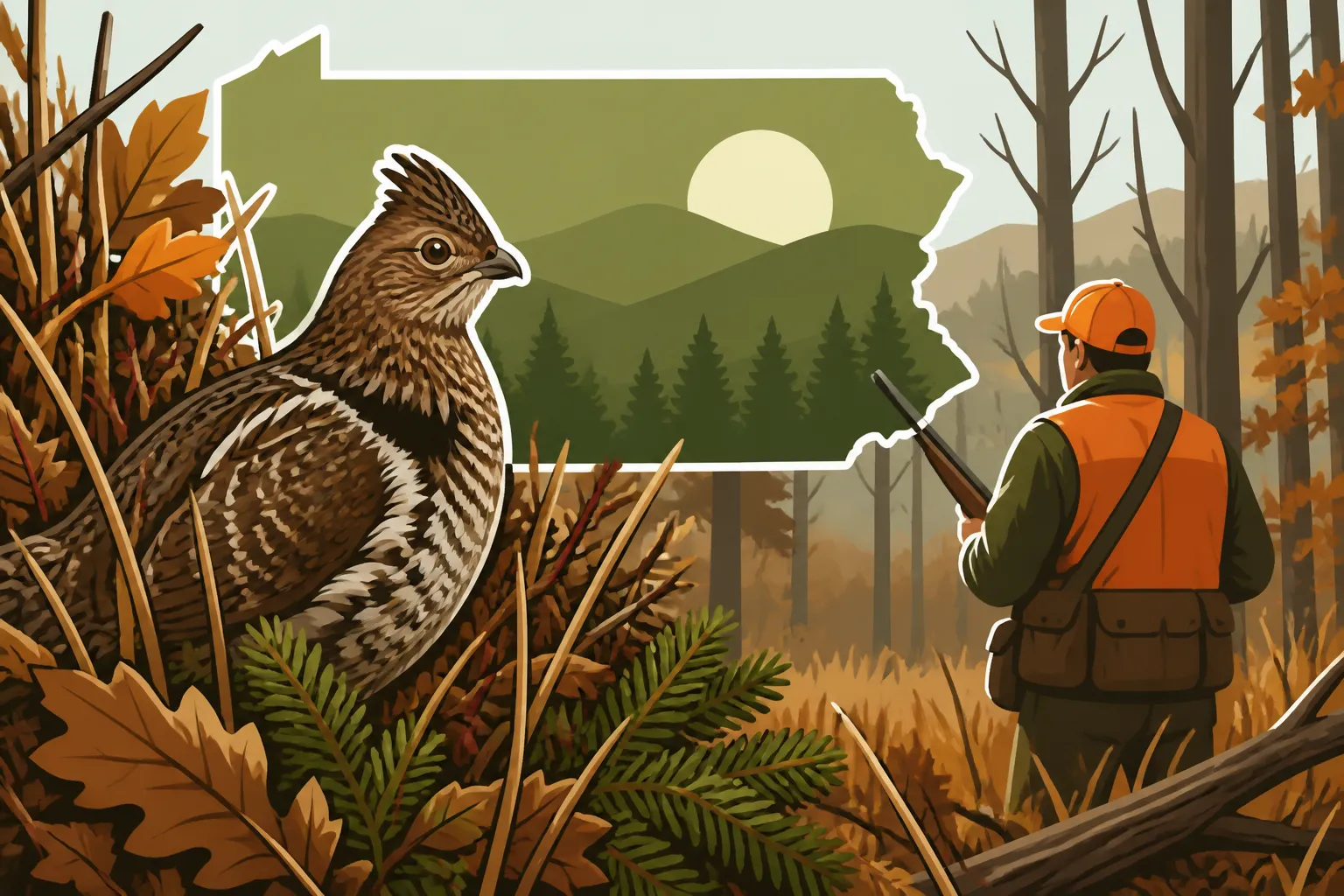
It’s a tough truth for many Pennsylvania upland hunters: finding ruffed grouse these days feels less like hunting and more like a treasure hunt for ghosts. Our beloved state bird has faced some serious challenges, and as a result, the dense, noisy flushes that once defined a good day afield are becoming increasingly rare. Despite these hurdles, dedicated grouse hunters can still find pockets of good cover on Pennsylvania's State Game Lands if they know what to look for and how to approach the hunt. This guide will walk you through the essential habitat grouse need and how to pinpoint those prime locations on public land.
Understanding Ruffed Grouse Habitat Needs
The first step to finding grouse is understanding their home. Ruffed grouse are incredibly particular about their habitat, and if you're not in the right kind of cover, you're simply not going to find birds. It’s not just about any woods; it’s about very specific types of dense, protective vegetation that provides food, shelter from predators, and nesting sites. Ignoring these habitat preferences is like trying to catch trout in a desert – you're just not going to have any luck.
The Importance of Young Forest and Early Successional Growth
If there's one thing to engrain in your mind about grouse, it's their reliance on young forest habitat. This isn't the majestic, mature timber that most people envision when they think of deep woods. Instead, we're talking about areas that have been recently logged, clear-cut, or experienced a significant disturbance that led to a burst of new, dense growth. Think of saplings, thick brush, and tangled vines that are almost impenetrable to walk through. This kind of cover provides grouse with an escape from aerial predators like hawks and owls, and ground predators such as foxes and coyotes. Without this thick overhead and understory protection, grouse are incredibly vulnerable. These areas also offer abundant food sources, from catkins in winter to a variety of berries and insects in warmer months. The unfortunate reality is that much of Pennsylvania's landscape has matured, leading to a significant Ruffed Grouse Decline in Pennsylvania over the decades. Understanding Why Young Forest Matters to Grouse is paramount for any serious upland hunter.
Aspen and Alder Thickets: Prime Grouse Real Estate
Among the types of young forest, aspen stands and alder thickets are often considered the holy grail for grouse hunters. Aspens, particularly quaking and bigtooth aspen, provide critical winter food in the form of buds and catkins. More importantly, they grow in dense, clonal stands that offer unparalleled overhead cover. When these stands are young – typically 5 to 25 years old – they create an almost perfect environment for grouse. The vertical stems act like a protective shield, making it hard for predators to spot or pursue a flushing bird. Alder thickets, on the other hand, are often found in damp, low-lying areas, along stream bottoms, or in old beaver swamps. These dense, shrubby areas are fantastic for concealing birds and also offer a different array of food sources, including the catkins of the alder itself. They can be incredibly difficult to navigate, but often, the tougher the walking, the better the grouse cover. Finding these pockets can feel like striking gold, especially after a long, birdless trek through mature woods.
Dense Evergreens and Laurel Patches for Winter
While young deciduous growth is crucial for most of the year, dense evergreen cover becomes particularly vital for grouse during the harsh Pennsylvania winters. Patches of hemlock, spruce, or even thick stands of mountain laurel and rhododendron offer crucial thermal cover, protecting birds from bitter winds and heavy snowfalls. These areas provide a sanctuary where grouse can conserve energy and stay hidden. You'll often find birds congregating in the edges where evergreen thickets meet younger deciduous growth, allowing them quick access to both food and safety. During a cold, snowy late season hunt, focusing on these evergreen havens can significantly increase your chances of a flush. It’s not uncommon to find several birds tucked away in a dense hemlock grove, hunkered down and waiting out the weather, ready to explode when disturbed.
Scouting Pennsylvania State Game Lands for Grouse
Finding grouse cover isn't usually something you stumble upon by accident, especially on public land. It takes dedicated scouting, often long before the season even opens. Pennsylvania State Game Lands are vast, covering hundreds of thousands of acres, but not all of that land holds grouse. You need a strategy to narrow down the possibilities.
Utilizing Online Mapping Tools and Aerial Imagery
In today's age, technology is your best friend for pre-season scouting. Online mapping tools, like those found on the Pennsylvania Mapping Center or provided by services such as GoHunt, are indispensable. These platforms allow you to zoom in on specific State Game Lands from the comfort of your home, examining aerial imagery for tell-tale signs of good grouse habitat. Look for variations in canopy cover – areas with a lighter green or brownish hue in an otherwise dark, unbroken forest often indicate younger, shorter growth or clear-cuts. Identifying rectangular patterns can indicate recent timber harvests, which are prime candidates for early successional growth. Pay attention to contour lines, looking for areas that might hold water and thus alder, or gradual slopes where aspen might thrive. Some advanced mapping layers can even show timber management units or recent logging activity, which is like a giant flashing arrow pointing to potential grouse cover. You can mark these promising spots with pins and create a detailed plan before you ever set foot in the woods.
Reading the Land: Topography and Water Sources
Grouse don't just exist in a vacuum; their habitat is often influenced by the surrounding topography and proximity to water. While they're not waterfowl, alder thickets and some aspen stands prefer moist soil, so looking for stream bottoms, seepages, or marshy areas on your topographic maps can be highly productive. Upland grouse also appreciate diverse topography. While they love thickets, they often feed on ridge tops or benches where different tree species, like oaks that produce acorns, might be found. Look for edges where different habitat types meet, such as where a dense evergreen stand gives way to a young clear-cut, or where a bench drops steeply into a creek bottom. These transition zones are often travel corridors and feeding areas for grouse. Don't forget to consider how snow accumulates and melts – south-facing slopes might clear faster and offer earlier access to food, while dense north-facing evergreen stands offer deeper protection.
Identifying Logging Activity and Timber Stands
The most direct way to find new grouse cover is to track timber management. The Pennsylvania Game Commission, which manages the State Game Lands, actively conducts timber harvests to create young forest habitat, not just for deer but also specifically for grouse and other early successional species. While you might not always find precise, up-to-the-minute information on every single cut, you can often find management plans or recent harvest maps through the PGC website or by calling local Game Commission offices. On aerial maps, look for areas that appear to be recently disturbed – lighter colored ground, distinct boundaries, or new logging roads can be clues. Once you're on the ground, fresh skidder tracks, stumps, and piles of slash are undeniable signs of recent activity. These areas, particularly when they’re 5-15 years post-harvest, are excellent places for Grouse Hunting Pennsylvania Regrowth. It’s these targeted habitat improvements that often provide the best opportunities for finding birds in an otherwise mature landscape.
On-the-Ground Tactics for Locating Grouse Cover
Once you've done your homework and identified promising spots on the map, it's time to hit the woods. But finding grouse cover in person is a different beast than looking at an aerial photo. You need to train your eye, and sometimes your ears, to pick out the subtle cues that indicate a bird might be near.
Identifying Key Cover Types by Sight and Sound
Walking through potential grouse cover, you need to be actively scanning, not just casually strolling. Look for the tangled mess of young saplings, the dense interwoven branches of mountain laurel, or the distinctive silvery bark of aspens. These areas should feel thick and difficult to navigate. If it's easy walking, it's probably not good grouse cover. Pay attention to the understory – a healthy understory of ferns, briars, and low-growing shrubs is a good sign. Don't just rely on your eyes; listen. Grouse are known for their drumming, a low-frequency sound made by the male's wings to attract mates and mark territory. While typically a spring phenomenon, knowing what it sounds like helps you recognize the habitat. During the season, listen for the thump-thump-thump of a flush, which is often your first, and sometimes only, warning a bird is present. Recognizing these visual and auditory cues becomes second nature with experience and helps you home in on the most productive areas.
Working Edges and Transition Zones
Grouse, like many wildlife species, are creatures of the edge. They rarely stay deep within one uniform habitat type for extended periods. Instead, they thrive in the transition zones where different cover types meet. Think of where a dense, young clear-cut transitions into a more mature oak forest, or where an alder swamp meets an upland bench. These edges provide a variety of food sources and quick access to different levels of cover depending on the season, weather, and time of day. When you're walking, focus on hunting these linear features. Instead of crashing through the middle of a huge, uniform thicket, try to walk its perimeter, where the grouse might be feeding just inside the denser vegetation. These edges are also where you'll often encounter other small game, making it a productive area for general Small Game Hunting in Pennsylvania. Pay close attention to old logging roads or trails that cut through diverse habitat; grouse often use these as travel lanes and feed along their margins.
The Role of Dogs (or Lack Thereof) in Finding Birds
While many upland hunters swear by a good bird dog, it’s entirely possible to find grouse on State Game Lands without one. If you hunt solo or don't have a dog, you'll need to adapt your strategy. This often means still-hunting or slow-walking through dense cover, pausing frequently to listen and observe. You'll be relying more on flushing birds within shotgun range as you push through the thick stuff. For those with dogs, breeds like English setters, pointers, and springer spaniels are often favored for their ability to cover ground and pin birds. A good dog can cover more ground and sniff out birds you'd walk right past, but it also needs to be disciplined enough to stay close in the dense cover, or you'll quickly lose track of it. Regardless of whether you have a canine companion, the goal remains the same: move slowly, deliberately, and be ready for that explosive flush. If you're going dogless, learning to effectively Flushing Grouse Without a Dog will be a critical skill.
Challenges and Considerations for Grouse Hunting on Game Lands
Hunting grouse in Pennsylvania, particularly on public land, isn't without its difficulties. Acknowledging these challenges upfront can help you manage expectations and adapt your strategies.
Dealing with Increased Hunting Pressure
State Game Lands, while offering incredible access to hunters, also see significant pressure. During deer season, especially, these areas can be bustling with activity. Even during small game seasons, popular spots can attract many hunters. This pressure can make grouse more wary and push them into even denser, harder-to-reach cover. To counter this, consider hunting mid-week if your schedule allows, or focusing on areas that require a longer walk-in. The further you get from main roads and parking areas, the less pressure you're likely to encounter. Using your mapping tools like GoHunt to identify remote corners or difficult terrain can be a huge advantage. These spots, while physically demanding to reach, often hold birds that haven't been pushed around as much. Remember that grouse hunting requires perseverance, and sometimes the best cover is the hardest to get to.
Adapting to Declining Grouse Populations and Habitat
It's no secret that grouse populations across Pennsylvania have been in decline for decades, a trend mirrored in many parts of their range. This makes finding birds even more challenging. Habitat loss and fragmentation, often due to maturing forests and changes in land management, are primary drivers. While the Game Commission is actively working on habitat projects, the sheer scale of the challenge is immense. This means you might not flush birds every time you go out, even in prime cover. The key is to celebrate every flush, learn from every outing, and adjust your expectations. This is not about bag limits as much as it is about the experience of Grouse Hunting Pennsylvania Cover and the thrill of the flush. Being aware of current population trends in specific WMUs can also help you focus your efforts on areas that are showing more promise, or at least understand why some days are slower than others.
Navigating Regulations and Access Restrictions
Hunting on State Game Lands comes with its own set of rules and regulations that are crucial to follow. Always check the latest Pennsylvania Game Commission digest for specific season dates, bag limits, and any special regulations that might apply to a particular Game Land or Wildlife Management Unit (WMU). While How Many Acres of Public Land Pennsylvania Has is impressive, certain areas might have restricted access, such as designated safety zones around buildings or specific habitat closures for management purposes. Parking regulations, the use of ATVs, and even the type of firearm or ammunition allowed can vary. Ensure you have all the necessary licenses and permits, including your general hunting license and any specific stamps required. A well-informed hunter is a safe and successful hunter, and staying on the right side of the law means protecting both yourself and the resource.
| Cover Type | Key Characteristics | Why Grouse Use It | Best Time to Hunt |
|---|---|---|---|
| Young Aspen/Oak Clear-cuts | Dense saplings, tangled understory (5-25 years old), high stem density | Food (buds, catkins, berries), excellent escape cover from predators | Early/Mid-Season |
| Alder Thickets | Shrubby, often wet areas along streams or lowlands, very dense | Water, insect foraging, thick overhead cover, thermal protection | Early/Mid-Season |
| Mountain Laurel/Rhododendron | Dense, evergreen shrub patches, often on slopes or rocky ground | Extreme thermal cover, excellent concealment from predators | Late Season (cold/snow) |
| Hemlock/Spruce Groves | Dense, mature evergreen stands, often with open understory below canopy | Thermal protection from wind and snow, roosting cover | Late Season (cold/snow) |
| Mixed Growth Edges | Where any two distinct cover types meet (e.g., clear-cut meets mature forest) | Diverse food sources, easy travel corridors, quick access to different cover | All Season |
Disclaimer
Always consult the official Pennsylvania Game Commission regulations and seasonal updates before heading afield, as rules and conditions can change. This guide provides general information for educational purposes and should not be considered a substitute for official legal guidance.