Duck Hunting the Susquehanna River
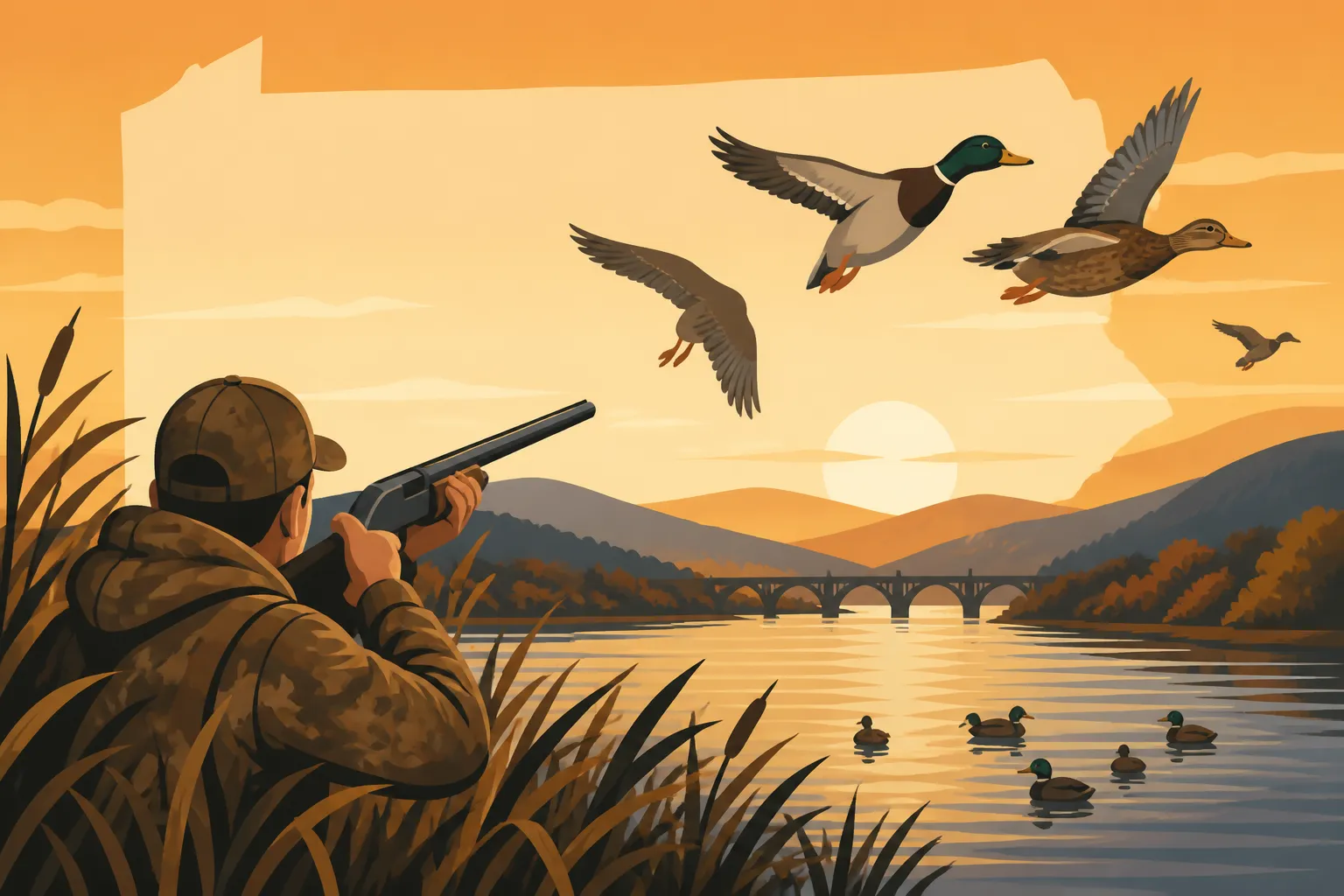
Hunting ducks on a big river like the Susquehanna can feel like an entirely different world compared to jump-shooting a farm pond or setting up on a quiet marsh. The unpredictable currents, hidden hazards, and the sheer scale of the water can be incredibly frustrating for even seasoned waterfowl hunters. This guide will help you navigate the unique challenges of chasing ducks and geese on Pennsylvania's iconic Susquehanna River, equipping you with the knowledge to make your next river hunt safer and more successful.
Understanding the Susquehanna's Unique Challenges and Opportunities
The Susquehanna River, a sprawling waterway carving through much of Pennsylvania, offers incredible waterfowl hunting opportunities, but it demands respect and careful planning. Its character changes dramatically from one section to another, from shallow, rocky stretches in the upper reaches to wider, deeper pools closer to its mouth. Understanding these dynamics is crucial for a successful and safe hunt.
Navigating the River's Flow and Obstacles
The current on the Susquehanna is a constant factor you’ll contend with, and it's always fluctuating based on recent rainfall and upstream dam releases. What might be a calm, manageable stretch one week can turn into a swiftly moving gauntlet after a heavy rain. This means your boat handling skills need to be sharp, and you should always be aware of what’s downstream. Sandbars are notorious for shifting and appearing unexpectedly, especially during lower water conditions, and hitting one at speed can quickly ruin a hunt, or worse. Rocks, submerged logs, and other debris can also pose serious threats to your prop and hull. It’s not uncommon to see a boat stranded or damaged by these hidden obstacles. Always be on the lookout for changes in water color or ripples that might indicate a submerged hazard.
One of the biggest frustrations is setting up decoys only to have them drag anchor in strong current or get tangled on a submerged snag. You'll need heavier anchor weights and longer lines than you might use in shallower, stiller waters. Many river hunters use a "Texas Rig" system for their decoys, which allows for quick deployment and retrieval, a huge plus when dealing with current and potentially numerous setup changes. It’s not just about getting to your spot; it’s about safely maneuvering within it. Remember, safety should always be your top priority, especially when dealing with cold water and strong currents. Knowing the local conditions and having a plan for emergencies is non-negotiable.
Species You'll Encounter and Their Habits
The Susquehanna River is a magnet for a diverse array of waterfowl, acting as a major highway on the Atlantic Flyway. While you’ll certainly see plenty of familiar faces, understanding their preferences on a large river system can greatly improve your odds.
Mallards and wood ducks are almost certainly the most common ducks you'll encounter, especially in the shallower, slower moving sections, back channels, and areas with riparian vegetation. Wood ducks love the timbered edges and smaller creeks that feed into the main river. Mallards, being highly adaptable, will be found almost anywhere there's food and cover, from agricultural fields adjacent to the river to small islands and eddies. As the season progresses and colder weather settles in, you'll start to see more divers like common goldeneyes, buffleheads, and scaup, particularly in the wider, deeper pools of the river. These birds prefer open water where they can dive for food. Canvasbacks and redheads are less common but do make appearances, offering a thrilling challenge. Beyond ducks, resident Canada geese are a constant presence, and you might also encounter greater and lesser snow geese during their migration, particularly if you're hunting near agricultural areas.
Understanding where these different species prefer to feed and rest on a river like the Susquehanna is key. Mallards and geese will often be found loafing on sandbars or feeding in nearby flooded fields, while wood ducks will stick to the cover of brushy banks and inlets. Divers, conversely, will hold to the main river channel, especially where deeper water and strong currents exist. Your strategy for Waterfowl Hunting on Pennsylvania Waters needs to account for these specific preferences.
Essential Gear and Setups for River Duck Hunting
Hunting the Susquehanna successfully means having the right gear. It's not just about a shotgun and some decoys; it's about reliable equipment that can withstand the river's demands and keep you safe and comfortable.
Boat Choices and Safety Considerations
Your boat is arguably the most critical piece of gear for Susquehanna river hunting. Forget the canoe or kayak for anything but the calmest, shallowest backwaters, unless you're strictly jump-shooting. For accessing prime locations, setting large decoy spreads, and retrieving downed birds in current, you'll want something stable and powerful. A 14 to 16-foot jon boat with a reliable outboard motor (think 25 horsepower or more, depending on the boat) is a common choice for many stretches of the Susquehanna. Look for boats with a wide beam for stability and a flat or modified-V hull for navigating shallower water and pushing through current.
Safety on the river cannot be overstated. Always wear a PFD, even if you think you’re a strong swimmer. The cold water temperatures during hunting season can quickly lead to hypothermia, making even a short swim to shore deadly. Carry a reliable anchor system with plenty of rope, knowing that you might need to drop anchor quickly in an emergency. A paddle or push pole is also essential as a backup if your motor dies. Navigation lights are a must for pre-dawn and post-sunset travel, and a reliable GPS or mapping app (like GoHunt) on your phone is invaluable for marking your spots, understanding river topography, and safely returning to your launch. Always tell someone where you’re going and when you expect to return. The Susquehanna can be unforgiving, so proper preparation is paramount.
Decoy Spreads and Calling Strategies
Setting up decoys on the Susquehanna requires a bit more thought than on still water. The current will naturally move your decoys, so you need to work with it, not against it. A common strategy is to set your decoys in a "J" or "U" shape, with the open end facing upstream. This creates a natural landing zone for birds, making it look like a quiet eddy where ducks might rest out of the main current. Use heavier decoy weights (at least 6-8 ounces, sometimes more) and longer lines to ensure your spread stays put. Spreader bars can also be useful for creating lifelike movement without worrying about tangled lines.
For species like mallards and wood ducks, a mix of standard mallard decoys, a few wood duck decoys, and maybe a spinner can be very effective. If you’re targeting divers in the wider sections, consider larger diver decoys like canvasbacks or scaup, which are more visible from a distance. Calling strategies should also adapt to the river environment. On a large, open river, your calls need to carry further. Use louder, more aggressive hail calls to grab attention, but be ready to tone it down with softer greetings and feeding calls as birds get closer. Don’t be afraid to experiment with different calls and volumes. Sometimes, a few subtle quacks are all it takes to convince wary birds. Remembering to adjust your calls and spread based on the Duck Migration Timing Through Pennsylvania is always a good idea.
Camouflage and Concealment on the Banks
Blending in on the Susquehanna’s diverse banks and islands is crucial. The river offers a mix of heavy timber, brushy islands, and open shoreline. Your camouflage should match your chosen hideout. For timbered banks, a leafy pattern or natural-looking ghillie suit can work wonders. If you're setting up on a brushy island, a camo pattern that mimics reeds and marsh grass is ideal.
Many river hunters rely on boat blinds, which are designed to seamlessly integrate with the natural surroundings. These can be simple burlap covers draped over an aluminum frame or more elaborate pop-up blinds that conceal the entire boat. If you're hunting from shore, build a natural blind using local vegetation like cattails, willow branches, or corn stalks if you're near agricultural fields. The key is to break up your outline and ensure your blind offers adequate concealment from all angles, especially skyward. Ducks have incredible eyesight, and a silhouette against the horizon will send them packing every time. Don’t forget about face masks and gloves to complete your concealment.
Tactics for Successful Susquehanna River Hunts
Putting all the pieces together – understanding the river, having the right gear, and employing smart tactics – is what separates a frustrating day from a successful hunt on the Susquehanna.
Scouting and Location Selection
Effective scouting is the bedrock of any successful waterfowl hunt, and on a river as dynamic as the Susquehanna, it’s absolutely non-negotiable. Don't just show up on opening day hoping for the best; the river will likely hand you a dose of humble pie. Before the season opens, dedicate time to exploring different sections of the river. Look for areas where ducks are loafing, feeding, or consistently flying. This could be a large, calm eddy downstream of an island, a secluded back channel with plenty of cover, or a section of river adjacent to flooded timber or agricultural fields. The Pennsylvania Duck Zone Boundaries might influence which areas open first, so keep an eye on those dates.
Pay close attention to changes in water level. A stretch that was prime hunting during low water might be completely unproductive after a heavy rain. Conversely, new opportunities can open up with higher water. Use aerial maps and apps like GoHunt to identify potential bottlenecks, islands, sandbars, and access points. GoHunt can be incredibly helpful for determining land ownership along the river, which is vital for knowing where you can legally set up or launch. Many public access points exist, but knowing where to scout first can save you a lot of time. Observe bird activity at different times of day to understand their flight patterns – are they flying upriver to feed in the mornings and downriver to roost in the evenings? This information will dictate your setup location and timing.
Jump Shooting and Pass Shooting Techniques
For hunters who prefer a more active approach, jump shooting can be incredibly effective on certain sections of the Susquehanna. This involves slowly and quietly navigating the river, typically in a smaller, more maneuverable boat, or even on foot along the banks, surprising ducks as you round bends or approach islands. The key to successful jump shooting is stealth and knowing where ducks are likely to be hiding. Look for sheltered pockets of water, brushy shorelines, or small inlets where ducks might be resting. Approach from downstream or downwind whenever possible to minimize your disturbance. When you spot birds, be ready to shoot quickly and accurately as they flush. This can be exhilarating, but always be mindful of other hunters, property lines, and safety zones. For smaller tributaries joining the Susquehanna, you might even consider Jump Shooting Small Creeks for wood ducks and mallards.
Pass shooting, while less common on the main Susquehanna, can be productive in areas where ducks consistently fly along predictable corridors. This might be a narrow section of the river, a choke point between two islands, or a flight path leading to or from a major feeding area. Set up a well-concealed blind along the flight path and wait for birds to come to you. This strategy requires patience and good recognition skills to identify species quickly and accurately.
Setting Up for a Stationary Hunt
Most Susquehanna river hunting involves a stationary setup, often from a boat blind, a shoreline blind, or an island. Once you've scouted and identified a promising spot, consider the wind direction, sun position, and current. You want the wind at your back or quartering, pushing the birds towards your spread and making them cup their wings for an easier shot. The sun should be to your back, if possible, to keep it out of your eyes and illuminate the incoming birds.
When anchoring your boat blind, ensure it's secure and won't swing excessively in the current. Many hunters use multiple anchors or even tie off to shoreline vegetation for maximum stability. If setting up on an island or bank, build your blind robustly to withstand the elements and provide complete concealment. Remember to consider your shooting lanes; you want clear lines of sight to your decoy spread and common flight paths. Once set, be patient. River ducks are often on the move, and good things come to those who wait. Being prepared with good Waders for River Duck Hunting is also key for those cold, wet setups. And don't forget to confirm the Pennsylvania Federal Duck Stamp Rules and ensure your Pennsylvania HIP Registration for Migratory Birds is up to date before you even head out.
| Duck Species | Common Susquehanna Habitats | Typical Behavior | Ideal Hunting Tactics |
|---|---|---|---|
| Mallard | Shallow eddies, back channels, sandbars, adjacent farm fields | Feeds in shallow water, loafs on sandbars | Decoy spread in eddies, jump shooting, pass shooting near fields |
| Wood Duck | Timbered banks, small creeks, brushy inlets | Flushes quickly from cover, feeds on acorns/seeds | Jump shooting tight cover, setting decoys near timber |
| Common Goldeneye | Main river channel, wider pools, deep water | Dives for food, fast flyer | Large diver decoy spread in open water, pass shooting |
| Bufflehead | Open water, larger pools, areas with good diving opportunities | Small, active diver, often in small groups | Decoy spread in open water, pass shooting |
| Canada Goose | Sandbars, adjacent farm fields, open water | Grazes in fields, loafs on river | Field blinds, large decoy spreads on sandbars or fields |
Remember, always check the current When Pennsylvania's Duck Seasons Run and Where Nontoxic Shot Is Required in Pennsylvania for waterfowl. The regulations are there for a reason, and adherence ensures safe and ethical hunting for everyone.
Disclaimer
Hunting is an inherently dangerous activity. This guide provides general information and recommendations but cannot account for all variables or individual skill levels. Always consult the most current Pennsylvania Game Commission regulations, prioritize safety, and exercise good judgment in the field. Be aware of private property boundaries and obtain permission before hunting on private land.