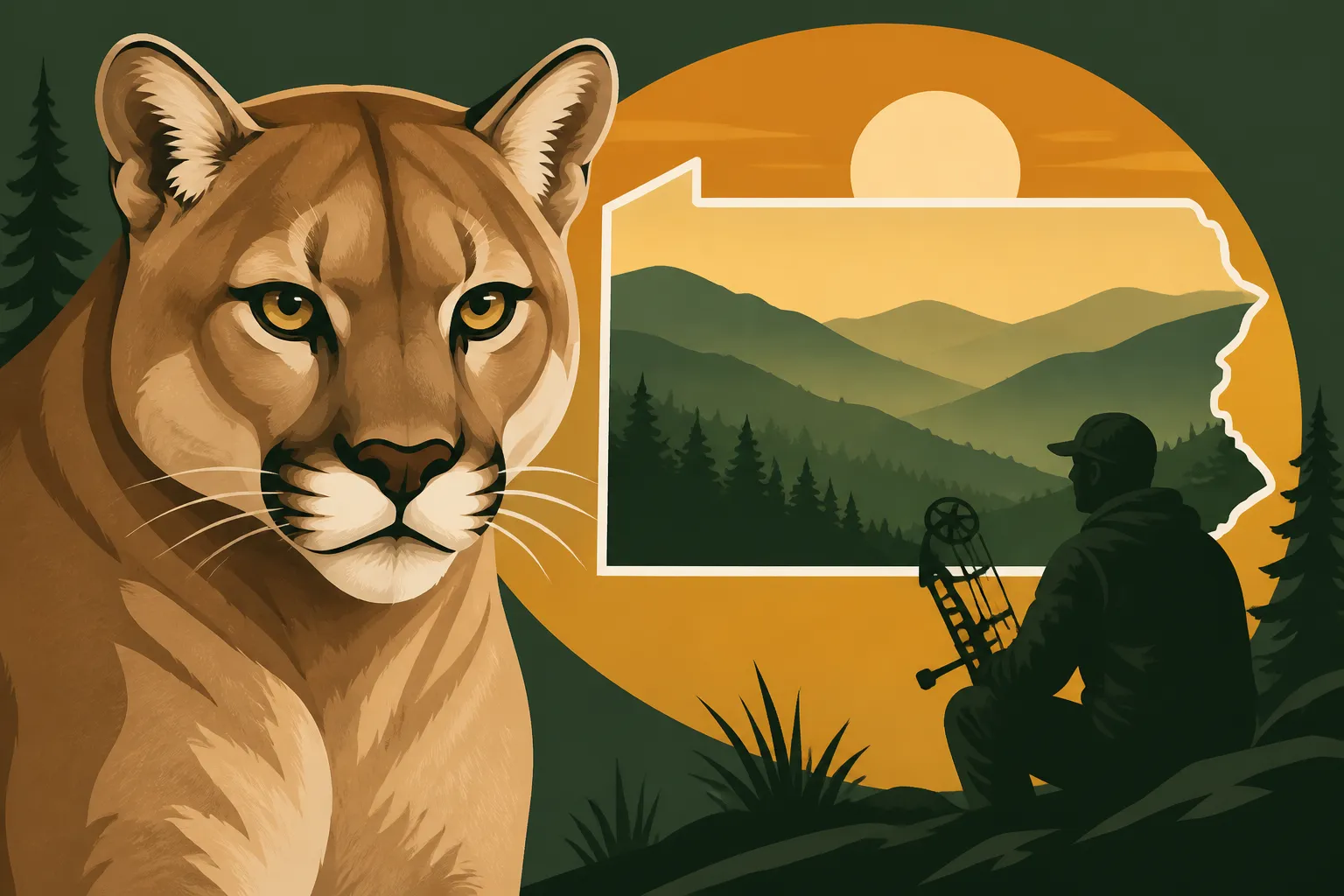
Pennsylvania Mountain Lion Confirmations
For years, a persistent whisper has traveled through Pennsylvania's hunting camps and local diners: "I saw a cougar." These stories, often accompanied by blurry photos or intense personal accounts, fuel an ongoing debate about whether mountain lions roam the wild ridges and valleys of our state. It's a source of both fascination and frustration for many, leaving hunters and outdoor enthusiasts wondering what's truly out there. This guide aims to clear up the confusion, providing an honest look at the official stance and the reality behind claims of mountain lion confirmations in Pennsylvania.
The Enduring Legend of Pennsylvania's Mountain Lions
The idea of a mountain lion lurking in Pennsylvania's forests is deeply ingrained in our collective outdoor consciousness. It’s a compelling thought, adding an element of mystery and wildness to our already rich natural landscapes. However, understanding the current situation requires a quick look back at history and a realistic assessment of what people are actually encountering.
Historical Context and Native Cougars
Believe it or not, mountain lions, also known as cougars or panthers, did once roam Pennsylvania. They were native to the region, apex predators that played a vital role in the ecosystem. Historical accounts from early settlers and indigenous peoples clearly indicate their presence. However, as European settlement expanded, bringing with it habitat destruction, hunting pressure, and the eradication campaigns aimed at large predators, the eastern cougar population steadily declined. By the late 19th and early 20th centuries, the eastern cougar was considered extirpated from Pennsylvania and, indeed, from most of the eastern United States. The last truly "wild" eastern cougar was likely gone from Pennsylvania a very long time ago, a stark reminder of how human impact can change the wild face of a landscape.
The Persistence of Sightings and Reports
Despite the official stance that wild, breeding populations of mountain lions no longer exist in Pennsylvania, reports of sightings are incredibly common. Almost every hunter, hiker, or outdoor enthusiast has either seen something themselves or knows someone who has. Many of these reports, while sincere, are often cases of misidentification. A bobcat, for instance, can appear much larger than it is when glimpsed quickly in low light, especially if its short tail isn't clearly seen. Large domestic cats, particularly those with a wilder look, are also frequently mistaken for cougars. Even large coyotes or domestic dogs seen at a distance can sometimes trigger that initial thought of a mountain lion. The human brain is quick to fill in details, and the idea of seeing a rare, powerful predator can certainly influence perception.
Another significant factor contributing to persistent sightings is the occasional presence of captive-bred or exotic pets that have either escaped or been intentionally released. While illegal to own many exotic animals in Pennsylvania without proper permits, it does happen. These animals, often disoriented and struggling to survive in the wild, might be responsible for a small number of legitimate sightings. They are not, however, indicative of a self-sustaining wild population, and their presence is usually fleeting and isolated.
The Role of Social Media in Spreading Information
In today's interconnected world, a single blurry photo or video shared online can go viral in a matter of hours, igniting a fresh wave of mountain lion fever. Social media platforms, while powerful tools for sharing information, also inadvertently amplify unverified claims. A video of a large, tawny animal walking through someone's backyard, even if it's clearly a domestic dog upon closer inspection, can quickly be labeled a "confirmed cougar" by excited users. These posts often spread far and wide before any official verification can occur, further muddying the waters and making it harder for the public to discern fact from fiction. It's a prime example of how quickly misinformation can spread, creating a perceived reality that doesn't always align with scientific evidence.
Official Stance: What the Experts Say About Confirmations
When it comes to the official status of mountain lions in Pennsylvania, the message from wildlife agencies is clear and consistent. While individual sightings generate a lot of buzz, the rigorous scientific criteria for confirming a wild, breeding population have simply not been met. It's a stance backed by decades of research, investigation, and analysis of reported evidence.
The Pennsylvania Game Commission's Position
The Pennsylvania Game Commission (PGC) is the state agency responsible for managing wildlife. Their position on mountain lions is unequivocal: there is no evidence of a wild, breeding population of mountain lions in Pennsylvania. They thoroughly investigate credible reports, but time and again, the evidence either points to misidentification, hoax, or an escaped captive animal. For a population to be considered "confirmed," wildlife biologists would need clear, repeated evidence of breeding pairs, cubs, multiple adults in an area, and consistent DNA samples from scat or hair. This type of evidence, crucial for proving a self-sustaining population, has simply not been found in Pennsylvania. While many dedicated professionals work within the PGC to monitor and manage all wildlife, they can only work with verifiable facts.
Scientific Consensus on Wild Populations
Beyond the PGC, the broader scientific community, including university researchers and wildlife ecologists, aligns with the state's position. The ecological requirements for a viable mountain lion population are immense. These are large predators that require vast territories, a robust prey base (primarily deer), and large tracts of undisturbed wilderness. While Pennsylvania certainly has deer and some wild areas, the contiguous habitat necessary to support a breeding population of mountain lions is generally considered insufficient, especially given the state's dense human population and extensive road network. Movement corridors are also critical for dispersal and genetic diversity, and while individuals might occasionally wander into the state from established western populations (an extremely rare occurrence, often involving thousands of miles of travel), establishing a population is a different challenge entirely.
Documented Cases of Escaped or Released Animals
It's important to differentiate between a wild, self-sustaining population and an isolated incident involving a captive animal. Over the years, there have been a handful of highly publicized instances where a mountain lion was confirmed in Pennsylvania. However, in virtually all these cases, the animal was determined to be either an escaped pet or a released captive animal. These are not "wild" cougars in the ecological sense, but rather individuals far from their natural environment, usually struggling to survive. For example, some animals have been identified by their declawed feet or other signs consistent with a life in captivity. These occurrences, while certainly exciting and attention-grabbing, do not alter the PGC's assessment that a native, breeding population does not exist. It merely confirms that sometimes, unfortunate circumstances bring these magnificent creatures into our state in an unnatural way.
How to Report a Sighting and What Constitutes "Confirmation"
If you believe you’ve seen a mountain lion in Pennsylvania, it's natural to feel a mix of excitement and maybe a little apprehension. The key to helping wildlife officials is understanding what constitutes credible evidence and how to properly report it. Your cooperation can help the PGC gather data and address any potential public safety concerns, even if it ultimately leads to identifying a different species.
The Importance of Evidence
Simply saying "I saw a cougar" isn't enough to constitute a confirmation, no matter how certain you are. Wildlife agencies need tangible, verifiable evidence. The gold standard includes:
- Clear photographs or video: This is by far the best evidence. Look for distinct features like the long, thick tail (often a third of the animal's body length), tawny fur, and relatively small head compared to its powerful body. Try to get something that shows scale.
- Track casts or detailed measurements: Mountain lion tracks are distinct. They typically show four toes, no claw marks (claws are usually retracted), and a characteristic M-shaped heel pad. They are typically larger than a bobcat's and lack the triangular shape of a coyote or dog track.
- Scat (droppings) for DNA analysis: If you find what you believe to be mountain lion scat, leave it undisturbed and report it immediately. DNA analysis can confirm the species.
- Physical remains: While grim, the discovery of a carcass, particularly if it's recently deceased, would provide irrefutable proof.
- Repeated, consistent sightings by multiple, reliable witnesses: While less concrete than physical evidence, multiple reports from different individuals over time in the same general area, especially if they are consistent in description, can prompt closer investigation.
Without this kind of evidence, even the most sincere eyewitness account remains unconfirmed. It’s not about disbelieving someone, but about upholding scientific rigor in wildlife management.
The Reporting Process
If you do encounter what you strongly believe to be a mountain lion and you manage to gather some form of tangible evidence, the proper channel for reporting is the Pennsylvania Game Commission. Do not try to approach the animal, and do not attempt to collect samples yourself unless you are trained to do so safely.
- Safety First: If you see the animal, maintain a safe distance. Do not harass or approach it.
- Document: Take photos or video from a safe distance if possible. Note the exact location (GPS coordinates are ideal), time, date, and any specific behaviors you observed.
- Report: Contact your regional Pennsylvania Game Commission office immediately. Provide them with all the details and any evidence you have. They have trained wildlife officers who can investigate. You can usually find the contact information for your specific region on the PGC's website. They will likely ask a series of questions to help them assess the credibility of the sighting.
Differentiating from Other Species
One of the biggest challenges in "confirming" mountain lions is the ease of misidentification. Many animals commonly found in Pennsylvania can be mistaken for a cougar, especially during a fleeting glimpse or in poor lighting.
- Bobcats: These are native to Pennsylvania and are often confused with cougars due to their tawny color and wild appearance. However, bobcats are much smaller (usually 20-30 lbs) and have a distinctive short, "bobbed" tail. Cougars have a long, thick tail that often drags on the ground. You might be interested in knowing more about Bobcats and Fishers in Pennsylvania.
- Coyotes: While grey/brown, a large coyote can sometimes be mistaken for a cougar from a distance. Their gait and body shape are quite different, and their tails are bushy, not long and smooth like a cougar's. Pennsylvania has a healthy Pennsylvania Coyote Range and Numbers.
- Domestic Dogs: Believe it or not, large breeds of domestic dogs, especially those with tan or tawny fur, are frequently mistaken for mountain lions. This is particularly true if the dog is seen running loose or at a distance, making its breed harder to identify.
- Feral House Cats: Even large domestic cats, especially those with some wilder characteristics, have occasionally been confused with cougars, though the size difference is usually quite apparent on closer inspection.
Here's a quick comparison table to help differentiate:
| Feature | Mountain Lion (Cougar) | Bobcat | Coyote | Large Domestic Dog |
|---|---|---|---|---|
| Size (weight) | Large (80-200 lbs) | Medium (20-35 lbs) | Medium (25-50 lbs) | Variable, often large |
| Tail | Long, thick, often drags, black tip | Short, "bobbed" (4-6 inches), black bands | Bushy, pointed, usually held down | Variable, often curled or wagging |
| Color | Uniform tawny/tan, sometimes grayish | Mottled tan/brown with spots/stripes | Grey/brown, often reddish legs/ears | Highly variable |
| Head Shape | Relatively small, round, powerful jaw | Small, tufted ears, short face | Wedge-shaped, pointed ears, long muzzle | Variable, often broad or long |
| Track Size | Large (3-4 inches), no claw marks | Small (1.5-2.5 inches), no claw marks | Medium (2-3 inches), visible claw marks | Variable, visible claw marks |
| Habitat | Dense forests, mountains, large range | Forests, swamps, farmlands, adaptable | Highly adaptable, rural to urban | Everywhere |
The Impact of Mountain Lion Beliefs on Hunters
The enduring legend of mountain lions in Pennsylvania isn't just a curiosity; it can actually have a subtle but real impact on how hunters perceive and engage with their environment. While the thrill of imagining such an elusive predator adds to the mystique of the outdoors, it's important to keep these beliefs grounded in reality for practical and conservation reasons.
Unnecessary Fears and Safety Concerns
One significant impact of unconfirmed mountain lion sightings is the creation of unnecessary fear among some outdoor enthusiasts. While any large predator should be respected, believing that a thriving, unmanaged population of cougars roams Pennsylvania can lead to undue anxiety, especially for those hunting alone or in remote areas. This fear, though understandable, is largely unfounded given the lack of scientific evidence for a wild breeding population. Hunters already navigate enough real risks in the woods, from dealing with inclement weather to navigating steep terrain. Adding a phantom threat can detract from the enjoyment and focus of the hunt. Understanding the actual Pennsylvania Black Bear Population and Pennsylvania Coyote Range and Numbers provides a more realistic assessment of the large predators you might encounter.
Distraction from Real Conservation Issues
When a significant portion of public discourse and attention is focused on unconfirmed species like mountain lions, it can inadvertently divert focus and resources away from real, pressing conservation issues in Pennsylvania. Our state faces genuine challenges related to habitat loss, managing populations of confirmed game species, combating wildlife diseases like Chronic Wasting Disease (CWD), and ensuring sustainable hunting opportunities. These are the battles that truly require our collective energy and advocacy. While it's fun to speculate about mysterious creatures, the conservation community needs our support for tangible, evidence-based initiatives that directly benefit the wildlife we know are here. Learning about Chronic Wasting Disease in Pennsylvania highlights a very real and serious concern.
Respect for All Wildlife
Ultimately, whether you believe mountain lions are out there or not, the underlying principle should be one of respect for all wildlife. This includes being responsible with what you see and report. If you genuinely think you've seen something extraordinary, follow the proper channels and provide the best evidence you can. Avoid spreading unverified rumors, as this creates confusion and can erode trust in official wildlife agencies. Our wild lands are home to an incredible array of confirmed species, from the majestic white-tailed deer, which you can learn more about in White-Tailed Deer Across Pennsylvania, to the elusive bobcat, the thriving black bear, and countless species of birds and small game. Focusing on understanding and conserving these known populations is where our efforts as hunters and conservationists can truly make a difference. Always stay informed by using resources like Scouting With the Pennsylvania Mapping Center to learn about the documented species in your hunting areas.
Disclaimer
This article is for general informational purposes only and does not constitute professional advice. Laws, prices and regulations vary by location and change over time. Consult a qualified professional for guidance on your specific situation.