Pennsylvania Coyote Range and Numbers
Few creatures spark as much debate and mystery among Pennsylvania hunters as the coyote. Their howls echo through the night, a constant reminder that this adaptable predator is firmly established across our varied landscapes. For many years, understanding where they roam and how many there truly are felt like trying to catch smoke. This guide aims to pull back the curtain on Pennsylvania's coyote populations, helping you grasp their presence, their patterns, and how their thriving numbers impact our hunting experiences, offering insights into their historical journey and current distribution.
The Coyote's Journey: How They Came to Pennsylvania
It’s easy to think of coyotes as always having been a part of the Pennsylvania wild, but that’s actually not the case. Their arrival and subsequent spread across the Commonwealth is a fascinating chapter in our state's wildlife history, and understanding it helps us appreciate their incredible adaptability. They aren't native to our eastern forests, but rather colonizers who found a niche and made it their own, filling an ecological void left by other, larger predators.
Tracing Their Path East
The eastern coyote, which is what we find here in Pennsylvania, is not quite the same as its western counterpart. Over generations, as coyotes expanded their range eastward from the Great Plains, they encountered and interbred with wolves in the Great Lakes region and eastern Canada. This genetic mixing resulted in a larger, often heavier-bodied animal than the pure western coyote, and one that's particularly well-suited to wooded environments like ours. They started making their way into northern Pennsylvania, slowly but surely, decades ago, slipping across the borders from New York and Ohio. This wasn't a rapid invasion but a gradual infiltration, driven by their natural dispersal and an uncanny ability to exploit new territories.
Their initial pushes were into the more remote, less settled portions of the state. Think of the vast timberlands and expansive state forests in the northern tier. These areas, with their dense cover and abundant prey, offered a welcoming environment for a species looking to expand. There wasn't a grand march; it was more like individual animals venturing out, finding new hunting grounds, and then establishing small, isolated populations that slowly grew and connected. This process was quiet, often unnoticed by the casual observer, but relentless. Hunters started reporting sightings, hearing the distinctive howls, and finding tracks in places where they'd never seen them before. It was a subtle shift in the landscape, but one that signaled a major change in Pennsylvania's wildlife composition. You can learn more about exactly How Coyotes Reached Pennsylvania and the specifics of their expansion.
Establishing a Foothold Across the State
Once coyotes found their way into Pennsylvania, they quickly realized what a land of opportunity it was. Our mixed agricultural and forested landscape, with its healthy populations of deer, rabbits, and small rodents, offered a smorgasbord of food. The absence of major competitors, like wolves or cougars, meant they could thrive largely unchecked by other large predators. This lack of competition allowed their numbers to grow and their range to expand rapidly, pushing them further south and east from their initial northern strongholds.
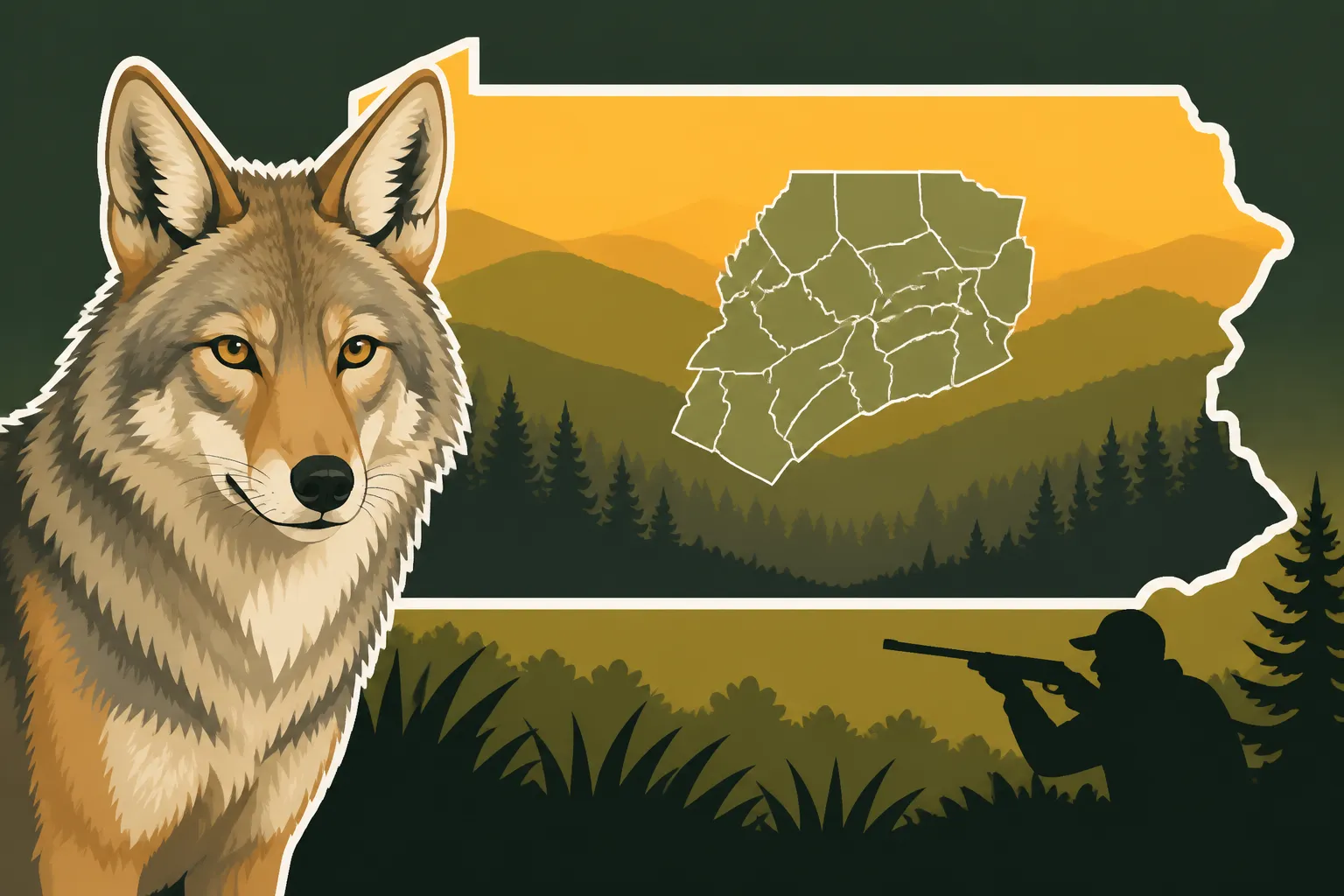
Today, it's safe to say that coyotes are found in every single county across Pennsylvania. While their densities might vary – you might encounter them more frequently in certain areas – there isn't really a corner of the state where a coyote couldn't show up. They've proven incredibly adept at adapting to different terrains, from the rugged slopes of the Appalachians to the rolling farmlands of the southeast, and even surprisingly close to human development. This widespread distribution means that no matter where you hunt in Pennsylvania, you need to be aware of the coyote's presence and factor it into your outdoor plans. Their establishment is complete, and they are now an integral part of our state’s ecosystem, for better or worse, depending on your perspective.
Where the Coyotes Roam: Their Current Range
If you've spent any significant time in the Pennsylvania outdoors, chances are you've either seen a coyote, heard their distinctive calls, or stumbled upon their tracks. They truly are everywhere, but understanding the nuances of their distribution can help you predict where you're most likely to encounter them and how their presence might influence other game you're pursuing. Their range isn't just about presence; it's about density and habitat preference.
Big Woods, Farm Fields, and Beyond
Coyotes are incredibly versatile when it comes to habitat. In the northern tier and big woods regions, like those found in the Allegheny National Forest or vast state forests, they thrive in the dense timber, using logging roads and clearcuts as travel corridors and hunting grounds. These areas offer excellent cover and a consistent food supply of deer, especially fawns, and various small game animals. Hunters pursuing deer in these areas often encounter coyote tracks on fresh snow or hear them howling at dawn or dusk. Understanding how deer move in these areas, especially where they might seek refuge or forage, often means understanding where coyotes might be present.
Moving south and east into Pennsylvania's farm country, coyotes shift their focus. Here, they'll utilize woodlots, hedgerows, creek bottoms, and thick brush for cover, venturing out into open fields to hunt voles, mice, and rabbits, or to scavenge on crop remnants. They become especially adept at navigating the fringes where human development meets wilder spaces. This adaptability means that a hunter in Adams County might find coyotes just as prevalent as a hunter in Potter County, albeit in different specific habitats. Learning to identify these varied "hotspots" can be crucial for a successful Pennsylvania Predator and Furbearer Hunting in Pennsylvania experience. Using tools like GoHunt can be incredibly helpful here, as its mapping layers allow you to identify key terrain features like thickets, field edges, and water sources that coyotes will frequent, even in seemingly less wild areas.
Adapting to Human Landscapes
One of the most remarkable, and sometimes unnerving, aspects of coyote behavior is their ability to adapt to human-dominated landscapes. It's no longer uncommon to find coyotes living in suburban woodlots, greenbelts, and even urban parks, particularly in the larger metropolitan areas. They learn to avoid direct human contact, becoming largely nocturnal and incredibly discreet. Their diet in these areas can include everything from small rodents and rabbits to discarded food items and even domestic pets, unfortunately. This close proximity can create conflicts, but it also highlights their unparalleled resilience.
For hunters, this means that even small, seemingly insignificant pockets of cover near residential areas can hold coyotes. While hunting regulations might restrict where and how you can pursue them in such areas, understanding their presence is vital. For instance, if you're hunting deer in a small woodlot adjacent to a housing development, knowing coyotes are likely present can inform your stand placement or calling strategy. Their presence in these areas often goes unnoticed by the general public until a sighting or an incident brings them to light, but for hunters, it's a constant factor to consider when evaluating game populations and patterns in any given area.
Crunching the Numbers: Understanding Coyote Populations
When we talk about "how many" coyotes are in Pennsylvania, it's not like counting deer where we have fairly good harvest data and population models. Coyotes are far more elusive, wide-ranging, and less frequently harvested or observed in a way that makes exact numbers easy to come by. However, wildlife agencies and researchers do have ways to estimate their presence and density, helping us understand the overall health and distribution of the population.
The Challenge of Counting a Ghost
Coyotes are notoriously difficult to count accurately. They are highly intelligent, elusive, and their territories can be vast, especially in less resource-rich areas. Unlike deer or bear, they don't have mandatory check stations or specific harvest limits that provide solid statistical data on a large scale. Furthermore, their coloring and nocturnal habits make aerial surveys largely ineffective. This means wildlife biologists rely on a combination of indirect methods, which, while scientific, still provide estimates rather than precise figures.
These methods often include road-kill data, observations from trappers and hunters (like harvest reports, though these are voluntary for coyotes), scat surveys, and sound surveys where researchers listen for and record coyote vocalizations. Trail camera studies can also provide insights into presence and relative abundance in specific study areas. All these pieces of the puzzle help build a picture of overall population trends, such as whether numbers are increasing, stable, or decreasing in certain regions. What these studies consistently show, however, is that coyotes are thriving and well-distributed throughout Pennsylvania, even if an exact statewide census number remains a "ghost" figure.
What Influences Coyote Density
While coyotes are found everywhere, their density – how many individuals are living in a specific area – isn't uniform. Several factors play a significant role in determining how concentrated a coyote population might be. The most crucial factor is food availability. Areas with an abundance of prey, such as healthy deer populations (especially fawns), rabbits, voles, and even wild turkeys, can support higher densities of coyotes. This often means farm country, with its mix of cover and agricultural fields, can hold more coyotes than extremely dense, food-scarce big woods areas.
Another key factor is available cover. While coyotes can operate in open spaces, they need secure places to den, rest, and escape detection. Dense brush, thickets, reverting clearcuts, and remote woodlots are all critical. The presence of other predators, like black bears in Pennsylvania, can also influence coyote behavior, though they generally avoid direct conflict. Diseases, such as mange or rabies, can temporarily reduce local populations, but coyotes are resilient and tend to rebound. The year-round Pennsylvania Coyote Hunting Rules Year-Round also play a role; while hunting pressure can impact local densities, the overall statewide population remains robust due to their high reproductive rates and adaptability. This complex interplay of factors is why you might hear howls every night in one valley, yet rarely encounter a sign in another, seemingly similar, location just a few miles away.
Coyotes and Your Hunt: Impact on Game Species
For many Pennsylvania hunters, the discussion around coyotes inevitably leads to their impact on other game animals, particularly deer. It’s a concern voiced frequently in hunting camps and online forums, often backed by anecdotal evidence. While science strives for objective analysis, the emotional connection hunters have to deer, turkey, and small game makes this a particularly sensitive topic.
The Deer Fawn Factor
One of the most significant impacts coyotes have on other game species is their predation on deer fawns. During the spring fawning season, coyotes are incredibly efficient predators, preying on young, vulnerable fawns. Studies conducted in various regions, including Pennsylvania, have shown that fawn mortality due to coyote predation can be substantial, sometimes accounting for a significant percentage of fawn losses. This isn't to say coyotes are the only cause of fawn mortality – disease, accidents, and other predators (like bears and bobcats) also play a role – but coyotes are certainly a major player.
This predation can influence local deer numbers and the overall recruitment of young deer into the population. In areas with high coyote densities, or where deer populations are already stressed by other factors, fawn predation can be particularly impactful. While adult deer are generally too large and agile for coyotes to consistently take down, weak, injured, or diseased adults can sometimes fall prey. Hunters concerned about this impact often advocate for increased coyote hunting efforts, sometimes participating in Predator Hunting Contests in Pennsylvania to help manage local coyote numbers. However, the scientific consensus is that coyotes have a natural role in regulating deer populations, particularly by culling weaker animals, which can ultimately lead to a healthier herd. For hunters, it means being aware that where you find significant coyote activity, your local Pennsylvania Deer Population Estimate might be more influenced by fawn predation than you previously thought.
Competition with Other Predators and Small Game
Beyond deer, coyotes also interact with and impact other game species and smaller predators. They are opportunistic hunters, and wild turkeys, especially poults, can be a target. While adult turkeys can often evade coyotes, young birds are vulnerable. This can contribute to localized declines in Pennsylvania Turkey Population Trends, particularly during nesting and brood-rearing periods. Similarly, rabbits and various small rodents form a substantial part of the coyote diet, putting them in direct competition with species like foxes, bobcats, and even some raptors.
In some areas, increased coyote presence has been linked to declines in red fox populations, as coyotes are known to be dominant and can displace or even kill smaller canids. For small game hunters, understanding this dynamic is important. If you're consistently seeing fewer rabbits or grouse in an area that used to be productive, it’s worth considering the local coyote population as a potential factor. The Ruffed Grouse Decline in Pennsylvania, while multifaceted and largely attributed to habitat loss and West Nile Virus, could also see some localized pressure from increased coyote predation on nests and young birds. Knowing that coyotes are widespread means hunters must consider all these interactions when assessing game populations in their chosen hunting grounds.
Hunting the Hunter: Coyote Opportunities and Tactics
Understanding Pennsylvania's coyote range and numbers isn't just academic; it directly translates into opportunities and strategies for hunters. Coyotes are an exciting and challenging quarry, offering a year-round hunting season and a chance to hone your skills against a truly intelligent animal. Many hunters view them as an important part of maintaining ecological balance, especially concerning deer populations.
Year-Round Pursuit and What That Means for Hunters
One of the most appealing aspects of coyote hunting in Pennsylvania is its year-round open season. This provides hunters with unparalleled flexibility and opportunities during times when other game seasons are closed. Whether it's the dead of winter when tracks are easy to read in the snow, or a warm summer evening when you can call them in, there's always a chance to pursue coyotes. This continuous season also means you can combine coyote hunting with scouting for other species. For example, during summer deer scouting trips, you might also be looking for coyote sign or listening for howls.
However, "year-round" doesn't mean "anything goes." It’s crucial to be aware of specific regulations, especially regarding firearms, legal shooting hours, and any necessary permits for different times of the year or specific locations. For instance, Night Hunting Rules for Pennsylvania Coyotes exist, and while legal, they come with specific equipment and safety considerations. Likewise, if you're out during a deer archery season, you need to ensure your method of take for coyotes aligns with the ongoing big game regulations or be prepared to switch gear. Always consult the Pennsylvania Game Commission's digest for the most current rules. This constant opportunity allows dedicated predator hunters to continuously refine their techniques and knowledge of these elusive animals.
Scouting for Sign and Effective Calling Strategies
Successfully hunting coyotes often boils down to excellent scouting and mastering calling techniques. Scouting isn't just about finding fresh tracks, though that’s certainly part of it. It’s about identifying travel corridors, primary food sources, bedding areas, and den sites. Look for scat along logging roads, creek bottoms, and field edges. Pay attention to howls at dawn and dusk, which can indicate their general location and activity. Using mapping tools like GoHunt can be invaluable for identifying potential travel routes, pinch points, and areas of dense cover where coyotes might hold up, allowing you to plan your ambush points effectively. Being able to visualize the terrain, even remotely, gives you a significant advantage.
When it comes to calling, consistency and adaptability are key. Coyotes respond to a variety of sounds, primarily distress calls (rabbit, fawn, bird) and their own vocalizations (howls, barks, pup distress). The time of year, weather conditions, and whether the coyotes are pressured will dictate which calls are most effective. During the colder months, especially after a fresh snow, Coyote Calling in Pennsylvania Winter can be incredibly productive, as coyotes are often hungry and more willing to investigate a potential meal. Setting up with the wind in your favor, having good visibility, and remaining absolutely motionless are critical. Don't be afraid to experiment with different calls and volumes. Sometimes, a quiet, subtle series of whimpers can be more effective than a loud, aggressive howl, especially on educated animals. Patience is truly a virtue when hunting these wily predators.
Disclaimer
This article is for general informational purposes only and does not constitute professional advice. Laws, prices and regulations vary by location and change over time. Consult a qualified professional for guidance on your specific situation.