How Coyotes Reached Pennsylvania
It’s easy to feel a jolt of surprise, or even a bit of a shiver, when you first hear the unmistakable howl of a coyote echo through the Pennsylvania woods. For many of us who grew up hunting here, these intelligent canids felt like a relatively new addition to our landscapes, almost appearing out of nowhere. But their journey into the Keystone State is a fascinating tale of adaptation, opportunity, and a shifting natural world, and understanding it helps us grasp their role in our present-day hunting grounds.
The Original Landscape: Coyotes Weren't Always Here
To truly appreciate the coyote's arrival, we first need to cast our minds back to a Pennsylvania that existed before their presence, a time when our forests and fields echoed with different sounds and were governed by a different set of wild rules. It wasn't that Pennsylvania lacked predators; it simply lacked the particular brand of adaptable, opportunistic hunter that the coyote embodies.
A Legacy of Eastern Forests and Missing Predators
Imagine Pennsylvania hundreds of years ago, before extensive European settlement. Our vast, unbroken eastern forests, often referred to as the "Big Woods," were home to a full suite of large carnivores. We had gray wolves, powerful and territorial apex predators that roamed in packs, keeping deer and elk herds in check. We also had eastern cougars, silent and elusive hunters that stalked the dense cover. These magnificent animals were the original architects of our forest ecosystems, shaping everything from deer behavior to the health of plant communities. Their presence meant a very different kind of predator-prey dynamic than what we know today.
As human populations grew and settlement spread, the landscape changed dramatically. Forests were cleared for agriculture, towns sprang up, and roads began to crisscross the wilderness. With this expansion came intense pressure on large predators. Wolves and cougars were systematically hunted, trapped, and poisoned, often seen as threats to livestock and human safety. By the late 19th and early 20th centuries, these iconic predators were effectively extirpated from Pennsylvania. Their removal created a massive ecological void, especially for a mid-sized, adaptable carnivore that could fill the niche they left behind.
The Human Impact and the Ecological Void
The elimination of wolves and cougars wasn't just a loss of individual species; it was a fundamental alteration of the entire ecosystem. With fewer large predators, deer populations, for example, could expand unchecked in many areas, leading to browse pressure on forests and other challenges. Small game species, while still facing pressure from smaller predators like bobcats and foxes, no longer contended with large, pack-hunting canids. The balance was disrupted.
For decades, Pennsylvania’s wilderness hummed along without a large, widespread canine predator. Foxes, bobcats, and even bears filled certain predatory roles, but none possessed the same ecological impact as a wide-ranging, highly adaptable canid. This absence created an open door, a perfect environment for a creature capable of thriving in both deep woods and human-dominated landscapes. While hunters might have grumbled about too many deer or celebrated plentiful small game, few could have predicted the new predator that was quietly making its way eastward, ready to reclaim a vacant niche.
The Western Migration: Paving the Way Eastward
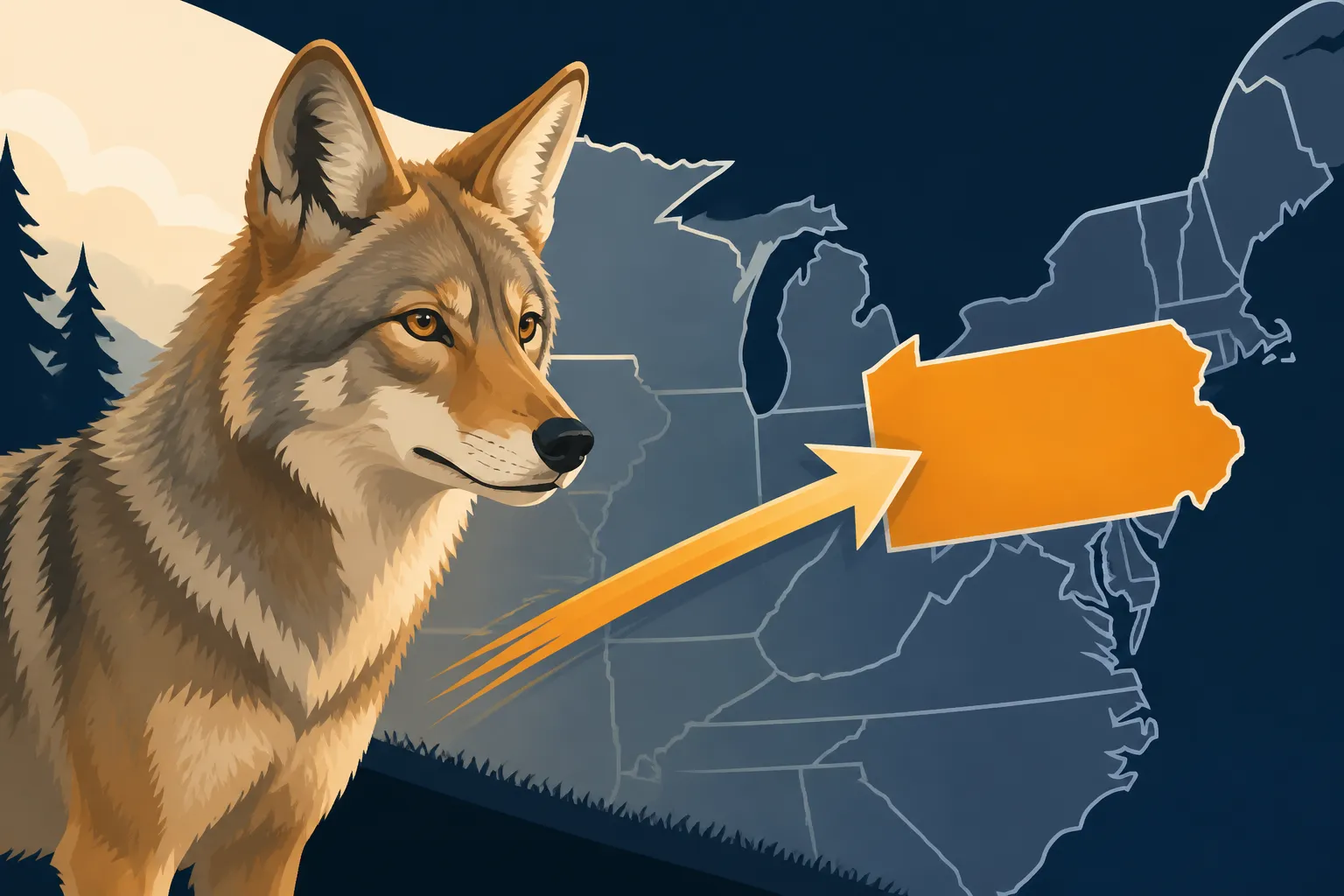
The coyotes didn't just teleport into Pennsylvania. Their arrival was the culmination of a slow, steady, and incredibly successful westward expansion that began centuries ago and picked up speed dramatically in the 20th century. It’s a remarkable story of wildlife resilience and adaptation.
Following the Changing Landscape
Coyotes, originally creatures of the North American plains and deserts, were historically not found east of the Mississippi River. Their natural range was confined to the western states, where open country and scattered woodlands suited their hunting style. However, as human settlement pushed westward across the continent, clearing forests and creating vast tracts of farmland, they inadvertently created ideal habitat for coyotes. The removal of dense eastern forests opened up new territories, while the extirpation of wolves removed a major competitor and predator of coyotes.
Coyotes are masters of adaptation. They can thrive in a wide variety of habitats, from deserts and prairies to mountains and, crucially for their eastward journey, agricultural lands and even suburban fringes. The patchwork of fields, woodlots, and brushy edges created by farming across the Midwest offered perfect cover and hunting opportunities. They followed these "new" landscapes, moving steadily east, often in advance of, or in conjunction with, the spread of agriculture itself. This journey wasn't a sudden rush but a gradual, generational expansion, with each new litter extending the species' presence a little further into new territory. This adaptability is part of why they've also made a significant impact on areas like Farm Country Deer Hunting in Southern Pennsylvania.
The "Coyote Highway" Phenomenon
The eastward expansion of coyotes wasn't just a random walk; it often followed predictable routes, almost like invisible highways. One significant pathway was through the northern Great Lakes region and southern Canada. As wolves were pushed back, coyotes moved north and east, expanding into forested areas they traditionally wouldn't have inhabited. They interbred with remnant wolf populations in some areas, which we'll discuss more later, further aiding their adaptation to denser woodlands. From Canada, they then began to filter south into New England and eventually into New York and Pennsylvania.
Another route involved a more direct eastward spread through the midwestern states, again following the agricultural expansion and the general reduction of their wolf competitors. Human infrastructure, while often seen as a barrier to wildlife, sometimes inadvertently facilitated their spread. Utility corridors, highway rights-of-way, and abandoned rail lines, often lined with brushy cover and offering easy travel, could act as conduits for their movement. These linear features provided cover, allowed for dispersal, and connected fragmented habitats, making it easier for individual coyotes or small family groups to establish themselves in new areas. This patient, persistent journey, exploiting every available advantage, eventually brought them to our doorstep in Pennsylvania, becoming a permanent fixture in our outdoors, even for those involved in Predator and Furbearer Hunting in Pennsylvania.
Settling Down in the Keystone State: Adaptation and Hybridization
Once coyotes arrived in Pennsylvania, they didn't just pass through. They quickly established themselves, making our mountains, valleys, and even our more developed areas their permanent home. Their success here isn't just about their adaptability, but also a fascinating biological phenomenon known as hybridization.
The Eastern Coyote: A Unique Evolution
One of the most intriguing aspects of the coyote's arrival and subsequent success in the East, particularly in Pennsylvania, is the genetic story behind what we now commonly refer to as the "Eastern Coyote" or "Coywolf." Research has revealed that these eastern populations are not genetically pure western coyotes. As coyotes expanded their range into areas where wolf populations had been decimated but not entirely eradicated, particularly in the Great Lakes region and southern Canada, they interbred with those remaining gray wolves. In some areas, there's also evidence of interbreeding with domestic dogs.
This hybridization is thought to be a key factor in the Eastern coyote's ability to thrive in our more forested, mountainous terrain. The infusion of wolf genetics likely contributed to a larger body size, on average, compared to their western cousins. This larger size, along with potentially more pack-like social structures, may give them an advantage in hunting larger prey, such as deer, which are abundant in Pennsylvania. It also perhaps made them more adept at navigating denser cover than the open-country specialists of the West. This genetic cocktail created a super-adaptable canid, perfectly suited to the unique challenges and opportunities of the eastern landscape. For hunters familiar with Pennsylvania Black Bear Hunting, the physical presence of these larger coyotes can sometimes be quite surprising.
Finding a Niche: Coyotes in Our Woods and Suburbs
The adaptability of the Eastern coyote is truly remarkable. They didn't just settle into one type of habitat; they quickly found niches across the entire spectrum of Pennsylvania's diverse landscapes. In the deep woods of the north-central mountains, they fill a role similar to the wolves that once roamed there, preying on deer and small game. They're masters of silent movement through dense cover, using their keen senses to locate prey. Hunting the Pennsylvania Rut in November often reveals their presence, as they can be quite active during this period.
But their success isn't limited to remote wilderness. Coyotes are incredibly intelligent and opportunistic, making them equally at home on the fringes of civilization. They'll readily exploit food sources in agricultural areas, preying on rodents, rabbits, and even domestic livestock if given the chance. They also forage on fruits, berries, and carrion. In suburban and exurban areas, they've learned to coexist with humans, often living surprisingly close to homes while remaining largely unseen. Garbage, pet food left outdoors, and abundant small mammals like voles and squirrels draw them in. This wide-ranging adaptability means that whether you're scouting deep in the Allegheny National Forest or checking a trail camera on the edge of a farm field, you should always be aware of their presence. Using tools like GoHunt, you can map out potential travel corridors or areas of dense cover where they might reside, no matter how close to civilization.
Living with Coyotes: Understanding Their Presence
Now that coyotes are firmly established in Pennsylvania, they are an undeniable part of our wildlife mosaic. For hunters and wildlife enthusiasts alike, understanding their impact and how to coexist with them has become an important aspect of enjoying our outdoor traditions.
Impact on Game Species and Ecosystems
The arrival of a new, highly effective predator like the Eastern coyote naturally raises questions about its impact on other game species. Their diet is incredibly varied and opportunistic. They will certainly prey on deer, especially fawns in the spring and weak or sick adults throughout the year. Studies of Pennsylvania Deer Population Estimate and Deer Density by Pennsylvania WMU often consider predation by coyotes as one of many factors influencing deer numbers. They also hunt a wide array of small game, including rabbits, groundhogs, and turkeys, especially poults. For those who enjoy Spring Gobbler Hunting in Pennsylvania, it's another factor to consider for turkey populations.
However, their role isn't simply one of consumption. Coyotes also act as a natural check on populations of mesopredators – smaller, mid-sized predators like foxes and raccoons – through competition and direct predation. This "top-down" pressure can sometimes benefit ground-nesting birds or other small game by reducing the numbers of these smaller, often more numerous, predators. They also play a crucial role as scavengers, cleaning up carrion and helping to prevent the spread of disease. The ecosystem is always striving for balance, and the coyote has simply found its place within that dynamic, filling a void that was open for a long time.
The Hunter's Role and Perspective
For hunters in Pennsylvania, coyotes often elicit mixed feelings. Some view them as competitors for deer and small game, particularly in areas where deer numbers are a concern. Others appreciate the challenge and excitement of hunting coyotes, especially during the off-season or as a way to extend time afield. The truth is, coyotes are here to stay, and understanding them is part of being an informed hunter in Pennsylvania.
Hunting coyotes can be a thrilling experience, requiring stealth, knowledge of their habits, and often, effective calling techniques. Learning Coyote Calling in Pennsylvania Winter can provide excellent late-season opportunities. The Pennsylvania Game Commission recognizes coyotes as a furbearer and game animal, allowing for year-round hunting with few restrictions, though specific regulations for Pennsylvania Coyote Hunting Rules Year-Round should always be checked. Many hunters see it as a way to contribute to healthy game populations and enjoy a challenging pursuit. Whether you hunt them or simply observe them, the Eastern coyote is a testament to nature's resilience and a fascinating chapter in the ongoing story of Pennsylvania's wild places.
Disclaimer
This article is for general informational purposes only and does not constitute professional advice. Laws, prices and regulations vary by location and change over time. Consult a qualified professional for guidance on your specific situation.