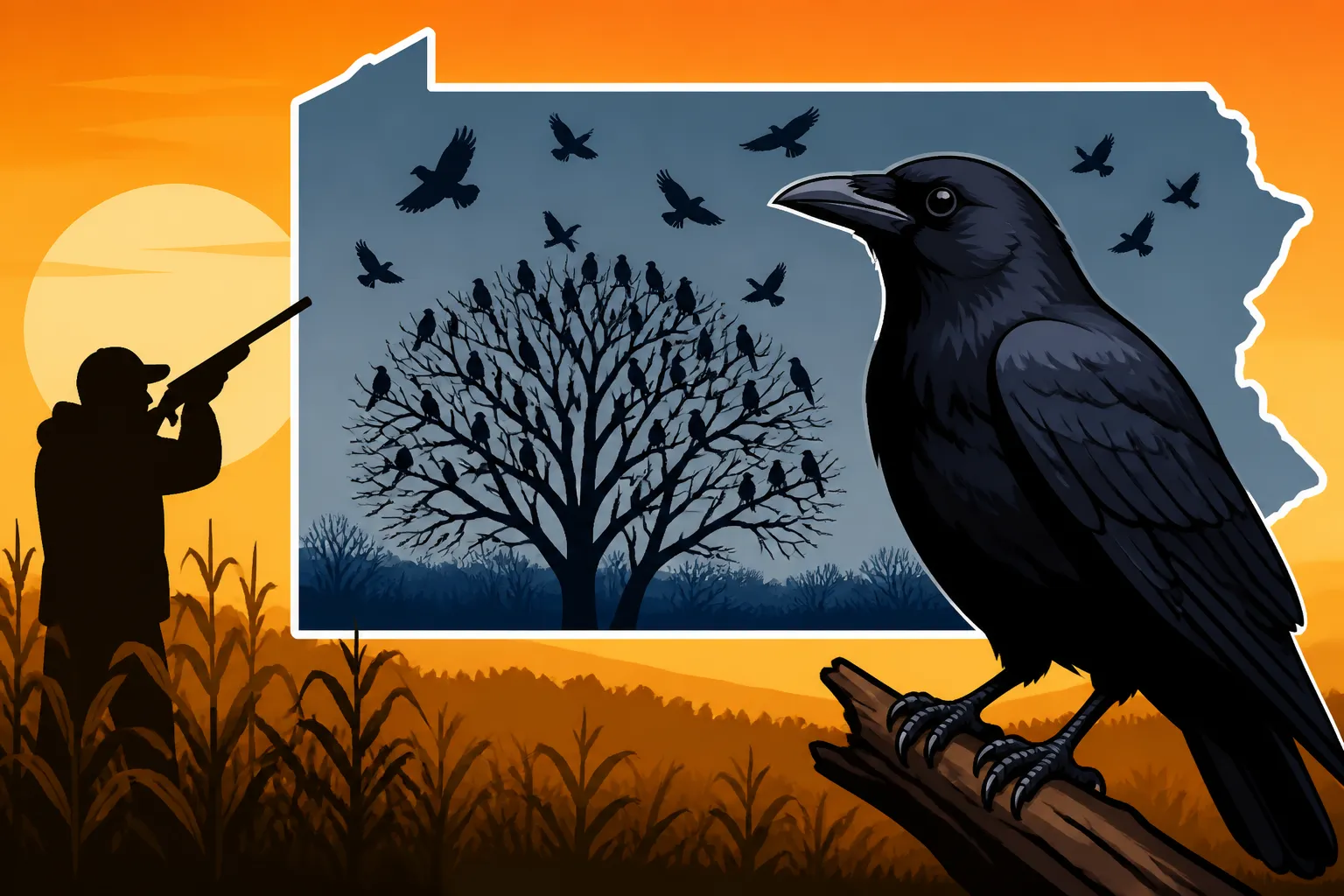
Pennsylvania Crow Roosts and Numbers
One of the most impressive, and sometimes frustrating, natural phenomena for a hunter in Pennsylvania isn't always about deer or bear – it's the sheer number of crows that can descend upon an area. If you've ever driven through a remote rural area around dusk and seen thousands upon thousands of black forms swirling in the sky, you've likely witnessed a crow roost, and understanding these intelligent birds can profoundly impact your hunting approach, whether you're targeting them or just curious about their presence. This guide will dive deep into the fascinating world of crow roosts and population numbers across the Keystone State.
The Enigma of Pennsylvania's Crow Roosts: Where and Why
Crow roosts are truly a sight to behold, especially during the colder months in Pennsylvania. What often starts as a few scattered birds descending from the sky can quickly multiply into thousands, sometimes tens of thousands, individuals gathering in a relatively small area. It's a cacophony of caws and a spectacle of aerial maneuvers, but it’s far more than just a loud gathering; it’s a vital social and survival strategy for these highly intelligent birds.
These massive congregations aren't random. Crows, like many social animals, find safety in numbers. A large roost acts as a fortress against nocturnal predators like great-horned owls, foxes, and coyotes. With so many eyes and ears, the chances of a single crow becoming prey are significantly reduced. Think of it like a huge, noisy slumber party where everyone is on alert, and any threat is quickly identified and mobbed by the group. This collective vigilance is paramount for their survival, especially when food sources become scarcer and temperatures drop.
Beyond safety, roosts also serve as information exchange centers. Crows are known to communicate about food sources, potential dangers, and even optimal foraging locations. When thousands of birds gather, they share knowledge, and younger crows can learn from more experienced ones. It's like a daily briefing before they disperse at dawn to forage. This behavior is most pronounced in late fall and winter when the roosts grow to their largest, often due to resident crows being joined by migrants seeking refuge from colder regions further north. You might find a single roost that serves birds from an incredibly wide radius, with crows flying many miles to reach their communal sleeping spot.
In Pennsylvania, these roosts tend to form in specific types of habitat. Mature coniferous stands, like pine or hemlock plantations, are prime real estate. The dense canopy offers excellent thermal cover, shielding the birds from biting winds and providing a bit of warmth. River bottoms and areas with dense deciduous trees can also be favored, especially if they offer protection from the elements. However, it's not uncommon to find massive crow roosts right on the edges of suburban or even urban areas, where large stands of trees offer shelter and reduced hunting pressure. Their adaptability means they can make a home almost anywhere that provides safety and comfort.
Understanding Pennsylvania's Dynamic Crow Population
Pennsylvania boasts a robust and adaptable crow population. These birds are survivors, thriving in a variety of environments from the deepest forests of the Pennsylvania Wilds to the agricultural heartland of Farm Country Deer Hunting in Southern Pennsylvania and even bustling urban centers. Their numbers fluctuate throughout the year, primarily influenced by breeding success, food availability, and seasonal migration patterns. While it's difficult to get an exact, real-time count, population estimates suggest a healthy and stable presence across the state.
One of the key factors in the crow's success is their omnivorous diet and incredible intelligence. They’ll eat almost anything – insects, carrion, berries, nuts, eggs, small mammals, and even agricultural crops. This dietary flexibility allows them to exploit diverse food sources, making them less vulnerable to localized food shortages that might devastate more specialized species. Their intelligence also plays a huge role; crows are known to use tools, solve complex problems, and even remember individual human faces, which makes them incredibly challenging for hunters and fascinating for observers.
Despite their general resilience, crow populations are not without their challenges. West Nile Virus, for example, had a noticeable, albeit often temporary, impact on crow numbers in the past. Habitat changes, particularly the loss of large, mature woodlands suitable for roosting, can also affect local populations. However, given their adaptability and wide-ranging nature, crows tend to rebound quickly. The Pennsylvania Game Commission monitors crow populations through various surveys, often in conjunction with other migratory bird surveys, to ensure their numbers remain healthy.
From a hunter's perspective, understanding crow numbers is less about conservation and more about opportunity. While crows aren't typically a primary target for most hunters, they do offer an exciting and challenging pursuit. The fact that their seasons are long, often year-round with some limitations (like closed Sundays for migratory birds), speaks to their stable numbers. For hunters looking to hone their calling and shooting skills during off-seasons, or for those who simply enjoy the challenge of outwitting a clever opponent, crows are an abundant resource.
Scouting and Hunting Crow Roosts in the Keystone State
If you're interested in hunting crows, finding their roosts is often the first and most critical step. These birds disperse widely during the day to feed, sometimes traveling many miles, only to converge again at dusk. This predictable pattern is your greatest ally. The best way to locate a roost is simply to listen and watch. Drive quiet backroads, especially in agricultural areas or near large timber blocks, an hour or two before sunset. You’ll start to see individual birds flying in a general direction, often high in the sky. Follow these flight paths, and eventually, you'll reach the main traffic corridors leading to the roost. The sound will become unmistakable – a rising chorus of caws as more and more birds arrive.
Once you’ve identified a potential roosting area, don’t dive straight in. Crows are incredibly wary, and spooking a roost can cause them to move to a new location, ruining your efforts. Instead, observe from a distance. Use binoculars to pinpoint specific trees or sections of woods where they seem to concentrate. Pay attention to their entry and exit routes. This reconnaissance is crucial for planning an effective hunt. Tools like the Using the Pennsylvania Mapping Center or apps like GoHunt can be invaluable here. You can identify large timber blocks, potential access points, and even confirm property lines to ensure you're scouting legally. Detailed aerial photos, similar to how you might Reading Aerial Photos for Big Woods Deer, can reveal the type of canopy cover crows prefer.
Hunting a crow roost isn't about shooting into the birds as they settle. That's generally ineffective, unethical, and against the spirit of fair chase. The most productive method is often to set up along their flight path to or from the roost, or in a nearby feeding area. Crows are keen-eyed, so a good blind is essential. Think natural cover – brush piles, fence rows, or even a pop-up blind brushed in with local vegetation. Decoys, especially "full-bodied" crow decoys, can be incredibly effective when combined with realistic calling. Electronic calls are legal for crows in Pennsylvania and can mimic the distress calls or large gathering sounds that draw birds in.
Remember that crows are intelligent and will quickly learn if your setup isn't convincing. Vary your calling, stay absolutely still, and only take shots at birds within ethical range. This is where patience and observation pay off. Hunting crows effectively is a master class in camouflage and calling, and it's fantastic practice for other forms of Predator and Furbearer Hunting in Pennsylvania.
| Crow Roost Behavior | Scouting Tips | Hunting Considerations |
|---|---|---|
| Winter Concentration | Largest roosts November-March. | Maximize hunter numbers for drives. |
| Seasonal Movement | Roosts break up in spring for nesting. | Focus on smaller family groups. |
| Preferred Habitat | Dense conifer stands, river bottoms. | Use aerial maps (e.g., GoHunt) to identify. |
| Flight Patterns | Predictable paths to/from roost at dawn/dusk. | Set up on flight paths, not directly in roost. |
| Intelligence/Wary | Quickly learn from pressure; recognize threats. | Employ full camo, good blinds, varied calling. |
| Social Communication | Calls indicate danger, food, gathering. | Use electronic calls for distress/gathering sounds. |
Challenges and Rewards of Crow Hunting in Pennsylvania
Hunting crows in Pennsylvania presents a unique set of challenges, precisely because of their intelligence and social structure. They have incredible eyesight, often spotting hunters from hundreds of yards away, and their vocal communication means that one spooked crow can alert every other bird in the vicinity. This makes consistently successful crow hunting a true test of a hunter's skills in concealment, calling, and reading animal behavior. You can't just walk into an area and expect to fill a bag; it requires planning, patience, and often, a little bit of trial and error.
One of the significant advantages for the Pennsylvania hunter, however, is the generous seasons for crows, typically running year-round with specific rules and no daily bag limit. This means you have ample opportunity to hone your skills during times when other game species are out of season. It's a fantastic way to stay sharp, practice your shotgunning, and keep your scouting instincts finely tuned. Check the current Pennsylvania Small Game and Furbearer Seasons for exact dates and any specific regulations. Also, be mindful of Pennsylvania Legal Shooting Hours, as these apply to crows just like other game.
The rewards of crow hunting extend beyond just the sheer volume of targets. There's a deep satisfaction in outsmarting a creature as intelligent as a crow. Successfully luring a flock into range with your calls and decoys, or coordinating a small group hunt to intercept them, can be just as thrilling as a successful deer hunt. It’s also an excellent way to introduce new hunters to the field, as the action can be fast-paced, and the stakes aren’t as high as with larger game. It teaches essential hunting principles like concealment, patience, and shot placement in a dynamic environment.
Furthermore, crows are often considered a nuisance in agricultural areas, where they can cause significant crop damage. By participating in crow hunting, you can contribute to local wildlife management, helping farmers protect their livelihoods. Always remember to seek permission if hunting on private land, especially around Hunting Pennsylvania Farm Country Edges where crows often feed. While not everyone considers crows table fare, some hunters do process them for meat, comparing them to duck or dove in flavor. Ultimately, crow hunting is a unique and rewarding pursuit that offers endless opportunities to improve your hunting craft and enjoy the Pennsylvanian outdoors. If you're looking to challenge yourself, it might be time to put crows on your radar.
Disclaimer
This article is for general informational purposes only and does not constitute professional advice. Laws, prices and regulations vary by location and change over time. Consult a qualified professional for guidance on your specific situation.