How Many Acres Pennsylvania Opens to Hunters
It can feel daunting, sometimes even impossible, to figure out where you can actually hunt in Pennsylvania. With all the talk of private property, posted signs, and ever-changing rules, many hunters worry they'll be left with nowhere to pursue their passion. This guide will cut through that confusion, revealing the impressive expanse of land available to hunters across the Keystone State and equipping you with the knowledge to find your next hunting spot.
The Grand Total of Pennsylvania's Public Hunting Lands
When you look at a map of Pennsylvania, it's easy to assume much of the green space is private, or that public access is limited to a few well-known spots. But the truth is, our state offers a remarkable amount of publicly accessible land for hunting. It's a patchwork quilt of different ownerships and management styles, each contributing significantly to the overall hunting opportunities we enjoy. Understanding this grand total isn't just about a number; it's about appreciating the diverse landscapes and experiences that await.
Understanding the "Big Picture" Numbers
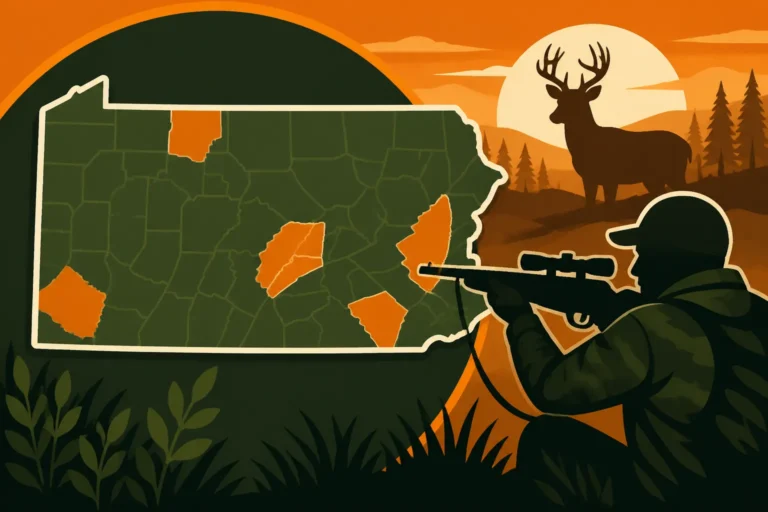
Pennsylvania boasts millions of acres available for public hunting, a figure that often surprises newcomers and even some seasoned hunters. This vast expanse isn't managed by a single entity, which is why it can sometimes feel complex to navigate. The primary contributors to this incredible total are the Pennsylvania Game Commission's State Game Lands, the Department of Conservation and Natural Resources (DCNR) State Forests, and the federally managed Allegheny National Forest. Beyond these major players, smaller tracts like specific State Parks, reservoirs, and lands enrolled in cooperative programs further enhance our access.
These lands collectively represent a tremendous resource. They range from dense, remote "big woods" country in the northern tier to rolling forested ridges in the central part of the state, and even some surprisingly accessible parcels in more developed areas. It's truly a testament to conservation efforts over decades, ensuring that hunting remains a fundamental part of Pennsylvania's heritage. For detailed information on specific areas, tools like the Pennsylvania Mapping Center can be invaluable for visualizing these land ownership types.
Why These Numbers Matter to Hunters
The sheer volume of publicly accessible land directly translates into a wealth of hunting opportunities. It means that whether you're looking for an expansive wilderness experience pursuing a elusive mountain buck or a more accessible spot for small game closer to home, there's likely an option for you. This diversity of habitat supports a healthy population of game animals, from white-tailed deer and black bear to wild turkeys, grouse, and a variety of waterfowl. It's not just about having somewhere to hunt, but having many different kinds of places to hunt, each with its own character and challenges.
Moreover, these extensive public lands help to distribute hunting pressure. While popular spots will always see more activity, the sheer acreage means that diligent hunters willing to walk a little further, or explore less obvious corners, can often find solitude and undisturbed game. It reinforces the idea that even in a heavily populated state like Pennsylvania, the spirit of the hunt and connection to wild places is alive and well, waiting to be discovered across these millions of acres.
Diving into State Game Lands: Pennsylvania's Hunting Backbone
If there's one category of public land that epitomizes hunting in Pennsylvania, it's our State Game Lands (SGLs). These tracts, managed by the Pennsylvania Game Commission (PGC), are specifically acquired and maintained for wildlife habitat and public hunting, trapping, and fishing. They are the core of our public hunting estate, and understanding them is crucial for any hunter in the state.
The History and Purpose of State Game Lands
The concept of State Game Lands in Pennsylvania dates back over a century, driven by visionary conservationists who recognized the need to secure land for future generations of hunters and wildlife. The PGC acquires these lands primarily through funds generated from hunting license sales and the federal Pittman-Robertson Act. This self-funding mechanism means that hunters themselves are directly contributing to the expansion and maintenance of these invaluable areas. When you buy a Pennsylvania Hunting Licences and What They Cost, a portion of that fee goes straight back into habitat work and land acquisition, making you a direct investor in our hunting future.
The purpose of SGLs is clear: to provide and enhance wildlife habitat and public access. This means active management, including timber sales, prescribed burns, food plots, and wetland restoration. These efforts are designed to create optimal conditions for a variety of game species, ensuring healthy populations. For hunters, this translates into diverse cover, reliable food sources, and predictable patterns of animal movement, making SGLs incredibly productive hunting grounds.
Navigating Rules and Regulations on SGLs
While SGLs offer open access, they do come with specific rules and regulations that hunters need to be aware of. These rules are put in place to ensure safety, promote fair chase, and protect the habitat. For instance, detailed regulations govern everything from vehicle access and parking to camping, treestand placement, and even the use of trail cameras. It's not uncommon for hunters to face fines or lose hunting privileges for unknowingly violating these rules, so taking the time to understand them is paramount.
One key aspect is the requirement for hunter orange during specific seasons, and how many square inches are needed. Another might be restrictions on cutting vegetation for shooting lanes or building ground blinds, as all habitat manipulation is typically reserved for the PGC. Familiarizing yourself with the Pennsylvania Game Lands Rules before you head out is not just good practice, it's essential for a safe and legal hunt. Always check the latest PGC digest or website for updates, as regulations can sometimes change between seasons.
Key Resources for Finding and Using SGLs
Finding and effectively using State Game Lands has never been easier, thanks to modern technology and accessible resources. The Pennsylvania Game Commission provides detailed maps, often available for free online or for purchase in physical format, which delineate SGL boundaries, access roads, parking areas, and habitat features. These maps are invaluable for planning your hunt and understanding the terrain.
Beyond the PGC's own offerings, digital mapping applications have revolutionized how hunters interact with public land. Tools like onX Hunt and GoHunt provide detailed satellite imagery, topographic maps, and crucially, property line overlays that clearly show public and private land boundaries. These apps can be used on your smartphone or tablet, allowing you to see exactly where you are in relation to SGL lines, often showing features like habitat projects or food plots. Using onX Layers for Pennsylvania Land Status can give you an edge in scouting, helping you pinpoint hidden pockets of public ground or identify optimal entry routes. It's a powerful way to make the most of the immense SGL acreage.
Exploring State Forests and the Allegheny National Forest
Beyond the dedicated State Game Lands, Pennsylvania offers a significant amount of public hunting access through its State Forests and the unique federally managed Allegheny National Forest. These lands, while different in their primary management objectives, are equally vital for providing diverse hunting experiences, particularly for those who love the solitude of true big woods hunting.
State Forests: Wild and Unspoiled Opportunities
Pennsylvania's State Forests, managed by the Department of Conservation and Natural Resources (DCNR), cover an astounding amount of acreage, often larger than individual State Game Lands. These forests are managed for a broader range of uses than SGLs, including timber production, recreation (hiking, camping, mountain biking), water resource protection, and, of course, public hunting. This multi-use approach means that while hunting is a permitted activity, you might encounter other users in the woods, particularly on well-traveled trails.
Hunting in State Forests often means tackling vast, unbroken tracts of timber, which can be both challenging and rewarding. It's the kind of place where you can truly get away from it all and immerse yourself in the wilderness. The terrain can be rugged, featuring steep ridges, deep hollows, and dense cover. However, this expansive, often less-pressured environment can hold some excellent game, particularly for deer, bear, and turkey. Planning a trip to Hunting Pennsylvania State Forests involves understanding the vastness and preparing for a more physically demanding hunt.
The Allegheny National Forest: A Unique Western Pennsylvania Gem
In the northwestern part of the state, Pennsylvania is home to the Allegheny National Forest (ANF), a sprawling federal landholding distinct from state-managed lands. Encompassing hundreds of thousands of acres, the ANF offers a different flavor of public land hunting. Managed by the U.S. Forest Service, its rules and regulations, while largely aligning with state hunting laws, can have specific nuances related to federal land use, such as dispersed camping or vehicle access.
The ANF is characterized by its mixed hardwood and conifer forests, interspersed with clear-cuts and regeneration, offering varied habitats. It's particularly renowned for its deer, bear, and turkey hunting, and its vastness provides ample room for adventurous hunters to explore. Allegheny National Forest Hunting can be an incredible experience, offering opportunities to chase game in a truly wild setting, often with fewer hunters per square mile than some of the more accessible state lands. The rugged terrain and extensive road networks, some of which are gated during hunting season, require careful scouting and planning.
Distinguishing Rules for State Forests vs. ANF
While both State Forests and the Allegheny National Forest provide abundant hunting opportunities, there are important distinctions in their management and specific rules. DCNR State Forests are under state jurisdiction, and while they generally follow PGC hunting regulations, they might have their own specific rules regarding camping, motorized vehicle use on specific roads, or the size of firewood you can gather. It’s always wise to check the DCNR website for the specific forest district you plan to hunt in.
The Allegheny National Forest, being federal land, operates under a combination of federal regulations (related to forest use) and state hunting laws (dictated by the PGC). This means that while your Pennsylvania hunting license is valid, you might encounter additional regulations regarding forest road access, food storage (especially in bear country), or even restrictions on certain types of blinds. It's crucial to consult both the PGC digest and the ANF's official website or local ranger district office before heading afield to ensure compliance with all applicable rules.
Here's a quick comparison of Pennsylvania's major public land types:
| Land Type | Managing Agency | Primary Focus | General Rules | Best For |
|---|---|---|---|---|
| State Game Lands (SGL) | PA Game Commission (PGC) | Wildlife habitat, public hunting/trapping | Specific PGC regulations, habitat-focused | Diverse game, habitat managed for hunting |
| State Forests | PA Dept. Conservation & Natural Res. | Timber, water, recreation, hunting | DCNR rules + PGC hunting regs, multi-use | Big woods, solitude, diverse recreation |
| Allegheny National Forest | U.S. Forest Service | Timber, recreation, water, hunting | USFS regs + PGC hunting regs, federal land | Wilderness feel, expansive, remote hunting |
| State Parks (specific) | PA Dept. Conservation & Natural Res. | Recreation, conservation, limited hunting | DCNR rules specific to each park + PGC regs | Accessible, sometimes limited area, specific |
| Hunter Access Program | PGC (cooperative with private owners) | Private land access for hunters | PGC rules + landowner conditions | Farm country, controlled access, permission |
Other Significant Public and Accessible Lands
While State Game Lands, State Forests, and the Allegheny National Forest form the bulk of Pennsylvania's public hunting acreage, there are other important categories that contribute significantly to the total, offering specialized opportunities or expanding access in areas where large tracts of public land are scarce. Don't overlook these often-valuable options.
State Parks and Their Specific Hunting Rules
Most people think of Pennsylvania State Parks as places for hiking, picnics, and camping, and for good reason – that's their primary function. However, many State Parks across the commonwealth do allow hunting, often on significant portions of their acreage, though usually with very specific rules and restrictions. The hunting allowed often depends on the park's size, location, and primary management objectives. It's not a free-for-all, and you can't just assume hunting is permitted everywhere within a park boundary.
These areas can be excellent for those looking for less pressure, or for specific game like deer to help manage local populations. Rules might include designated hunting zones, specific entry and exit points, prohibitions on certain firearm types, or limitations on hunting during peak recreational seasons. For instance, Pennsylvania State Park Hunting Rules will detail which areas are open, what species can be hunted, and any special permits or registration required. It's vital to research the specific park you intend to hunt, as rules vary widely from park to park and are rigorously enforced to ensure visitor safety and resource protection.
The Hunter Access Program: Opening Private Doors
Beyond purely public lands, Pennsylvania also has an ingenious initiative called the Hunter Access Program (HAP). This program, managed by the PGC, works with private landowners to open up their properties to public hunting. Landowners voluntarily enroll their acreage, often in exchange for habitat assistance, signage, and increased enforcement of trespass laws by the PGC. For hunters, it means gaining access to private farm fields, woodlots, and other properties that would otherwise be off-limits.
The HAP is especially critical in regions where traditional public lands are sparse, such as the rich agricultural areas of southeastern and southcentral Pennsylvania. These lands can offer fantastic opportunities for deer, turkey, and small game. When hunting HAP lands, remember that while you have permission to be there, you are still on private property. Respect the landowner's specific conditions, such as parking in designated areas, avoiding crop fields, or abiding by any "safety zones" around buildings or livestock. The program is a lifeline for many hunters, especially those without private land connections, and is a wonderful example of how cooperation can expand Getting Private Land Permission in Pennsylvania.
Federal Lands Beyond the ANF
While the Allegheny National Forest is the largest and most well-known federal landholding open to hunting in Pennsylvania, there are other smaller federal properties that may offer hunting opportunities. These can include Army Corps of Engineers land around certain reservoirs, National Wildlife Refuges (with very specific and often limited hunting seasons), and portions of National Park Service land (though hunting is generally prohibited in designated national parks, specific units like National Recreation Areas might have exceptions).
These additional federal lands often have highly specific regulations that combine federal land management rules with Pennsylvania's hunting laws. For example, a Corps of Engineers lake might allow waterfowl hunting in certain zones, but prohibit all other forms of hunting. National Wildlife Refuges that allow hunting will have their own permit systems, bag limits, and season dates that can differ from statewide regulations. Always do your homework. Check with the managing federal agency directly, alongside the PGC regulations, to understand the exact scope of hunting opportunities and restrictions on these unique tracts.
Maximizing Your Access: Tools and Mindset
Having millions of acres available is fantastic, but actually finding and effectively hunting those acres requires more than just a general understanding. It demands the right tools, a proactive mindset, and a commitment to responsible hunting practices. These elements combine to turn vast numbers into tangible hunting success.
Leveraging Digital Mapping Tools
In today's hunting world, digital mapping applications are no longer a luxury; they are an essential tool for maximizing your access to public land. Services like onX Hunt and GoHunt have transformed how hunters scout, navigate, and plan their hunts. These apps offer layers that clearly show public and private land boundaries, ownership information, topographic features, aerial imagery, and even historic fire or timber cut data. This level of detail, right in your pocket, is incredibly empowering.
Imagine being able to identify a remote finger of State Game Land extending into private timber, or finding a subtle bench on a State Forest mountain that traditional paper maps might miss. These apps allow you to mark waypoints, track your movements, and stay safely on public ground, avoiding accidental trespass. They are invaluable for Scouting Pennsylvania Public Land Before Season, helping you identify potential bedding areas, travel corridors, and food sources before you ever set foot in the woods. Learning to use these tools effectively is perhaps the single greatest step you can take to unlock more hunting opportunities.
The Importance of Scouting and Local Knowledge
Even the best digital maps are just a starting point. Nothing, absolutely nothing, replaces boots-on-the-ground scouting and the accumulation of local knowledge. Public lands, especially the vast State Forests and the ANF, are dynamic environments. Timbering operations, natural events like windstorms, changes in acorn crops, or even subtle shifts in deer travel patterns can all influence where game will be. Getting out there before the season, or even during off-season months, allows you to observe these changes firsthand.
Walking potential hunting areas, looking for fresh sign, understanding the lay of the land, and identifying pinch points or funnels are critical. You'll learn how Wind and Thermals on a Ridge might impact deer movement, or where a particular flock of turkeys prefers to roost. Beyond your own observations, connecting with other ethical hunters, joining local conservation groups, or simply spending time in the area can provide invaluable insights. This blend of technological prowess and traditional woodsmanship is the ultimate strategy for success on Pennsylvania's public hunting lands.
Respectful Private Land Access
While this guide has focused heavily on public lands, it's worth reiterating the importance of respectful private land access, even when it's part of a program like the Hunter Access Program. A significant portion of Pennsylvania remains privately owned, and building good relationships with landowners can unlock even more hunting opportunities. It's a simple truth that the vastness of public land is complemented by the unique opportunities often found on smaller private tracts, especially in our rich farm country.
Always seek explicit permission before hunting on private property, even if it appears unposted or abandoned. A polite knock on the door, a clear explanation of your intentions, and a willingness to abide by any specific requests from the landowner can go a long way. Offering to help with chores, sharing some of your harvest, or simply leaving the property better than you found it can cement these relationships for years to come. Ultimately, ensuring we have millions of acres to hunt involves both securing public land and fostering strong, respectful connections with private landowners.
Disclaimer
This article is for general informational purposes only and does not constitute professional advice. Laws, prices and regulations vary by location and change over time. Consult a qualified professional for guidance on your specific situation.