Pennsylvania State Game Lands Rules
Navigating the vast expanse of Pennsylvania's State Game Lands can feel like stepping into a labyrinth of regulations, leaving many hunters scratching their heads about what's truly allowed. It’s easy to get overwhelmed trying to understand all the specific rules for everything from parking your truck to hanging a treestand. This comprehensive guide is here to untangle the complexities, offering clear, actionable insights into the rules and etiquette that govern hunting on these invaluable public lands, ensuring your time afield is both legal and enjoyable.
Understanding State Game Lands: Your Public Hunting Ground
State Game Lands (SGLs) are a cornerstone of Pennsylvania's hunting heritage, offering millions of acres of public access to hunters, trappers, and outdoor enthusiasts. But what exactly are they, why were they created, and how are they maintained? Understanding these basics helps you appreciate and respect these vital resources.
What Are State Game Lands?
Think of State Game Lands as Pennsylvania's gift to its outdoor community – vast tracts of land, managed primarily for wildlife and public recreation. These aren't like state parks, which often have more restrictive rules and are geared towards diverse recreational activities, nor are they simply large forests. SGLs are specifically acquired and managed by the Pennsylvania Game Commission (PGC) with wildlife habitat and public hunting, trapping, and fishing as their top priorities. They span the entire state, from the rugged mountains of the northern tier to the rolling hills and agricultural areas of the south. These areas provide critical habitat for everything from white-tailed deer and black bear to wild turkeys, grouse, and countless other species, ensuring robust hunting opportunities for current and future generations.
Why We Have State Game Lands
The concept of State Game Lands arose from a clear vision: to ensure that hunters and outdoor enthusiasts would always have a place to pursue their passions, regardless of private land development or restrictive access. Historically, much of Pennsylvania's wilderness was heavily logged and then became private property, limiting access for many. The PGC began acquiring these lands in the early 20th century, recognizing the need for dedicated public hunting grounds and habitat restoration. The goal was to secure and manage lands specifically for wildlife, allowing for regulated hunting and other outdoor activities. This proactive approach has preserved millions of acres, creating a priceless legacy that directly benefits hunters by providing accessible, well-managed wildlife habitat. These lands are a testament to forward-thinking conservation.
Funding and Management
Ever wondered how these incredible resources are paid for and maintained? It's largely thanks to hunters themselves! The acquisition, maintenance, and management of State Game Lands are primarily funded through hunting and furtaker license sales. This "user-pays, user-benefits" model is a powerful engine for conservation, ensuring that the fees paid by hunters directly contribute to the lands and wildlife they cherish. Beyond license fees, federal excise taxes on hunting equipment and ammunition, through the Pittman-Robertson Act, also provide significant funding. This collaborative funding allows the PGC to undertake crucial habitat improvement projects, maintain roads and infrastructure, and conduct wildlife research and surveys. When you purchase your Pennsylvania hunting license, you're not just buying a permit to hunt; you're investing directly in the future of these invaluable public lands. For more on the financial aspects, check out How State Game Lands Are Funded.
General Rules and Regulations for Hunters
Hunting on State Game Lands comes with a set of specific rules designed to ensure safety, fair chase, and sustainable wildlife populations. Familiarizing yourself with these regulations is not just about avoiding a fine; it's about being a responsible and ethical hunter.
Licensing and Tagging Requirements
Before you even step foot on State Game Lands with a firearm or bow, you absolutely must possess the proper Pennsylvania hunting licenses and any required permits. This includes your general hunting license, which is the baseline requirement for most game, as well as any specific tags for species like deer (antlered and antlerless), bear, or turkey. It's not enough to simply have them; they must be valid for the current season and species you are pursuing. For example, if you plan to harvest an antlerless deer, you need a WMU-specific antlerless license for the unit you are hunting. Make sure your licenses are signed and carried with you at all times, ready for inspection. Properly tagging your game immediately after a kill is also non-negotiable and crucial for legal compliance. Details on what you need can be found in Pennsylvania Hunting Licences and What They Cost.
Safety Zones and Hunter Orange
Safety is paramount on State Game Lands, and understanding safety zones is critical. Safety zones are areas around occupied buildings, schools, and playgrounds where it is unlawful to hunt or discharge a firearm. Generally, this means no hunting within 150 yards of an occupied building without permission. For archers, this zone is often 50 yards. Always be aware of your surroundings, especially when hunting near private property boundaries.
Hunter orange requirements are another vital safety measure. The Pennsylvania Game Commission mandates specific amounts of fluorescent orange clothing for certain seasons and species, designed to make hunters visible to each other. For example, during the firearms deer season, a certain amount of fluorescent orange must be worn on the head, chest, and back. Even during archery season, while not always legally required, wearing some orange while walking to and from your stand is just plain smart. Always double-check the current hunting digest for the exact requirements for the season you're in.
Legal Hunting Hours and Methods
Hunting on State Game Lands is restricted to specific legal hours, which vary depending on the time of year and the species being hunted. Generally, these hours run from a half-hour before sunrise to a half-hour after sunset, though exceptions exist for certain species like spring gobblers where shooting hours extend later in the season. It’s your responsibility to know these times, which are published annually in the Pennsylvania Hunting & Trapping Digest.
Beyond hours, legal hunting methods are also strictly defined. This includes restrictions on baiting, using artificial lights, or employing certain types of firearms or archery equipment in particular seasons or areas. For instance, while semi-automatic rifles are now legal for big game in many areas, there might be caliber or magazine capacity restrictions. Make sure the firearm or bow you are using is legal for the season and species. Using an illegal method, even unknowingly, can lead to significant penalties. Always consult the most current digest to confirm legal shooting hours and permitted methods for your hunt.
Accessing and Navigating State Game Lands
Pennsylvania's State Game Lands encompass an incredible amount of terrain, and knowing how to properly access and navigate these areas is key to a successful and legal hunt. From designated parking areas to understanding property lines, proper planning goes a long way.
Vehicle and Parking Regulations
While State Game Lands offer extensive access, vehicle use is tightly regulated to minimize disturbance and maintain habitat integrity. You can't just drive anywhere you please. Vehicles are generally restricted to designated roads and parking areas. Look for the iconic yellow PGC gates; these typically mark roads that are closed to public vehicle traffic beyond a certain point, though walking or bicycling behind them is usually permitted. Parking is usually allowed in designated parking lots, along public roads where it doesn't obstruct traffic, or in pull-offs clearly marked as parking areas. Never block gates, service roads, or private driveways. Improper parking can result in fines or even towing, which nobody wants after a long day in the woods. Always be mindful of signed restrictions or temporary closures, which can happen for habitat work or road maintenance. For more details on this, see Parking Rules on State Game Lands.
Foot Traffic and Trail Use
Once you leave your vehicle, the vast majority of State Game Lands are open for foot traffic. This means you can walk, hike, or even mountain bike on most roads, trails, and through the woods. Many SGLs have extensive networks of old logging roads and maintenance trails, which are excellent for accessing deeper country. While these trails are great for covering ground, remember they are primarily for access, not necessarily maintained like hiking trails in state parks. Expect uneven terrain, wet spots, and obstacles. While generally open, some specific areas, such as designated refuges or critical wildlife breeding areas, might have temporary or permanent restrictions on entry, so always keep an eye out for signage.
Using Mapping Tools Effectively
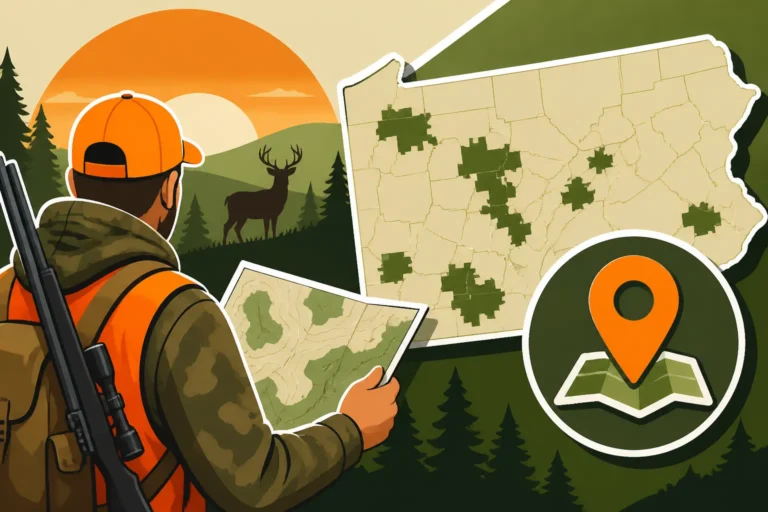
In today's hunting world, digital mapping tools are an absolute game-changer, especially on sprawling State Game Lands. Services like onX Hunt and GoHunt provide detailed satellite imagery, topographic maps, and crucial land ownership overlays that can save you countless hours of scouting and prevent accidental trespass. With a good mapping app, you can clearly see the boundaries of State Game Lands, identify private inholdings, locate parking areas, and even mark potential stand sites, rubs, and scrapes.
These tools are invaluable for planning your entry and exit routes, understanding terrain features like benches and saddles, and determining exactly where you are relative to property lines. Even with a physical map and compass, having a digital backup with GPS capabilities is a massive advantage, particularly in areas with poor cell service where you might have downloaded offline maps beforehand. Knowing exactly where the SGL boundary ends and private land begins is critical for staying legal and respectful. For further navigation tips, consider Using the Pennsylvania Mapping Center.
Treestands, Blinds, and Scouting Practices
Pennsylvania hunters often rely on treestands and ground blinds, and responsible scouting is key to success. However, specific rules apply when using these tools on State Game Lands.
Temporary vs. Permanent Structures
On State Game Lands, the rule of thumb for hunting structures is "temporary." This means treestands and ground blinds must be removed within a specific timeframe after the close of the hunting season in which they were used. Generally, this means within a couple of weeks, but always confirm the exact dates in the annual hunting digest. You cannot leave a stand or blind up indefinitely, nor can you construct permanent structures like enclosed box blinds or tree houses.
The reason for this rule is twofold: to ensure public access for all and to prevent damage to trees and the landscape. When setting up a treestand, avoid damaging trees with large screws or bolts. Many hunters opt for hang-on stands with climbing sticks or self-climbing stands, ensuring minimal impact. Ground blinds must also be removed, and any materials used to brush them in should be natural and biodegradable, or removed with the blind itself. Leaving behind stands or blinds is considered littering and can result in fines. More specifics can be found under Treestand Rules on Pennsylvania Game Lands.
| Structure Type | Legality on SGLs | Notes |
|---|---|---|
| Portable Treestands | Permitted | Must be removed seasonally (check digest for exact dates). |
| Ladder Stands | Permitted | Must be removed seasonally. Often bulkier to transport. |
| Climbing Stands | Permitted | Must be removed seasonally. Good for quick adjustments. |
| Ground Blinds | Permitted | Must be removed seasonally. Any brush-in material must be natural. |
| Permanent Blinds | Not Permitted | No building structures that cannot be easily moved and removed. |
| Screw-in Steps | Not Permitted | Generally prohibited due to tree damage. Use strap-on steps or sticks. |
Trail Cameras and Scouting Etiquette
Trail cameras have become an indispensable scouting tool for many Pennsylvania hunters, and their use is generally permitted on State Game Lands. However, there are some important considerations for proper etiquette and legal compliance. First, your camera must be clearly marked with your customer identification number (CID) from your hunting license, or your name and address. This ensures that if found or if there's an issue, the owner can be identified.
When placing cameras, always be mindful of others. Avoid placing them directly over active trails where they could be easily seen or tampered with by other hunters or hikers. Place them discreetly, and always retrieve them promptly after the season or when you're finished scouting. Remember, these are public lands, and while you might be focused on your specific area, others have a right to use and enjoy the same space. Leaving cameras out for extended periods, especially outside of hunting seasons, can sometimes be an issue, so it's best to retrieve them within a reasonable timeframe. Ethical camera use means minimal impact and respect for other users. More on this topic can be explored in Trail Camera Rules on Game Lands.
Food Plots and Habitat Manipulation
This is where the distinction between private and public land hunting rules becomes very clear: food plots and any form of habitat manipulation by individual hunters are strictly prohibited on State Game Lands. The Pennsylvania Game Commission manages habitat extensively across SGLs, undertaking projects like timber stand improvement, prescribed burns, and planting food plots, but these are all done by the PGC directly.
As an individual hunter, you cannot plant crops, cut down trees, clear brush, or introduce any non-native species onto State Game Lands. This includes activities like hinge cutting trees to create bedding areas or spreading mineral blocks or bait. These actions are considered illegal habitat manipulation or baiting and can result in significant penalties. The entire purpose of State Game Lands is for the PGC to manage the habitat for the benefit of all wildlife and public hunting, not for individual hunters to alter the landscape to create their own hunting advantage. Respect the work the PGC does and refrain from any attempts to "improve" the habitat yourself.
Camping, Fires, and Other Recreational Uses
State Game Lands are not just for hunting and trapping; they're also open to a wide array of other recreational activities, but with rules in place to protect the land and ensure safety for all users.
Camping Rules on Game Lands
While rustic camping might be part of your hunting tradition, it's crucial to understand the specific rules for camping on Pennsylvania State Game Lands, which can differ significantly from state parks or state forests. Generally, primitive camping is permitted on SGLs, but often with restrictions on duration and location. For example, you typically cannot stay for more than one or two consecutive nights without a special permit. You also can't set up permanent camps or leave structures behind.
The idea is to allow temporary, low-impact overnight stays. Always look for signage in specific SGLs, as local rules can sometimes apply. Remember, "primitive" means no developed campsites, no water hookups, and you must pack out everything you pack in, leaving no trace. This also means no excessive clearing of vegetation for your camp. If you plan an overnight stay, ensure you're fully aware of the regulations to avoid a citation. For additional details, consult Camping Rules on Pennsylvania Public Land.
Fires and Firewood Collection
The use of campfires on State Game Lands is generally permitted, but with important caveats and a strong emphasis on safety. Fires must be contained to a small, manageable size and kept clear of flammable vegetation. It's always best to build fires in existing fire rings if available, or create a temporary one that can be fully extinguished and dispersed when you leave. During dry periods or high fire danger, open fires may be prohibited entirely, so always check for current burn bans or restrictions before lighting one.
Collecting firewood is usually allowed from dead and downed timber, but you cannot cut standing trees, even dead ones, for firewood. The goal is to utilize what's already on the ground without impacting the forest ecosystem. Always ensure your fire is completely out – cold to the touch – before you leave it unattended. A responsible campfire is a cornerstone of a safe and enjoyable outdoor experience.
Other Permitted Activities
Beyond hunting and trapping, State Game Lands welcome a host of other outdoor pursuits. Hiking, bird watching, mushroom foraging, and even horseback riding are often permitted on designated trails or roads. Many SGLs also offer opportunities for target shooting at designated ranges, which are managed by the PGC. However, you can't just set up a target anywhere; you must use established ranges and follow all safety protocols. Target Shooting on Pennsylvania Game Lands has more information on this.
Dog training for hunting is another popular activity, with specific areas sometimes designated for this purpose, particularly for bird dogs. Again, always check for specific regulations in the SGL you plan to visit, as certain areas or times of year might have restrictions. The key is to respect other users and wildlife, and always follow the "leave no trace" principles, ensuring these lands remain pristine for everyone.
Respecting Wildlife and the Environment
Hunting on State Game Lands is a privilege that comes with the responsibility to protect both the wildlife and the natural environment. Ethical conduct and adherence to regulations, particularly regarding disease management, are critical for preserving these valuable resources.
Litter, Waste, and Ethical Conduct
One of the most fundamental rules of using State Game Lands, or any natural area, is to pack out everything you pack in. Leaving behind trash, spent casings, food wrappers, or any other debris is not only illegal but deeply disrespectful to the land and fellow outdoor enthusiasts. The principle of "Leave No Trace" is not just a suggestion; it's a code of conduct that helps preserve the wild character of these areas. This includes disposing of game carcasses ethically, usually by dragging them well away from trails, roads, and waterways, allowing nature to reclaim them.
Ethical conduct extends beyond litter. It means respecting others' space, avoiding excessive noise, and always prioritizing safety. It also means understanding and adhering to fair chase principles – giving the animal a sporting chance, ensuring clean kills, and promptly recovering any game you harvest. Maintaining a high standard of ethical behavior is crucial for the public perception of hunting and for the long-term health of our wild places.
CWD and Carcass Movement Rules
Chronic Wasting Disease (CWD) is a serious concern for Pennsylvania's deer and elk populations, and the Pennsylvania Game Commission has implemented specific rules on State Game Lands to help prevent its spread. If you harvest a deer or elk within a CWD Disease Management Area (DMA), there are strict regulations regarding the movement of certain carcass parts out of that zone. Typically, the brain, spinal cord, and certain other high-risk tissues cannot be removed from the DMA. This means hunters often need to process their deer within the DMA or transport only allowed parts (like boned-out meat, cleaned skull plates, or capes) out of the area.
Understanding these rules is not just a recommendation; it’s a legal requirement designed to protect the health of Pennsylvania's wildlife. Failing to comply can result in fines and, more importantly, contribute to the spread of a devastating disease. Before hunting in any area, especially those near or within a DMA, always check the current CWD regulations in the hunting digest or on the PGC website. Your vigilance helps protect the herd. Learn more in Pennsylvania CWD Carcass Rules.
Habitat Preservation and Conservation
Every hunter, by definition, is a conservationist, and our actions on State Game Lands directly impact habitat preservation. Beyond not littering and following CWD rules, this responsibility extends to understanding and appreciating the habitat management efforts undertaken by the PGC. From timber harvests designed to create early successional habitat to wetland restoration projects, these efforts are meticulously planned to benefit a diversity of wildlife.
Hunters play a crucial role by simply being good stewards of the land: reporting suspicious activities, respecting habitat closures, and understanding that our presence has an impact. Avoid driving off designated roads, disturbing sensitive areas, or otherwise interfering with natural processes. By working together and adhering to these rules, we ensure that Pennsylvania's State Game Lands remain vibrant, healthy ecosystems supporting abundant wildlife and providing unparalleled outdoor opportunities for generations to come.
Disclaimer
This article is for general informational purposes only and does not constitute professional advice. Laws, prices and regulations vary by location and change over time. Consult a qualified professional for guidance on your specific situation.