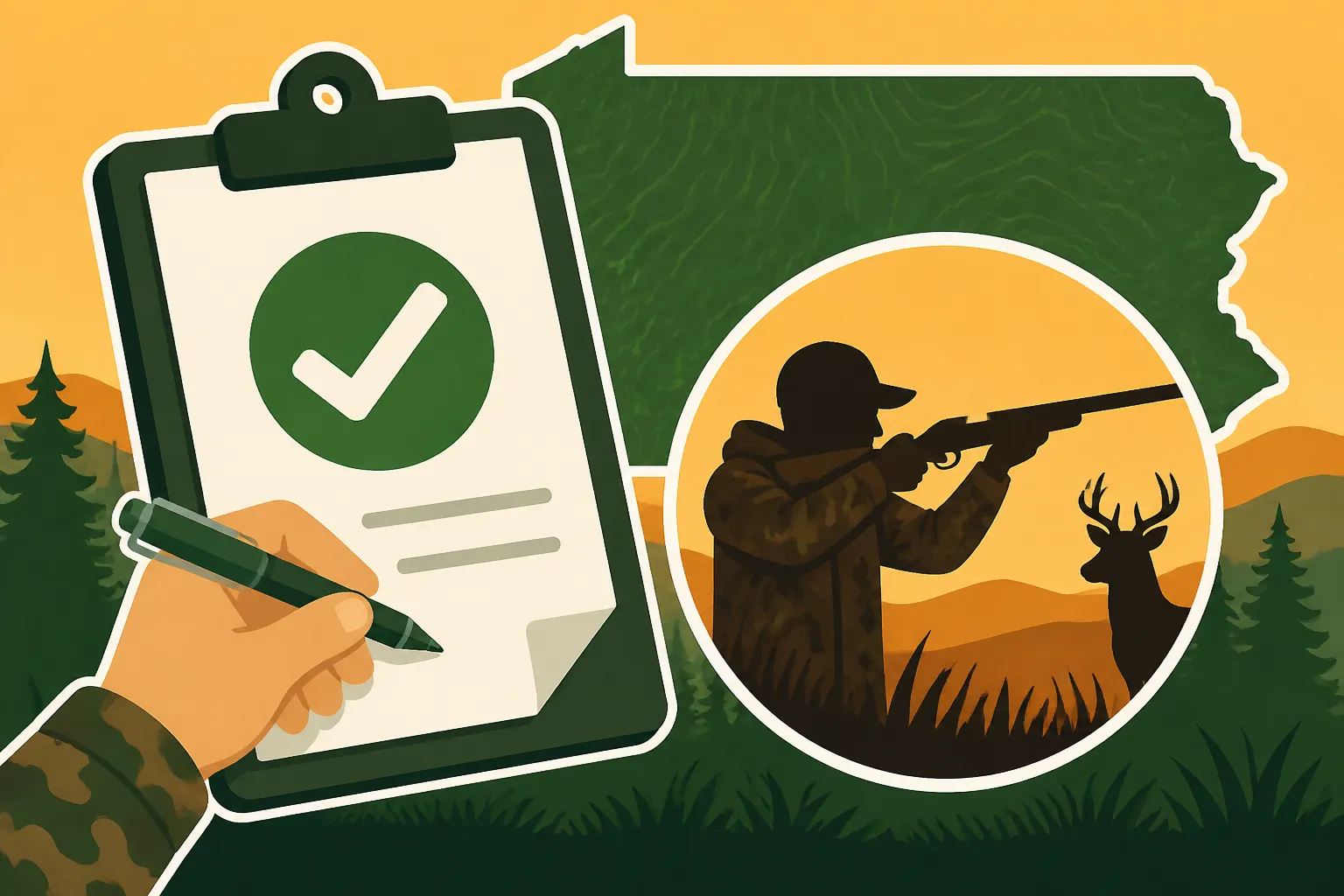
Written Permission for Sunday Hunting
It can be incredibly frustrating to finally have a Sunday free to chase whitetails or turkeys in Pennsylvania, only to realize the rules for private land access on that day are different and more stringent than any other. Many hunters, especially those new to the state or those who primarily hunt public land, get tripped up by the requirement for written permission. This comprehensive guide will walk you through exactly what you need to know about securing and carrying written permission for Sunday hunting on private property in Pennsylvania, ensuring you can enjoy your time afield without any unwelcome surprises.
The Evolution of Sunday Hunting in Pennsylvania
For decades, Pennsylvania was one of the last holdouts for Sunday hunting, a frustrating relic of antiquated "blue laws" that many hunters felt unfairly limited their time in the woods. This changed significantly, thankfully, a few years ago. The Pennsylvania Game Commission (PGC) and state lawmakers heard the calls for more opportunities, especially for working hunters who often only had weekends to pursue their passion.
Initially, the changes were gradual. One Sunday was added for archery deer, another for firearms deer, and a third for bear season. Slowly, more Sundays were approved, creating new chances to be in the field. However, this expansion didn't come without caveats. One of the most significant stipulations, born from concerns of private landowners, was the requirement for explicit written permission to hunt on private land on Sundays. This rule aimed to protect property rights and prevent an influx of uninvited hunters, a valid concern for many farmers and landowners who value their privacy. It was a compromise, a way to expand hunting opportunities while addressing landowner anxieties, and it’s something every hunter needs to understand deeply. It's a different beast than hunting during the week or on public land, where implied permission might be assumed by merely not seeing "No Trespassing" signs, or where explicit permission isn't needed at all on state lands.
This nuance is why understanding the specific requirements for Sunday Hunting Rules in Pennsylvania is so vital, especially when considering Which Sundays Are Now Open in Pennsylvania for your chosen game species. Don't assume the rules are uniform across all days or land types; always double-check.
Why Written Permission is Critical on Private Land for Sunday Hunting
The primary reason for the written permission mandate on private land during Sunday hunts stems directly from a legislative compromise. When the state legislature debated expanding Sunday hunting, a significant concern raised by agricultural groups and private landowner associations was the potential for increased trespass and diminished property rights. Historically, Sunday hunting bans offered landowners a day of respite from hunting pressure. Opening Sundays could, in their view, lead to a free-for-all, with hunters potentially wandering onto properties without permission.
To gain enough support to pass the Sunday hunting expansion, a specific safeguard for private landowners was included: hunters must possess written permission from the landowner to hunt on their property on Sundays. This isn't just a suggestion; it's a legal requirement. Without it, you could be cited for trespassing, even if you hunt that property routinely on weekdays without a written note. The law makes a clear distinction: verbal permission, which might suffice on weekdays if not explicitly posted, is not enough for Sunday hunting. This is a huge shift in precedent and one that every hunter needs to engrave into their memory. It’s about respect for private property and maintaining a good relationship between hunters and landowners, which is paramount for the future of hunting in our state.
Moreover, this rule puts the onus squarely on the hunter to prove they have permission, rather than on the landowner to prove they don't want you there. This protects landowners from the burden of constantly policing their property on Sundays. For a detailed understanding of landowner expectations, it helps to review What Pennsylvania Trespass Law Requires.
What Constitutes Valid Written Permission
So, you know you need it, but what exactly does "written permission" entail? This isn't just a scribble on a napkin. To be legally sound and spare you a potential headache from a game warden, your written permission should be clear, comprehensive, and readily available. Think of it as a mini-contract between you and the landowner.
Here are the essential elements your written permission document should include:
- Landowner's Full Name and Contact Information: This verifies who granted the permission. Include their full name, address, and a phone number.
- Hunter's Full Name and Contact Information: Your details, including your full name, address, and hunting license number, should be clearly stated. This ties the permission directly to you.
- Specific Date(s) of Permission: This is crucial for Sunday hunting. The permission should explicitly state the Sunday(s) you are allowed to hunt. "Good for the entire season" might be acceptable if it clearly covers all Sundays within that season, but specifying each Sunday is safer. For instance, "October 20, 2024" or "All legal Sundays during the 2024-2025 deer archery season."
- Property Description: Don't just say "John Smith's farm." Describe the property clearly. This could be a street address, tax parcel number, or a description like "John Smith's property located at 123 Main Street, adjacent to State Game Land 100, comprised of the fields and woods west of the creek." The more specific, the better. This prevents any ambiguity about where you are allowed to hunt.
- Game Species Permitted (Optional but Recommended): While not legally required for the permission itself, stating which species you're allowed to hunt (e.g., "deer and turkey") can prevent misunderstandings.
- Landowner's Signature: This is non-negotiable. A physical signature from the landowner makes the document legitimate. Digital signatures might be accepted if verifiable, but a wet ink signature is always the safest bet.
- Date the Permission Was Granted: This helps establish the recency and validity of the permission.
Example of a basic, but effective, written permission slip:
---
**Pennsylvania Sunday Hunting Permission**

I, [Landowner's Full Name], residing at [Landowner's Full Address] with contact phone number [Landowner's Phone Number], hereby grant permission to:

[Hunter's Full Name]
[Hunter's Full Address]
PA Hunting License # [Hunter's PA Hunting License Number]

to hunt on my property located at:
[Specific Property Address or Detailed Description, e.g., "Tax Parcel ID 12-3-45, roughly 80 acres of fields and woods, bordered by Route 11 and Muddy Creek, in [Township/County], Pennsylvania."]

This permission is valid for the following specific Sunday(s):
[List specific dates, e.g., "Sunday, October 20, 2024", "Sunday, November 3, 2024", or "All legal Sundays during the 2024-2025 general firearms deer season."]

Permitted game species: [e.g., Whitetail Deer, Turkey]

This permission is for Sunday hunting access only and does not extend to other days unless specifically granted elsewhere.

Landowner's Signature: _________________________
Date: [Date Permission Granted]
---
It's also a good idea to carry a photocopy or a digital image of the property boundaries, perhaps from a mapping app like GoHunt, with the permitted area clearly marked, alongside your written permission. This adds another layer of clarity for both you and any inquiring game warden. Imagine trying to explain property lines in the thick woods without a visual aid – it's a recipe for confusion.
For those who regularly hunt the same private ground, consider having the landowner sign an annual permission slip that covers all relevant Sundays for the upcoming hunting season. This proactive approach saves both parties time and ensures you're never caught unprepared. Always make sure to carry the original or a clear, legible copy with you while hunting. Don't leave it in your truck!
Securing and Maintaining Landowner Relationships
Getting written permission isn't just about the piece of paper; it's about building and maintaining a positive relationship with the landowner. Many landowners are hesitant to grant permission, especially to strangers, due to past negative experiences or concerns about liability and property damage. Your approach and actions can make all the difference.
1. The Approach: Politeness and Respect are Key
When you approach a landowner, especially if it's someone you don't know, dress neatly, be polite, and introduce yourself clearly. Explain why you're seeking permission – perhaps you've scouted deer sign or notice a lot of turkeys on their property. Ask if they have any issues with deer or other game. Show them you're a responsible hunter. Offering to help with chores like fixing fences, clearing brush, or even just sharing some fresh venison after a successful hunt can go a long way in building trust. Many hunters find success by inquiring about finding small private tracts in Pennsylvania and then simply going door-to-door, which is often how Knocking on Doors in Pennsylvania Farm Country begins.
2. Clarify Expectations and Rules
Before any permission is granted, have an open conversation about expectations. Discuss:
- Specific Areas: Are there areas off-limits, like around houses, barns, or livestock? What about fields that might still be in rotation?
- Vehicle Access: Can you drive on their property, or should you park and walk? If driving, which roads or trails are acceptable?
- Harvest Reporting: Do they want to know if you harvest an animal? Some landowners like to keep track.
- Hunting Methods: Are bows, rifles, muzzleloaders, or shotguns all acceptable?
- Other Users: Are there other hunters, hikers, or family members who use the property?
- Gate Closures: Always close any gates you open! This is a simple but often overlooked courtesy that can sour a relationship quickly.
- Leaving No Trace: Emphasize that you will pack out all trash, avoid damaging crops or property, and respect their land as if it were your own.
3. Put it in Writing (Literally!)
Once you've discussed the parameters, provide the landowner with a pre-prepared written permission form that they can review and sign. Make it easy for them. Offer to provide your hunting license number, contact information, and even a copy of your liability insurance (some hunters carry personal hunting liability insurance for this exact reason). Using a detailed mapping tool like the ones found on GoHunt can help you define the exact boundaries you’re discussing with the landowner, making the written permission even more precise.
4. Follow Through and Maintain the Relationship
After you've received permission, the real work of maintaining that relationship begins.
- Respect Boundaries: Stick to the agreed-upon areas and rules.
- Report Issues: If you see anything concerning, like downed fences, trespassers, or illegal dumping, notify the landowner. You become their eyes and ears.
- Show Gratitude: A simple thank-you note, a small gift, or sharing part of your harvest can make a big impact.
- Don't Overstay Your Welcome: If they tell you the permission is for specific dates, don't push for more.
- Be Mindful of Noise and Disturbance: Especially on Sundays, neighbors might be more sensitive to hunting activities. Be discreet.
By consistently demonstrating respect and responsibility, you not only secure your Sunday hunting access but also foster a positive image of hunters in the community, which is beneficial for everyone. This diligent effort is especially important on private lands where hunter access programs like the Pennsylvania Hunter Access Program might not apply, making direct landowner negotiation your only option.
Common Misconceptions and FAQs
Let's clear up some common questions and misunderstandings surrounding Sunday hunting permission in Pennsylvania.
Q: Does written permission for Sunday hunting apply to all species?
A: Yes, if you are hunting any game species on private land on a Sunday that is open for hunting, you need written permission. This applies to deer, bear, turkey, small game, and furbearers.
Q: Can I use a digital copy of the written permission on my phone?
A: While the law specifies "written permission," most Pennsylvania Game Wardens will accept a clear, legible digital image or PDF of the signed permission slip on your phone, provided it contains all the necessary information. However, carrying a physical copy is still the safest bet, as phone batteries die and screens can crack. It's best to have both.
Q: What if the landowner lives out of state or is hard to reach?
A: This can be a challenge. If they manage the property through an agent or relative, permission from that authorized individual might suffice, but it's always best to get it directly from the legal landowner if possible. Make sure the agent has clear authority to grant such permission, and that their role is stated on the permission slip.
Q: Does "posted" land on weekdays mean I automatically need written permission on Sundays too?
A: For Sunday hunting on private land, you always need written permission, regardless of whether the land is posted or not. The posting rules relate to trespass on weekdays; the Sunday hunting rule is a separate, additional requirement.
Q: What if I have a lease agreement for hunting on private land? Does that count as written permission?
A: Yes, a valid hunting lease agreement typically serves as written permission, as it outlines your rights and privileges on the property, usually including specific dates. Just ensure it explicitly covers Sunday hunting access and the current season. A copy of your lease should be carried with you. For insights into Pennsylvania Hunting Lease Costs, you might find resources on GoHunt or similar platforms.
Q: What happens if I'm caught Sunday hunting on private land without written permission?
A: You could face charges for trespassing, which typically carries a fine. Additionally, your hunting privileges could be revoked. Game wardens take this rule seriously as it's a critical component of maintaining landowner relations and public trust in Sunday hunting. It's simply not worth the risk.
Q: Are there any public lands that require written permission on Sundays?
A: Generally, no. Public lands such as State Game Lands, State Forests, and the Allegheny National Forest do not require individual written permission for Sunday hunting. The permission is implicitly granted by the public nature of these lands, assuming you possess a valid Pennsylvania Hunting Licences and What They Cost and adhere to all other regulations. Always verify rules for specific public access areas like certain State Parks or municipal lands, as some may have unique local regulations. You can explore How Many Acres of Public Land Pennsylvania Has to plan your trips.
Q: What if the written permission is old?
A: The permission should be current for the hunting season. If it's from two years ago, a game warden will likely consider it invalid. Make sure the dates are specific to the current or upcoming season. It’s always best to renew permission annually, keeping the relationship fresh.
Q: How does this affect hunting groups or clubs?
A: If you're part of a hunting club that has private land access, ensure your club's agreement with the landowner specifically covers Sunday hunting. Each individual hunter should also carry a copy of this agreement or a personalized permission slip derived from it, with their own details clearly marked.
These distinctions are vital for responsible hunting in Pennsylvania. Understanding and adhering to these rules not only keeps you legal but also helps preserve the privilege of Sunday hunting for all of us.
Table of Pennsylvania Sunday Hunting Permission Requirements
To quickly summarize the key points regarding written permission for Sunday hunting in Pennsylvania, consult this table:
| Aspect | Private Land (Sunday Hunting) | Public Land (Sunday Hunting) | Private Land (Weekday Hunting – Not Posted) |
|---|---|---|---|
| Written Permission | REQUIRED | Not required (implied by public access) | Not required (verbal usually sufficient) |
| Verbal Permission | NOT SUFFICIENT | Not applicable | Usually sufficient if landowner agrees |
| Key Info on Document | Landowner/Hunter names, contact, dates, property desc., signature | Not applicable | Not applicable |
| Legally Required | Yes | No | No, but good practice if requested |
| Potential Violations | Trespassing, fines, license revocation | No specific Sunday permission violation | Trespassing (if landowner withdraws consent) |
| Goal of Rule | Protect landowner rights, expand hunting | Provide public hunting access | Manage general access |
This table highlights the crucial difference: Sunday hunting on private land stands out as the only scenario where written permission is a legal prerequisite.
Concluding Thoughts on Responsible Sunday Hunting
Navigating the rules for Sunday hunting in Pennsylvania, especially concerning private land, can feel like a maze at times. However, by understanding the reasons behind the written permission requirement and diligently following the guidelines for obtaining and carrying it, you're not just staying legal; you're actively contributing to the positive image of hunters in our state. This responsible approach helps build trust with landowners, ensuring that the hard-won privilege of Sunday hunting remains available for years to come. Remember, a polite request, clear communication, and a signed piece of paper are your best tools for unlocking more precious time afield.
Disclaimer
The information provided in this guide is for general informational purposes only and does not constitute legal advice. Hunting regulations can change, and interpretations may vary. Hunters are responsible for knowing and abiding by all current Pennsylvania Game Commission regulations and state laws. Always consult the official Pennsylvania Hunting & Trapping Digest or the PGC website for the most up-to-date and authoritative information.