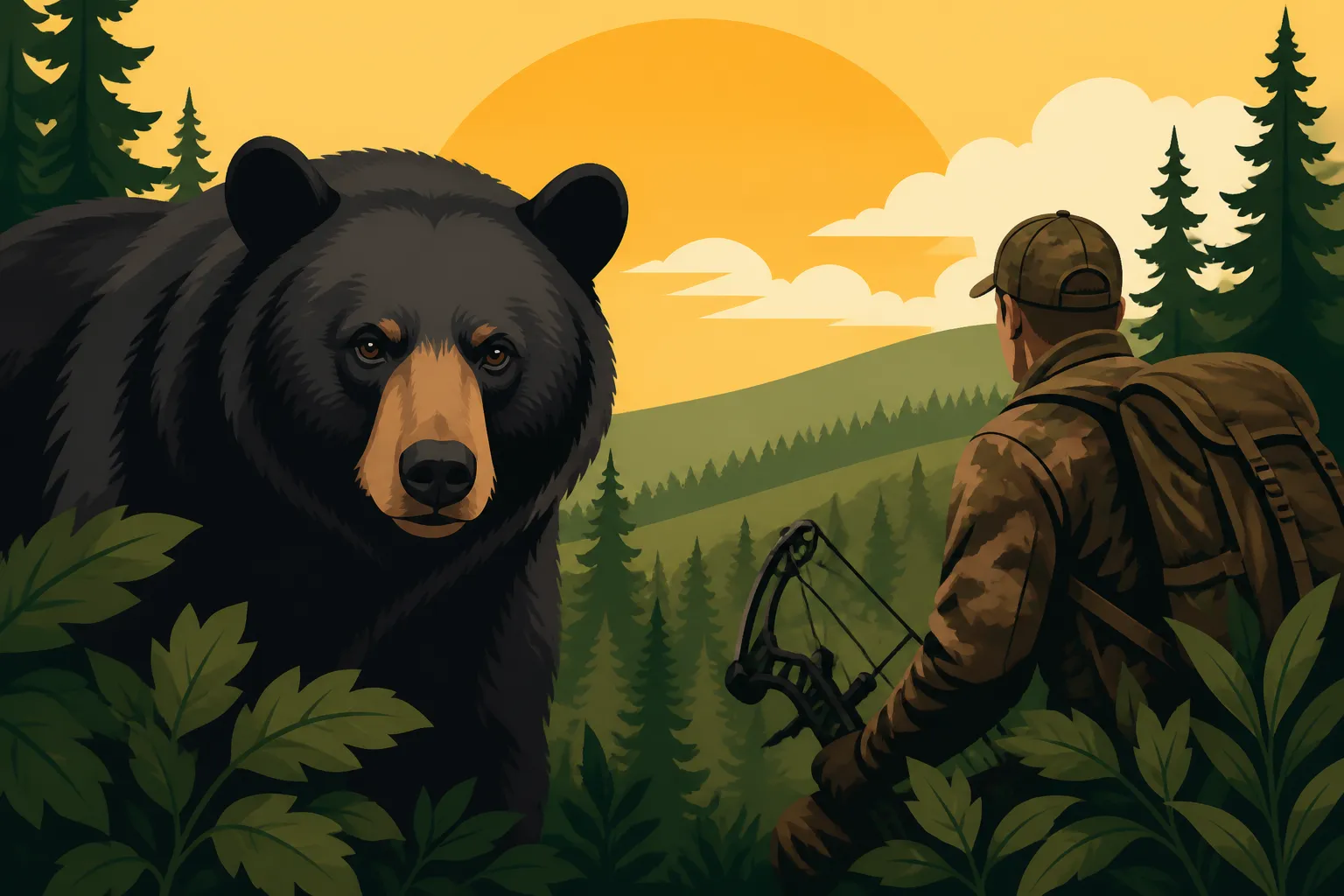
Allegheny Forest Bear Country
The Allegheny National Forest presents an incredible, yet often intimidating, challenge for bear hunters in Pennsylvania. The sheer scale of its wild acres, the dense cover, and the rugged terrain can make finding and pursuing a black bear feel like searching for a needle in a vast, emerald haystack. This guide aims to demystify hunting this magnificent public land, offering insights and strategies to help you navigate its complexities and increase your chances of success in the heart of Pennsylvania's bear country.
Understanding the Allegheny National Forest for Bear Hunting
The Allegheny National Forest (ANF) isn't just a big patch of woods; it's a dynamic, sprawling ecosystem that offers some of the most remote and challenging hunting experiences in Pennsylvania. When you're talking about bear hunting here, you're talking about a truly wild pursuit. This isn't your typical farm-country whitetail hunt; the rules of engagement are different, and the rewards, when they come, feel earned a hundred times over.
Why the ANF is Prime Bear Habitat
The ANF, covering hundreds of thousands of acres in northwestern Pennsylvania, is essentially one massive block of contiguous forest. This uninterrupted habitat is precisely what black bears thrive in. They need vast spaces to roam, find food, and establish territories without constant human disturbance. The forest here is a mix of mature hardwoods, primarily oak, cherry, and maple, interspersed with thick stands of conifers and dense undergrowth like mountain laurel and rhododendron.
This diversity of vegetation is critical for bears. In the fall, they depend heavily on mast crops – acorns from the various oak species, and the elusive beech nuts. These high-energy foods are essential for them to put on the necessary fat reserves before winter denning. Beyond the mast, they forage on berries, grubs, insects, and even some grasses. The numerous small streams, creeks, and the vast Allegheny Reservoir provide abundant water sources throughout the year. The remoteness also plays a huge role; away from major roads and developments, bears can live out their lives with minimal human interaction, leading to a robust and healthy population. Hunting Pennsylvania Bear on Acorns is a strategy that shines here.
Bear Population and Density in the ANF
While specific real-time numbers are beyond the scope of what we can provide, it's widely understood that the Allegheny National Forest supports a significant and thriving black bear population. It's one of the state's most reliable areas for consistently harvesting bears, year after year. The sheer volume of habitat allows for a greater density of bears compared to more fragmented landscapes. This isn't to say you'll see a bear around every corner – far from it – but the potential for encountering a bear is genuinely high in these woods. The remote sections of the forest, far from accessible roads, often hold older, larger bears that have learned to avoid human presence. This is truly where the wild ones live, making every encounter a unique trophy, regardless of size.
Unique Challenges of Hunting the ANF
Let's be real: hunting the Allegheny National Forest is tough. It's not for the faint of heart or the unprepared. The primary challenge is the terrain itself – it's rugged, with steep ravines, long ridges, and thick, unforgiving cover. Navigating this landscape, especially when carrying gear or, hopefully, dragging a bear, demands serious physical conditioning and mental fortitude.
Another significant hurdle is the sheer size of the forest. Without distinct topographical features or property lines (outside of those you can verify with mapping apps like onX Hunt), it's easy to get disoriented, especially on overcast days or in fresh snow. This vastness also means bears can literally be anywhere, so scouting effectively and covering ground strategically becomes paramount. Weather can turn quickly, from mild autumn days to brutal winter conditions, demanding robust clothing and gear. Finally, the hunting pressure, while sometimes concentrated near access points, generally disperses across this massive area, meaning you might feel truly alone for days on end.
Scouting and Locating Bears in the Allegheny National Forest
Successfully hunting bears in the ANF often comes down to one thing: preparation. You can't just show up on opening day and expect to stumble upon a bruin. The vastness of this public land demands meticulous scouting, both from your armchair and on the ground. This forethought helps you narrow down vast tracts into manageable, high-percentage hunting zones.
Pre-Season Reconnaissance and Mapping
Before you even set foot in the woods, the best tool you have is your computer or phone. This is where modern mapping applications truly shine. Using tools like onX Hunt, you can meticulously study satellite imagery and topographical maps of the Allegheny National Forest. Look for key features:
- Elevation Changes: Bears often travel along benches and saddles on ridges to conserve energy. Identify these natural travel corridors.
- Water Sources: Any consistent water source, especially in drier years, will attract bears.
- Cover Types: Dense stands of mountain laurel, clearcuts, or thick hemlock groves offer excellent bedding and security cover. Bears will often bed in the thickest, nastiest stuff they can find.
- Mast Production: While satellite imagery won't tell you the current year's mast crop, it can show you large concentrations of oak or beech trees. Mark these areas as potential hotspots to check on the ground later.
- Access Points and Roads: Identify remote gates, logging roads, and trails that might lead you deeper into less-pressured areas. Also, note potential escape routes for bears once the season opens.
By marking these points of interest digitally, you're building a comprehensive plan. You can identify potential routes, ingress and egress points, and even emergency rally points if hunting with a group. This digital scouting saves countless miles of walking and directs your physical scouting efforts much more efficiently. Reading Aerial Photos for Big Woods Deer principles apply directly to bears as well.
Identifying Bear Sign and Activity
Once you're on the ground in the ANF, it's time to become a detective. Bears leave plenty of clues, but you have to know what to look for and where.
- Scat: This is one of the most common and informative signs. Its contents will tell you what bears are eating – berries, acorns, corn, or even insect parts. Fresh scat indicates recent activity.
- Tracks: Look for large, flat-footed prints, often with five distinct toes. In soft mud near water sources or along logging roads, tracks can be very clear. Large tracks are, of course, a great sign.
- Rub Trees and Claw Marks: Bears love to rub on trees, often to mark territory or simply scratch an itch. Look for signs of rubbing, and sometimes even claw marks, on trees, especially evergreens. On beech and oak trees, look for claw marks where bears have climbed to feed on nuts. These can be quite high up the trunk.
- Disturbed Logs and Rocks: Bears will tear apart rotting logs and flip over rocks in search of grubs, ants, and other insects. This can be a significant food source, especially when mast crops are scarce.
- Feeding Areas: In oak flats, look for disturbed leaves where bears have been rooting for acorns. In clearcuts or open areas, look for signs of berry foraging. If you find a productive white oak ridge, you've found a goldmine. Pay attention to Finding Bear Sign in Mountain Laurel, as these dense thickets are often where bears feel safest.
The key is to look for fresh sign. Old sign means a bear was there; fresh sign means a bear is there, or will be soon. Use a systematic approach, walking likely travel corridors, stream bottoms, and mast-producing ridges.
Understanding Seasonal Bear Movement
Bear patterns in the ANF are heavily influenced by the availability of food and, as the season progresses, the approach of winter.
- Early Season (October Archery): Bears are primarily focused on building fat reserves. This means they will be heavily concentrated in areas with abundant mast crops – particularly acorns and beech nuts. If the hard mast crop is poor, they'll seek out alternative foods like wild grapes, berries, and supplemental sources from agricultural areas bordering the forest, if any.
- Mid-Season (Firearms Opener): With increased hunting pressure, bears often become more nocturnal and retreat into the thickest, most secluded cover. They will still visit food sources, but typically under the cover of darkness or during low-pressure periods. This is when understanding escape routes and thick bedding areas becomes crucial.
- Late Season (Extended & Muzzleloader): As temperatures drop and winter approaches, bears will continue to feed heavily until they den. Denning usually occurs from late November through December. They may make longer foraging excursions in search of remaining mast or even look for carrion. Understanding that bears will still be active, driven by the instinct to eat before denning, is key. They might travel further for remaining food.
| Bear Sign Category | What to Look For | When to Look (Season) | Significance |
|---|---|---|---|
| Scat | Size, shape, contents (berries, nuts, insect parts) | Year-round, especially pre-season and during hunting | Indicates recent presence and diet |
| Tracks | Large, flat-footed, five-toed prints in mud/snow | Year-round, best after rain or in fresh snow | Confirms bear travel; size may indicate mature bear |
| Rub Trees | Scratches, hair, sap on evergreen or hardwood trunks | Year-round, more common during rut and scent marking | Territory marking, presence in the area |
| Claw Marks | Vertical marks on bark, especially oak/beech | Fall (mast feeding), early spring (climbing for buds) | Direct evidence of climbing for food |
| Digging/Flipping | Uprooted logs, overturned rocks, disturbed ground | Spring, Summer, Fall (for grubs, insects, roots) | Active foraging for protein and energy |
| Bedding Areas | Depressions in thick cover (mountain laurel, hemlock) | Year-round, especially in secure, thermal cover | Location of bear resting/hiding; often near food or escape |
| Feeding Areas | Disturbed leaves under oak/beech, stripped berry bushes | Fall (mast), Summer (berries), Spring (green shoots) | Primary attraction zones; indicates current food sources |
Tactics and Strategies for ANF Bear Hunting
Hunting black bears in the Allegheny National Forest requires a blend of patience, endurance, and adaptability. The tactics you employ will depend heavily on the season, the number of hunters in your party, and your personal hunting style. The common thread, however, is being prepared for a truly wild experience.
Still-Hunting and Stand Hunting Approaches
Still-Hunting: This method is often highly effective in the ANF's dense cover and rugged terrain, especially for solo hunters or small groups. Still-hunting involves moving very slowly and deliberately through the woods, pausing frequently to observe, listen, and scan for movement. The goal isn't to cover miles, but to cover ground thoroughly. You're hunting the wind and thermals, looking for subtle changes in the landscape, a flicker of black, or the sound of rustling leaves.
Focus on areas with fresh sign: productive oak ridges, thick creek bottoms, or the edges of dense mountain laurel thickets where bears might be bedded. Move against the wind, using cover to break up your silhouette. This method requires immense patience, often taking an hour to move only a hundred yards, but it puts you in a position to ambush an unsuspecting bear. When still-hunting, Still-Hunting Pennsylvania Big Woods principles are absolutely your best friend.
Stand Hunting: While the ANF might seem too vast for traditional stand hunting, it can be productive when done strategically. This usually involves finding a reliable food source (like a hotspot of white oak trees with dropping acorns) or a major travel corridor between bedding and feeding areas. Set up your stand (or ground blind, if preferred) downwind of these locations, ensuring you have clear shooting lanes. Because bears often move during low-light hours, pick a spot where you have good visibility at dawn and dusk. This method often works best in the early archery bear season when bears are more predictable and focused on food. However, be prepared for long, cold sits, and remember that bears are incredibly wary. Treestand Setups in Pennsylvania Hardwoods can be adapted for bear hunting.
Organizing Bear Drives in the Vast Forest
Bear drives are a classic Pennsylvania hunting tradition, and in the sprawling ANF, they can be highly effective, especially during the general firearms season when groups of hunters converge. However, conducting a drive in the ANF is a serious undertaking that requires careful planning and coordination.
- Group Size and Communication: You'll need a group of at least 5-10 hunters, divided into "drivers" and "posters." Reliable communication is paramount – two-way radios are almost a necessity, as cell service is often nonexistent in the ANF's deep hollows.
- Choosing the Drive Block: Select a manageable block of woods with clearly defined boundaries (e.g., a ridge line, a logging road, a creek). Look for areas with thick cover where bears might be bedded, or areas with known food sources. Using your onX Hunt maps to delineate the drive block and assign stands is invaluable.
- Safety First: Establish clear shooting lanes and safety zones for posters. All hunters must be aware of each other's positions. Drivers should move slowly and make noise, pushing bears towards the posters. Posters must remain still and quiet, focused on their assigned zone.
- Understanding Bear Behavior: Bears, when pushed, will often try to slip out the sides of a drive or loop back behind the drivers. They don't always run straight. This is where strategic placement of posters on the flanks can be crucial.
- Logistics: Plan for the recovery of a downed bear. In the rugged ANF, this can be an incredibly physically demanding task. Ensure you have proper game carts, sleds (if snow is present), and enough manpower. Organising a Pennsylvania Bear Drive is a skill honed over many seasons.
Archery and Muzzleloader Considerations
The ANF offers unique opportunities for both archery and muzzleloader bear hunters, often during less pressured seasons.
Archery Season: Pennsylvania's October archery season for bears provides a chance to hunt before the woods are filled with rifle hunters. Bears are often still very focused on hard mast, making food sources excellent ambush points. Your bow setup needs to be dialed in for close-range shots in thick cover. Broadhead choice is critical, ensuring maximum penetration on a tough animal. Stealth, scent control, and knowing bear travel patterns are magnified during archery season. Being patient and letting a bear come into your comfortable range is key.
Muzzleloader Season: Often coinciding with the late deer seasons, muzzleloader season provides another opportunity, frequently in colder weather or snow. A flintlock or inline muzzleloader offers a challenging and rewarding hunt. Accuracy with your chosen load is paramount. In colder, potentially wet conditions, keeping your powder dry and your ignition reliable is crucial for flintlock users. The slower, single-shot nature of muzzleloader hunting forces you to be even more deliberate with your shot placement. These seasons often occur when bears are making their final push for food before denning, so focus on remaining food sources. Archery and Muzzleloader Bear Tactics delve deeper into specific gear and strategies.
Safety and Logistics in Remote Bear Country
Hunting in the vastness of the Allegheny National Forest isn't just about finding a bear; it's about navigating a truly wild environment responsibly and safely. The ANF can be unforgiving, and being prepared for all contingencies is not just smart, it's essential.
Essential Gear for Remote Hunts
When you venture deep into the ANF, you need to be self-sufficient. Every item in your pack should serve a purpose.
- Navigation: A reliable GPS unit or a smartphone with a robust mapping app like onX Hunt is non-negotiable. Download offline maps for your entire hunting area, as cell service is almost guaranteed to be spotty or nonexistent. Carry a compass and a physical map as a backup – batteries die, and electronics fail. Knowing how to use them is just as important as having them.
- First Aid: A comprehensive first-aid kit, beyond just a few band-aids, is crucial. This means items for severe cuts, sprains, allergic reactions, and pain relief. Consider carrying a tourniquet, especially if hunting alone in remote areas.
- Water and Filtration: Carry enough water for a full day, and a water filter or purification tablets for extended hunts. Dehydration is a real threat, especially when covering rugged terrain.
- Emergency Shelter: A lightweight emergency bivy sack or a tarp can be a lifesaver if you get stuck out after dark or in unexpected weather.
- Communication: Besides radios for group hunts, a satellite messenger device (like a Garmin inReach or Zoleo) can provide critical communication capabilities to summon help even when out of cell range.
- Fire Starting: Waterproof matches, a lighter, and a fire starter are essential for warmth and signaling.
- Lighting: A headlamp with fresh batteries, plus spare batteries, is a must for navigating in the dark or field dressing a bear after sunset.
- Game Recovery Tools: A sharp, sturdy knife, game bags, heavy-duty rope for dragging, and perhaps a game cart or sled for snow are invaluable. Retrieving a bear, even a smaller one, from the steep, thick terrain of the ANF is immensely difficult. Meat Care Gear for Pennsylvania Hunters is more relevant than ever.
Navigating the Rugged Terrain
The ANF is not flat. Expect significant elevation changes, steep slopes, and rocky, uneven ground.
- Physical Fitness: This isn't a suggestion; it's a requirement. Be in good physical condition to handle the strenuous climbs and long miles, especially if you plan on a retrieve.
- Footwear: Invest in high-quality, waterproof, ankle-supporting boots. You'll be crossing streams, climbing rocky slopes, and traversing muddy areas. Blisters can ruin a hunt quickly. Boots and Packs for Steep Country are essential.
- Pace Yourself: Don't try to sprint up a mountain. Maintain a steady, sustainable pace, taking breaks as needed. Conserve your energy, especially for the hike out, which will often be uphill with a heavier pack.
- Awareness: Always be aware of your surroundings. Look for landmarks, check your map frequently, and note your travel direction. If you get disoriented, stop, assess, and use your navigation tools. It’s better to take a moment to confirm your location than to wander aimlessly and get truly lost.
Bear Encounter Safety and Awareness
While your goal is to hunt bears, it's also important to be aware of safety in case of an unplanned encounter. The ANF has a healthy bear population, and interactions are possible.
- Make Noise: When walking through thick cover, especially where visibility is limited, make some noise to avoid surprising a bear. Most bears will flee before you even see them.
- Carry Bear Spray: Even though you're carrying a firearm, bear spray can be a highly effective deterrent in a close-quarters, defensive encounter. Know how to use it and keep it readily accessible.
- If You Encounter a Bear: Generally, if a bear sees or hears you, it will retreat. If it doesn't, speak in a calm, firm voice, make yourself look as large as possible, and back away slowly. Avoid direct eye contact. Do not run, as this can trigger a chase response. If a bear approaches you, especially defensively (clacking jaws, huffing, swats), stand your ground and be prepared to use bear spray or, as a last resort, your firearm.
By combining thorough preparation, strategic hunting tactics, and an unwavering commitment to safety, you can truly embrace the challenge and the unique rewards of bear hunting in the Allegheny National Forest.
Disclaimer
This article is for general informational purposes only and does not constitute professional advice. Laws, prices and regulations vary by location and change over time. Consult a qualified professional for guidance on your specific situation.