Hunting Allegheny National Forest for Deer
For many Pennsylvania deer hunters, the Allegheny National Forest represents a vast, wild frontier, a place of immense beauty but also immense challenge. It’s not your typical farm-country sit, and understanding how to effectively hunt deer in this sprawling public land can feel like trying to find a needle in a haystack. This guide is here to help you unravel the mysteries of hunting deer in the ANF, offering practical advice and strategies to make your next big woods adventure a success.
Understanding the Allegheny National Forest Landscape
The Allegheny National Forest (ANF) is unlike much of Pennsylvania's other public hunting land. Spanning hundreds of thousands of acres across four counties in the state's northwest, it’s a vast expanse of continuous forest, deep hollows, and high plateaus. While state game lands (SGLs) often offer a mosaic of habitats, the ANF is predominantly mature timber, with significant differences in cover and food sources depending on whether you're in an area managed for timber or simply left to mature.
The sheer scale of the ANF can be intimidating. You won't find the smaller, fragmented woodlots common in the agricultural regions, nor the easily accessible clearcuts that define some other state forest districts. Instead, you're faced with endless ridges, drainages, and thick stands of hardwoods and conifers. This environment presents unique challenges for deer hunters, primarily due to lower deer densities compared to farm country, and the vast amount of cover available to the deer. Don't expect to see deer around every corner; success in the ANF often comes down to perseverance, meticulous scouting, and understanding subtle shifts in deer behavior. It truly embodies the "big woods" hunting experience, demanding a different approach than what many Pennsylvania hunters are accustomed to. You can get a sense of its scope by learning about the Allegheny National Forest Acreage.
Navigating and Accessing the ANF for Deer Hunting
One of the biggest hurdles for new hunters in the Allegheny National Forest is simply figuring out where to go and how to get there. The ANF is crisscrossed by a network of forest roads, some paved, some gravel, and many seasonal. Understanding which roads are open, which areas are accessible, and how to effectively use mapping tools is paramount to a successful hunt.
Utilizing Modern Mapping Technology
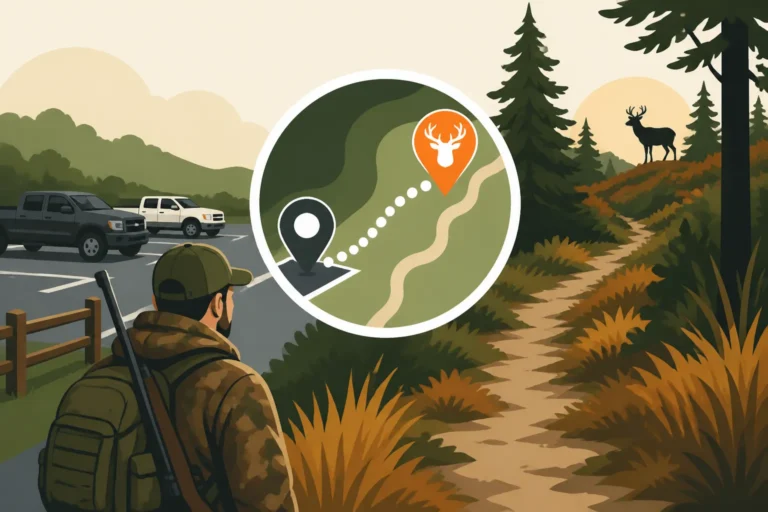
Gone are the days when a paper topo map and a compass were your only reliable tools, though they remain vital backups. Today, digital mapping applications have become indispensable for navigating the ANF's vastness. Services like onX Hunt provide incredibly detailed maps with public/private land boundaries, topographical lines, and even satellite imagery that can be downloaded for offline use—a critical feature in areas with no cell service, which are common in the ANF. Before you even step foot in the woods, you can spend hours scouting from your couch, identifying potential bedding areas, travel corridors, and overlooked pockets of cover. This digital reconnaissance can save you countless miles of walking and help you formulate a solid game plan. Learning Reading Aerial Photos for Big Woods Deer can significantly improve your pre-hunt strategy.
Another excellent tool for planning and e-scouting, particularly for understanding general habitat types and potential deer hot spots, is GoHunt. While it offers different functionalities, pairing it with your on-the-ground efforts can give you a more comprehensive picture of the terrain and how deer might be utilizing it. These digital maps also help immensely with marking your route, identifying escape points, and, crucially, knowing exactly where you are in relation to property lines, preventing accidental trespass in areas where the ANF abuts private parcels. Always double-check boundaries, especially when hunting close to the edges of the forest.
Understanding ANF Road and Camping Rules
The Allegheny National Forest manages its roads carefully. Many smaller, unpaved roads are gated seasonally, often closing in winter and reopening in spring. It’s crucial to check the current road status with the ANF office before you head out, as these closures can significantly impact your access to certain hunting areas. A road that looks promising on a map might be locked down, forcing a much longer walk than anticipated. Always adhere to posted signs; driving past a closed gate can result in fines and damage to forest resources.
For those planning multi-day hunts, camping is often permitted in designated campgrounds or dispersed (primitive) camping areas, with specific rules varying by district. Dispersed camping typically requires you to be a certain distance from roads, water sources, and established trails. While you might be able to set up a small camp close to where you want to hunt, familiarize yourself with these regulations beforehand. Having a comfortable base camp can be a game-changer when you're expending a lot of energy covering ground in the big woods.
| Access Type | Description | Pros | Cons |
|---|---|---|---|
| Paved/Gravel Roads | Main arteries and well-maintained forest roads. | Easy access, often leads to trailheads or specific spots | Can be busy, limited deep woods access directly |
| Gated/Seasonal Roads | Unpaved, secondary roads often closed during certain seasons. | Leads to less pressured areas, good walking access | Requires longer walks, check status before visiting |
| Hiking Trails | Marked trails for recreation, often used for foot access into deeper areas. | Excellent for foot access, covers varied terrain | Can be crowded with hikers, not always optimal deer paths |
| Bushwhacking | Off-trail travel through dense timber and challenging terrain. | Accesses truly remote, unpressured areas | Extremely physically demanding, easy to get disoriented |
Effective Deer Hunting Strategies in the Big Woods
Hunting deer in the Allegheny National Forest is less about baiting or sitting over food plots (which are generally not permitted on public land anyway) and more about covering ground, reading sign, and understanding deer movement patterns in a vast, natural environment. Success often comes from patience and adapting to the subtle cues the forest provides.
The Art of Still-Hunting
Still-hunting is perhaps the most effective tactic in the ANF. This involves moving slowly, taking a few steps, then stopping for several minutes to observe your surroundings. You're not just looking for deer, but listening for subtle sounds – a twig snapping, a rustle in the leaves, the flick of an ear. The goal is to move quietly enough that you might spot a deer before it spots you, giving you time to evaluate the situation and take a shot. This method requires immense discipline and a keen eye. Pay attention to the wind direction and thermals, which are critical in hilly terrain. For more on this, check out Still-Hunting Pennsylvania Big Woods and Wind and Thermals on a Ridge.
Focus your still-hunting efforts along benches on hillsides, subtle ridges, and near any changes in vegetation. Deer in big woods country don't often move in wide-open fields. They prefer cover, so concentrate on the edges of thickets, laurel patches, and areas of new growth. Any subtle shift in terrain that provides a travel advantage or bedding cover could be holding a deer. Remember, in such a large forest, deer might not be concentrated in huge numbers, but finding a few key areas of activity can lead to success. Look for historical sign: old rubs, well-used trails, and fresh droppings will give you clues about where deer are moving.
Finding Food and Cover Sources
Deer in the ANF are largely dependent on natural food sources. Acorns, particularly from red and white oak, are a primary draw in the fall. During a good mast year, deer will concentrate heavily in oak stands. Identifying these areas, especially those on higher benches or ridges where acorns may be more abundant, is a crucial scouting step. Other food sources include beechnuts, various berries, and browse. When the acorn crop fails, deer will switch to other browse, making thickets and regeneration areas more important.
Cover is everywhere in the ANF, but certain types are more attractive for bedding. Dense stands of hemlock or pine offer thermal cover during cold weather and a visual barrier year-round. Laurel thickets, common throughout the ANF, provide excellent bedding security. Deer often bed on ridges or benches, using the wind and thermals to detect danger. Understanding Where Big Woods Bucks Bed is key. Look for areas with recent timber cuts, as the resulting regeneration creates both food and dense cover, acting as magnets for deer in an otherwise mature forest. However, these clearcuts can be incredibly difficult to navigate due to the dense tangles of downed trees and new growth.
Preparing for the Hunt: Gear and Safety Considerations
Hunting in the Allegheny National Forest demands specific gear and a strong emphasis on safety due to the remote, rugged nature of the terrain. Being well-prepared isn't just about comfort; it's about ensuring your well-being in a challenging environment.
Essential Gear for ANF Hunts
When heading into the ANF, your gear needs to be robust and reliable. Given the vastness, a good pair of comfortable, waterproof boots is non-negotiable. You’ll be covering many miles over uneven, often steep terrain, so support and durability are key. Consider boots specifically designed for mountain hunting, as discussed in Boots for Pennsylvania Mountains. You also need a well-stocked pack that can handle an all-day, or even multi-day, outing. Think about water, high-energy snacks, a reliable first-aid kit, and emergency shelter.
Layering your clothing is critical, as weather in the mountains can change rapidly. Start with moisture-wicking base layers, add insulating mid-layers, and top it off with a waterproof and windproof outer shell. Even if it feels mild at the trailhead, conditions can be drastically different higher up or after a few hours of sitting still. Don't forget your hunter orange during firearms seasons, ensuring you meet the minimum square inch requirements. A powerful headlamp with extra batteries is also a must for navigating the woods in the dark, whether you're heading in before dawn or packing out after sunset.
Safety in Remote Terrain
The remoteness of the ANF means you often won't have cell service. Carrying a personal locator beacon (PLB) or a satellite communication device is a smart investment, especially if you hunt alone. Always let someone know your exact hunting plans, including your general route and expected return time. Be realistic about your physical fitness. Dragging a deer out of a deep hollow in the ANF is a grueling task, and it's essential to understand the challenge. If you are successful, know how to handle a field-dressed deer, especially if you have a long haul back to your vehicle. Tools like a deer cart can be helpful on less rugged terrain, but often in the ANF, it's brute force or quartering a deer out. Getting a Deer Out of a Pennsylvania Hollow is a skill you might need.
Wildlife encounters are also a possibility. The ANF is prime Allegheny Forest Bear Country, so be bear aware. Carry bear spray, keep your camp clean, and know what to do if you encounter a bear. While rare, other predators like coyotes are present. Be prepared for any situation the wilderness might throw at you. A well-planned, well-equipped hunter is a safe hunter, and the ANF demands nothing less. You can also benefit from Scouting With the Pennsylvania Mapping Center to identify escape routes and potential hazards.
Disclaimer
This article is for general informational purposes only and does not constitute professional advice. Laws, prices and regulations vary by location and change over time. Consult a qualified professional for guidance on your specific situation.