Best Game Lands for Public Land Deer
Finding productive public land to hunt deer in Pennsylvania can feel like trying to find a needle in a haystack, especially when you're staring at a map covered in thousands of acres of State Game Lands. It’s easy to get overwhelmed, wondering where to even begin, or feeling like all the "good" spots are already taken. This guide is here to cut through that frustration, helping you understand how to identify and hunt the State Game Lands (SGLs) that consistently hold deer, offering real strategies for success on public ground.
Understanding Pennsylvania's State Game Lands Landscape
Pennsylvania boasts an incredible amount of public land, and a huge chunk of that comes in the form of State Game Lands. These are parcels of land, managed by the Pennsylvania Game Commission (PGC), acquired specifically for hunting and trapping. They range from small, isolated woodlots surrounded by farmland to massive tracts of mountainous timber. Understanding this diverse landscape is your first step to finding where the deer are.
The Sheer Volume and Variety of Game Lands
It's truly staggering how many acres the PGC manages across the state, and each State Game Land has its own unique character. Some SGLs are vast, rugged, and remote, characterized by steep slopes, dense timber, and deep hollows that demand physical endurance and good navigational skills. You might find yourself miles from the nearest road, a feeling that many public land hunters crave. These larger tracts often hold deer that are less accustomed to human presence, making for a truly wild hunting experience.
On the other hand, you have smaller, more accessible Game Lands, particularly in the agricultural regions of the state. These might be a patchwork of woodlots, brushy creek bottoms, and reclaimed strip mines nestled between active farms. While they can see higher hunting pressure due to their accessibility, they also benefit from proximity to prime food sources like corn, soybeans, and alfalfa, which means deer are often present, even if they're warier. The key is knowing how to approach each type.
How Habitat Dictates Deer Presence
Deer are creatures of habit, and their habits are dictated by their needs: food, water, and cover. If a piece of Game Land consistently provides all three, you can bet deer will be there. The "best" Game Lands for public land deer aren't necessarily the ones with the biggest trees or the prettiest vistas, but the ones that offer a mosaic of these critical elements.
Consider the role of clearcuts and regenerating timber. While they might look like a messy tangle to us, these areas are absolute deer magnets. The new growth provides a smorgasbord of browse, offering high-quality forage that deer simply can't resist. Coupled with the dense cover these areas provide for bedding and escape, a regenerating clearcut on a State Game Land is often a hotspot. Conversely, mature, open timber, while beautiful, typically offers less in the way of food and cover, meaning deer might pass through but rarely linger. Look for areas where the PGC has actively managed the timber, as these efforts are often designed to improve wildlife habitat, which directly benefits deer. Hunting Pennsylvania Clearcuts and Regrowth is a fantastic resource for diving deeper into these areas.
Strategies for Identifying Productive Game Lands
You can't just drive up to any Game Land and expect to find deer. Successful public land hunting in Pennsylvania requires a strategic approach to scouting and understanding deer behavior, particularly how they react to pressure.
Mapping and Satellite Imagery as Your Best Friend
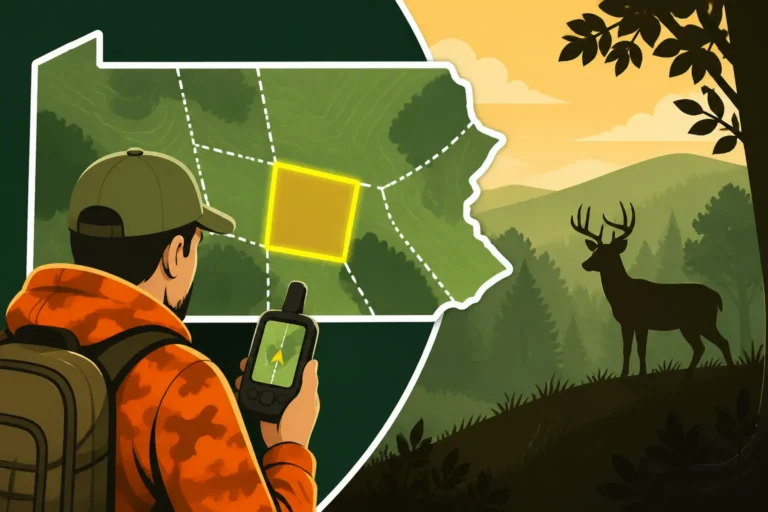
In today's world, there's no excuse for going into the woods blind. Mapping applications are an absolute game-changer for public land hunters. Tools like onX Hunt have revolutionized how we scout and navigate. Before you even set foot on a State Game Land, you can pour over satellite imagery, identifying potential bedding areas, travel corridors, food sources, and even hidden water sources. Look for subtle terrain features like benches on a steep hillside, fingers of timber extending into open fields, or creek bottoms that act as natural travel routes. You can even identify potential staging areas where deer might gather before heading to an evening food source.
Don't just look at the green blobs on a map. Zoom in. Look for changes in canopy density, indicating different forest ages or clearcuts. Trace contours to find subtle ridges and hollows that deer will naturally use for travel and bedding. You can drop pins for potential stand locations, note areas of thick cover, and plan your entry and exit routes to minimize disturbance. Some mapping apps even show historical timber cuts or prescribed burns, which are invaluable for understanding habitat changes over time. Scouting Pennsylvania Public Land Before Season emphasizes how critical this pre-season work is. Another great resource for similar detailed mapping analysis is GoHunt, which helps you break down complex terrain into manageable hunting strategies.
Looking Beyond the Parking Lots
One of the biggest frustrations for public land hunters is dealing with other people. It's easy to pull into a Game Lands parking lot on opening day and feel like every square inch is already covered. However, deer are incredibly adept at avoiding human pressure. They will quickly learn where hunters congregate and adapt their movement patterns to areas of less disturbance. This means the "best" spots are often not the ones closest to easy access.
Your strategy should be to go where others won't. This often means walking further, climbing steeper hills, or navigating through thicker cover. While it might be more physically demanding, the rewards can be significant. Look for hidden access points or neglected corners of Game Lands that might be overlooked by the casual hunter. Sometimes, even a quarter-mile further off the beaten path can make all the difference. Deer will often bed in tight, nasty cover adjacent to well-used trails, simply because most hunters stick to the trails. Consider entry routes that leverage wind and thermals to your advantage, especially on steep terrain. Hunting Pressure on Pennsylvania Game Lands is a must-read if you want to understand how to outsmart other hunters.
Types of Game Lands That Consistently Hold Deer
While every State Game Land is unique, certain characteristics and geographical regions in Pennsylvania tend to offer more consistent deer hunting opportunities on public ground. Knowing what to look for can narrow down your search considerably.
Big Woods Game Lands
When many Pennsylvanians think of public land hunting, they envision the vast "Big Woods" country of the north-central part of the state. These Game Lands are typically characterized by extensive tracts of mature hardwood forests, deep valleys, and rugged mountain ridges. Deer densities here are often lower than in farm country, but the bucks can be older and savvier due to less consistent pressure in certain remote pockets. The key to finding deer in these areas is understanding how they use the terrain.
Look for mast-producing trees like oaks on ridges and benches. Deer will focus on these areas when acorns are dropping. Also, keep an eye out for pockets of mountain laurel or dense conifer stands, which provide crucial thermal cover during colder months and escape cover year-round. Clearcuts and areas of timber regeneration are goldmines, as mentioned earlier. Deer will often bed in the thickest cover within these clearcuts and feed on the edges or in adjacent mature timber. Don't overlook the deep, steep hollows; while challenging to navigate, they can be sanctuaries for mature bucks. Hunting Pennsylvania's Big Woods for Deer provides an excellent overview of these challenging yet rewarding areas.
Ridge and Valley Game Lands
Further south and east, the topography shifts to the classic "Ridge and Valley" region of Pennsylvania. Here, Game Lands are often long, linear strips running along the mountain ridges, interspersed with agricultural valleys. These areas are fantastic because the terrain naturally funnels deer movement. Deer will often travel along the benches and saddles of these ridges, moving between bedding areas on the slopes and food sources in the valleys.
When scouting these Game Lands, pay close attention to contour lines on your map. Identify saddles that connect different parts of a ridge, or benches—flat areas on a steep slope—where deer will often create trails and feed. Creek bottoms and draws that cut through the ridges are also prime travel corridors. Hunting these areas often involves setting up on a bench above a creek bottom, catching deer as they move. Hunting Oak Ridges and Benches delves into specific tactics for these terrain features, which are abundant on Ridge and Valley Game Lands.
Farm Country Game Lands
While the Big Woods gets a lot of attention, don't sleep on the smaller State Game Lands nestled within Pennsylvania's agricultural regions, particularly in the southern and southeastern parts of the state. These Game Lands might be smaller, but they often punch above their weight in terms of deer density and the potential for larger bucks. The reason is simple: abundant, high-quality food. These deer have access to endless fields of corn, soybeans, and alfalfa, allowing them to grow larger and healthier.
The challenge here is that these smaller tracts can see immense hunting pressure. However, deer adapt by becoming largely nocturnal or by holding tight in the nastiest, thickest cover during daylight hours. Your strategy should involve focusing on the edges where these Game Lands meet agricultural fields, looking for pinch points, fence lines, and small woodlots that deer use for cover and travel between fields. Don't be afraid to hunt tight to thickets or briar patches, as deer will often bed in these seemingly impenetrable areas. Farm Country Deer Hunting in Southern Pennsylvania offers invaluable insights for successfully navigating these unique hunting grounds.
Swamps and Bottomlands on Game Lands
One type of habitat often overlooked by hunters, yet consistently holds deer, especially pressured bucks, is swamps, marshes, and dense creek bottomlands found within State Game Lands. These areas are typically difficult to access and navigate due to water, mud, and extremely dense vegetation, which makes them perfect sanctuaries. Most hunters avoid them, which is precisely why deer seek them out.
Deer will bed in the drier islands within these wet areas, using the thick cover for security and the readily available water source. During the rut, bucks will cruise these edges, checking for does. In late season, the dense cover offers excellent thermal protection. If you're willing to don some good waterproof boots or waders and push into these areas, you might find deer that have rarely seen a human. Always be mindful of safety in wet environments, and let someone know your plans when exploring these challenging but rewarding areas.
| Game Land Type | Typical Location | Key Habitat Features | Deer Characteristics | Hunter Strategy |
|---|---|---|---|---|
| Big Woods | North/Central PA | Vast mature timber, clearcuts, deep hollows, laurel thickets | Lower density, older, wilder bucks | Walk further, hunt clearcut edges, steep hollows |
| Ridge & Valley | Central/South PA | Linear mountain ridges, benches, saddles, agricultural valleys | Moderate density, funnelled movement | Hunt saddles, benches, creek bottoms |
| Farm Country | Southern/Southeast PA | Small woodlots, brushy cover, adjacent to crop fields | High density, healthy, pressured deer | Hunt thick cover, field edges, pinch points |
| Swamps/Bottomlands | Scattered, often near rivers/creeks | Water, mud, dense low-lying vegetation | Sanctuary for pressured deer | Waders, thick cover penetration, careful entry |
Key Considerations When Hunting Game Lands
Beyond just identifying potential locations, maximizing your success on Pennsylvania's State Game Lands involves understanding and adapting to several critical factors.
Pressure Management and Entry/Exit Routes
Public land means shared land, and that means you're going to encounter other hunters. The key to successful pressure management isn't just finding spots away from people, but understanding how deer react to that pressure. On Game Lands, deer often learn to move at night or use very specific, secure corridors during daylight hours, especially during peak hunting times like opening day or the rut. Your goal is to intercept them in these safe zones.
Planning your entry and exit routes meticulously is crucial. Avoid walking directly through known bedding areas. Instead, approach from downwind, using terrain features like creek beds, ditches, or ridge lines to mask your movement and scent. Get in early, often before first light, and be prepared to stay late. Deer will often start moving back to bedding areas after the initial flurry of morning activity, or move towards feeding areas just before dark. Consider where other hunters are likely to be, and try to position yourself between them and where the deer want to go. Sometimes, just sitting quietly on a subtle bench for several hours is all it takes for a deer to eventually move past you. Entry Routes on Steep Ground provides excellent advice for navigating challenging terrain without spooking game.
Seasonal Food Sources
Deer diets change throughout the year, and understanding these shifts is paramount, especially on Game Lands where food plots are less common than on private land. In early archery season, soft mast like apples, pears, and wild grapes, as well as acorns, are prime attractants. As the season progresses into late fall and early winter, acorns become king. Finding a good oak flat that's dropping fresh acorns can be the hottest spot on the mountain.
If the acorn crop is poor, deer will shift to browse—the tender twigs and leaves of woody plants—and whatever leftover agricultural crops they can find. Identifying what food sources are available and fresh in your chosen Game Land is a dynamic process that requires scouting throughout the year and even during the season. A pre-season scout might show abundant acorns, but by mid-November, they could all be gone. Always be ready to adapt. Late-Season Food Sources for Whitetails is a vital resource for understanding these dietary changes and planning your hunts accordingly as the weather cools and food becomes scarcer.
Respecting the Resource and Rules
Hunting on State Game Lands comes with responsibilities. These lands are a public trust, and it's up to all of us to ensure they remain viable hunting grounds for future generations. Always familiarize yourself with the specific regulations for the Game Land you're hunting, as rules can sometimes vary. This includes rules regarding treestand placement, vehicle access, camping, and, of course, all general hunting regulations set forth by the Pennsylvania Game Commission.
Be a good steward of the land. Pack out everything you pack in, and if you see litter, pick it up. Respect safety zones around any buildings or active farms adjacent to the Game Lands. Remember, we share these lands not only with other hunters but also with hikers, birdwatchers, and other outdoor enthusiasts. Being courteous and respectful ensures that everyone can enjoy Pennsylvania's incredible public resources. A good understanding of Pennsylvania State Game Lands Rules will help you stay compliant and ethical.
Disclaimer
This article is for general informational purposes only and does not constitute professional advice. Laws, prices and regulations vary by location and change over time. Consult a qualified professional for guidance on your specific situation.