Best Game Lands for Public Land Turkeys
Finding solid turkey hunting on public land in Pennsylvania can feel like a real puzzle. You're out there, listening for those tell-tale gobblers, only to be met with silence or worse, the sound of other hunters. It’s tough to know where to start, especially when much of the prime habitat seems tucked away on private ground. This guide is all about helping you unlock the potential of Pennsylvania's State Game Lands for successful turkey hunting, pointing you toward the best areas and proven strategies.
Understanding Pennsylvania's Turkey Habitat on Game Lands
To consistently find turkeys on public land, you first need to think like a turkey. What do they need? Food, water, cover, and safe roosting sites. Pennsylvania's vast network of State Game Lands offers a surprising variety of these elements, but knowing what to look for will make all the difference in your scouting and hunting efforts.
The Importance of Mixed Forests and Early Successional Growth
Turkeys thrive in a diverse landscape, not just one type of woods. You'll often hear hunters talk about "big woods" or "farm country," and while both can hold birds, the real sweet spots on Game Lands usually involve a mix. They need mature oak and hickory stands for those crucial fall and winter mast crops – acorns and nuts are like gold to them. But they also desperately need early successional growth: those thick, brushy clearcuts, regenerating timber stands, or even old field edges that are slowly reverting to forest. These areas provide vital bugging grounds for poults in the spring and summer, and dense escape cover from predators year-round.
When you're looking at a map or walking the ground, seek out Game Lands that have undergone recent timber management. Look for areas where the Pennsylvania Game Commission has done some clearcutting or selective logging in the last 5-15 years. These aren't always pretty to walk through, with briars and downed tops, but they create incredible habitat. The sunlight hitting the forest floor sparks new growth, attracting insects, and providing the cover young turkeys need to survive. Don't overlook the edges of old logging roads or food plots within these areas either; they often serve as travel corridors and feeding spots.
How Topography Affects Turkey Movement and Location
Pennsylvania's varied topography plays a huge role in where turkeys live and move, especially on public lands where they might face more pressure. Ridge tops, benches, hollows, and creek bottoms all serve different purposes for a turkey throughout the day and the season. In the spring, gobblers often strut on open ridge tops or benches where they can see and be seen. Hens will seek out nesting cover in thicker areas, often lower down near water sources or in dense regrowth.
Come evening, turkeys will almost always head to the highest available ground to roost. They prefer tall, sturdy trees with strong lateral limbs that offer a clear fly-up path and a good vantage point to spot predators. This often means mature hardwoods on ridge lines or steep side hills. Understanding how they use this terrain for roosting, feeding, and strutting is key to planning your approach. For example, if you know where they typically roost, you can plan an early morning approach from below, using the terrain to mask your movement. Similarly, during the day, turkeys will often filter down into hollows or along creek bottoms to feed and water, especially as the day warms up. Being mindful of Wind and Thermals on a Ridge is crucial, as you don't want your scent carrying directly to a wary gobbler. Using the natural contours of the land to your advantage, whether setting up on Setting Up Against a Big Oak on a bench or sneaking through a hollow, is a fundamental skill for public land turkey hunters.
Identifying Productive Game Lands for Turkey Hunting
So, how do you actually find these sweet spots amidst the vast acreage of Pennsylvania's public lands? It takes a bit of research, a lot of scouting, and sometimes, a little luck.
Focusing on Large, Connected Tracts of Public Land
While turkeys can certainly be found on smaller parcels of Game Lands, especially those bordering private farms, for a consistent public land turkey experience, you'll often do better focusing on the larger, more contiguous blocks of state land. These vast areas offer turkeys more room to roam, which means they're less likely to be "pressured out" by other hunters. Think about the sprawling State Game Lands that merge into State Forests in the big woods regions of Pennsylvania. These extensive tracts provide diverse habitats and fewer hard edges, allowing turkeys to escape pressure and find undisturbed areas.
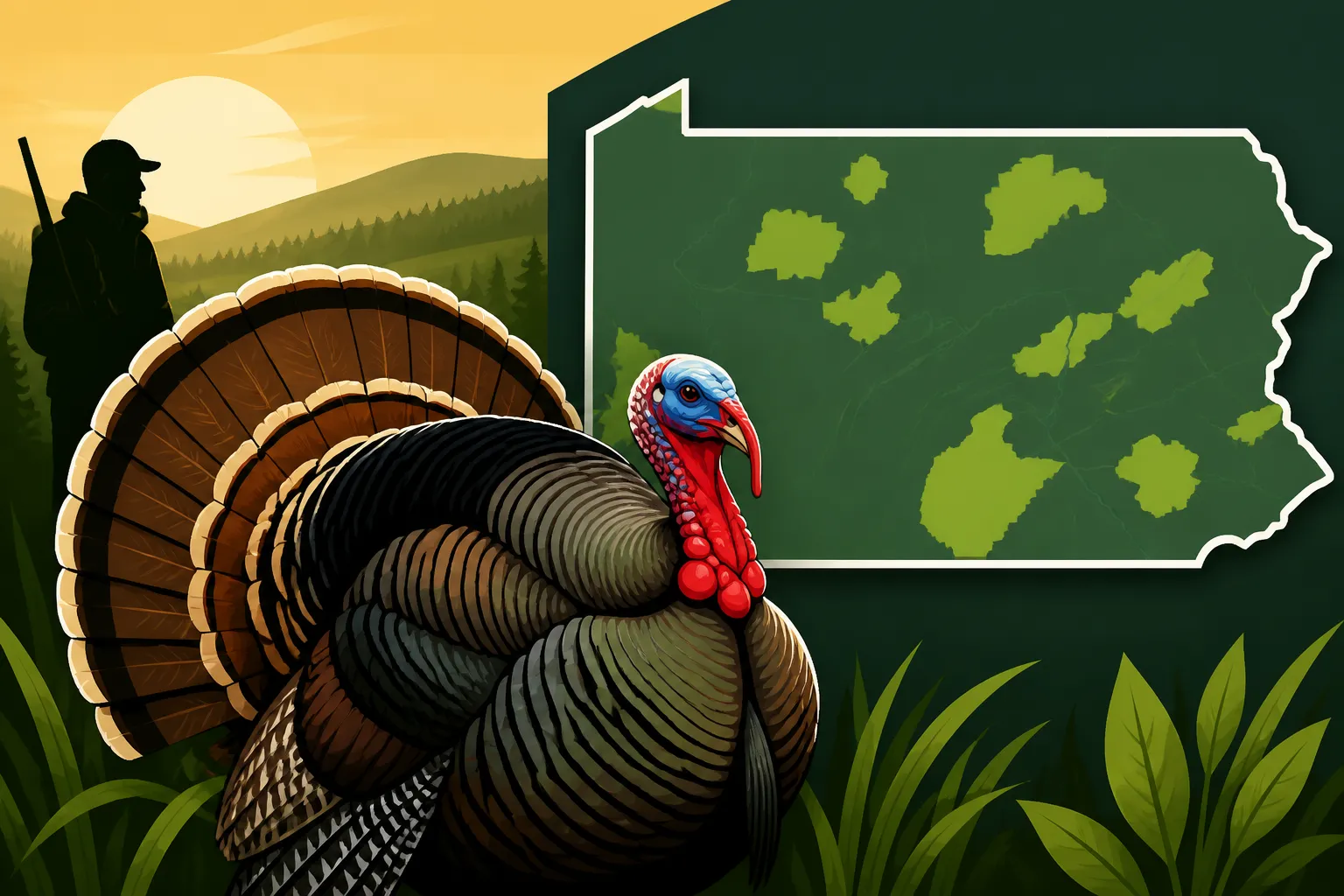
In these larger areas, turkeys might not be as concentrated as they are on smaller, agricultural parcels, but the sheer volume of habitat means there are usually birds to be found if you're willing to walk and scout. Regions like the Pennsylvania Wilds, encompassing counties such as Clinton, Centre, and Lycoming, offer immense opportunities. While I can't name specific Game Lands and guarantee you'll find a bird there today, generally, Game Lands that have significant acreage in these "big woods" counties will hold turkeys. When looking at maps, seek out areas where the green blobs of public land are vast and unbroken, suggesting healthy, self-sustaining turkey populations. The less road access and fewer obvious trails, often the better for finding less-pressured birds.
Scouting for Turkey Sign: What to Look For
Scouting is paramount for turkey hunting, especially on public land where bird locations can shift due to pressure or changing food sources. You’re looking for evidence of turkey activity, even if you don't see or hear a bird. Key indicators include droppings, tracks, scratchings, dusting bowls, and shed feathers.
- Droppings: Gobbler droppings are typically J-shaped or elongated, while hen droppings are more blob-like or spiraled. Finding fresh droppings beneath a potential roost tree is a huge clue.
- Tracks: Turkeys leave three-toed tracks. Look for them in soft dirt along logging roads, creek beds, or field edges.
- Scratchings: Turkeys scratch the leaf litter in search of insects, seeds, and acorns. Fresh scratchings, especially in oak flats or along ridge tops, indicate active feeding areas.
- Dusting Bowls: Turkeys take dust baths to rid themselves of parasites. These are shallow depressions in soft dirt, often near stumps or logs.
- Feathers: Finding a primary wing feather can indicate a roost site, while smaller body feathers might be found in dusting bowls or feeding areas.
Beyond these physical signs, look for obvious roost trees—the tallest, most sturdy trees on high ground. Old logging roads and benches often serve as travel corridors. Don't underestimate the power of "silent scouting"—just walking the woods, observing, and listening. Use tools like onX Hunt or GoHunt to mark potential roost sites, dusting bowls, or areas with heavy scratchings. It helps you build a mental map of where turkeys are spending their time. Even if you don't find active birds during your Scouting Pennsylvania Public Land Before Season trips, understanding these signs will put you a step ahead when the season opens.
Strategies for Hunting Turkeys on Pennsylvania Game Lands
Once you've done your homework and found some promising areas, it's time to put boots on the ground. Hunting turkeys on public land requires adaptability and often, a bit more grit than hunting private ground.
Early Season Tactics: Roosting and Locating Birds
The early season, particularly in Pennsylvania's spring, is all about intercepting gobblers fresh off the roost. The first step is locating where they're roosting the evening before or very early on opening morning. This involves being in the woods well before daylight, often using owl hoots or crow calls to elicit a shock gobble. Once you pinpoint a roost, the critical phase begins: a stealthy, pre-dawn approach. You want to get as close as safely possible—ideally within 100-150 yards—without alerting the bird.
Set up quietly, ensuring you have good back cover against a wide tree or in a ground blind. Then, wait. As the woods lighten, a few soft tree yelps or purrs might encourage him to gobble again. The magic happens at fly-down. That's when a gobbler is most vulnerable and often eager to find the hen he's been hearing. Your goal is to call him in before he flies down and joins actual hens. Be patient, listen intently for his fly-down, and be ready. If he pitches down and doesn't come in, don't panic. Sometimes a soft cluck or purr might pique his interest enough to bring him those last few yards. Many a public land gobbler has been bagged by hunters employing effective Calling a Pennsylvania Gobbler Off the Roost tactics.
Mid-Season and Run-and-Gun Approaches
As the spring season progresses, turkeys on public land can become "call shy" or heavily pressured. Those eager gobblers from opening day might have been harvested or simply learned to ignore aggressive calling. This is when the "run-and-gun" strategy truly shines. Instead of setting up and waiting indefinitely, you become more mobile. Walk logging roads, old trails, or along ridge lines, stopping every few hundred yards to let out a series of yelps or a sharp cut, listening intently for a response.
If you get a gobble, try to quickly close the distance, using the terrain to your advantage. Set up rapidly in a concealed position, and then work the bird. Sometimes a more aggressive calling sequence is needed to pull a pressured bird, while other times, soft clucks and purrs are all it takes. The key is to cover ground, find the birds, and then adapt your calling and setup to their mood. This isn't about being noisy and reckless; it's about intelligent movement and swift setups. For more on this dynamic method, check out Run-and-Gun Turkey Tactics on Game Lands. Persistence is key here—you might cover miles before finding a receptive gobbler.
Late Season and Fall Hunting Considerations
The late spring season can offer some excellent opportunities as breeding activity dwindles, and gobblers might become more solitary or easier to call. Focus on food sources as new greens emerge, and be prepared to sit longer. The late morning and early afternoon can often be productive as gobblers might be cruising alone, looking for any last receptive hens.
Fall turkey hunting is an entirely different beast, primarily focusing on breaking up flocks and calling them back. Instead of imitating a hen to attract a gobbler, you're looking for larger groups of turkeys, often a hen with her brood or mixed flocks. Once you locate a flock, your primary goal is to scatter them thoroughly. Charge into them, yelling and making noise. The more dispersed they are, the better. Then, find a good, concealed setup, wait an hour or so, and begin calling—soft, plaintive "lost" yelps or kee-kees. This mimics a scattered bird trying to reunite with the flock. Often, younger birds or even the lead hen will respond. Fall hunting on public land can be incredibly rewarding, as the birds are often less pressured than in the spring. Don't forget that late-season scouting for mast crops like acorns or beech nuts is critical in the fall, as these dictate where flocks will be feeding. This strategy, sometimes called the "scatter and call" method, is covered in more detail in Fall Turkey Tactics in the Big Woods.
Utilizing Technology and Resources for Public Land Turkey Hunting
In today's world, a successful public land hunt isn't just about woodsmanship; it's also about leveraging the tools at your disposal. Modern technology and publicly available data can significantly boost your odds.
Mapping Apps and Digital Tools
Forget fumbling with paper maps in the wind and rain. Digital mapping apps like onX Hunt and GoHunt have revolutionized how hunters approach public land. These apps allow you to view detailed satellite imagery, topographic maps, and crucially, property boundaries that highlight State Game Lands. This is invaluable for knowing exactly where you stand, avoiding trespass, and identifying access points.
Beyond basic navigation, these apps enable you to custom-mark points of interest. Found a fresh dusting bowl? Mark it. Heard a gobbler roosting on a specific ridge? Pin it. Identified a thick clearcut that looks like prime brood habitat? Outline it. You can plan your entry and exit routes, identify subtle terrain features like benches or hidden creek bottoms, and even track your movements. For Hunting Turkeys in Pennsylvania Big Woods, having a reliable GPS app can mean the difference between getting lost and confidently navigating miles of unfamiliar terrain. It’s also excellent for identifying potential areas where other hunters might not venture as frequently, helping you Find Ground Others Walk Past.
Reviewing Game Commission Data and Reports
The Pennsylvania Game Commission provides a wealth of information that turkey hunters often overlook. Their annual harvest reports, population estimates, and turkey brood survey results are all publicly available and can offer invaluable insights into turkey trends in specific Wildlife Management Units (WMUs).
By looking at Pennsylvania Turkey Population Trends and Pennsylvania Turkey Brood Survey Results, you can identify WMUs that have stable or increasing turkey numbers, as well as those that might be experiencing declines. This data can help you decide which WMU to focus your efforts on. For example, if brood reports were strong in a particular WMU two years prior, that might suggest a good population of two-year-old gobblers coming into their prime. While these reports won't tell you exactly where to find a gobbler, they provide a macroscopic view that can inform your strategic planning. Combine this data with your personal scouting, and you'll have a powerful combination for choosing productive public land. Don't be afraid to read the fine print; understanding these biological reports is a key part of becoming a more effective and informed hunter.
Comparing Turkey Habitat Across Game Land Types
Different types of State Game Lands, or even different sections of the same SGL, can offer varying degrees of prime turkey habitat. Here's a general comparison to help you visualize what to look for:
| Habitat Feature | Big Woods State Game Lands (e.g., Northcentral PA) | Farm Country State Game Lands (e.g., Southeast PA) | Mountain Ridge & Valley Game Lands (e.g., Central PA) |
|---|---|---|---|
| Dominant Vegetation | Mature hardwoods (oak, hickory), some conifer stands, extensive clearcuts | Mix of woodlots, crop fields (corn, soy), brushy fencerows, small clearings | Oak and mixed hardwood forests, mountain laurel, hemlock thickets |
| Roosting Sites | Tall, mature oaks/pines on ridge tops, often remote | Isolated large trees near field edges, mature woodlots | High elevation hardwoods on steep slopes, protected hollows |
| Food Sources | Acorns, beech nuts, wild berries, insects in clearcuts | Waste grain in harvested fields, insects in pastures, soft mast | Acorns, wild grapes, insects on sun-exposed benches |
| Brood Rearing | Dense regenerating clearcuts, forest openings, logging roads | Grassy field edges, brushy creek bottoms, old pastures | Thickets, logging roads, small clearings near water |
| Turkey Density | Generally lower density, but less pressured birds | Potentially higher density, but often more pressured | Moderate density, can be pressured but good escape cover |
| Access/Pressure | Often remote, requiring long walks; less hunter interference | More road access, higher hunter density; more challenging to find unpressured birds | Good mix of remote and accessible areas; varies by specific location |
No matter where you choose to hunt, remember that turkeys on public land are often wary. Stealth, patience, and knowing when to call and when to keep quiet are your best assets. And always, always prioritize safety and ethical hunting practices. Pennsylvania State Game Lands are a fantastic resource for turkey hunters, and with the right approach, you can have a memorable and successful hunt.
Disclaimer
This article is for general informational purposes only and does not constitute professional advice. Laws, prices and regulations vary by location and change over time. Consult a qualified professional for guidance on your specific situation.