Berks County Game Lands for Small Game
Finding consistent, productive small game hunting opportunities in south-central Pennsylvania can feel like a perpetual treasure hunt. You're looking for that sweet spot where cover, food, and manageable pressure converge, all while navigating the ever-changing landscape of public access. This guide is here to demystify small game hunting on Berks County's State Game Lands, helping you identify prime locations, understand what you're likely to find, and equip yourself with the tactics for a successful day afield.
Understanding Small Game Opportunities in Berks County
Berks County, nestled in the heart of Pennsylvania's rolling hills and farmlands, offers a unique blend of habitat that can be incredibly rewarding for the small game hunter. Unlike the vast, unbroken tracts of timber found in the northern tier, Berks County's public lands often feature a mosaic of agricultural fields, mature woodlands, brushy regrowth, and stream bottoms. This diversity is precisely what makes it a haven for various small game species, but it also presents its own set of challenges.
The Landscape of Berks County for Upland Hunters
When you picture hunting in Berks County, think less about deep wilderness and more about interwoven patterns of open ground and dense cover. You'll find yourself walking field edges, pushing through briar thickets, and navigating pockets of oak and hickory hardwoods. These areas are often adjacent to private farmland, creating excellent "edge" habitat where different ecosystems meet. This blend provides everything from nesting cover to crucial food sources, drawing in cottontails, pheasants, and squirrels.
The terrain varies, from gently sloping agricultural fields to steeper, timbered hillsides, especially as you move towards the northern and western parts of the county. Understanding these transitions is key. A productive morning might involve working the fencerows and brush piles bordering a cornfield for rabbits, then shifting to a small woodlot nearby for squirrels. It's a game of observation and adaptability. Hunters often express frustration trying to find consistent spots year after year, as agricultural practices change and cover comes and goes. The trick is to scout actively and understand the dynamic nature of these transitional zones.
Primary Small Game Species You'll Encounter
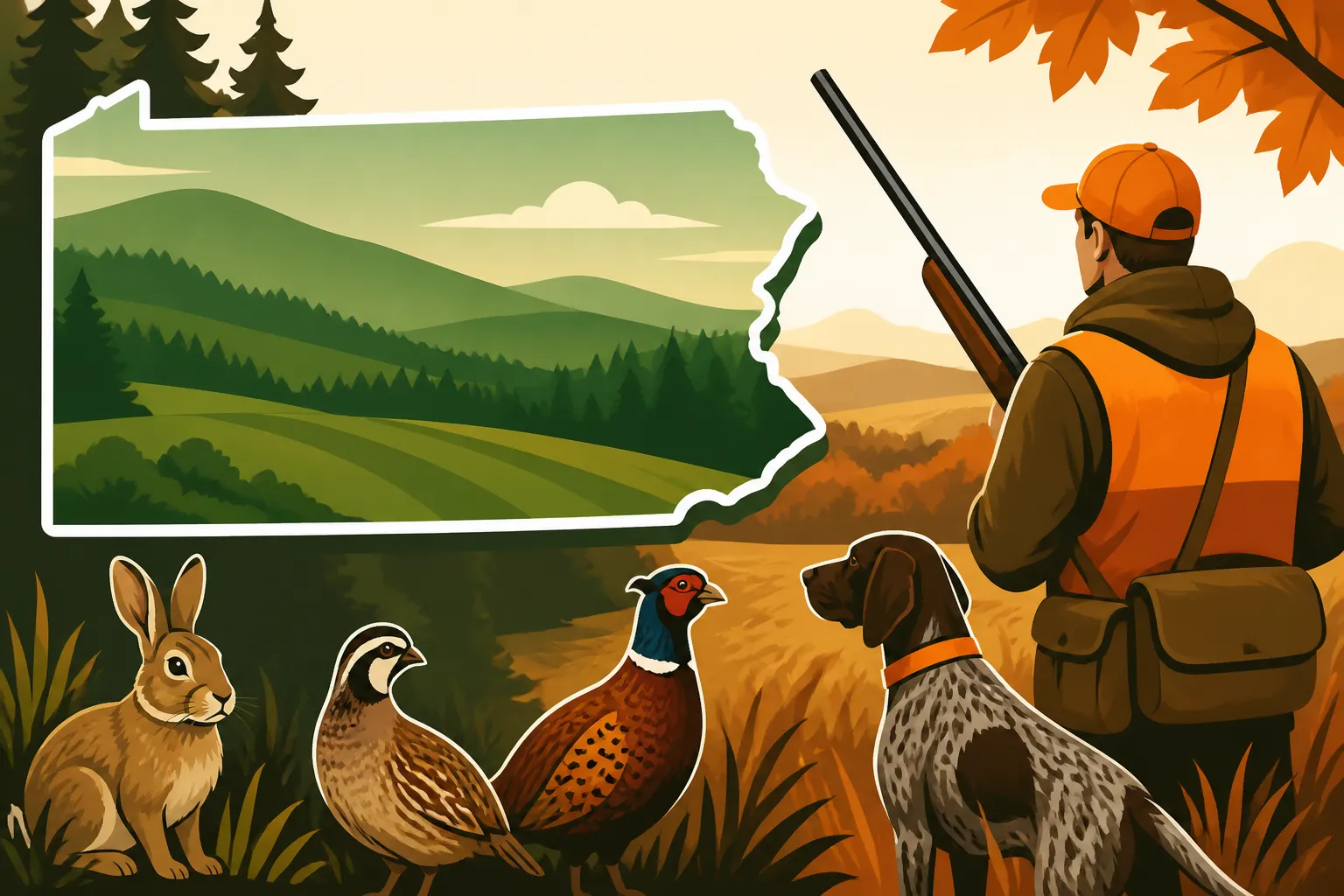
Berks County is a hotspot for several classic small game species, each requiring slightly different approaches. The most commonly targeted are cottontail rabbits, ring-necked pheasants (primarily stocked birds), and gray squirrels. While ruffed grouse numbers have seen declines across much of Pennsylvania, you might still encounter them in specific, denser timber pockets, though they are certainly not as prevalent as in the big woods counties further north.
For cottontail rabbits, focus on thick, thorny cover, brush piles, old farmsteads, and overgrown fencerows. These little dynamos thrive where they can quickly dive into protective cover. You'll find them at the edges of fields, especially where there's a transition to a woodlot or a swampy bottom. Rabbit Hunting Thick Brush and Briars is a great resource to hone your skills in these environments.
Pheasants are predominantly a "put-and-take" proposition in Berks County. The Pennsylvania Game Commission stocks thousands of pheasants annually on designated State Game Lands, providing a popular opportunity for hunters. These birds are often released in areas with good grass cover, often adjacent to agricultural fields. Knowing the stocking schedules and release sites is paramount to success. We'll dive into specific Game Lands that are known for pheasant stocking shortly. If you're looking for specifics, check out Hunting Stocked Pheasant Release Sites.
Gray squirrels are abundant throughout the county's timbered areas. Look for mature hardwood stands, especially those with oak, hickory, and beech trees, which provide their primary food sources. Squirrel Hunting Pennsylvania Hardwoods offers detailed guidance on hunting these cunning critters. You'll often find them working along ridge lines, in hollows, and around older woodlots bordering fields.
Here’s a quick overview of what you might target:
| Species | Preferred Habitat | Key Indicators | Best Tactics |
|---|---|---|---|
| Cottontail | Briar patches, thickets, fencerows, brush piles, old farms | Droppings, worn paths, tracks | Dogging (beagles), pushing cover, still-hunting |
| Pheasant | Dense grass, cornfields, hedgerows, tall weeds | Cackling, flushes, tracks | Walking fields with dogs, block-and-drive (groups) |
| Gray Squirrel | Mature oak/hickory/beech stands, timbered stream bottoms | Cuttings, nests, barks | Still-hunting, sitting, calling (less common) |
| Ruffed Grouse | Young forest, dense regeneration, stream bottoms | Flushes, droppings | Walking old logging roads, dogging (setters/pointers) |
Key Game Lands for Small Game Pursuits in Berks County
Berks County is home to several State Game Lands that offer excellent small game hunting opportunities. These areas are managed by the Pennsylvania Game Commission (PGC) to provide public access and foster healthy wildlife populations. While general access is permitted, understanding the specific characteristics and common uses of each Game Land can greatly improve your chances of success. It's often helpful to use mapping tools like onX Hunt to visualize the terrain, property boundaries, and potential access points before you ever leave home.
State Game Lands 110: A Mix of Habitats
State Game Lands (SGL) 110 is arguably one of the most popular and diverse small game hunting destinations in Berks County, stretching across parts of both Berks and Schuylkill counties. This large SGL encompasses a wide range of habitats, making it productive for multiple species. You'll find extensive timber blocks, particularly on the steeper slopes and ridge tops, providing excellent squirrel habitat. But it's the numerous field edges, regenerating clearcuts, and brushy bottoms that make SGL 110 a standout for rabbits and pheasants.
The PGC often utilizes certain sections of SGL 110 for pheasant stocking, typically areas with good open cover and accessible parking. These spots can draw crowds, especially on stocking days or opening weekends. To find solitude, you might need to walk a bit further from common access points, or focus on days later in the week. Many experienced pheasant hunters will work these areas with a good bird dog, covering ground and flushing birds from thick cover. For cottontails, don't overlook the dense briar patches along power lines or in old farm fields that have reverted to brush. These areas often harbor a surprising number of rabbits. Using the Pennsylvania Mapping Center or a similar digital tool like onX Hunt can reveal these subtle habitat changes and help you plan your approach.
State Game Lands 106: Exploring the Foothills
SGL 106 is another significant Game Land in Berks County, located largely in the southern portion and offering a somewhat different character. This area tends to be a bit more agricultural in nature, with more interspersed private farmland, making the public parcels crucial habitat connectors. SGL 106 often features a mix of mature timber and open fields, making it excellent for squirrels and stocked pheasants. The flatter, more accessible sections are frequently utilized for pheasant releases.
When hunting SGL 106, pay close attention to the transitions between dense timber and the more open, field-edge habitats. These "soft edges" are where small game often congregate. For example, a small woodlot with mature oaks might border a field of cut corn; this junction is prime for both squirrels and rabbits. The challenge here, as with many areas in southeastern PA, can be finding contiguous public land without venturing onto private property. Always double-check your location, perhaps with a GPS unit or a phone app like onX Hunt, to ensure you stay on Game Lands. Hunting Pennsylvania Farm Country Edges will give you some excellent strategies for these specific types of areas.
Other Notable Game Lands and Considerations
While SGL 110 and 106 are prominent, Berks County features other, smaller Game Lands and public access areas that can also hold small game. It's always worth researching these local spots, as they sometimes receive less pressure. These might include smaller SGL tracts or areas managed under programs like the Hunter Access Program, where private landowners open their property to public hunting. The Pennsylvania Game Commission's website is an invaluable resource for finding maps and specific regulations for all SGLs.
When considering any Game Lands for small game, remember a few key things:
- Pressure: Areas near population centers or with easy access roads will see more hunters, especially on opening days and weekends. Don't be afraid to walk further or hunt mid-week if possible. Opening Day Crowds on Pennsylvania Game Lands is a real phenomenon.
- Habitat Diversity: Look for areas that offer a mix of cover types—brush, timber, fields, water sources. This diversity supports a wider array of species.
- Stocking Schedules: For pheasants, consult the PGC's stocking schedule well in advance. While pheasants can spread out, freshly stocked birds are often found near release points.
- Local Knowledge: Talking to local sportsmen or checking community forums can often provide invaluable, real-time insights into specific conditions or productive spots that aren't widely publicized.
It's also important to remember that certain rules apply specifically to public lands. For example, when Hanging a Stand on an Oak Bench or setting up a ground blind, be aware of the specific regulations for that Game Land. While small game hunting typically involves more movement than deer hunting from a stand, knowing the general rules for public land use is always smart.
Effective Tactics and Preparation for Berks County Small Game
Hunting small game in Berks County, whether you're chasing cottontails through briars or trying to intercept a flushed pheasant, requires a blend of savvy tactics and proper preparation. It's not just about wandering around with a shotgun; it's about understanding animal behavior, reading the landscape, and equipping yourself for success and safety.
Scouting and Planning Your Hunt
Effective scouting is the bedrock of successful small game hunting. In Berks County's varied landscape, this means more than just a quick drive-by. You want to identify key habitat features that attract and hold small game. For rabbits, look for those dense, impenetrable tangles of multiflora rose, grapevines, and hawthorn. These thickets provide critical cover from predators. For squirrels, identify mature nut-bearing trees like oaks, hickories, and beeches, especially those showing signs of recent feeding, such as fresh shell cuttings. You can learn more about this by checking Reading Cuttings Under an Oak.
Mapping tools are indispensable here. Services like onX Hunt or GoHunt provide satellite imagery and topographic maps that can highlight cover changes, elevation contours, and proximity to water sources. You can mark potential hotspots, parking areas, and access routes. Before a hunt, I'll often spend hours on these apps, virtually scouting areas I plan to visit, looking for those field edges, brushy draws, or isolated woodlots that might hold game. Don't forget to look for clearings and regrowth areas; Hunting Pennsylvania Clearcuts and Regrowth is a fantastic resource for understanding these dynamic habitats.
Beyond digital scouting, physical boots-on-the-ground scouting is invaluable. Walk the edges, look for tracks and droppings, and observe how wildlife might move through the area. Pay attention to how the land lays out – where are the escape routes? Where are the primary food sources? This pre-season work will save you countless hours of unproductive walking once the season opens.
Essential Gear for Upland Success
Your gear setup for Berks County small game hunting needs to be practical, comfortable, and suited to the diverse terrain.
- Shotgun: A 12-gauge or 20-gauge shotgun is standard. For pheasants, a more open choke (like improved cylinder or modified) is often preferred for close-range flushing birds. For rabbits in thick cover, the same applies. If you're primarily squirrel hunting in mature timber, a .22 rifle or even a shotgun with a tighter choke for longer shots might be appropriate. Best Shotgun Gauge for Pennsylvania Grouse (and by extension, pheasants and rabbits) can offer some good insights here.
- Ammunition: Carry a variety of shot sizes if you're targeting multiple species. For pheasants and rabbits, #4, #5, or #6 shot is common. For squirrels, #6 or #7.5 shot works well.
- Upland Vest: An upland vest is almost a necessity. It distributes weight, provides plenty of pockets for shells, water, and snacks, and often includes a large game bag for your harvest. Look for one with good blaze orange coverage.
- Blaze Orange: Pennsylvania's hunter orange requirements are crucial for safety, especially on busy public lands. Make sure you meet the Pennsylvania Hunter Orange Square Inches rule, often satisfied by an orange vest and hat. This isn't just a legal requirement; it's a vital safety measure when hunting with partners or when other hunters might be in the vicinity.
- Boots and Brush Pants: Comfortable, waterproof, and briar-resistant boots are paramount. You'll be doing a lot of walking, often through wet grass or thorns. Brush pants or chaps will protect your legs from the relentless scratches of multiflora rose and greenbrier that dominate many of these coverts.
- Mapping Device: A reliable GPS unit or a smartphone with a mapping app (like onX Hunt or GoHunt) is essential for navigation, identifying property lines, and marking key locations. It’s too easy to get disoriented in unfamiliar territory or inadvertently wander onto private land.
- Water and Snacks: Always carry enough water, especially on warmer early season days. Small game hunting involves active walking, and staying hydrated is key.
Navigating Hunter Pressure and Finding Solitude
One of the biggest frustrations for small game hunters in areas like Berks County is dealing with hunter pressure. Popular Game Lands, especially those regularly stocked with pheasants, can feel like a carnival on peak days. However, there are strategies to find more solitude and productive hunting.
Timing is Everything:
- Mid-week Hunts: If your schedule allows, hunting on a Tuesday or Wednesday can significantly reduce the number of other hunters you encounter.
- Later in the Season: As the season progresses, pressure generally tapers off, and remaining birds and rabbits become savvier, offering a more challenging and rewarding hunt.
- Early Morning: Getting out right at legal shooting hours, especially for squirrels or pheasants, can give you a head start before others arrive.
Tactical Approaches:
- Walk Further: Most hunters stick close to parking areas and easy-to-access trails. Don't be afraid to put in the extra miles to reach less-pressured areas. Sometimes, just walking a half-mile further can make all the difference. How Far to Walk From the Parking Lot is a common question, and the answer is usually "further than you think."
- Hunt Thick Cover: Many hunters shy away from truly dense, thorny cover. This is often where rabbits, and even pheasants, will escape to. If you're willing to push through the briars, you might be rewarded.
- Hunt Less Obvious Spots: Small, isolated pockets of public land, odd-shaped parcels, or areas that require crossing more varied terrain often see less pressure. Utilize your mapping apps to find these overlooked gems.
- Work with a Dog: A well-trained bird dog for pheasants or a beagle pack for rabbits can cover ground more efficiently and extract game from cover that still-hunters might miss, often turning a quiet day into an active one. Rabbit Hunting With Beagles in Pennsylvania is a classic approach in these parts.
Remember, the goal isn't just to find game, but to enjoy the experience. By understanding the unique characteristics of Berks County Game Lands and employing smart tactics, you can turn a potentially frustrating day into a memorable success. Happy hunting!
Disclaimer
This article is for general informational purposes only and does not constitute professional advice. Laws, prices and regulations vary by location and change over time. Consult a qualified professional for guidance on your specific situation.