Turkey Shotguns and Chokes
One of the biggest headaches for Pennsylvania spring gobbler hunters often isn't finding a bird, but rather having the confidence that when that tom finally struts into range, your shotgun will deliver. There's nothing worse than that knot in your stomach, wondering if your pattern is dense enough, or if you've done all you can to prepare. This guide is here to untangle the complexities of turkey shotguns and chokes, giving you the knowledge and confidence to make that crucial shot when it matters most, whether you're hunting the big woods or a farm field edge.
Understanding Your Turkey Shotgun's Foundation
Before we dive into the nitty-gritty of chokes and ammunition, let's talk about the gun itself. Your turkey shotgun is more than just a tube that throws shot; it's the platform upon which your entire pattern-building strategy rests. Many hunters simply grab whatever shotgun they have in the cabinet, often a pheasant or duck gun, and hope for the best. While this can work, truly optimizing your turkey setup starts with understanding the basic components of your firearm.
Common Gauges for Turkey Hunting
In Pennsylvania, you'll see a variety of gauges used for turkey hunting, but a few stand out as perennial favorites. Each has its pros and cons, especially when considering recoil, shot capacity, and the types of loads available.
The 12-gauge reigns supreme for most turkey hunters, and for good reason. It offers the widest selection of specialized turkey ammunition, allowing for heavy payloads of large shot sizes or denser, smaller shot like TSS. This versatility means you can truly customize your pattern. However, with heavy turkey loads, the recoil can be stout, especially in lighter guns. Many hunters find that adding a recoil pad or choosing a heavier shotgun can mitigate this, ensuring follow-up shots, if needed, are less punishing. For many, the stopping power and pattern density possible with a 12-gauge make it the clear choice, particularly when reaching out to those more wary gobblers.
The 20-gauge has seen a resurgence in popularity, largely thanks to advancements in ammunition technology, particularly Tungsten Super Shot (TSS). A 20-gauge shotgun is lighter, more maneuverable, and produces less recoil, making it an excellent choice for younger hunters, those sensitive to recoil, or anyone who covers a lot of ground in the spring woods. While historically seen as less powerful, modern TSS loads for 20-gauge can rival or even surpass the performance of older 12-gauge lead loads, offering incredibly dense patterns and ample penetration. If you're looking to shed some weight on a long walk through the mountains or you're setting up for a tight shot in thick cover, the 20-gauge loaded with premium turkey shells is a fantastic option.
Less common, but still viable, are the 10-gauge and .410 bore. The 10-gauge is a powerhouse, throwing massive amounts of shot, but it comes with significant recoil and weight. It's often overkill for most situations with modern loads. The .410 bore, on the other hand, is generally considered a specialty gun, almost exclusively effective with TSS loads due to its small payload. It's incredibly light and has virtually no recoil, but demands absolute precision in shot placement and a very tight pattern. It’s certainly not for the faint of heart or the beginner.
Barrel Length and Action Types
The length of your shotgun barrel plays a surprisingly significant role in how it handles in the turkey woods. Longer barrels, typically 26-28 inches, can offer a smoother swing, and some argue they contribute to a slightly better pattern due to a longer dwell time for the shot cup. However, in the dense Pennsylvania timber or when trying to maneuver in a ground blind, a long barrel can feel cumbersome and difficult to aim quickly. Shorter barrels, often 20-24 inches, are much more nimble. They are quicker to point, easier to handle in tight spots, and generally lighter, which is a huge bonus when you're still-hunting or running and gunning after a hot gobbler. The key is finding a balance that feels comfortable for your hunting style. For most turkey hunting scenarios, precision is paramount, not quick swings at flying birds, so a shorter, more manageable barrel often makes a lot of sense.
Action types also come into play, primarily influencing reliability and shot capacity. Pump-action shotguns are arguably the most common and reliable choice for turkey hunting. They are robust, simple to operate, and can handle a wide range of ammunition without a hitch. The ability to manually cycle each round ensures positive feeding, which is crucial when that once-in-a-lifetime gobbler is standing at 30 yards. Semi-automatic shotguns offer faster follow-up shots and significantly less felt recoil, as the gas system absorbs some of the energy. Many hunters appreciate the reduced recoil when shooting heavy turkey loads, allowing for quicker recovery and better focus. However, some semi-autos can be finicky with different loads, so it's essential to thoroughly test your chosen ammunition to ensure flawless cycling. Break-action shotguns, typically single or double barrels, are the simplest and lightest. While a single-shot offers only one chance, it forces the hunter to be incredibly precise and disciplined, often making for a very satisfying hunt. Double barrels, while less common for dedicated turkey setups, can offer two distinct chokes or loads, providing versatility, though they are often heavier. The choice here often boils down to personal preference, budget, and confidence in the platform.
The Critical Role of Chokes
If your shotgun is the engine, the choke tube is the steering wheel, directing your payload precisely where it needs to go. Many hunters underestimate the impact of a good choke, often just screwing in a "full" choke and calling it a day. But for turkeys, a standard full choke often isn't enough to produce the dense, consistent pattern required for clean kills at typical turkey ranges. This is where specialized turkey chokes come into their own, acting as precision instruments designed to constrict the shot column just so, delivering maximum pellet count to the turkey's head and neck vital zone.
Understanding Choke Constriction
Choke constriction refers to how much smaller the bore of the choke tube is compared to the actual bore of the shotgun barrel. The tighter the constriction, the more compressed the shot column becomes as it exits the barrel, theoretically leading to a denser pattern at longer ranges. Standard chokes range from Cylinder (no constriction) to Full (significant constriction). For turkey hunting, we generally move beyond standard "Full" to "Extra Full," "Turkey," or even "Super Full" constrictions. These specialized chokes are designed to squeeze the shot column more aggressively, often incorporating features like longer parallel sections or specific porting to further refine the pattern.
It's important to realize that tighter isn't always better. Too much constriction can actually deform shot pellets, especially softer lead shot, leading to flyers and inconsistent patterns. The goal is the optimal balance of constriction to produce a dense, uniform pattern without blowing it out. Different manufacturers achieve this in various ways, using different internal geometries and materials. This is why patterning your specific shotgun, choke, and ammunition combination is absolutely crucial – what works wonders in one gun might be mediocre in another, even with the same choke model.
The material of your choke also matters. Most chokes are made from steel, but some high-performance chokes might use different alloys for durability, especially with harder shot like TSS. Keep in mind that some chokes are designed only for lead shot, while others are rated for steel or tungsten. Always check the manufacturer's recommendations for your choke tube to avoid damage to your gun or choke. You definitely don't want to run steel shot through a choke not rated for it, as it can cause significant damage.
Dedicated Turkey Chokes and Their Benefits
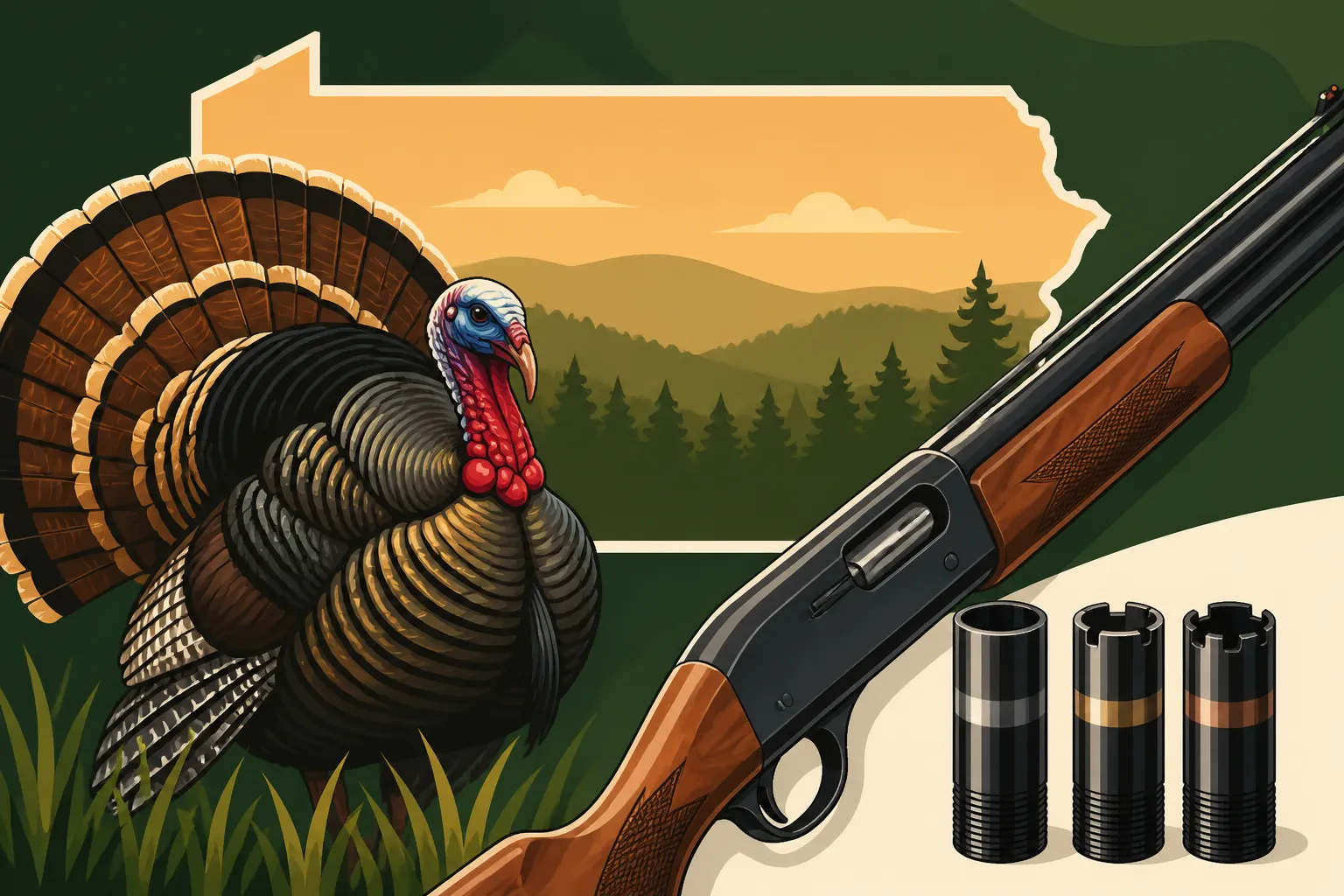
Dedicated turkey chokes are specifically engineered to provide the tightest, most consistent patterns possible with modern turkey ammunition. Unlike a standard Full choke, which might be .035" or .040" over bore, a turkey choke can be .060" or even .070" or more over bore. They often feature extended designs, meaning they protrude from the end of the barrel. This extension helps to protect the barrel threads, allows for more gradual constriction, and sometimes includes porting to reduce recoil and muzzle jump, which can be helpful with heavy turkey loads.
The main benefit of a dedicated turkey choke is its ability to centralize the pattern and deliver a high percentage of pellets into a tight core. This creates a lethal pattern that minimizes the chances of wounding a bird and maximizes your effective range. When you're trying to put 100+ pellets of #5 lead or #9 TSS into a turkey's head and neck at 40 yards, you need every advantage you can get. These chokes are designed to do exactly that, by stripping the wad cleanly and keeping the shot column together as long as possible before dispersion.
Many companies, such as Carlson's, Indian Creek, and Jebs, specialize in making high-performance turkey chokes. Each company has its own philosophy and design, so one brand might perform better in your specific shotgun than another. It's a bit of a trial and error process, but investing in a good turkey choke is one of the most cost-effective ways to improve your turkey hunting success rate. When you're spending good money on specialized ammunition, it only makes sense to have a choke that can maximize its potential.
| Choke Type | Typical Constriction (Approx.) | Best For | Considerations |
|---|---|---|---|
| Modified | .010" – .020" | Close range, larger patterns, early season | Too open for most dedicated turkey hunting. |
| Full | .030" – .040" | Decent all-around, general purpose hunting | Often not tight enough for extended turkey range. |
| Extra Full | .040" – .050" | Better for turkey, tighter patterns | Good step up from full, but can still be improved. |
| Turkey Specific | .055" – .075"+ | Optimal for turkey, densest patterns | Designed for lead/TSS, check ratings for steel shot. |
Ammunition Matters: Pairing Shotgun and Choke with Loads
Choosing the right choke is only half the battle; the other half is selecting the perfect ammunition to go with it. The marriage between your shotgun, choke, and the specific shell you use is what truly dictates your pattern's performance. Don't fall into the trap of thinking all turkey loads are created equal, or that a super-tight choke will magically make any shell perform flawlessly. Understanding the different types of shot and how they interact with your choke will be key to building a lethal setup.
The Evolution of Turkey Loads
For decades, lead shot was the standard for turkey hunting. Historically, #4, #5, and #6 lead shot were the most common, offering a good balance of pellet count and penetration. Lead is relatively soft, which means it can deform when pushed through a tight choke or when pellets collide in the shot column. This deformation leads to "fliers" – pellets that stray from the main pattern – and reduces overall pattern density and consistency. Despite this, quality lead loads from brands like Federal Premium and Winchester still provide excellent performance, especially when paired with a choke designed for lead. They are generally more affordable than newer alternatives, making them a good option for those on a budget or for patterning multiple chokes.
The game-changer in turkey ammunition has undoubtedly been Tungsten Super Shot (TSS). This material is significantly denser and harder than lead, allowing for much smaller pellets to carry more energy and penetrate deeper. A #9 TSS pellet, for example, often carries more energy than a #5 lead pellet. This means you can pack a much higher pellet count into a shell without sacrificing knockdown power. The hardness of TSS also means minimal pellet deformation, resulting in incredibly tight and uniform patterns. This is why 20-gauge and even .410 shotguns have become legitimate turkey guns with TSS. The downside, of course, is the cost. TSS shells are significantly more expensive, which can make extensive patterning an investment. However, for many serious turkey hunters, the superior performance and confidence TSS provides are well worth the price.
Other alternative non-toxic shot materials, such as bismuth or blends, also exist. These typically fall somewhere between lead and TSS in terms of density, hardness, and price. They can be a good compromise for hunters looking for something better than lead but less expensive than TSS, or in areas where lead shot is restricted.
Matching Shot Size and Type to Your Choke
The general rule of thumb is that smaller, harder shot (like #9 TSS) tends to pattern tighter than larger, softer shot (like #4 lead) through the same choke. This is because the harder pellets resist deformation, and the smaller size allows more pellets to fit through the constricted bore without excessive friction or damage.
When using lead loads, you often want to avoid overly tight chokes. A choke that's too restrictive for lead can actually degrade your pattern by crushing and deforming too many pellets. An Extra Full or a turkey choke specifically designed for lead might be ideal. Common lead shot sizes include #4, #5, and #6. Many hunters swear by #5 lead for its balance of pellet count and energy.
With TSS, the rules change a bit. Because TSS is so hard, it can handle much tighter constrictions without deforming. This means you can often use an even tighter choke, or a choke specifically designed for TSS, to achieve astonishingly dense patterns. #7, #9, and even blended #7/9 TSS loads are popular. The sheer pellet count of #9 TSS can turn a small gauge shotgun into a true turkey slayer. When you're studying the performance data for your specific gun and choke, perhaps using resources like GoHunt to research ballistic comparisons, you'll see how much modern TSS has shifted the game.
It's crucial to experiment. What patterns well in your friend's 12-gauge with a specific brand of #5 lead might pattern terribly in your gun. You need to shoot various combinations to find the sweet spot. Don't be afraid to try different brands, shot sizes, and even different chokes if your initial results aren't satisfactory. A slight change in wad design or powder type can dramatically alter a pattern.
Patterning Your Setup for Success
You can spend all the money in the world on a fancy shotgun, a high-tech choke, and premium ammunition, but if you don't take the time to pattern your setup, it's all just guesswork. Patterning is the single most important step in ensuring your turkey hunting success and ethical kills. It's not just about hitting the target; it's about knowing exactly how your gun throws its shot at various distances, so you can make informed decisions in the field. This is where the rubber meets the road, proving what actually works.
The Importance of Patterning at Realistic Ranges
Many hunters make the mistake of patterning at 20 yards, seeing a super-tight cluster, and thinking they're ready for anything. The reality of turkey hunting often involves birds that hang up at 30, 40, or even 50 yards. If you only pattern at close range, you have no idea how your pattern opens up at those longer distances.
You should always pattern your turkey gun at the maximum range you anticipate shooting, plus a little extra. For many, this means 40 yards, as this is a common ethical maximum for most setups. However, if you are confident in your setup and skill, you might extend to 50 yards with premium TSS loads. Start closer, say 25 yards, to get a baseline and ensure you're on paper, then move back to 30, 40, and 50 yards. The goal is to establish a clear understanding of your effective killing range – the distance at which your pattern still reliably places enough pellets (typically 80-100+) into a turkey's head and neck area to ensure a clean kill.
When patterning, use large paper targets, preferably ones with a turkey head and neck silhouette. This allows you to visually identify where your pattern is centered and how dense it is within the vital zone. Don't just count the pellets in the center; evaluate the overall coverage. A few stray pellets outside the vital zone are irrelevant; it's the density within that zone that counts. Shoot multiple times with each ammunition and choke combination to ensure consistency. One good pattern doesn't mean your setup is perfect; you're looking for repeatable results.
Troubleshooting Common Patterning Issues
It's rare to get a perfect pattern on your first try. More often than not, you'll encounter some issues that need troubleshooting. This is a normal part of the process, so don't get discouraged.
Pattern Not Centered: If your pattern is consistently hitting high, low, or to one side, it could be an issue with your sights, scope, or even your shooting form. If you're using bead sights, ensure they are properly aligned. If you have a red dot sight or scope (which I highly recommend for precise turkey hunting), make sure it's properly zeroed. A red dot like the Trijicon RMR or similar can make a huge difference in aiming precision. Sometimes, a poorly mounted scope or a loose base can cause shifts. Also, your cheek weld and eye alignment can affect point of impact, especially with heavy recoil. Practice consistent form.
Pattern Too Sparse: A sparse pattern means you're not getting enough pellets in the vital zone. This could be due to several factors:
- Wrong Choke: Your choke might be too open (a standard Full often isn't enough) or, paradoxically, too tight for the specific ammunition, deforming the shot.
- Wrong Ammunition: The load itself might not be performing well in your gun/choke combination. Try different brands, shot sizes, or shot types (e.g., switch from lead to TSS).
- Wad Problems: Sometimes the shotgun wad isn't stripping cleanly from the shot column, causing it to disrupt the pattern. This is harder to diagnose but can be a factor.
"Blown Out" Patterns: This is when the pattern is very large and inconsistent, often with a thin center. It can happen if the choke is too tight for the shot, causing excessive pellet deformation, or if the wad is failing. It's often seen with softer lead shot through very tight chokes. The solution is usually to try a slightly less restrictive choke or switch to harder shot like TSS.
Remember, every shotgun is an individual. What works for a Remington 870 might not work for a Mossberg 500, even if they're both 12-gauge with similar chokes. Be patient, take notes, and make small, incremental changes. A good patterning session will instill confidence, allowing you to focus on the hunt, not whether your gear will perform.
Selecting the Right Setup for Pennsylvania's Diverse Terrain
Pennsylvania's turkey hunting landscape is incredibly varied, from the dense, steep "big woods" of the northcentral region to the rolling farmlands and woodlots of the southcentral and southeastern counties. Your ideal turkey shotgun and choke setup might subtly change depending on where you plan to pursue gobblers. Understanding these nuances can give you an edge and ensure your gear is optimized for the specific challenges of your hunting grounds.
Big Woods Strategies: Long Shots and Steep Terrain
Hunting the vast Hunting Pennsylvania Big Woods for Deer or Hunting Turkeys in Pennsylvania Big Woods presents unique challenges. Gobblers often roam widely, and calling them into spitting distance can be tough. They might hang up on a ridge at 50 yards, or appear suddenly through thick hemlocks. This environment can often lead to longer shots than in more open country, and you're doing a lot more walking.
For big woods hunting, many experienced Pennsylvania hunters favor a 12-gauge shotgun with a high-performance turkey choke and premium TSS loads. The reasoning is simple: maximum pattern density and extended effective range. When a gobbler is cautiously approaching across a logging road or holding up on an opposite bench, having the confidence to make a 40- or 50-yard shot cleanly is invaluable. The extra punch and tighter pattern of TSS through a specialized choke like a Jebs Head Hunter or an Indian Creek BDS can be the difference between a filled tag and a heartbreaking miss.
Barrel length becomes a trade-off here. While a longer barrel might theoretically offer a touch more velocity or consistency, the sheer amount of hiking and maneuvering required in the big woods often makes a shorter, more nimble 20-24 inch barrel preferable. You'll be climbing, crawling, and still-hunting, and a shorter gun is just easier to handle in close quarters or when quickly adjusting your shooting position on uneven ground. Combine this with a lightweight synthetic stock, and you have a potent, mobile package. When you're considering your next big woods adventure, maybe doing some pre-season scouting with a tool like GoHunt to understand the topography, think about how easily you can carry and deploy your setup.
Farm Country Tactics: Close Encounters and Obstacles
Conversely, hunting turkeys in Pennsylvania's farm country, especially in areas like Hunting Pennsylvania Farm Country Edges or Turkey Tactics for Farm Country Edges, often means dealing with different scenarios. Birds might be more patterned to fields, woodlot edges, and agricultural settings. Encounters can often be closer, but you might also be dealing with fences, heavy brush, or even small ravines that a gobbler uses to approach.
In these environments, while a long-range setup is still effective, you might prioritize maneuverability and a slightly wider pattern for closer shots. A 20-gauge with TSS is an excellent choice for farm country. Its lighter weight and reduced recoil are a boon if you're setting up in a ground blind or need to quickly shoulder the gun as a bird pops out of a hedgerow. The incredible pattern density of TSS ensures that even with a smaller gauge, you're delivering lethal energy.
For closer range encounters, some hunters might opt for a slightly less constricted choke, or even run two different chokes in a double-barrel (if using one), one for closer shots and one for longer. The key in farm country is often being prepared for a quick, close shot, as gobblers can appear suddenly. A setup that points naturally and allows for rapid target acquisition is highly valued. The challenges aren't about extreme distance, but often about dealing with obstacles and the bird's sudden appearance. Understanding Decoy Placement for Pressured Birds in these field edge settings can also influence your comfort with effective ranges, as decoys often bring birds in closer.
Maintenance and Fine-Tuning Your Turkey Rig
Getting your turkey shotgun dialed in isn't a "set it and forget it" task. Like any precision hunting tool, it benefits from regular maintenance and occasional fine-tuning. Over the course of a season, or even just during extensive patterning sessions, small issues can arise that affect performance. A little preventative care and attention to detail can ensure your shotgun performs reliably when it truly matters.
Keeping Your Shotgun Clean and Ready
A clean gun is a reliable gun. This is especially true for shotguns, where powder residue and plastic wad fouling can build up, affecting everything from choke performance to bore integrity.
After each patterning session, and certainly after a few days of hunting, give your shotgun a thorough cleaning. Pay particular attention to the barrel and choke tube. Powder residue and plastic fouling (from the shot cup rubbing against the bore) can accumulate, especially in the choke section. This build-up can alter the internal dimensions of the choke, leading to inconsistent patterns or even "blowing out" a pattern. Use a good bore cleaner and a brass brush to scrub the bore, followed by patches until clean. Don't forget to remove the choke tube and clean both its threads and the choke seating area in the barrel. A light coat of oil on the choke threads will prevent seizing.
Beyond the bore, wipe down the exterior of the gun, especially if you've been out in rain or damp conditions. A thin layer of rust can form quickly, leading to pitting and cosmetic damage. Lightly oil all metal surfaces and moving parts. Check all screws on your scope or red dot sight to ensure they are tight. Red Dots on a Turkey Shotgun can significantly improve accuracy, but only if they're securely mounted. If you're using a semi-automatic, pay extra attention to cleaning the gas system and bolt assembly, as these are critical for reliable cycling. A well-maintained shotgun not only performs better but also lasts longer, becoming a trusted companion for many seasons to come.
Adjusting Sights and Optics for Precision
Even if your shotgun was perfectly patterned at the start of the season, slight shifts can occur. Bumping your gun, extreme temperature changes, or even just repeated firing of heavy loads can cause a scope or red dot to lose zero. This is why it's a good idea to periodically check your zero, especially before opening day.
Take a few practice shots at your intended hunting distance (e.g., 40 yards) to confirm your point of aim. If you notice any drift in your pattern's center, make the necessary adjustments to your sights or optic. Remember, small adjustments can make a big difference downrange. Most optics have click adjustments for windage and elevation; understand how many clicks equate to an inch of movement at a given distance.
If you're using fiber optic bead sights, ensure they haven't been damaged or knocked loose. These can be surprisingly effective for close-range shots, but they lack the precision of a magnified optic or red dot. For optimal precision, especially for headshots on turkeys, a red dot sight or a low-power variable optic is highly recommended. They eliminate parallax and make precise aiming much easier, particularly in low light conditions or when a gobbler's head is bobbing and weaving. Consider what kind of optic you'd want for Scouting Pennsylvania Public Land Before Season that might also help you on the firing range. Taking the time to confirm your zero and make minor adjustments will give you incredible peace of mind when that gobbler finally steps into your shooting lane.
Disclaimer
This article is for general informational purposes only and does not constitute professional advice. Laws, prices and regulations vary by location and change over time. Consult a qualified professional for guidance on your specific situation.