Turkey Calls Worth Carrying in Pennsylvania
There's nothing quite like the silence of a Pennsylvania spring morning, broken only by the rustle of leaves or the distant caw of a crow. But that silence can quickly turn to frustration when you're set up, ready for a gobbler, and he just isn't talking back to your calls. We've all been there, wondering if our calls are just sounding wrong, or if we're using the right ones at the wrong time. This guide is all about helping you sort through the vast array of turkey calls out there, focusing on the ones that truly earn their spot in your vest for success in Pennsylvania's diverse turkey woods.
The Foundation of Turkey Calling: Understanding the Basics
Before we even dive into specific calls, it's crucial to grasp why turkeys make the sounds they do. It’s not just random noise; every yelp, cluck, purr, and gobble serves a purpose, a communication signal within their intricate social structure. Understanding this helps us replicate those sounds authentically and, more importantly, know which sound to make at which moment to elicit a response. Without this understanding, you're just making noise, and Pennsylvania gobblers, especially those on public lands, are often too wary for that.
The "Why" Behind the Call: Deciphering Turkey Vocalizations
Think about what a hen or a gobbler is trying to achieve with their calls. Hens yelp to announce their presence, to locate other turkeys, or to gather their brood. Clucks and purrs are close-range, contented sounds, signaling safety or interest. Gobbles, of course, are primarily the male's declaration of dominance and desire to attract hens. When you're trying to call in a bird, you're essentially trying to have a conversation. Are you a lonely hen looking for company? A boss hen telling others where to go? Or are you simply trying to provoke a response to pinpoint a bird's location? Your choice of call, and the cadence you use, should reflect this underlying intention.
It's not just about making the sound, but making it believable. A sharp, excited yelp might sound great on a YouTube video, but if you're trying to portray a calm, feeding hen, it's going to fall flat. Conversely, a quiet purr isn't going to cut through the wind and trees to reach a distant gobbler. Learning to differentiate between these nuances is a lifelong journey for a turkey hunter, but it starts with appreciating the meaning behind the sound. This deeper understanding will make your calling more effective and reduce those frustrating moments when birds seem to ignore you completely.
Matching the Hatch: When to Use Which Call Type
Just like matching the hatch for trout fishing, selecting the right call depends heavily on the specific scenario you find yourself in. Are you trying to wake up a gobbler on the roost first thing in the morning? A loud, clear tree yelp might be your best bet. Are you working a bird that's hung up at 80 yards, trying to get him to commit? Soft clucks and purrs, perhaps with a subtle whine, often do the trick better than aggressive yelping. The conditions around you also play a huge role. Wind, rain, heavy foliage, or wide-open fields all dictate how far your sound will travel and how natural it will seem to a sharp-eared gobbler.
Consider the time of year and the pressure birds are experiencing. Early in Spring Gobbler Hunting in Pennsylvania, birds might be more responsive to bold calling as they're actively seeking mates. Later in the season, after weeks of pressure from other hunters, a more subtle approach might be necessary. Some days, they want to hear a lot; other days, a single, well-placed call is all it takes. This adaptability comes with experience, but knowing the range and typical use of each call type is the first step.
Practice Makes Perfect: Developing Your Calling Ear
I know, I know, it sounds cliché, but it's absolutely true. You wouldn't expect to hit a bullseye without shooting your bow, and you shouldn't expect to sound like a real turkey without practicing your calls. This isn't just about making noise; it's about developing an "ear" for what a real turkey sounds like. Listen to actual turkeys, whether it's out in the woods or on recordings. Pay attention to the rhythm, the tone, and the subtle variations in their vocalizations. Then, try to mimic those sounds with your chosen calls.
Start by mastering the basic yelp, cluck, and purr on a few different call types. Record yourself and compare it to real turkeys. It can be a humbling experience, but it's essential for improvement. Don't be afraid to experiment with different pressures, angles, and speeds. Many seasoned hunters will even use a mapping tool like GoHunt to scout likely roosting or feeding areas, then practice their calls in those locations, hearing how the sound carries in different types of timber and terrain. This kind of dedicated practice at home and afield builds muscle memory and confidence, ensuring that when that crucial moment arrives in the woods, your calls sound convincing.
Essential Box and Slate Calls for Pennsylvania Woods
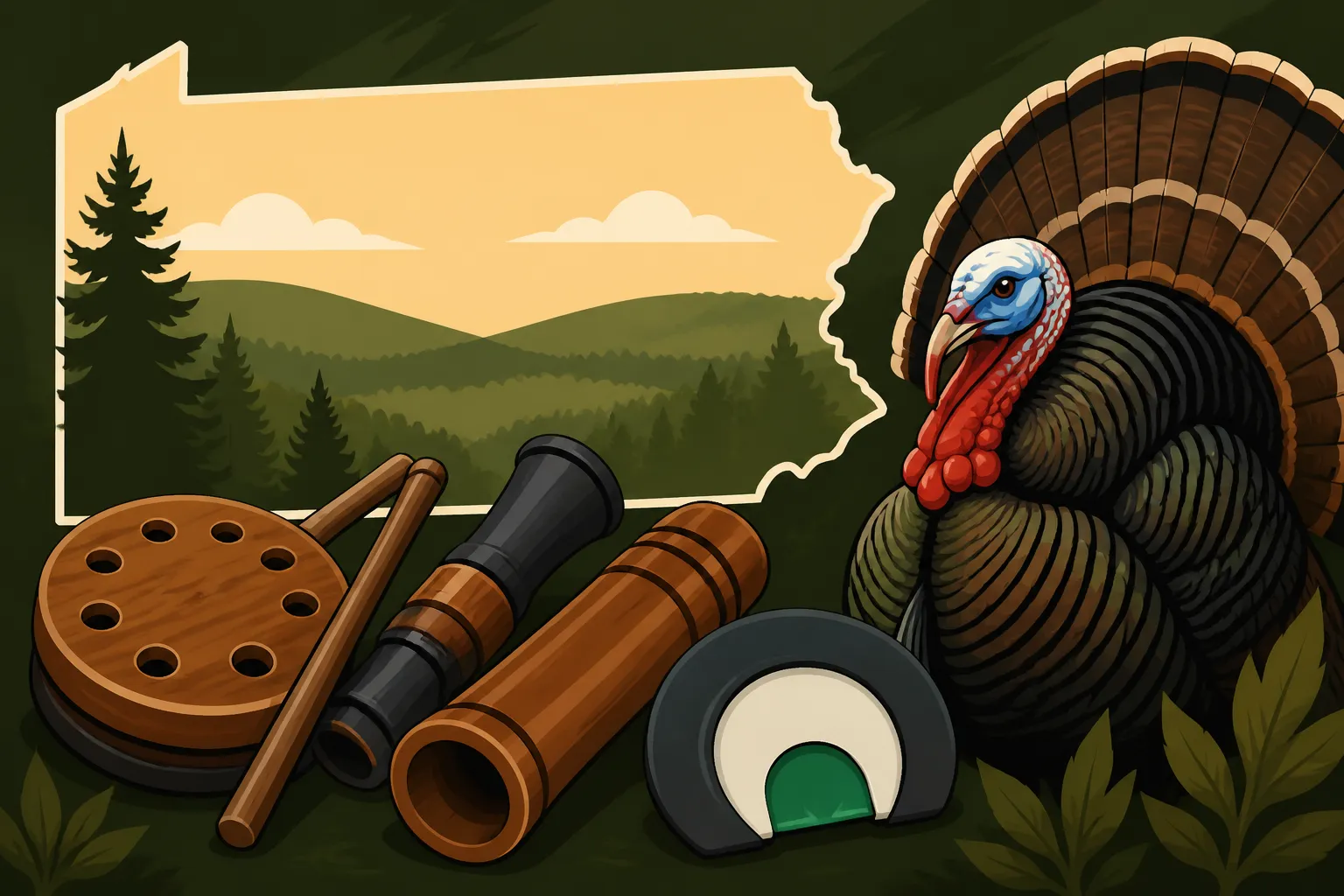
When it comes to versatility and reliability, box and slate calls are often the backbone of a Pennsylvania turkey hunter's arsenal. They are relatively easy to learn, can produce a wide range of realistic sounds, and often work in conditions where other calls might struggle. Whether you're a beginner or a seasoned pro, these calls deserve a prime spot in your vest.
The Reliable Box Call: Loud, Versatile, and Beginner-Friendly
The box call is a classic for a reason. Its design allows for loud, far-reaching yelps and cutts, making it perfect for reaching out to distant gobblers or covering a lot of ground when you're Run-and-Gun Turkey Tactics on Game Lands. The beauty of a box call lies in its simplicity. By varying the pressure you apply to the paddle and how quickly you drag it across the lip of the box, you can create everything from soft tree yelps to excited cutting. This makes it an excellent choice for new callers, as it's forgiving and produces decent sounds with minimal effort.
But don't mistake "beginner-friendly" for "only for beginners." Many expert callers swear by their box calls, especially when trying to get a shock gobble from a bird on the roost or make a loud declaration in heavy wind. Some of the most realistic hen yelps I've ever heard have come from a well-tuned box call. Plus, it's generally durable and less susceptible to moisture than some other call types, though keeping the chalked surfaces dry is still key. I like to carry a small piece of chalk with me to re-chalk the lid and lip if they get too slick from moisture or oils.
Slate Calls: The Subtle Art of Realistic Yelps and Clucks
If the box call is your loud hailing device, the slate (or pot) call is your subtle persuader. Consisting of a pot with a striking surface (slate, glass, aluminum, or crystal) and a striker, these calls are renowned for their ability to produce incredibly realistic, nuanced hen vocalizations. They excel at softer clucks, purrs, and quiet yelps – those delicate sounds that often seal the deal when a gobbler is close but needs a final nudge to come into range. Turkey Tactics for Farm Country Edges often demand this level of subtlety.
Learning to use a slate call takes a bit more practice than a box call, but the payoff is immense. Different strikers (made of various woods like hickory, purpleheart, or carbon) will produce slightly different tones, adding another layer of versatility. Keep your slate surface clean and lightly scuffed (sandpaper or a conditioning stone usually comes with the call) to ensure proper friction. Like all friction calls, moisture can be an issue, so keeping it in a dedicated pouch in your vest is a good idea. For those tense moments when a gobbler is peering through the timber just out of sight, a series of soft, seductive purrs from a slate call can often be irresistible.
Combining Box and Slate for a More Natural Sound
One of the most effective strategies for any turkey hunter is to use multiple calls to mimic the sounds of an actual flock. Turkeys don't just hear one hen; they hear a chorus of different voices. By alternating between a box call and a slate call, you can create the impression of more than one bird, or simply vary the tone and cadence enough to sound more natural and less like a single, repetitive caller. This can be especially effective when you're trying to Calling a Pennsylvania Gobbler Off the Roost.
Imagine starting with a loud box call to get a distant gobbler's attention, then switching to a softer slate call as he gets closer, making him think a "different" hen is moving in. Or perhaps you use the box call for your main yelps and the slate call for soft clucks and purrs in between, adding depth to your calling sequence. This technique adds realism and prevents the gobbler from "patterning" your calling. Having both in your vest also provides a backup in case one gets wet or malfunctions.
| Call Type | Primary Use Cases | Pros | Cons |
|---|---|---|---|
| Box Call | Long-range yelps, cutts, shock gobbling, covering ground | Loud, versatile, easy to learn, durable | Can be bulky, less subtle for close work |
| Slate Call | Close-range yelps, clucks, purrs, soft calling | Highly realistic, nuanced sounds, compact | Requires more practice, sensitive to moisture |
| Mouth Call | Hands-free calling, aggressive sounds, diverse tones | Hands-free, compact, diverse sounds, realistic | Steep learning curve, can stick to roof of mouth |
| Locator | Shock gobbling, pinpointing birds, covering ground | Gets instant responses, covers large areas | Can spook birds if overused or too aggressive |
Mastering Mouth Calls: The Hands-Free Advantage
Mouth calls, also known as diaphragm calls, are arguably the most versatile and challenging calls to master, but they offer an unparalleled advantage: they allow you to call hands-free. This is a game-changer when you have a gobbler in sight and need to keep your gun shouldered or your hands free for your bow. While they have a steeper learning curve, the range of sounds and the practical benefits make them an absolute must-have for serious Pennsylvania turkey hunters.
Diaphragm Calls: The Go-To for Aggressive and Realistic Sounds
Diaphragm calls consist of a small frame with one to three (or more) latex reeds stretched across it, which you place in the roof of your mouth. By forcing air across the reeds while applying tongue pressure, you create vibrations that mimic a wide array of turkey vocalizations. From soft tree yelps to aggressive cutting and even gobbling, a skilled caller can do it all with a mouth call. This hands-free operation is particularly beneficial when you're Setting Up Against a Big Oak and need to stay absolutely still as a gobbler approaches, or when running and gunning, allowing you to move with your gun at the ready.
The sheer variety of mouth calls available is staggering, with different reed cuts and tensions producing distinct tones. A beginner might start with a single-reed call, which is generally easier to blow. As you gain experience, you might move to double or triple-reed calls for more rasp and volume. Mastering a mouth call takes patience, perseverance, and a lot of practice in the off-season. Don't get discouraged if it sounds like a dying duck at first; everyone starts there. Consistent effort will eventually lead to those sweet, realistic yelps that bring a gobbler charging in.
Push-Pull Calls: Simple, Effective, and Often Overlooked
While not as widely discussed as diaphragm or friction calls, the push-pull call (also known as a push-button call) is an incredibly effective and often overlooked tool, especially for hunters who struggle with mouth calls or want a simple, reliable option. These calls typically consist of a small wooden box with a plunger that you push and pull to create friction, producing yelps and clucks. They are incredibly easy to use, often producing excellent sounds right out of the package with minimal practice.
The advantage of a push-pull call is its consistent sound. It's difficult to make a bad sound with one, and they can produce very realistic soft calls, which can be invaluable when a gobbler is close and wary. While they aren't hands-free in the same way a diaphragm call is, they are quiet to operate with minimal movement, making them a great choice for those critical final moments. I've seen many a seasoned hunter pull out a push-pull call to finish a gobbler that was hung up, and it often does the trick when more complex calls have failed.
When to Reach for a Mouth Call Over Others
Knowing when to deploy your mouth call is just as important as knowing how to use it. The primary reason, as mentioned, is the hands-free advantage. If you have a bird coming in and you anticipate a shot opportunity, having your hands free for your firearm or bow is critical. Trying to put down a slate call or maneuver a box call while a gobbler is within range is a recipe for getting busted. This makes mouth calls ideal for the final stages of an encounter.
Beyond that, mouth calls excel at producing aggressive, excited sequences that can really fire up a gobbler. Rapid cutting and yelping, which can be difficult and noisy to do with a friction call, are seamless with a mouth call. If you're encountering pressured birds or in areas where gobblers are wary, being able to quickly switch between soft and aggressive calling without any hand movement can be the difference maker. They also perform well in wet weather, as the reeds are less affected by moisture than the surfaces of friction calls. For hunters navigating Hunting Pennsylvania's Big Woods for Deer (and by extension, turkeys), where close encounters can happen in thick cover, the mouth call is often the most practical choice.
Locator Calls: Getting a Read on Gobblers
Sometimes, the hardest part of turkey hunting isn't calling a bird in, but simply finding one to begin with. This is where locator calls come into play. These calls mimic the sounds of other animals, provoking a "shock gobble" from a tom that feels the need to announce his presence or territory. They are an essential part of a hunter's toolkit, especially when trying to pinpoint birds at dawn or when covering new ground.
Crow, Owl, and Hawk Calls: Shocking a Gobbler into Action
The most common and effective locator calls mimic the sounds of crows, owls, and hawks. A loud, sharp crow caw, especially multiple caws in a sequence, can often irritate a gobbler enough to make him sound off. Similarly, an owl hoot, particularly the barred owl's distinctive "Who cooks for you? Who cooks for you all?" call, is fantastic for getting a pre-dawn gobble from a bird still on the roost. Hawks, with their piercing screams, can also elicit a response, though they are generally less common than crow or owl calls.
These calls are most effective in the early morning or late evening when turkeys are most vocal, but they can work anytime you need to locate a silent bird. The key is to be loud and confident with your locator call. You're not trying to fool the gobbler into thinking you're a crow; you're just trying to get a reflex gobble out of him. Once you hear that gobble, you can then switch to your turkey calls and begin your setup. Always listen carefully after each locator call, sometimes the gobble is faint or distant, and you need to be tuned in. Many hunters consult GoHunt's mapping features to mark where they hear these responses, helping them build a pattern of roosting and travel routes for future hunts.
The Unpredictable Coyote Howl: A Bold Approach
While not as common as crow or owl locators, a coyote howl can be an incredibly effective and sometimes surprising way to get a gobbler to sound off. Coyotes are natural predators of turkeys, and a tom, upon hearing a howl, might feel compelled to gobble as a territorial defense or to rally any nearby hens. This is a bolder approach and should be used with caution, as it can sometimes make birds wary, especially if they're accustomed to hearing real coyotes.
I've had personal success with a coyote howl when traditional locator calls failed. It's often best used when you suspect birds are in an area but are completely silent, perhaps When Pennsylvania Gobblers Go Quiet after some pressure. A single, realistic howl, followed by a period of silence, can sometimes shock a gobbler into giving away his position when nothing else will. Like all locator calls, the goal is simply to get a reaction, not to imitate a coyote perfectly. If you can get a gobble, you've achieved your objective, and it's time to switch to your hen calls.
Reading the Response: What a Gobble Tells You
Once you've gotten a gobble, your job isn't over; in fact, it's just beginning. The way a gobbler responds to your locator call can tell you a lot about his position, his enthusiasm, and even his potential direction of travel. A loud, booming gobble that cuts off your call indicates an aggressive, close bird. A softer, more distant gobble suggests he's further away or perhaps less interested. Listen not only to the volume but also the direction. Is he straight ahead? Off to your left? Behind that ridge?
Experienced hunters use these auditory cues to quickly assess the situation and plan their approach. If he's still on the roost, you might try a soft tree yelp immediately after his gobble to get him interested before he flies down. If he's on the ground and moving away, you know you need to reposition quickly. Conversely, if he's gobbling consistently in the same spot, he might be strutting for hens, or perhaps has a specific area he doesn't want to leave. Don't just listen for a gobble, listen for the gobble – its characteristics provide valuable intelligence.
Strategic Call Selection for Pennsylvania's Diverse Terrains
Pennsylvania's turkey hunting landscape is incredibly varied, from the vast, sprawling big woods of the north-central region to the rolling farmlands and suburban fringes of the south-east. What works like a charm in one area might be completely ineffective in another. A savvy turkey hunter understands that their calling strategy, and therefore their call selection, needs to adapt to these different environments, as well as to changing weather conditions and hunting pressure.
Big Woods Tactics: Reaching Out in Expansive Timber
Hunting turkeys in Pennsylvania's big woods is a completely different ballgame than chasing them in farm country. Here, gobblers might be miles apart, and the dense timber absorbs sound, making it harder to locate birds and keep them engaged. For these expansive areas, volume and projection are your best friends. You need calls that can cut through the wind and trees to reach distant birds. Hunting Turkeys in Pennsylvania Big Woods requires a strategic approach to calling.
Loud box calls and aggressive, raspy mouth calls (especially multi-reed diaphragms) are ideal for covering ground and announcing your presence in the big woods. Start with loud, attention-grabbing yelps and cutts to locate a bird. Once you get a response, you can moderate your calling, but don't be afraid to be bold. These birds often roam wide, and you need to convince them it's worth their effort to come your way. Locator calls, particularly crow and owl hoots, are also indispensable for pinpointing gobblers in thick cover.
Farm Country Edges: Subtle Calling for Pressured Birds
In contrast to the big woods, farm country turkeys, especially those closer to suburban areas, are often heavily pressured and much warier. They've heard every call in the book, seen every decoy setup, and are quick to shy away from anything that sounds unnatural or too aggressive. Here, subtlety and realism are paramount. You need calls that can produce soft, enticing sounds that won't alarm an educated gobbler.
Slate calls excel in these scenarios, producing realistic clucks, purrs, and soft yelps that convince a hung-up bird to take those last few steps. Push-pull calls can also be incredibly effective for their consistent, mellow tones. Mouth calls, when used sparingly and softly, are excellent for hands-free calling when a gobbler is peering through the last bit of cover at the field edge. Avoid overly loud or aggressive calling. Focus on patience and sounding like a contented, disinterested hen. Sometimes, just a few soft clucks from a slate call, then silence, is enough to pull in a bird. Remember, birds in these areas are highly educated and often visible for long distances, so your call choice needs to reflect that pressure. Turkey Tactics for Farm Country Edges means less volume, more nuance.
Adapting Your Call Arsenal to Weather and Pressure
The weather, like the terrain, dictates your call choices. On a windy day, friction calls can be difficult to use effectively as the sound gets carried away or distorted. Here, louder box calls or aggressive mouth calls might be better for projection. If it's raining or very damp, friction calls with slate or glass surfaces can become sticky or lose their sound quality. In these conditions, mouth calls or weatherproof box calls (some are made with materials that resist moisture) are a smarter choice.
Similarly, hunting pressure will impact how responsive birds are to certain calls. Early in the season, or on properties with minimal pressure, gobblers might come charging in to almost any convincing yelp. Later in the season, or on public lands like those managed by the Pennsylvania Game Commission, birds become call-shy. This is when your full repertoire comes into play. You might need to cycle through different calls, using different tones and cadences, to find something that resonates. This also means being adept at using silent periods, letting the curiosity get the best of the bird. If you're going for Decoy Placement for Pressured Birds, your calling needs to be perfectly synchronized with your decoy strategy to avoid alarming wary toms.
Ultimately, the best turkey call for Pennsylvania isn't just one call; it's a carefully selected arsenal of different types. By understanding the function of each, practicing diligently, and adapting your choices to the specific conditions of your hunt, you'll significantly increase your chances of bringing that gobbler home. Always consider your hunting location, be it vast tracts of the Allegheny National Forest Hunting or smaller woodlots in the Southeast Pennsylvania Farm Country Hunting, and tailor your calling strategy accordingly. Tools like GoHunt can help you understand the terrain, identify potential roosts or strutting zones, and even plan your approach, giving you the context to make informed decisions about your calling. Just remember to grab your Turkey Vests With a Kickstand Seat and get out there!
Disclaimer
This article is for general informational purposes only and does not constitute professional advice. Laws, prices and regulations vary by location and change over time. Consult a qualified professional for guidance on your specific situation.