Red Dots on a Turkey Shotgun
There's nothing quite like the rush of a spring gobbler sounding off on the roost, but that excitement can quickly turn to frustration when it comes time to make the shot. Many Pennsylvania turkey hunters have wrestled with the tiny bead sight on their shotgun, struggling to get a precise aim on a bird's bobbing head and neck, especially when it steps into a tight shooting lane or the light is fading. This guide is all about simplifying that aiming process by diving deep into how red dot sights can transform your turkey hunting experience in the varied and often challenging terrain of Pennsylvania, helping you achieve more consistent, ethical harvests.
Why Red Dots Make Sense for Pennsylvania Turkey Hunting
For years, the traditional single bead on the end of a shotgun barrel was the standard for turkey hunting. It worked, to be sure, but it also presented a host of challenges, particularly in the fast-paced, close-quarters situations that turkey hunting often delivers. Red dot sights offer a clear, distinct advantage that can alleviate many of these aiming frustrations.
The Frustration of Traditional Shotgun Beads
Think about those moments: a gobbler steps out from behind a tree at 25 yards, its head bobbing and weaving as it scans for hens. You shoulder your shotgun, try to align that tiny front bead with the broad, blurring mass of its head, and just as you pull the trigger, the bird takes another step, or your eye alignment shifts ever so slightly. It’s an easy scenario for a missed shot or, worse, a poorly placed shot that only wounds the bird. Traditional beads force you to focus on two planes simultaneously – the bead and the target – which is notoriously difficult under pressure.
Another common frustration arises in low-light conditions, either at dawn when the woods are still shadowy or in thick cover where light struggles to penetrate. That little brass bead can disappear, becoming almost impossible to pick up against a dark backdrop or the turkey’s dark feathers. This can lead to hesitation, giving the bird time to spot you or move out of range, or it can force a risky shot. Hunters often carry a special wild turkey licence, and they want to make that tag count, so the pressure is real.
Then there's the issue of target acquisition itself. Turkeys don't always cooperate and present a perfect, stationary broadside shot. Sometimes they're moving, or you need to quickly pivot to a different angle. Trying to quickly swing and acquire a target with just a bead can feel like a game of hide-and-seek, especially for hunters new to the sport or those who only pick up a turkey gun once a year. The Pennsylvania woods are full of tight lanes and sudden opportunities, and a bead can feel like it's holding you back.
Advantages of a Red Dot Sight
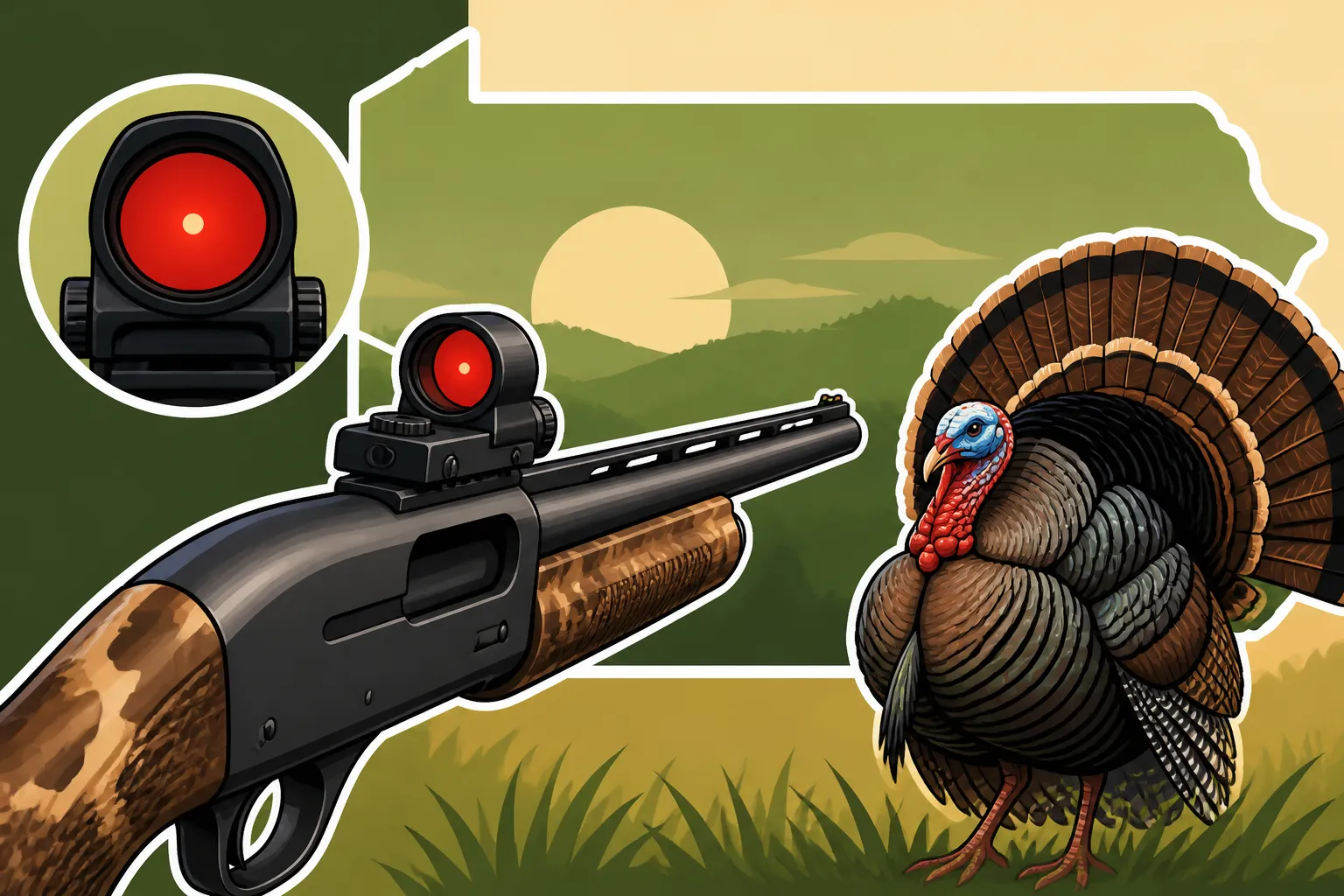
Enter the red dot sight, a game-changer for many turkey hunters. The primary advantage is its single focal plane. Instead of aligning a bead with the target, you simply put the red dot on the target and press the trigger. Your eye naturally focuses on the red dot, which appears to float in front of the target, allowing for much faster and more intuitive target acquisition. This is particularly valuable when a gobbler bursts from cover unexpectedly or you need to adjust your aim quickly as it struts past your Turkey Decoys That Work on Pressured Birds.
Red dots also excel in varied lighting conditions. Most quality red dot sights come with adjustable brightness settings, allowing you to dial up the intensity for bright daylight or dim it down for those shadowy early morning hours when turkeys are still on the roost. This means that little red dot remains crisp and visible, regardless of the ambient light, giving you confidence when Calling a Pennsylvania Gobbler Off the Roost at legal shooting light.
Furthermore, red dots significantly improve accuracy. While shotguns aren't precision rifles, a well-patterned turkey gun with a red dot allows for incredibly precise placement of that dense shot pattern. You're no longer guessing where the center of your pattern will hit; you're placing it exactly where the dot sits. This is crucial for ethical head and neck shots, which are paramount in turkey hunting. It also helps account for slight shifts in head position or range, ensuring more of your pellets impact the kill zone. When you're Setting Up Against a Big Oak and waiting for a tom to commit, knowing your aiming system is rock-solid provides immense confidence.
Legal Considerations for Red Dots in Pennsylvania
One of the great things about red dot sights in Pennsylvania is their legality for shotgun hunting. The Pennsylvania Game Commission (PGC) allows the use of any non-magnifying or magnifying optical device on shotguns for turkey hunting. This means you don't have to worry about running afoul of regulations when you mount a red dot on your dedicated turkey gun. Unlike some more advanced night vision or thermal optics that have specific restrictions for certain species or seasons, a red dot is a straightforward, legal enhancement for your turkey setup.
However, it's always wise to stay informed about the latest regulations, as things can change. Checking the current PGC digest each year is a good practice for any hunter. But for red dot sights, they've been embraced as a legitimate and effective aiming tool, making turkey hunting more accessible and successful for many. It's a technological advancement that truly helps hunters be more precise and ethical in the field, which aligns with responsible hunting practices. This freedom to use modern optics means you can focus on Run-and-Gun Turkey Tactics on Game Lands or hunting the Fall Turkey Hunting in Pennsylvania without equipment concerns.
Choosing the Right Red Dot for Your Turkey Shotgun
Selecting a red dot sight isn't as simple as grabbing the first one you see. Shotguns, especially those firing heavy turkey loads, impart significant recoil, and the demanding conditions of spring turkey season in Pennsylvania require a robust optic.
Key Features to Look For
When choosing a red dot for your turkey shotgun, durability is paramount. These optics need to withstand the harsh recoil of turkey loads, year after year. Look for sights constructed from aircraft-grade aluminum or similar rugged materials. Waterproof and fogproof ratings are also critical. Pennsylvania spring weather can be notoriously unpredictable, swinging from sunny and warm to cold, rainy, or even snowy in a matter of hours. You need an optic that won't fog up internally or short out if it gets drenched.
Battery life is another significant factor. You don't want your dot dying on you when that gobbler finally commits. Many modern red dots boast impressive battery life, often measured in tens of thousands of hours, and some even have motion-activated "shake awake" features to conserve power. However, always carry a spare battery, just in case. Consider the accessibility of the battery compartment; some designs allow for battery changes without removing the sight from the gun, which prevents loss of zero.
The size of the red dot, measured in MOA (Minute of Angle), also matters. For turkey hunting, where the target area is relatively small (the head and neck), a dot size between 2-5 MOA is generally preferred. A smaller 2-3 MOA dot offers more precision for aiming at the exact spot on the turkey's head, while a slightly larger 5 MOA dot can be quicker to pick up, especially in fast-breaking situations. It's a trade-off that often comes down to personal preference and how you typically hunt. If you're Hunting Turkeys in Pennsylvania Big Woods where shots might be through tight lanes, a smaller dot might be beneficial for precise placement.
Finally, consider the mounting options. Some red dots are designed for direct mounting to specific shotgun receivers, while others utilize Picatinny rails. Ensure the red dot you choose is compatible with your shotgun's receiver or has an adapter available. The lower the profile, generally, the better, to maintain a natural cheek weld and line of sight.
Mounting and Zeroing Your Red Dot
Proper mounting is crucial for consistent accuracy and to prevent the red dot from shifting under recoil. Most turkey shotguns will require a Picatinny rail, often installed directly onto the receiver. Ensure the rail is securely fastened, using thread locker on the screws if recommended by the manufacturer. Then, mount your red dot sight as far forward as comfortable on the rail, while still allowing for proper eye relief and a clear sight picture. Once mounted, tighten all screws to the manufacturer's specifications.
Zeroing your red dot is perhaps the most critical step. This isn't like zeroing a rifle for paper targets; you're patterning your shotgun. You'll need a large paper target at your chosen maximum turkey shooting distance, typically 30-40 yards. Use the exact turkey loads you plan to hunt with. Fire a few shots, aiming the red dot at the center of the target. Then, adjust the red dot's windage and elevation until the densest part of your shot pattern (the "core") is centered where your dot was aiming.
This process, often called Patterning a Turkey Gun at 40 Yards, is paramount. It ensures that when your red dot is on the bird's head, the most concentrated part of your shot column is precisely where it needs to be. Don't skip this step or try to zero with lighter field loads; your turkey loads will pattern differently. Many hunters will even pattern their gun at a couple of different distances, say 20 and 40 yards, to see how the pattern spreads and confirm their point of aim. A proper zero will give you immense confidence when a gobbler finally comes into range, whether you're dealing with Turkey Tactics for Farm Country Edges or dense timber.
| Feature | Importance for Turkey Hunting | Considerations |
|---|---|---|
| Durability | High | Must withstand shotgun recoil; shock-resistant housing. |
| Waterproof/Fogproof | High | Essential for unpredictable spring weather. |
| Battery Life | High | Long hours, "shake awake" features, accessible compartment. |
| Dot Size (MOA) | Medium | 2-5 MOA; 2-3 for precision, 5 for faster acquisition. |
| Mounting Options | High | Compatibility with shotgun receiver (Picatinny, direct). |
| Brightness Settings | High | Adjustable for varying light conditions (dawn/midday). |
Brands and Models to Consider
While I can't recommend specific models with current pricing, it's worth knowing that many reputable optics manufacturers offer red dot sights suitable for shotguns. When researching, you'll find options ranging from compact, open-reflex designs (often called "mini red dots") to more traditional tube-style sights. Open-reflex sights typically offer a wider field of view, which can be beneficial for quickly acquiring a moving bird, but their open design can make them more susceptible to rain or debris on the emitter. Tube-style sights are often more robust and enclosed, protecting the emitter, but might have a slightly narrower field of view.
When looking at reviews and specifications, pay attention to the recoil rating. Some red dots are designed primarily for pistols or rimfire rifles, and while they might fit, they might not hold up to repeated blasts from a 3.5-inch turkey load. Look for models explicitly rated for shotgun use or those known for exceptional durability. Brands that specialize in tactical or duty-grade optics often produce red dots that are more than capable of handling shotgun recoil. You might also want to consult hunting forums or outdoor retailers that specialize in gear & optics for Pennsylvania hunters to see what others are using successfully. As you're doing your research and planning your hunts, using tools like GoHunt for mapping and scouting can help you find promising areas before you even step foot in the woods. This kind of preparation, from gear to location, is key to success.
Field Tactics: Using Your Red Dot for Pennsylvania Gobblers
Having a red dot on your turkey shotgun is one thing; effectively using it in the field to seal the deal on a wary Pennsylvania gobbler is another. It's about combining your gear with sound hunting strategy and ethical considerations.
Situational Awareness and Target Acquisition
The speed advantage of a red dot becomes incredibly evident when a gobbler suddenly appears or shifts position. Instead of fiddling with alignment, your focus can remain squarely on the bird. This is particularly helpful in the dense woods typical of much of Pennsylvania, where shots are often close and opportunities fleeting. Imagine a tom cresting a rise just outside your setup, then strutting quickly into a small shooting window. With a red dot, you can acquire that target almost instantly.
However, a red dot doesn't replace good situational awareness. You still need to be ready, shotgun shouldered and pointed in the general direction of where you expect the bird to appear. Maintain a vigilant watch, listen for subtle sounds, and be aware of your surroundings, especially when Hunting Turkeys in Pennsylvania Big Woods. When the moment comes, smoothly bring the gun up, place the dot on the bird's head, and squeeze. Practice this movement at home, safely, so it becomes second nature. The quick acquisition also helps if you’re using Run-and-Gun Turkey Tactics on Game Lands and need to make a quick setup.
One common scenario is when a bird hangs up just out of range, then suddenly commits. The red dot allows for quick adjustments as the bird closes the distance, ensuring your aim remains true even if the bird's head is bobbing or it's moving through patchy cover. This confidence in aim helps reduce the "buck fever" or "turkey fever" that can cause missed shots with traditional beads. Remember to stay still, even as you raise the gun. Face Masks and Gloves for Turkey Hunting are essential to break up your outline against the background.
Ethical Shot Placement with a Red Dot
The primary goal of turkey hunting is a clean, ethical harvest. For turkeys, this almost always means a shot to the head and neck. The brain and spine in this area are small targets, but a dense pattern of shot here leads to an instant, humane kill. A red dot sight is arguably the best tool for achieving this precision with a shotgun.
The crisp, illuminated dot allows you to aim directly at the turkey's noodle (the fleshy part above the eyes) or the base of its neck. This is a much more precise aiming point than trying to "center the pattern" on a larger body mass, which can lead to wounded birds if vital organs aren't hit. With a red dot, you're not guessing where your pattern will hit; you're placing it with confidence. This is especially critical during the Pennsylvania Spring Gobbler Rules when you're looking for that mature tom.
To reinforce ethical shot placement, spend time practicing. Set up turkey head targets at various distances from 10 to 40 yards. Practice quickly acquiring the target and placing the red dot on the head. This isn't just about shooting; it's about simulating real-world hunting scenarios. Understanding your shotgun's pattern density at different ranges will also help you determine your ethical maximum range, which is often around 40-50 yards for most turkey loads and chokes. Using the correct Turkey Shotguns and Chokes will help you achieve this dense pattern.
Maintaining Your Red Dot in the Field
A red dot sight is a piece of electronic equipment, and like all electronics, it needs a bit of care to perform optimally in the field. Before heading out for the season, always perform a battery check. Even if your sight has a long battery life, replacing the battery at the start of each season is cheap insurance against a dead dot in a critical moment. Carry a spare battery in your Turkey Vests and Seat Choices or pack, sealed in a small, waterproof container.
The lenses of your red dot can get dirty, smudged, or wet. Carrying a lens cloth (the kind used for eyeglasses or camera lenses) is a good idea. Avoid using your shirt or anything abrasive, as this can scratch the lens coatings. If it's raining or snowing, a small piece of painter's tape or electrical tape over the objective lens can keep moisture off, but be ready to peel it off quickly when a bird approaches. Some hunters even fashion small bikini covers for their red dots.
Finally, protect your red dot during transport. While they are built tough, unnecessary bumps and drops can affect their zero or internal components. A good gun case is essential. After a rainy hunt, remove the red dot (if easily detachable) or dry it thoroughly to prevent corrosion. A well-maintained red dot will serve you reliably for many seasons across the Pennsylvania landscape, from the farmlands of the southeast to the big woods of the north.
Common Challenges and Troubleshooting
While red dot sights are fantastic tools, they aren't without their quirks or potential issues. Knowing how to address these common challenges can save you a lot of frustration and ensure your hunt goes smoothly.
Parallax and Eye Relief
One of the celebrated benefits of red dot sights is their "parallax-free" nature, or at least being very close to it. In simple terms, this means that as long as the red dot appears on your target, your point of impact should remain consistent, regardless of minor head movements or eye position. This is a huge advantage over iron sights or even some traditional scopes, where a slight shift in head position can change your point of aim.
However, no optic is perfectly parallax-free at all distances. Most red dots are designed to be parallax-free at a specific range, often around 50 yards. For turkey hunting, where shots are typically closer (20-40 yards), any residual parallax is usually negligible, especially if you maintain a consistent cheek weld. The key takeaway is not to overthink it; simply place the dot on the target, and trust your zero. If you find your eye relief is consistently awkward, re-evaluate your mount position on the shotgun. A comfortable, natural cheek weld is vital for quick target acquisition and minimizing movement.
Battery Life and Backup Solutions
Modern red dots have excellent battery life, but batteries can fail unexpectedly, or you might forget to replace them. Imagine your gobbler strutting in, and your dot winks out. That's a gut-wrenching moment. As mentioned, always carry a spare battery. If your sight uses a common battery type, buy a few extras and stash them in different places in your hunting kit.
Some red dots come with "auto-off" features or "shake awake" technology. Auto-off will turn the dot off after a period of inactivity to save battery, while shake awake will instantly turn it back on when it senses movement. These are great features, but it's important to understand how they work with your specific optic. Test them at home before the season. If your red dot doesn't have these features, make it a habit to manually turn it off when you're moving or calling, and then back on when you settle in for a potential shot. This helps preserve battery life.
Even with the best battery, an electronic device can always fail. Some hunters choose to leave their shotgun's factory bead sight in place as a last-resort backup, though this is not always practical with certain mounting systems. The most reliable backup is diligent battery management. A dead battery shouldn't mean the end of your hunt if you've prepared for it. Remember, preparation is key, and tools like GoHunt can help you scout and plan effectively, ensuring you're ready for every scenario.
Dot Glare and Brightness Issues
On extremely bright, sunny days, especially with the sun directly overhead or at an awkward angle, you might experience some glare within the red dot housing. This can make the dot appear fuzzy or slightly obscured. Most quality red dots have anti-reflective coatings on their lenses to minimize this, but it can still happen. The best way to combat it is to adjust the brightness setting. A slightly brighter dot will "punch through" the glare better than a dim one.
Conversely, on very dark, overcast days or in deep shade, a dot that is too bright can create a halo effect, making it harder to aim precisely. Again, this is where adjustable brightness settings are your friend. Dial the brightness down until the dot is clear and crisp without being overwhelming. Some advanced red dots even have automatic brightness adjustment based on ambient light, though manual control is usually still an option.
It's also worth noting that external moisture on the lens can distort the dot. A raindrop or smudge directly on the emitter or objective lens can make the dot look like a starburst or simply disappear. A quick wipe with a clean lens cloth usually solves this. By understanding these potential issues and how to troubleshoot them, your red dot will remain a reliable aiming companion for all your Pennsylvania turkey hunting adventures.
Disclaimer
This article is for general informational purposes only and does not constitute professional advice. Laws, prices and regulations vary by location and change over time. Consult a qualified professional for guidance on your specific situation.