.30-30 in Pennsylvania Hardwoods
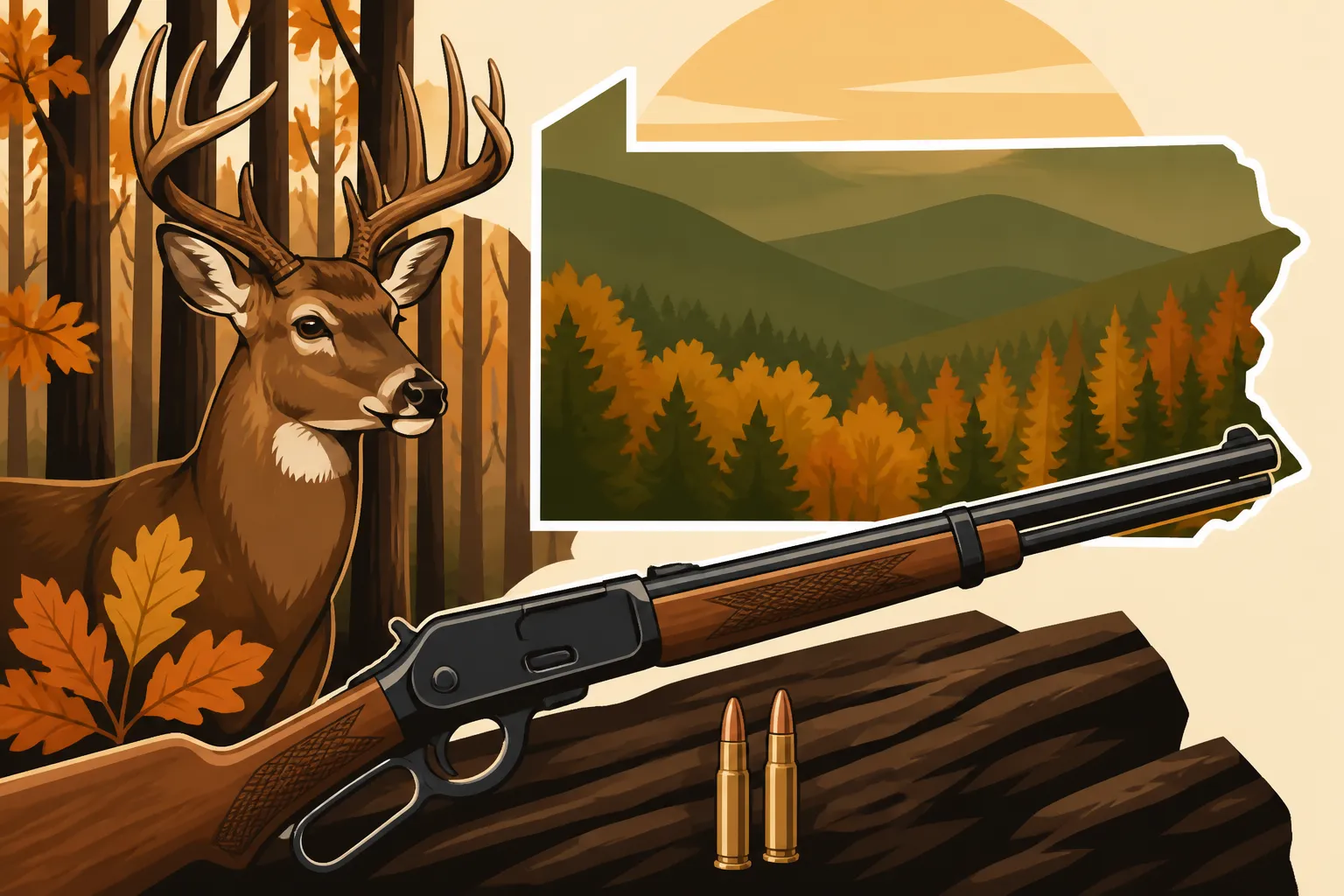
It's easy to feel overwhelmed by the sheer number of rifle calibers and advanced gear available to Pennsylvania deer hunters today. Everyone's chasing the latest, fastest, or most technologically advanced setup, but for many of us who hunt the dense woods of the Commonwealth, the simple truth is that sometimes the old ways are still the best ways. This guide is all about one such classic: the venerable .30-30 Winchester, and why it remains a solid, dependable choice for navigating and succeeding in Pennsylvania's challenging hardwood forests.
Why the .30-30 Still Holds Its Own in Pennsylvania's Thick Timber
There's a reason the .30-30 Winchester has been a mainstay in deer camps for generations, and it's not just nostalgia. While newer, flatter-shooting cartridges get all the hype, the .30-30 continues to prove its worth year after year, especially when you step into the kind of unforgiving cover that characterizes so much of Pennsylvania's hunting landscape. Many of us have grown up with a .30-30 lever-action tucked away in the gun safe, passed down through the family, and that connection alone is powerful. But beyond sentiment, this rifle and caliber combo offers tangible benefits that are often overlooked in today's high-tech hunting world.
Think about the places we hunt: the dense saplings of a clearcut, the tangled mountain laurel thickets, the steep, rocky benches where visibility rarely extends beyond 75 yards. In these environments, the ability to make a precise 300-yard shot is utterly irrelevant. What does matter is carrying a rifle that handles quickly, points instinctively, and delivers ample knock-down power within typical woods ranges. The .30-30, with its compact lever-action platform, fits this bill perfectly. It's not about being the flashiest; it's about being effective when it counts. For more on general rifle choices, check out Rifle Setups for Pennsylvania Deer.
The Lever-Action Advantage in Close Quarters
When you're still-hunting through a dense stand of oaks or navigating thick regrowth after a timber cut, a long, heavy bolt-action rifle with a massive scope can feel like a cumbersome burden. That's where the lever-action .30-30 truly shines. Its shorter overall length and balanced design make it incredibly quick to shoulder and maneuver in tight spaces. You can carry it comfortably in one hand, ready to bring it to bear the moment a buck slips through the brush. The action itself allows for rapid follow-up shots without having to break your cheek weld or lose sight of a fleeing deer, a critical advantage in an unexpected encounter.
Consider a scenario where you're creeping along a bench above a creek bottom, a favorite travel corridor for deer. Suddenly, a buck materializes out of the laurel at 40 yards. With a lever-action .30-30, you can quickly bring the rifle up, acquire your target, and send a round downrange before the deer spooks. If it takes another step, reloading is a fluid, almost subconscious motion. There's a certain efficiency to it that's hard to replicate with other rifle types in such close-quarters situations. It truly feels like an extension of your body, rather than a separate piece of equipment.
Ballistic Suitability for Pennsylvania Whitetails
The .30-30 cartridge might be considered slow by modern magnum standards, but its traditional 150-grain or 170-grain round-nose or flat-nose bullets are incredibly effective on whitetails within the ranges typically encountered in Pennsylvania's hardwoods. These bullets are designed to expand reliably at .30-30 velocities, transferring a tremendous amount of energy to the deer and creating a wide wound channel. They aren't going to blow through both shoulders at 200 yards like a high-velocity .30-06, but that's not what they're built for.
At 100 yards and under, where most Pennsylvania woods shots occur, the .30-30 delivers more than enough energy to ethically take down a deer. The larger frontal area of a traditional flat-nose bullet can also be an advantage, potentially cutting a wider path through brush than a sharp-pointed, high-velocity spitzer bullet, though no bullet is truly "brush-busting." The key is knowing your rifle and its capabilities. If you understand its effective range and practice within those limits, the .30-30 is a formidable deer cartridge. For deeper dives into bullet performance, consider how it relates to specific terrain, which you can often scout ahead of time using mapping tools like GoHunt to understand line-of-sight and shot distances.
Understanding the .30-30's Performance in Timber
When you're talking about hunting in Pennsylvania's varied terrain, from the dense understory of Hunting Pennsylvania's Big Woods for Deer to the thick edges of Hunting Pennsylvania Clearcuts and Regrowth, understanding your firearm's actual capabilities and limitations is paramount. The .30-30 is no exception. It's a fantastic caliber for its intended purpose, but like any tool, it has its sweet spots and its boundaries.
Effective Range and Trajectory Considerations
Let's be realistic: the .30-30 is not a 300-yard deer rifle. Its rainbow-like trajectory becomes a significant factor beyond about 150 yards. However, in most Pennsylvania hardwood settings, a shot over 100 yards is relatively uncommon. Many deer are taken at 50 yards or less, especially when still-hunting or hunting thick cover. Within these parameters, the .30-30 performs admirably. It's flat enough for typical woods ranges, and with a good zero, you can reliably place shots on a deer's vitals out to 125-150 yards with minimal holdover.
The key is to know your rifle and your ammunition. Take it to the range and practice shooting at various distances – 25, 50, 75, and 100 yards. Understand where your bullet impacts at each of those ranges when zeroed for, say, 100 yards. This practical knowledge is far more valuable than worrying about theoretical ballistic charts at extreme distances. If you're confident in your ability to place a shot at 75 yards, and you limit yourself to those distances, the .30-30 will serve you well. For comparison with other calibers often used in these ranges, consider the following:
| Caliber | Bullet Weight (gr) | Muzzle Velocity (fps) | Energy @ 100 yds (ft-lbs) | Trajectory @ 150 yds (inches with 100-yd zero) | Optimal Use Case |
|---|---|---|---|---|---|
| .30-30 Win | 150 | 2390 | 1450-1600 | -4 to -6 | Thick woods, short to medium range |
| .35 Rem | 200 | 2080 | 1550-1700 | -5 to -7 | Dense brush, medium-heavy game |
| .45-70 Gov't | 300 | 1880 | 1400-1500 | -6 to -8 | Big bore, brush gun, large game |
Note: Velocities and energies are approximate and vary by specific ammunition load and barrel length.
Bullet Selection for Woods Hunting
While traditional round-nose and flat-nose bullets have been the workhorses of the .30-30 for over a century, modern advancements have brought some interesting options to the market. Hornady's LEVERevolution line, for instance, uses a flexible polymer tip on spitzer-shaped bullets, making them safe for tubular magazines while offering a more aerodynamic profile. This can extend the .30-30's effective range slightly and flatten its trajectory a bit, but still, don't expect it to turn your lever-action into a long-range magnum.
For most Pennsylvania woods hunters, the traditional 150-grain or 170-grain soft-point or flat-nose bullets are perfectly adequate. They provide excellent terminal performance on deer, expanding reliably upon impact without excessive fragmentation. The goal is a quick, humane kill, and these bullets deliver that within the .30-30's operational envelope. When picking your ammunition, consider what you'll be shooting through, even if it's just a few twigs or light brush. A robust bullet will perform better than a fragile one in those situations.
Optimizing Your .30-30 Setup for Woods Hunting
A classic .30-30 lever-action straight out of the box is already a very capable woods rifle, but with a few thoughtful modifications and choices, you can enhance its performance and your comfort in the Pennsylvania hardwoods. This isn't about transforming it into something it's not, but rather refining it for its intended environment.
Optics Choices for Close-Range Encounters
Forget those massive 20x scopes; they have no place on a .30-30 in the Pennsylvania woods. What you need is a low-magnification scope that gathers light well, has a wide field of view, and is durable enough to withstand the knocks and bumps of thick cover. A 1-4x, 1.5-5x, or even a fixed 2.5x or 3x scope is ideal. These provide enough magnification for precise shot placement out to 100-150 yards, while still allowing you to quickly acquire a target in close quarters, even when that target is moving through heavy cover. Optics for Pennsylvania Timber Hunting delves deeper into these considerations.
Many hunters even opt for a red dot sight or simply rely on iron sights, particularly if their typical shots are under 50 yards. The beauty of a red dot is its unparalleled speed in target acquisition and its ability to perform in low light. For those who prefer the traditional feel, well-adjusted iron sights are perfectly capable and eliminate any concerns about fogged lenses or batteries dying. Whatever your choice, ensure it's robust, clear, and doesn't add unnecessary bulk or weight to your nimble lever-action.
Practical Accessories and Carry Methods
A good sling is an absolute must when you're hiking through steep terrain or across miles of state game lands. Look for a comfortable, wide sling that distributes the weight of the rifle effectively and allows for quick shouldering when needed. Beyond that, keep accessories minimal. A small, sturdy light attached to the fore-end can be invaluable for tracking a deer after dark, but avoid anything that will snag on brush or throw off the balance of the rifle.
For carry, many traditional hunters simply carry their lever-action at the ready, often in one hand, with their thumb hooked over the hammer for safety. This allows for instant action if a deer presents itself. For longer walks into areas like Where Big Woods Bucks Bed, carrying the rifle slung over your shoulder or across your chest will save your arms, but always be mindful of how quickly you can bring it into action. Consider also adding a set of quality sling swivels if your rifle doesn't have them, ensuring a secure attachment for your sling.
Tactics for Hunting with a .30-30 in Pennsylvania
The .30-30 excels when paired with hunting tactics that leverage its strengths: quick handling, moderate range, and reliability. This means focusing on getting close to your deer, understanding their movements in thick cover, and being ready for a fast shot. It's a rifle that rewards patience, stealth, and a deep understanding of the Pennsylvania woods.
Still-Hunting and Tracking in Dense Cover
Still-hunting is perhaps the quintessential tactic for the .30-30. Moving slowly, deliberately, and quietly through the woods allows you to cover ground while always being prepared for an encounter. In thick areas like those found in Hunting Pennsylvania Clearcuts and Regrowth or along the edges of a sprawling clearcut, this method is deadly effective. The compact nature of the lever-action allows you to navigate tangled brush without getting hung up, and its quick-pointing characteristics mean you're ready when a deer jumps from its bed just feet away.
When you're still-hunting, use mapping tools like GoHunt to identify areas with good cover, pinch points, and natural travel corridors. Look for fresh sign – tracks, rubs, scrapes – and slow down even further. Pay attention to wind direction and thermals, especially in hilly terrain. Every step should be intentional, every pause a moment to scan and listen. The goal is to see the deer before it sees you, and the .30-30 is a perfect partner for this patient, methodical approach.
Stand Hunting in Traditional Woods Settings
While the .30-30 is often associated with still-hunting, it's also a fantastic choice for stand hunting in traditional woods settings. If your treestand or ground blind is placed in an area where shots are likely to be under 100 yards – along a logging road, at the edge of a small clearing, or overlooking a natural funnel in the timber – the .30-30 is more than capable. Its relatively short barrel makes it less cumbersome in a treestand, and the lever-action mechanism is quiet and easy to manipulate without a lot of movement.
Consider placing your stand where deer naturally filter through, perhaps between bedding and feeding areas, or along a bench above a creek. These are often areas of reduced visibility, making long shots rare. A ground blind, especially one well-brushed in on a field edge, can also provide excellent opportunities within the .30-30's range, allowing for comfortable, quiet hunts in conditions that might make a treestand less appealing. For more on this, consider Brushing In a Blind on a Field Edge. Just make sure your chosen location accounts for the .30-30's effective range, focusing on those 50-75 yard sweet spots.
The .30-30 in the Deer Drive
In many parts of Pennsylvania, especially on public lands, deer drives are a common and effective tactic during the firearms season. A .30-30 lever-action can be an excellent choice for both drivers and standers in such situations. For drivers, its maneuverability in thick cover is a huge asset. For standers, particularly if positioned in timbered areas or along escape routes where shots are often fast and close, the ability to get on target quickly and potentially take a follow-up shot is invaluable.
The power of the .30-30 at close range ensures a solid hit on a moving deer, assuming proper shot placement. It's not uncommon for deer to burst out of cover at very close ranges during a drive, and a fast-handling rifle that delivers reliable power is exactly what you need. Remember, safety is paramount during a drive; always know your shooting lanes and what lies beyond your target. For tips on organizing these, refer to Deer Drives With Three or Four Hunters.
Ultimately, the .30-30 Winchester remains a true Pennsylvania deer rifle. It might not be the newest or the most powerful, but for countless hunters, it's the right tool for the job, year after year, in the challenging and rewarding hardwoods of our state.
Disclaimer
This article is for general informational purposes only and does not constitute professional advice. Laws, prices and regulations vary by location and change over time. Consult a qualified professional for guidance on your specific situation.