Patterning a Turkey Gun at 40 Yards
There's nothing quite as frustrating as working a gobbler perfectly, calling him in close, getting him to strut and drum, and then hearing nothing but a "click" or watching him sail off unscathed after the shot. Many Pennsylvania turkey hunters have been there, left wondering what went wrong. Often, it's not the calling or the setup that failed, but a misunderstanding of their shotgun's true capabilities – specifically, its pattern. This guide is all about demystifying the critical process of patterning your turkey gun at that crucial 40-yard mark, ensuring you're ready when that moment of truth arrives.
Why 40 Yards Matters for a Turkey Gun
You hear a lot of numbers thrown around in turkey hunting circles about range, but 40 yards is consistently cited for a reason. It’s not an arbitrary distance; it represents a sweet spot for most hunters and setups, balancing effective killing power with realistic field conditions.
The Reality of Effective Range
When we talk about "effective range" for turkey hunting, we're not just talking about whether a pellet might reach the bird. We're talking about putting enough pellets into a very small, vital area – the head and neck – with enough energy to instantly dispatch the bird. Anything less than a dense, consistent pattern in that critical zone is a recipe for a wounded bird that escapes to suffer or, worse, leads to a long, fruitless tracking job. It’s an ethical consideration as much as a practical one.
Many hunters, especially those new to the sport or those who haven't patterned their guns, might be tempted to stretch shots out to 50 or even 60 yards, especially with modern specialized loads. But here's the honest truth: most shotguns, even with the best chokes and loads, struggle to consistently deliver a truly lethal pattern beyond 40 yards. The pellet count within that small kill zone drops dramatically with every yard you add, increasing the chance of a marginal hit. Imagine you've spent hours hiking into the big woods, locating a wary gobbler, and Calling a Pennsylvania Gobbler Off the Roost, only to take a shot that's just a bit too far. That's a heartache you want to avoid. Sticking to a known, proven effective range, like 40 yards, minimizes risk and maximizes your chances of a clean, ethical harvest.
Understanding Turkey Anatomy and Vulnerability
Unlike deer, where a body shot targeting the vitals is the goal, turkey hunting almost exclusively relies on a head and neck shot. Why? A turkey's body is incredibly robust, protected by thick feathers, powerful muscles, and even a breastplate. A body shot, even with heavy turkey loads, is rarely instantly lethal and often results in birds escaping with injuries. The head and neck, however, are delicate, unarmored, and contain the brain and spinal column, making them extremely vulnerable. A few pellets striking this area are usually enough to drop a bird instantly.
The challenge, of course, is that the head and neck present a tiny target, especially on a moving or partially obscured bird. This is precisely why a dense, even pattern is paramount. You need a pattern that is tight enough to ensure multiple pellets strike that small target, even if your aim is slightly off or the bird bobs its head. A pattern that looks good on paper might still have gaps large enough for a turkey's head to pass through unscathed. Your job at the range is to find a combination of choke and load that produces a pattern so tight and consistent that it essentially creates a "kill zone" on the target that guarantees a quick, clean kill at your intended range, often 40 yards.
Setting Up Your Patterning Session
Proper preparation for your patterning session is just as important as the shooting itself. Skimping on the details here can lead to inconsistent results and frustration, wasting your time and ammunition.
The Right Gear for the Range
Before you even head out, gather everything you'll need. This isn't a casual plinking session; it's a serious test of your hunting setup.
- Your Shotgun: The exact one you plan to hunt with. Don't pattern with a different gun, even if it's the same model.
- Choke Tube: The specific choke tube you intend to use. Most turkey hunters opt for an extra-full, turkey-specific choke. You might even want to bring a few different ones if you're experimenting.
- Ammunition: This is critical: use the exact brand, shot size, and shell length you will be hunting with. Different loads, even from the same manufacturer, can pattern wildly differently through the same choke. If you plan to hunt with Federal Heavyweight TSS #9s, that's what you pattern with. Bring at least 5-10 shells for each load/choke combination you want to test.
- Patterning Targets: Large paper targets, preferably ones designed for patterning turkeys, are ideal. These often have a turkey head/neck outline and a marked 10-inch circle. Standard paper plates or smaller targets simply won't give you enough surface area to properly analyze the pattern.
- Tape Measure: Absolutely essential for accurately setting your distances. Eyeballing it isn't good enough.
- Stable Shooting Rest: Sandbags, a Caldwell Lead Sled, or a sturdy shooting bench with a front and rear rest are crucial. You want to eliminate as much human error as possible in your aiming, so you can objectively evaluate the shotgun's pattern.
- Ear and Eye Protection: Non-negotiable. Turkey loads are loud, and protecting your hearing and vision is paramount.
- Cleaning Supplies: A bore snake or cleaning rod to clean your barrel between different loads or after a few shots, especially if you're experiencing inconsistencies.
- Pen/Marker and Notebook: To record your results for each load/choke combo. This data is invaluable.
- GoHunt or other mapping app: While not directly for shooting, having a mapping app on your phone can be useful for marking distances or potential areas if you're patterning on private land.
Choosing a Suitable Range Location
Safety always comes first. You need a location with a safe, adequate backstop that can absorb shotgun pellets without ricocheting or endangering anyone. A dedicated shooting range is often the best choice, as they have established safety protocols and facilities. If you're patterning on private land, ensure you have explicit permission and a clear understanding of the terrain beyond your target. Remember, pellets can travel farther than you might think, especially when shot upwards.
The ideal range should be quiet and free from distractions. You want to be focused on your shooting and analysis. Wind can affect patterning, though generally less so with shotguns than rifles, but still try to choose a calm day if possible. Avoid areas with a lot of cross-traffic or other shooters who might interrupt your rhythm or introduce safety concerns. The more controlled your environment, the more accurate and useful your patterning results will be. Think of it as a scientific experiment: control as many variables as you can to isolate the one you're testing – your shotgun's pattern.
The Step-by-Step Patterning Process
Okay, you've got your gear, you're at a safe range. Now it's time to put lead downrange and see what your setup can really do. This isn't a race; take your time and follow these steps.
Starting Close and Moving Back
Don't start immediately at 40 yards. It's frustrating to shoot at a distant target only to find you're not even hitting the paper.
- Start at 15-20 yards: Set up your first target at a relatively close distance. This allows you to confirm that your shotgun is shooting roughly where you're aiming. Fire one shot, aiming precisely at the turkey's head.
- Evaluate Point of Impact: Check where the pattern hit relative to your aiming point. If it's significantly off (e.g., hitting high, low, or to the side), you might need to adjust your shotgun's sights, or consider a different choke tube if the deviation is consistent. Most factory shotguns with a bead sight are designed for general bird hunting, not precision turkey headshots, so a slight deviation isn't uncommon. If you have a Red Dots on a Turkey Shotgun, this initial shot will help you zero it in.
- Move to 30 Yards: Once you're consistently hitting the target at 15-20 yards, move your target back to 30 yards. Fire 1-2 shots with your chosen load. At this distance, you should be seeing a very dense, tight pattern. This helps build confidence before moving to the maximum practical range.
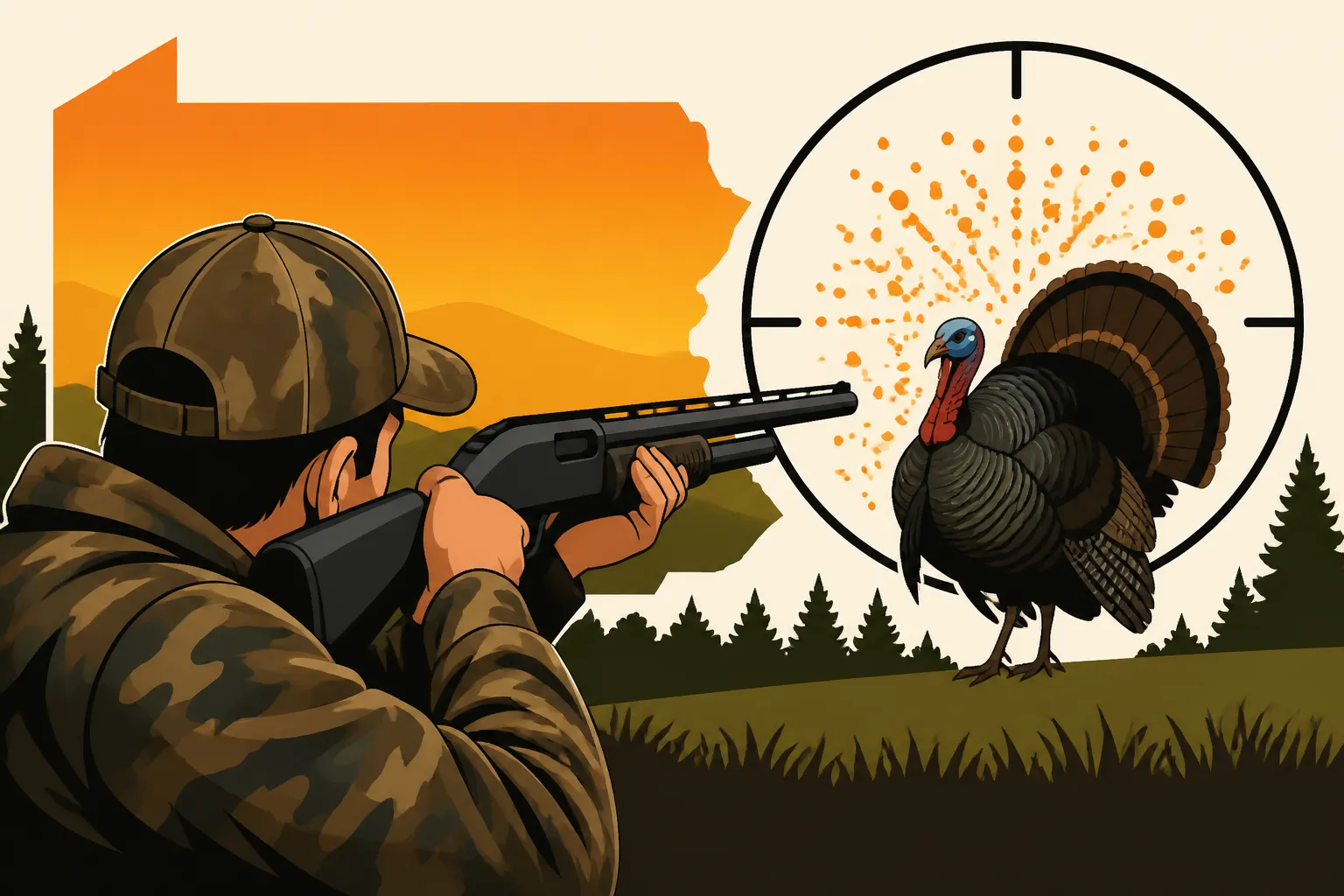
- The 40-Yard Test: Finally, move your target back to a precise 40 yards. This is your critical test distance. Fire at least three separate shots at three fresh targets. Don't shoot multiple times at the same target, as the patterns will overlap and make analysis impossible. You need a distinct pattern for each shot to see consistency.
Remember to take your time between shots. Let the barrel cool slightly, and maintain a consistent shooting position. If you're switching between different chokes or loads, clean your barrel between combinations to ensure optimal performance. This thoroughness is what will give you reliable results for your Turkey Shotguns and Chokes.
Analyzing Your 40-Yard Patterns
This is where the rubber meets the road. After each 40-yard shot, walk downrange and carefully examine your target.
- Identify the Core Pattern: First, locate the densest part of the pellet pattern. This might not be exactly where you aimed, especially with bead sights. Once you've found the center of the pattern, draw a 10-inch circle around it. Many turkey targets will have this pre-printed.
- Count the Pellets: Carefully count every pellet hole within that 10-inch circle. Some hunters use a pen to mark each pellet as they count to avoid missing any.
- Assess Density and Distribution:
- Pellet Count: Generally, a good, ethical pattern for turkey hunting at 40 yards should have at least 100-150 pellets within that 10-inch circle. More is always better, but this is a solid benchmark. If you're consistently getting fewer, your setup is likely not effective at 40 yards.
- Evenness: Is the pattern evenly distributed, or are there large "holes" or gaps where a turkey's head could slip through? A few small gaps are inevitable, but significant voids are a red flag. You want a consistent "cone of death" that saturates the target area.
- Consistency: Are all three of your 40-yard patterns similar in density and distribution? If one shot is great and the next is terrible, you have an inconsistency problem, which could be due to your shooting form, the ammunition, or even a faulty choke tube.
Record all of this information in your notebook: Load type, choke type, shot number, pellet count in the 10-inch circle, and a brief note on distribution. This data will be invaluable for making informed decisions.
Troubleshooting and Refinement
What if your initial patterns aren't up to snuff? Don't despair; this is precisely why we pattern. It's a diagnostic process.
-
Too Open or Too Sparse: If your pellet count is too low or the pattern is too spread out, your first thought should be to try a different choke tube. Start with a tighter constriction, such as a "turkey extra-full" or a specialized "super full." If you're already using one of these, try a different brand or model, as choke tubes vary greatly even with the same constriction rating. Secondly, experiment with different ammunition. As mentioned, turkey loads from various manufacturers use different shot types (lead, copper-plated lead, tungsten-alloy like TSS), different buffering materials, and different wad designs. One load might perform exceptionally well in your gun, while another might be terrible. This is where the cost of premium turkey loads becomes worthwhile; you're paying for denser, harder shot that maintains energy and patterns better. Brands like Federal Premium, Remington, Winchester, and Browning all offer excellent turkey-specific loads.
-
Pattern Off-Center: If your pattern is consistently hitting high, low, left, or right of your point of aim, you have a few options. If you're using a single bead sight, it might just be a limitation of that simple aiming system. You could consider adding a TruGlo fiber optic sight to your rib, or for more precision, installing a receiver-mounted red dot sight or a low-magnification scope. These allow for more precise aiming and often better consistency. Alternatively, if the deviation is slight and consistent, you can learn to hold slightly off-target to compensate, but this isn't ideal under pressure in the woods.
-
Inconsistent Patterns: If your patterns are inconsistent, meaning one shot is great and the next is poor, double-check your shooting form. Are you flinching? Is your rest stable? Are you letting the barrel cool between shots? Also, inspect your choke tube for any damage or fouling. Sometimes a thorough cleaning of the bore and choke can resolve minor issues. If all else fails, trying a completely different load or choke is the next step. Sometimes, a shotgun simply "likes" a certain combination, and it's your job to find it. Remember, this detailed approach to patterning is what separates successful turkey hunters from those who consistently struggle, and it's a key part of becoming proficient for Spring Gobbler Hunting in Pennsylvania.
| Choke Type | Typical Constriction | General Pattern Density (at 40 yards) | Best For | Considerations |
|---|---|---|---|---|
| Full | 0.035" – 0.040" | Moderate-Good | Longer shots, larger shot sizes | May be too open for smaller shot sizes; older shotguns might prefer this. |
| Extra-Full | 0.045" – 0.055" | Good-Very Good | Dedicated turkey hunting, modern lead loads | A solid starting point for many turkey setups. |
| Turkey Specific | 0.055" – 0.075"+ | Very Good-Excellent | High-performance tungsten/TSS loads | Often custom-designed for specific loads; can be very tight. |
| Cylinder/Improved | Minimal – 0.015" | Poor | Not recommended for turkey hunting | Patterns are too open for ethical turkey shots beyond very close range (under 20yd). |
Beyond the 40-Yard Mark: Ethical Considerations and Practice
Patterning your gun is a crucial first step, but it's not the end of the journey. Understanding the limits of your setup and yourself, and regularly practicing, are what truly prepare you for the field.
Knowing Your Maximum Ethical Range
Once you've found a choke and load combination that consistently delivers a lethal pattern at 40 yards, you might be tempted to push it further. However, 40 yards should still be considered your benchmark. While some specialized setups with advanced chokes and super-dense TSS loads might theoretically extend your ethical range to 50 yards or slightly beyond, that's not the norm for most hunters. Even with a stellar pattern on paper, real-world variables come into play. A turkey's head bobs, branches can deflect pellets, and the excitement of the moment can throw off your aim.
Your pattern density, and not simply hitting the target, is what defines your ethical maximum range. If at 45 or 50 yards your pellet count in that critical 10-inch circle drops below 100, you're entering a high-risk zone for wounding. Remember that you've likely spent a significant amount of time preparing for your hunt, scouting, and perhaps even investing in a Special Wild Turkey Licence. Don't let a moment of eagerness compromise all that effort and the well-being of the animal. If a bird hangs up at 50 yards and you know your pattern drops off significantly past 40, your decision should be clear: either call it closer or let it walk. There’s no shame in passing on a shot that isn’t 100% ethical.
Field Practice and Real-World Scenarios
Patterning your gun from a bench rest is essential for diagnosing performance, but hunting doesn't happen from a bench. True proficiency comes from practicing in positions you'd actually use in the field.
- Practice from Hunting Positions: Get comfortable shooting from a kneeling position, sitting against a tree (perhaps using your Turkey Vests and Seat Choices for comfort), or even from a seated position with a decoy out front. These are the realities of turkey hunting. Practice should involve getting your gun up quickly and smoothly, finding your sight picture, and firing.
- Judging Distance: One of the biggest challenges in the heat of the moment is accurately judging distance. A rangefinder is an invaluable tool for turkey hunting. Practice ranging objects around your property or even at the range to train your eye. Knowing that a specific tree is exactly 40 yards from your setup can be the difference between a clean kill and a frustrating miss. Consider using a mapping app like GoHunt to mark distances on your property or public hunting areas during scouting trips. This can give you reference points when a gobbler comes into view.
- Simulating Real-World Shots: If you use decoys, set them up at various distances and practice acquiring the target. Observe how quickly you can get on target and make the shot. This practice also helps with your mental game, building confidence for when the moment finally arrives. Knowing your gun intimately and practicing realistic scenarios means when that big tom struts into range, whether you're still-hunting the Hunting Turkeys in Pennsylvania Big Woods or calling from a blind on Hunting Pennsylvania Farm Country Edges, you’ll be ready for a clean, ethical shot.
Good luck out there, and happy patterning!
Disclaimer
This article is for general informational purposes only and does not constitute professional advice. Laws, prices and regulations vary by location and change over time. Consult a qualified professional for guidance on your specific situation.