Frame Packs for Boning Out a Deer
The moment you drop a deer deep in a remote Pennsylvania hollow or miles back on a State Game Land ridge, the real work begins. Dragging a whole deer out of that kind of country can be back-breaking, time-consuming, and honestly, sometimes impossible for one person. This guide will walk you through why a quality frame pack is your best friend for getting that hard-earned venison from the woods to your freezer by boning out your deer, making your hunts more manageable and your recoveries much safer.
Why a Frame Pack is Essential for Pennsylvania Backcountry Hunting
For many Pennsylvania hunters, especially those venturing into the expansive State Game Lands or State Forests, the challenge isn't just finding and harvesting a deer, but physically getting it out. Traditional deer drags, even with two people, can quickly turn into a grueling ordeal, especially on steep terrain, through thick regrowth, or across rocky stream beds. This is where the concept of boning out a deer and packing it out in a frame pack truly shines.
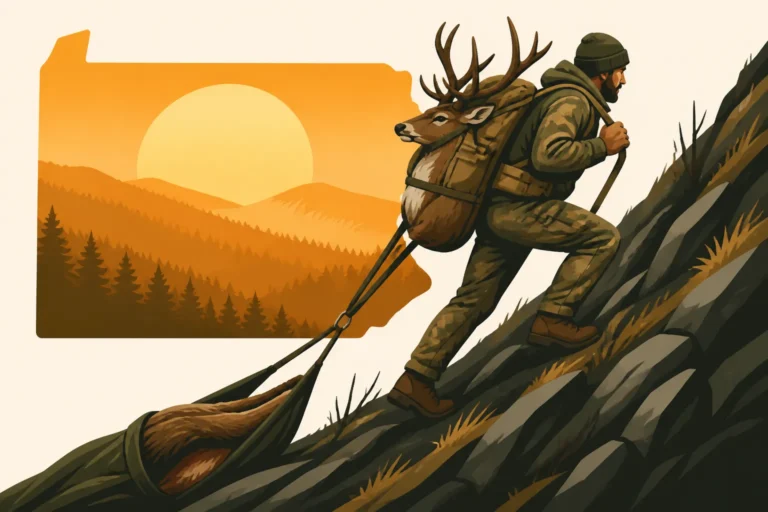
Imagine you're deep in the Allegheny National Forest Hunting or tucked away in a remote section of the Sproul State Forest. You've just tagged a beautiful buck. The adrenaline is pumping, but then the reality hits: you're three miles from the nearest road, and the ground between you and your truck is a mix of steep climbs, laurel thickets, and maybe even a creek crossing. Trying to muscle a 150-pound deer, intact, over that kind of ground is not only exhausting but can be dangerous, leading to slips, falls, and even injuries. It’s a situation many of us have faced, ending the hunt on a note of pure physical misery.
A frame pack, purpose-built for carrying heavy, awkward loads, transforms this challenge. Instead of dragging the whole carcass, you field-dress the animal, then carefully remove the meat from the bone, sectioning it into manageable pieces. These pieces are then loaded into game bags and secured within or to the robust frame of your pack. This method, while requiring a bit more time on site, distributes the weight ergonomically, allowing you to carry a significant amount of meat more comfortably and efficiently than any drag could ever hope to. It respects the animal by ensuring the meat is handled cleanly and prevents spoilage, which can be a real concern on warmer early season days.
The Problem with Traditional Deer Extraction in Rugged Terrain
Pennsylvania's diverse topography, from the steep ridges of the central mountains to the rolling hills and dense thickets of the Tioga and Loyalsock State Forests, presents unique challenges for deer recovery. A deer cart, while fantastic for flat, open ground or old logging roads, often becomes useless the moment you hit steep, uneven, or brushy terrain. You find yourself pushing, pulling, and lifting a heavy cart over obstacles, ultimately expending more energy than if you had simply dragged the deer without it.
Even a dedicated Deer Drives With Three or Four Hunters can struggle with getting a whole deer out, especially if the drive pushes the animal into a particularly nasty pocket of cover. The sheer bulk of an entire deer makes it prone to snagging on downed timber, getting wedged between rocks, or becoming mired in mud. This struggle not only damages the meat but also puts immense strain on your body, often leading to sore muscles, strained backs, and a general feeling of being completely worn out, which can detract from the joy of a successful hunt.
Beyond the physical toll, there's the practical consideration of meat quality. Dragging a deer, especially over rough ground, can introduce dirt, leaves, and debris into the hide and potentially onto the exposed meat if the carcass is damaged. In warmer temperatures, prolonged dragging can also impede cooling, which is crucial for preventing spoilage. This is a legitimate concern, particularly during the early archery season or a mild rifle opener, when temperatures can still be quite warm. Boning out and using clean game bags protects the meat, ensuring that your venison is in prime condition when it reaches your cooler.
How Boning Out a Deer Simplifies Backcountry Recovery
Boning out a deer is a skill every backcountry hunter should master. It's not about being a butcher in the woods, but rather understanding how to efficiently remove the primal cuts from the bone. This process significantly reduces the weight you need to carry, as bone, hide, and gut pile are left behind (responsibly, of course). What you're left with are compact, clean packages of meat ready for transport.
The immediate benefit is a drastic reduction in overall weight and bulk. Bones account for a significant portion of a deer's body weight, and by leaving them behind, you can reduce your pack weight by 25-30% or more. The hide, too, is heavy and bulky, and removing it makes the meat much more manageable. This lighter, more compact load allows you to navigate challenging terrain with greater ease and safety, reducing the risk of a fall or injury. It truly turns a potentially miserable experience into a much more sustainable effort, allowing you to focus on the hike out rather than battling an unwieldy carcass.
Furthermore, boning out allows for faster cooling of the meat. Once separated from the bone and hide and placed into breathable game bags, the meat can dissipate heat much more effectively. This is incredibly important in Pennsylvania, where early archery and even parts of the rifle season can bring unseasonably warm days. Getting that meat cooled down quickly is paramount for preserving its quality. Properly boned-out meat, in good game bags, and loaded into a well-designed frame pack, means you’re prioritizing the quality of your venison from the moment the animal hits the ground.
Anatomy of a Good Frame Pack for Boning Out Deer
Choosing the right frame pack for boning out a deer isn't just about picking one that looks rugged. It's about understanding the specific features that make a pack truly effective for carrying heavy, irregular loads of meat over challenging terrain. You need something that can handle weight, distribute it properly, and endure the rigors of the Pennsylvania woods. Investing in a quality pack means investing in your comfort, safety, and the preservation of your valuable harvest.
Many hunters make the mistake of trying to use a standard hiking pack or even a large daypack for this task. While these packs are great for lighter loads and overnight trips, they simply aren't designed to comfortably and securely carry 50-80 pounds of boned-out venison. Their suspension systems often can't handle the weight, leading to uncomfortable pressure points, instability, and ultimately, a much harder hike out. The fabric might not be robust enough, and the internal volume might not be flexible enough to accommodate bulky meat bags.
A dedicated frame pack, whether internal or external, is built with a robust suspension system, durable materials, and thoughtful features specifically for hauling heavy, awkward loads. These packs are engineered to transfer the weight efficiently to your hips, allowing your stronger leg muscles to do the heavy lifting, rather than putting all the strain on your shoulders and back. They offer customizable fit options, allowing you to tailor the pack to your body, further enhancing comfort and stability on uneven ground.
Key Features of a High-Performance Frame Pack
When you're evaluating frame packs, there are several non-negotiable features to look for. These are the elements that will make or break your experience when you're loaded down with a heavy pack of venison miles from your vehicle. Don't compromise on these, as they are crucial for both performance and durability.
First and foremost is the frame itself. It needs to be rigid and strong, typically made of aluminum, carbon fiber, or a robust polymer. This rigidity prevents the pack from sagging and shifting under a heavy load, which is vital for stability. A good frame creates a "shelf" effect, allowing the main weight of the meat to sit close to your body and transfer effectively to your hips. Second, look for a robust suspension system. This includes a well-padded hip belt that's wide and supportive, adjustable shoulder straps, and a load lifter system that pulls the top of the pack closer to your shoulders, preventing it from leaning back. These components work together to ensure the weight is distributed evenly and comfortably.
Third, durable materials are critical. The fabric needs to be tough, abrasion-resistant nylon or Cordura, capable of standing up to thorns, sharp edges, and general abuse. Look for reinforced stitching at all stress points. Fourth, consider the load-hauling capacity and versatility. Many modern frame packs feature an expandable meat shelf or an "overload" shelf between the main pack bag and the frame. This allows you to securely strap game bags directly to the frame, keeping any potential mess separate from your gear, and then attach the main pack bag over it. Finally, look for compression straps that are plentiful and robust. These straps are essential for cinching down your load, eliminating movement, and ensuring everything stays tight and stable as you navigate varied terrain. Brands like Eberlestock and Kifaru are well-known for these features, offering solutions that many Pennsylvania hunters rely on.
Internal vs. External Frame Packs for Meat Hauling
The debate between internal and external frame packs is often lively among hunters, and each has its merits, especially when it comes to hauling meat. Understanding the differences will help you choose the best option for your specific hunting style and the terrain you frequent in Pennsylvania.
| Feature | Internal Frame Pack | External Frame Pack |
|---|---|---|
| Frame Design | Frame integrated into the pack, conforming to back | Rigid, exposed frame, often aluminum |
| Load Transfer | Close to body, good for stability on uneven ground | Excellent load transfer to hips, good for very heavy loads |
| Comfort | Often more comfortable for technical terrain | Can feel bulkier, but superior for ventilation |
| Versatility | More adaptable for general backpacking | Often designed with a dedicated meat shelf or hauler |
| Durability | Fabric can be susceptible to tears/abrasion | Frame is exposed, can be snagged, but very strong |
| Ventilation | Can be warm against the back | Excellent airflow between pack and back |
Internal frame packs are popular for their ability to hug your body, providing excellent stability on uneven ground and through thick brush, which is common when Hunting Pennsylvania Clearcuts and Regrowth. The frame, usually made of aluminum stays or a carbon fiber sheet, is built into the pack body, allowing it to flex with your movements. This design is great for technical terrain or situations where you need to move stealthily. However, they can sometimes run hotter against your back, and if you're not using dedicated game bags, meat can potentially soil the inside of your pack.
External frame packs, on the other hand, feature a rigid, often exposed, frame to which the pack bag is attached. Their primary advantage for meat hauling is their unparalleled ability to transfer weight directly to your hips. The rigid frame also creates a "shelf" where you can securely strap large, unwieldy loads like a boned-out deer or even a whole quarter. This design often offers better ventilation, keeping your back cooler, which is a blessing on a long pack-out. While they might feel a bit more cumbersome in extremely dense cover, their load-bearing capacity and ability to keep game meat separate from your gear make them a top choice for serious backcountry hunters. When looking for pack options, consider exploring brands known for their rugged construction and thoughtful design, often found on reputable outdoor gear sites like GoHunt. They often feature detailed reviews and specifications that help narrow down your choice.
The Process: Boning Out and Packing a Deer in Pennsylvania
Once you've made the shot and located your deer, the real work of getting that venison out of the woods begins. Boning out a deer and packing it out requires a systematic approach, ensuring the meat stays clean, cools properly, and is transported safely. This isn't a task to rush, especially if you're new to it. Take your time, work methodically, and prioritize hygiene.
First, always remember to legally tag your deer immediately after the kill, as per Pennsylvania Game Commission regulations. Then, get the deer field-dressed promptly to start the cooling process. This removes the entrails and reduces the animal's internal temperature, which is critical for meat preservation. For those newer to the process or hunting alone, having a plan for Field Dressing a Deer in Cold Weather or warmer conditions is vital. Lay out your gear – sharp knives, a bone saw if you're taking quarters, game bags, and your frame pack – within easy reach.
The goal of boning out is to remove as much meat as possible from the bone, leaving behind only the skeleton and hide. This significantly reduces the weight you'll be carrying and makes the meat more manageable. It also allows the meat to cool much faster than if it were left on the bone, encased in the hide. With practice, this process becomes efficient, allowing you to quickly break down an animal into easily transportable pieces. Remember, clean meat is happy meat, so keep your knives sharp and your working surface as clean as possible.
Step-by-Step Boning Out in the Field
The actual process of boning out a deer might seem daunting at first, but it's quite straightforward with a sharp knife and a little practice. You'll essentially be deconstructing the animal, muscle group by muscle group, leaving the bone and hide behind. Always prioritize safety – a sharp knife is safer than a dull one, and always cut away from yourself.
- Prepare the Carcass: Lay the deer on its back or side on a clean surface, if possible. If you don't have a tarp, use clean leaves or snow. Make sure the deer is already field-dressed.
- Remove Legs (Optional but Recommended): While you can bone out the meat directly, many hunters find it easier to first remove the four legs (front and hindquarters) at the joints. This creates smaller, more manageable sections to work with. Use your knife to find the ball-and-socket joints for the hindquarters and the shoulder blade for the front legs. A bit of maneuvering will separate them.
- Bone Out the Hindquarters: These are the largest muscle groups. Start by carefully separating the major muscle groups from the bone, following the natural seams. You'll work your way around the femur and pelvic bone, peeling off the large muscle masses. Don't worry about being perfect; the goal is to get clean meat. Slice off any large chunks of fat or gristle.
- Bone Out the Front Shoulders: These are simpler, as the front legs don't have a direct bone-to-bone connection to the body. Simply peel the meat off the shoulder blade and humerus.
- Remove Backstraps and Tenderloins: These are prime cuts. Carefully cut along the spine to remove the two long backstraps that run down either side. For the tenderloins, reach inside the body cavity, along the inside of the spine, and carefully cut these delicate muscles free. These are often the first cuts to go into your pack!
- Neck and Other Meat: Don't forget the neck meat, which can be substantial and excellent for stew or ground venison. You can also scrape off any other usable meat from the ribs, though many hunters prefer to leave rib meat if not taking the entire rib cage.
- Place in Game Bags: As each section of meat is removed, place it immediately into clean, breathable game bags. These bags protect the meat from dirt, insects, and provide airflow for cooling. Avoid plastic bags at this stage, as they trap heat and moisture, promoting bacterial growth.
Efficiently Loading Your Frame Pack
Once your venison is boned out and safely tucked into game bags, the art of loading your frame pack comes into play. A poorly loaded pack can be incredibly uncomfortable, unstable, and even dangerous, causing you to lose your footing on steep or rocky terrain. The key is to distribute the weight evenly and keep the heavy items close to your body.
Start by securing the heaviest meat portions onto the lower part of the frame, close to your back. Many modern frame packs have an integrated meat shelf or a space between the frame and the main pack bag specifically designed for this. This keeps the center of gravity low and tight, which is crucial for stability, especially when Hunting Deer in Deep Pennsylvania Snow or traversing a tricky sidehill. Use the pack's compression straps to cinch these meat bags down tightly, preventing them from shifting or swinging as you walk. Any movement in the load will throw off your balance and make the hike exponentially harder.
After the meat is secured, you can attach the main pack bag over the meat, if your pack has this feature, and load your lighter gear – extra clothing, water, snacks, first-aid kit, and GPS – into the top of the pack. This layering ensures that the heavy, dense meat is directly against your spine and hips, where your body can best carry the weight. Before you even stand up, ensure all straps are tight, and the load feels balanced. Take a moment to adjust your shoulder straps and hip belt. A quick check and adjustment here can save you a lot of discomfort later. Consider practicing loading your pack at home with some heavy items to get a feel for how it distributes weight and how to best secure a load.
Choosing and Using Your Frame Pack Wisely
Acquiring a quality frame pack for boning out a deer is a significant step, but knowing how to properly choose one, fit it to your body, and maintain it for years of use is equally important. This isn't just a piece of gear; it's an investment in more comfortable, safer, and ultimately more successful hunting experiences in Pennsylvania's challenging environments. Don't just buy the first pack you see; do your research, try them on, and learn to use them effectively.
The market offers a wide array of frame packs, from minimalist meat haulers to full-on expedition packs designed for multi-day trips. Your choice should reflect your typical hunting style, the distance you usually travel from the road, and the size of game you pursue. Are you primarily day-hunting in the Hunting Pennsylvania Big Woods for Deer where a heavy-duty meat hauler is paramount, or do you occasionally make an overnight trip where more internal storage is needed? Thinking through these questions will guide you to the right type of pack.
Proper fit is paramount, regardless of the pack you choose. A well-designed frame pack can still be a misery if it's not adjusted correctly for your torso length and hip size. Most reputable brands offer adjustable torso lengths and hip belts, allowing you to customize the fit. Spend time at home adjusting all the straps, loading it with some weight, and walking around to ensure it feels right. A poorly fitting pack will cause hot spots, unnecessary fatigue, and make your hard-earned venison feel twice as heavy.
Fitting Your Pack and Preparing for the Haul
Once you've made the investment in a frame pack, proper fitting is the next critical step. This isn't a "set it and forget it" process; you'll want to fine-tune your pack's fit, especially before a big hunt. A properly fitted pack transfers the majority of the weight to your hips, allowing your strong leg muscles to do the work, saving your shoulders and back from undue strain.
Start by adjusting the torso length. Many quality packs have an adjustable yoke or shoulder harness that slides up and down the frame. The goal is to position the shoulder straps so they curve over your shoulders, but the bulk of the weight is resting on your hip belt. The hip belt itself should sit comfortably over your iliac crest (the top of your hip bones). Cinch the hip belt firmly, but not uncomfortably tight. You should feel the weight primarily on your hips. Next, adjust the shoulder straps so they are snug, but not digging in. They are primarily for stabilizing the load, not carrying the main weight. Finally, adjust the load lifter straps, which connect the top of the pack to the shoulder straps. These pull the top of the pack closer to your body, preventing it from leaning back and creating better balance.
Before heading into the field, practice loading your pack with comparable weight. Use sandbags, dumbbells, or even bags of dog food. Walk around your property, up and down hills if you have them, to get a feel for how the pack carries. Pay attention to any pressure points or discomfort. Fine-tune your adjustments until the pack feels like an extension of your body, rather than an external burden. This preparation will pay dividends when you're loaded down with a heavy deer in challenging conditions. When scouting new areas or planning a hunt, tools like GoHunt's mapping and planning features can help you anticipate terrain and potential pack-out distances, further aiding your preparation.
Maintenance and Best Practices for Longevity
A good frame pack is built to last, but like any piece of hunting gear, it requires proper maintenance to ensure its longevity and performance. Neglecting your pack can lead to premature wear, failed zippers, and compromised load-bearing capabilities, which is the last thing you want when you're three miles back in the woods with a deer on your shoulders.
After each use, especially after a successful pack-out, thoroughly clean your pack. Remove any meat residue, blood, dirt, or debris. If your pack has a dedicated meat shelf or separate meat compartment, clean it particularly well, using a mild soap and water solution, then rinse thoroughly. Allow the pack to air dry completely in a well-ventilated area, away from direct sunlight, before storing it. Never store a damp pack, as this can lead to mildew, odor, and degradation of the fabric and components. Pay attention to zippers, buckles, and straps – ensure they are free of grit and functioning smoothly.
Store your pack in a cool, dry place, protected from rodents and direct sunlight. Periodically inspect the pack for any signs of wear, such as fraying straps, loose stitching, or damaged buckles. Address minor issues promptly before they become major problems. A small repair now can prevent a catastrophic failure in the field. By treating your frame pack with care, you'll ensure it's ready to perform reliably whenever you need to Recovering a Deer on Steep Ground or haul venison from a remote corner of Pennsylvania. This level of attention to detail not only extends the life of your gear but also reflects a responsible approach to hunting and wilderness travel.
Disclaimer
This article is for general informational purposes only and does not constitute professional advice. Laws, prices and regulations vary by location and change over time. Consult a qualified professional for guidance on your specific situation.