Deer Carts and Where They Are Allowed
There are few things more satisfying in the world of Pennsylvania hunting than putting a tag on a mature whitetail. But the euphoria can quickly give way to a grim reality: getting that deer out of the woods. Whether you’ve dropped a hefty buck deep in a mountain hollow or across a sprawling cornfield, the thought of dragging it by hand can feel utterly daunting. This guide is here to shed light on a hunter’s best friend for this chore – the deer cart – and, crucially, to help you understand exactly where these invaluable tools are allowed across Pennsylvania’s diverse hunting landscapes.
The Grueling Reality of Deer Recovery in Pennsylvania
Every hunter knows the feeling: the shot connects, the deer drops, and then the real work begins. Pennsylvania's terrain is notoriously unforgiving, from the steep, rocky slopes of the Allegheny Mountains to the tangled briar patches of clearcuts and the seemingly endless expanses of farm country. Recovering a deer, especially a large buck or a doe taken during a productive season, can quickly turn a triumphant hunt into an exhausting test of endurance and willpower.
The Brutal Reality of Dragging a Deer
Picture this: you’ve just taken a beautiful eight-point buck on a frosty November morning. It’s a clean shot, and the deer piled up in a thick stand of mountain laurel about a half-mile from the nearest old logging road. You get to it, admire your prize, and then the adrenaline starts to wane, replaced by the heavy realization that you now have to move this 150-pound (or more!) animal. Trying to muscle it through dense cover, over fallen logs, and up slippery slopes can feel like an impossible task. Your back starts to ache, your knees protest, and every few yards feels like a monumental effort. This is the moment when many hunters wish they had a better solution than a simple drag rope. Dragging a Deer Off a Pennsylvania Mountain is an experience that can humble even the most seasoned outdoorsman, making you question your life choices and certainly your fitness level.
Why Traditional Methods Often Fall Short
While a good old-fashioned drag rope has been the standby for generations, it has its significant limitations, especially in Pennsylvania. The sheer weight of a deer, compounded by uneven terrain, snow, mud, or thick underbrush, makes a direct drag incredibly inefficient and punishing. Imagine trying to drag a deer across a boulder-strewn creek bottom or up a 30-degree incline; it's an exercise in futility that can lead to injury, not just for you but for your hunting partners who might be helping. Sometimes, the only solution seems to be to quarter the deer, which is an option many hunters prefer to avoid if possible, especially if processing facilities aren't immediately available or you prefer to keep the carcass whole until you get it home. Furthermore, the amount of time and energy expended on dragging can eat into valuable hunting time or leave you completely spent, making the rest of your day, or even weekend, far less enjoyable. This is where tools designed specifically for game recovery truly shine.
Understanding Deer Carts
So, what’s the alternative to back-breaking drags and endless struggles? Enter the deer cart. These often-underestimated pieces of equipment are specifically designed to make game recovery easier, more efficient, and far less taxing on the hunter. They provide a mechanical advantage that can transform a seemingly impossible task into a manageable one.
What Exactly is a Deer Cart?
At its core, a deer cart is a wheeled device used to transport harvested game, typically deer, out of the woods. Think of it as a specialized hand truck or wagon built for rough terrain. Most models feature a sturdy frame, one or two large wheels (sometimes more), and straps or netting to secure the animal. The design allows you to lift one end of the deer onto the cart and then simply push or pull it, distributing the weight over the wheels and reducing friction with the ground. This simple change from dragging to rolling can make an enormous difference, particularly when faced with significant distances or challenging topography. Many hunters are surprised by how much easier it becomes to traverse difficult sections once they've adopted a cart.
Types of Deer Carts and Their Features
Deer carts come in various configurations, each with its own advantages depending on the hunter's needs and the type of terrain they typically navigate.
- Two-Wheeled Carts: These are perhaps the most common. They resemble a heavy-duty wheelbarrow or a hand truck laid flat. The two wheels provide stability, making it easier to balance the load, and they often feature large, pneumatic tires that can roll over obstacles like rocks and logs. Many designs allow the cart to fold flat for easy transport in a vehicle or for storage. The main benefit here is how it distributes weight and allows for relatively stable movement, even with a heavy animal strapped on.
- Single-Wheeled Carts: Less common but effective in extremely tight or technical terrain. These carts operate more like a specialized unicycle, with the hunter acting as a second point of balance. They can be incredibly agile and navigate narrow trails or dense brush where a wider two-wheeled cart might get hung up. However, they require more effort to balance, especially with an uneven load.
- All-Terrain Wagons/Carts: Some heavier-duty options might have four wheels or a design more akin to a small utility wagon. These are excellent for truly heavy loads and relatively flat, open terrain, such as farm fields or wide logging roads. They offer maximum stability but can be less maneuverable in dense timber or on steep, winding trails.
- Backpack Frame Carts: A hybrid solution, these carts often integrate with a backpack frame. You might carry it in like a large pack, and once the deer is down, you can configure it to transport the animal on your back or as a drag cart. This offers versatility for hunters who need to hike deep into remote areas where a traditional cart might be too cumbersome to carry empty.
Key features to look for across all types include robust construction (steel or aluminum frames are common), durable wheels (pneumatic tires are often preferred for shock absorption and traction), and strong securing straps. The ability to fold compactly for storage and transport is also a huge plus for many Pennsylvania hunters.
Where Deer Carts Are Allowed (and Not Allowed) in Pennsylvania
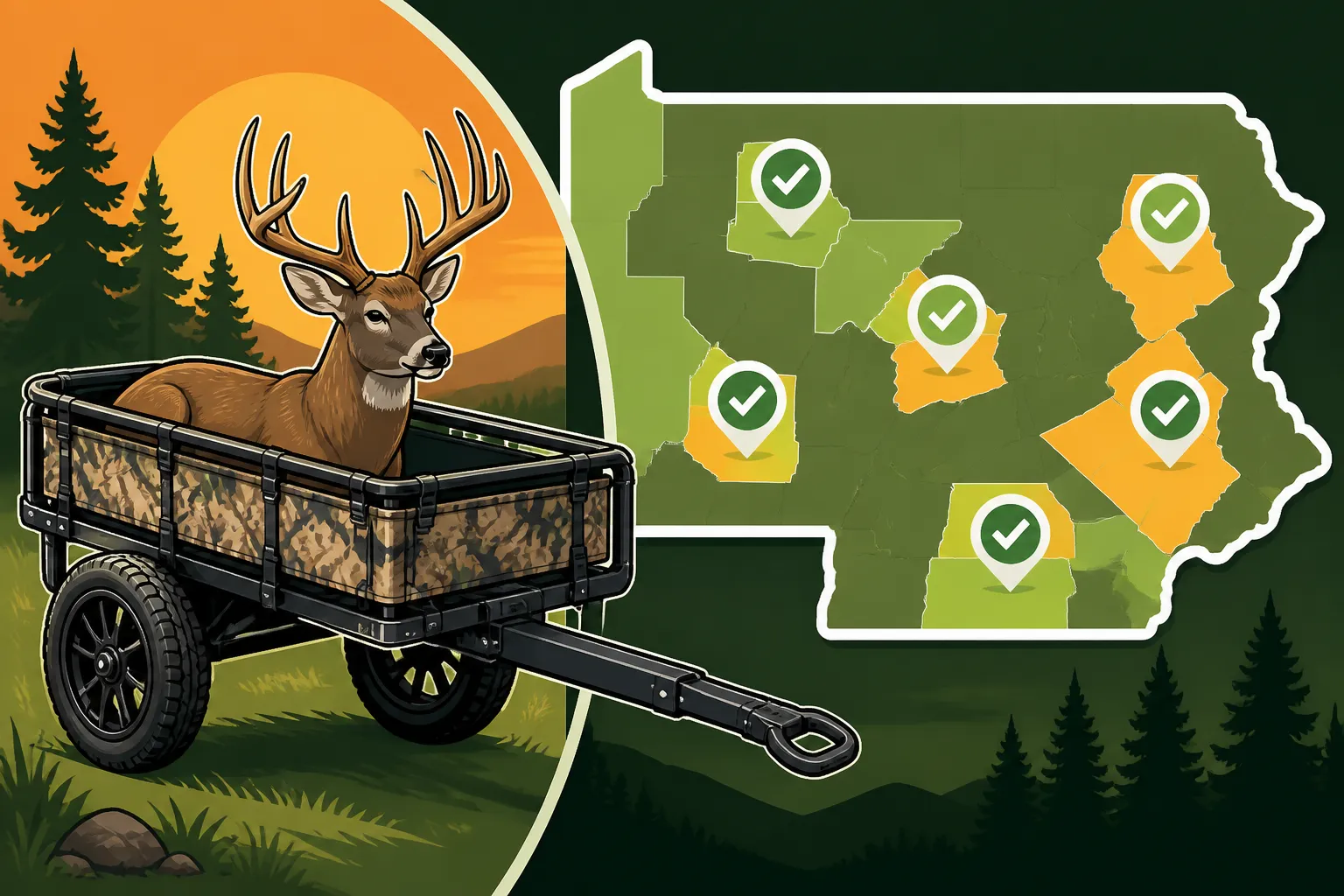
This is often the million-dollar question for many hunters. Pennsylvania offers vast tracts of public hunting land, but each type of land comes with its own set of regulations. Understanding these rules is crucial to avoid any unwelcome surprises or citations. Generally speaking, hand-pulled deer carts are widely accepted, but motorized assistance is almost universally prohibited on public hunting lands.
State Game Lands Regulations on Carts
Pennsylvania's State Game Lands (SGLs) represent a significant portion of public hunting ground, managed by the Pennsylvania Game Commission (PGC). When it comes to deer carts, the general rule is quite favorable for hunters. Non-motorized, hand-pulled deer carts are typically allowed on State Game Lands. This means you can absolutely bring your two-wheeled or single-wheeled cart onto SGLs to assist with game recovery. The key here is "non-motorized" and "hand-pulled." You cannot, under any circumstances, use an ATV, UTV, electric bicycle, or any other motorized vehicle to recover game on SGLs, unless specifically designated otherwise for individuals with disabilities who have obtained a special permit.
It's important to remember that while the cart itself is allowed, you must still adhere to all other SGL rules. This includes staying on designated trails or open areas where possible and not causing undue damage to the habitat. For instance, if you're pulling your cart through a particularly sensitive wetland area, you could still be creating a problem, even if the cart itself isn't motorized. Always use common sense and respect the land. Many seasoned hunters utilize mapping tools, like those available from GoHunt, to plan their recovery routes from potential kill zones back to an access road, taking into account terrain and trail networks where a cart would be most effective. This kind of advanced planning can save a lot of grief. Pennsylvania State Game Lands Rules are designed to ensure fair chase and preserve the resource for everyone.
State Forests and Allegheny National Forest
Pennsylvania State Forests, managed by the Department of Conservation and Natural Resources (DCNR), offer another immense opportunity for public hunting. The rules for deer carts in State Forests are generally similar to those for State Game Lands: non-motorized, hand-pulled carts are usually permitted. These areas are often more rugged than some SGL tracts, featuring expansive timber and steeper terrain, making carts even more valuable. When hunting in a State Forest, you might find yourself far from paved roads, making the ability to roll your deer out a huge advantage. Hunting Pennsylvania State Forests often involves navigating more primitive trails and old logging paths, which are ideal for a sturdy deer cart.
The Allegheny National Forest (ANF), a federal property, also permits the use of non-motorized deer carts for game retrieval. Like State Forests, the ANF is characterized by vast tracts of timber, steep hollows, and remote areas. The ability to transport a deer with a cart here can mean the difference between getting your deer out whole or having to quarter it many miles from your vehicle. Always remember that while carts are allowed, off-road vehicle use (ATVs, UTVs, etc.) is strictly regulated and generally not permitted for game retrieval outside of designated routes, which typically do not include retrieving a deer from deep in the woods. Pay attention to specific signage and maps for State Forest Road Closures in Season and designated routes.
Private Land Considerations
When hunting on private land, the rules around deer carts become much simpler: it's entirely up to the landowner. If you have permission to hunt on private property, you should always clarify with the landowner about their rules regarding game retrieval. Most landowners will have no issue with you using a hand-pulled deer cart, as it doesn't cause damage and shows a commitment to efficiently recovering your game. However, if they have specific concerns about certain fields or areas, it's essential to respect those wishes.
The key takeaway here is communication. Before you even set foot on private land, establish clear expectations. This proactive approach helps maintain a good relationship with the landowner, which is invaluable. Asking a Pennsylvania Farmer for Permission often involves these types of discussions, ensuring you're both on the same page about access and post-harvest activities. Many farmers appreciate hunters who respect their land and strive for efficient, low-impact recovery.
DMAP and Special Areas
Deer Management Assistance Program (DMAP) units are specific areas, often on private or public land, where additional antlerless permits are issued to help manage deer populations. Hunting these areas falls under the general rules of the property owner, whether it’s a private landowner, a state park, or a specific parcel of State Game Lands. If the DMAP unit is on SGLs or State Forests, the hand-pulled cart rules apply as mentioned above. If it's on private land, consult the landowner.
Some special regulation areas, particularly those close to urban centers or within state parks that allow hunting, might have very specific rules. For example, while hunting may be permitted, certain types of access or equipment could be restricted. It's always a good practice to check the specific regulations for any DMAP unit or special area you plan to hunt. A quick visit to the PGC website or using a mapping app with detailed property information from a provider like GoHunt can help you understand any unique constraints before you go.
Choosing the Right Deer Cart for Pennsylvania Terrain
Selecting the right deer cart isn't a one-size-fits-all decision, especially given Pennsylvania's varied landscapes. What works perfectly for rolling a deer out of a cut cornfield might be a nightmare on a steep, rocky mountain side. Considering the specific terrain you frequently hunt will help you make the best choice.
Factors to Consider for Mountainous Terrain
Hunting the "big woods" of Pennsylvania often means dealing with steep inclines, rocky outcrops, dense forest floor, and slippery leaves or mud. For these areas, a few features become paramount for your deer cart:
- Large, Pneumatic Tires: These are a must. They absorb shock better, provide superior traction over roots and rocks, and handle uneven ground more effectively than solid wheels. Look for tires with aggressive treads.
- Sturdy, Lightweight Frame: Aluminum frames are often preferred as they are strong enough to handle heavy loads but won't add excessive weight to your overall trek. You'll be pushing and pulling this thing, and every extra pound counts when you're going uphill.
- High Clearance: A cart with good ground clearance will prevent the frame from dragging over obstacles, making it easier to navigate rough terrain without getting stuck.
- Good Balance and Maneuverability: While two-wheeled carts are popular, in truly dense or steep areas, a well-designed single-wheeled cart might offer more maneuverability. However, be prepared for the extra effort required to balance it. When packing your Packs and Drags for Steep Ground, consider how the cart folds down and attaches to your gear or vehicle for easy transport to your hunting spot.
Features for Farm Country and Flatlands
Hunting the rolling hills and agricultural lands of southern Pennsylvania presents a different set of challenges and opportunities for deer cart use. Here, you're less likely to encounter extreme steepness but more likely to deal with mud, cultivated fields, and longer, flatter drags.
- Wider Wheels/Four Wheels: In open fields, especially after rain, wider wheels or a four-wheeled cart can distribute weight better and prevent sinking into soft ground. A standard two-wheeled cart with wide pneumatic tires will also perform admirably.
- High Capacity: Farm country often produces larger deer, and the terrain allows for easier transport of heavier loads. A cart with a higher weight capacity and a larger platform will be beneficial here.
- Folding Design: While less critical for navigating tight spots, a good folding design still makes transporting the cart to and from your vehicle much easier, especially if you're driving on paved roads between hunting locations. Many hunters using GoHunt maps for farm country scouting will plot access points and recovery routes that take advantage of flat terrain and wider trails, knowing their cart will handle it.
Maintenance and Transporting Your Cart
Regardless of the type of cart you choose, proper maintenance is key to its longevity and reliability. After each use, especially if it's been a muddy or wet day, clean off any dirt, debris, and blood. Lubricate moving parts, especially wheel axles, to prevent rust and ensure smooth operation. Check tire pressure regularly and repair any punctures promptly.
Transporting your cart to and from the hunting area is another practical consideration. Many deer carts are designed to fold flat, making them easy to slide into the bed of a pickup truck, the trunk of a car, or even strapped to a roof rack. If you're hiking a long distance before you even start hunting, consider a lighter, more compact model or one that can be partially disassembled. Having your cart ready to go, and knowing how to efficiently load and secure a deer, will make the post-harvest process much smoother. Field Dressing a Deer in Cold Weather is easier when you know you can get the deer out quickly.
| Cart Type | Best Terrain | Key Advantages | Key Considerations |
|---|---|---|---|
| Two-Wheeled Cart | Varied: Mountains, fields, woods | Stable, good load capacity, handles obstacles well | Can be wide in dense brush; can be heavy |
| Single-Wheeled Cart | Dense brush, narrow trails | Highly maneuverable, agile | Requires more effort to balance; less stable with heavy loads |
| Four-Wheeled Wagon | Flat, open fields, wide trails | Maximum stability, high capacity for heavy loads | Less maneuverable in tight spots; heaviest option |
| Backpack Frame Cart | Deep backcountry, remote areas | Versatile (carry in/out), good for quartering | Lower capacity than dedicated carts; more expensive |
Disclaimer
This article is for general informational purposes only and does not constitute professional advice. Laws, prices and regulations vary by location and change over time. Consult a qualified professional for guidance on your specific situation.