Minimum Draw Weight for Pennsylvania Deer
There's a common misconception, especially for new bowhunters or those transitioning to a new setup, about just how much draw weight you really need to hunt deer in Pennsylvania. Many folks get caught up in the "more is better" mentality, worrying if their current bow is powerful enough, or perhaps they're struggling to draw a heavy bow, wondering if they're even legal. This guide is here to clarify the exact legal requirements, delve into the ethical considerations, and help you understand how to choose and maximize a draw weight that works for you, ensuring a humane and successful hunt.
Understanding Pennsylvania's Draw Weight Regulations
When you're preparing for archery season in the Keystone State, the rules can sometimes feel a bit like a tangled web. But when it comes to bowhunting, the Pennsylvania Game Commission (PGC) keeps things fairly straightforward regarding draw weight. This section will break down the legal minimums and explain how different bow types fit into those regulations, so you can head into the woods with confidence.
The Legal Minimum
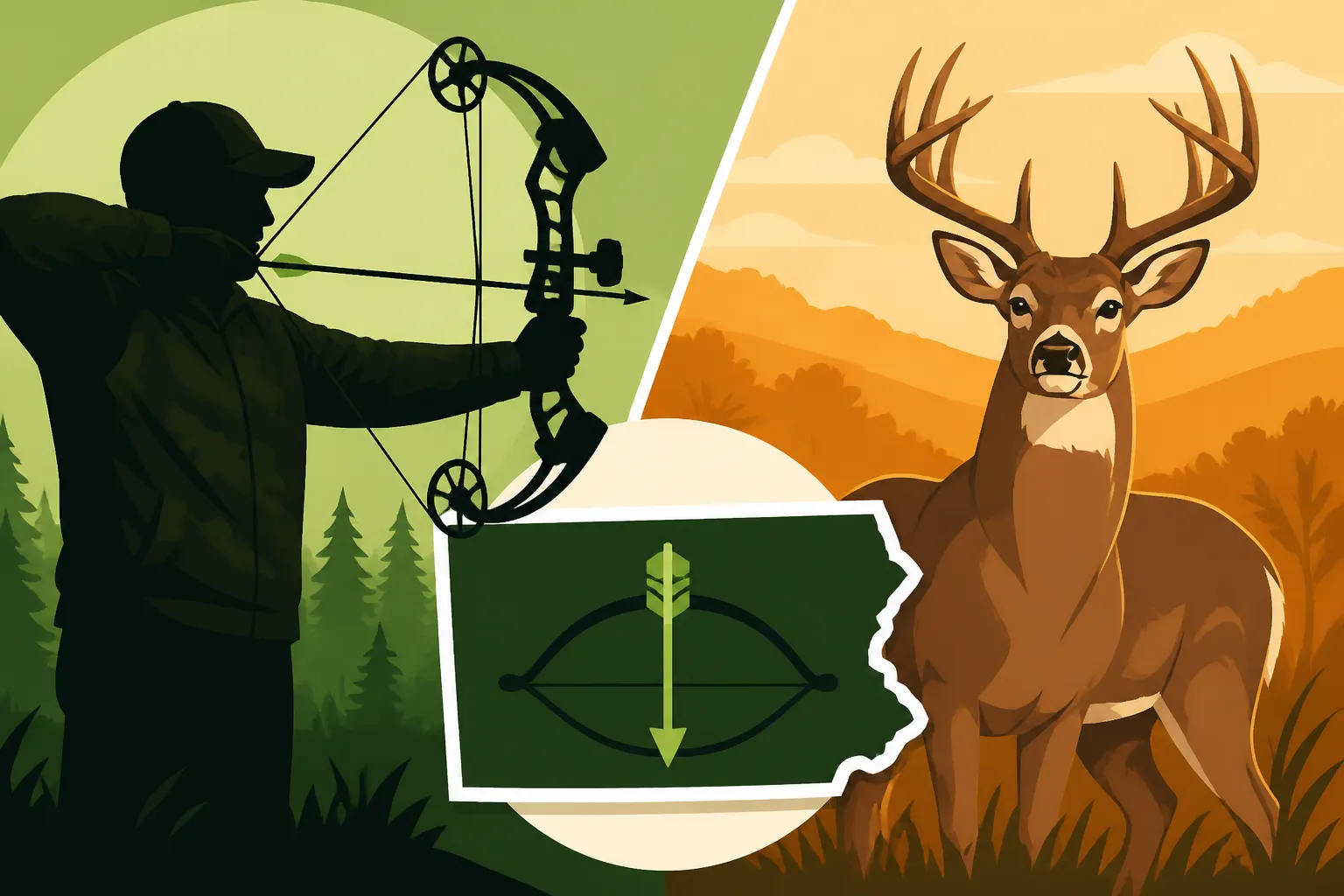
Let's cut right to the chase: Pennsylvania has a specific minimum draw weight for bows used to hunt big game, which includes deer. For compound bows, recurve bows, and longbows, the legal minimum draw weight is 35 pounds. That's it. Thirty-five pounds. This isn't a suggestion; it's a hard and fast rule set by the PGC to ensure that any arrow launched at a deer has sufficient energy to achieve a clean, ethical kill, assuming proper shot placement and a sharp broadhead.
For a lot of hunters, especially those new to archery or those with smaller frames, 35 pounds is very achievable. It means that you don't necessarily need to be a muscle-bound archer to participate in Bowhunting Pennsylvania's October Archery Season. Many modern bows are incredibly efficient, and even at this minimum draw weight, they can deliver an arrow with enough force to take down a whitetail. The key is to be able to draw your bow smoothly and hold it steadily at full draw without excessive strain, allowing for precise aiming. If you're struggling to even reach this minimum, it might be worth consulting with an archery pro shop to assess your form or consider a bow with a lower minimum setting, if applicable.
Different Bow Types and Their Implications
While the 35-pound minimum applies broadly, how that draw weight feels and performs can differ significantly between bow types. Understanding these nuances is crucial for selecting the right equipment for your hunting style and physical capabilities.
Compound bows are incredibly popular for a reason. Their cam systems provide a "let-off" at full draw, meaning that while you might pull 60 pounds to get to full draw, you might only be holding 15-20 pounds once you're there. This mechanical advantage makes it much easier to hold steady on target for an extended period, which is a huge benefit when a deer is quartering away slowly or needs to take one more step into a clear shooting lane. Even if your bow is set at the legal minimum of 35 pounds, the let-off means you're holding even less, making it very comfortable for many hunters.
Traditional archers, using recurve or longbows, experience the full draw weight throughout the shot sequence. If you're shooting a 45-pound recurve, you're holding 45 pounds at full draw. This requires more physical strength and disciplined practice to maintain accuracy, especially when hunting from a stand on a chilly morning in late October. However, for those who enjoy the challenge and simplicity of traditional archery, consistent practice makes this manageable and highly effective.
Crossbows, on the other hand, have a different set of rules. For crossbows, the hunter isn't actively "drawing" the string in the same way. Instead, a cranking or cocking device is often used. Therefore, there isn't a draw weight requirement that applies directly to the hunter's strength. However, crossbows must still meet certain specifications related to their draw weight and arrow length, typically meaning they must have a minimum peak draw weight of 125 pounds and a minimum bolt length of 18 inches. The hunter's physical ability is less about drawing the bow and more about safely handling and aiming the crossbow.
Beyond the Legal Minimum: Ethical Draw Weight Considerations
Meeting the legal minimum draw weight is just the first step. True ethical hunting goes beyond simply following the rules; it's about making every reasonable effort to ensure a quick, humane kill. This involves a delicate balance of arrow ballistics, shot placement, and your personal shooting abilities. It's a topic that often sparks passionate debate among hunters, but at its core, it's about respecting the animal.
Kinetic Energy and Arrow Penetration
When an arrow strikes a deer, it needs to penetrate deeply enough to reach vital organs like the heart and lungs. This penetration is largely determined by the arrow's kinetic energy (KE) and momentum. Kinetic energy is a measure of the energy an arrow possesses due to its mass and speed. Higher draw weights, heavier arrows, and faster arrow speeds all contribute to higher kinetic energy and momentum, which in turn leads to better penetration.
While 35 pounds might be legal, a bow set to that minimum with a very lightweight arrow might struggle to achieve full pass-throughs on larger deer, especially if hitting bone. A heavier arrow, even from a moderate draw weight, can carry more momentum and often penetrate better than a lighter, faster arrow with similar kinetic energy. It’s a bit of a balancing act, and every component of your arrow setup, from broadhead type to total arrow weight, plays a role. A good rule of thumb is to aim for at least 40-45 ft-lbs of kinetic energy for deer, though more is always better for reliability.
Here's a simplified look at how draw weight might influence kinetic energy with typical arrow setups. Keep in mind, actual results vary wildly based on bow efficiency, arrow weight, and cam design.
| Draw Weight (lbs) | Approximate Arrow Speed (fps) | Approximate Arrow Weight (grains) | Estimated Kinetic Energy (ft-lbs) | Typical Penetration Potential |
|---|---|---|---|---|
| 35 | 220 | 350 | 37.6 | Sufficient for broadside, may struggle with bone. |
| 45 | 250 | 400 | 55.5 | Good for most deer, some bone penetration. |
| 60 | 280 | 425 | 74.1 | Excellent for deer, capable of significant bone penetration. |
| 70 | 300 | 450 | 89.9 | Overkill for deer, but ensures deep penetration. |
Note: These figures are illustrative only. Your actual bow and arrow setup will yield different results. Always test your own equipment.
Consider a scenario where a hunter is using a 35-pound bow with a very lightweight carbon arrow. They might get decent speed, but the kinetic energy could be on the lower end of what's ideal for a quick pass-through, especially on a large-bodied Pennsylvania buck in late fall. Now imagine that same hunter switches to a slightly heavier arrow, perhaps 50-75 grains more. Even with a minor drop in speed, the increased momentum often results in significantly better penetration, drastically improving the chances of a clean kill. It's not just about the numbers; it's about the combination working together.
Accuracy and Shot Placement
This cannot be stressed enough: accuracy is far more important than raw power. A perfectly placed shot with a 35-pound bow will yield a much quicker, more humane kill than a poorly placed shot from an 80-pound bow. If you’re struggling to draw a heavy bow, your form will suffer, your muscles will fatigue, and your accuracy will plummet. This leads to missed shots, or worse, wounded animals.
Many hunters make the mistake of "over-bowing" themselves, choosing a draw weight that feels impressive in the pro shop but becomes unmanageable after a few shots, or worse, in the cold, adrenaline-filled moments of a real hunt. It’s far better to shoot a lighter draw weight accurately and consistently than to yank back a heavy bow with poor form. Think about it: a few inches off the mark, even with a powerful bow, can mean hitting gut instead of lung.
Consistent practice, focusing on smooth draws, steady holds, and clean releases, is paramount. Practice from various positions you might encounter while hunting, such as sitting, kneeling, or from a treestand. Ensure you can draw your bow silently and smoothly without having to muscle it. Your personal physical limits for accuracy should dictate your draw weight, not an arbitrary desire for "more power." The ability to hold steady on target for those crucial seconds when a deer is presenting a shot is invaluable.
Personal Physical Capability
Everyone's body is different, and what's comfortable and effective for one hunter might be completely impractical for another. Your personal physical capability is arguably the most important factor in choosing an ethical draw weight. Trying to hunt with a draw weight that’s too heavy for you can lead to a host of problems beyond just poor accuracy.
For example, an older hunter might find that their strength isn't what it once was, or someone recovering from an injury might have limitations. A younger hunter might still be building strength. In these situations, setting your bow to a comfortable, manageable draw weight is not just about personal comfort; it's an ethical responsibility. If you can't consistently draw your bow smoothly and quietly without excessive strain, and hold it steady long enough to make an accurate shot, you're not ready to hunt with that setup.
Remember, deer hunting often involves unexpected moments. You might need to draw your bow when it's cold, after sitting still for hours, or with adrenaline pumping through your veins. Can you still make that smooth, silent draw? Can you hold it steady for 10, 20, or even 30 seconds if the deer hesitates? These are the questions you need to answer honestly when assessing your personal capability. Don't let ego dictate your draw weight; let ethical hunting and consistent accuracy be your guide.
Choosing the Right Draw Weight for You
Selecting the ideal draw weight isn't about bragging rights; it's about finding the sweet spot where you're comfortable, accurate, and powerful enough to make an ethical kill. It's a deeply personal decision that should involve self-assessment and, ideally, professional guidance.
Assessing Your Strength and Form
The first step is a frank assessment of your own physical strength and current shooting form. If you're new to archery, start low and work your way up. Most compound bows allow for a significant range of draw weight adjustment, often 10-15 pounds or more. Begin at the lower end of that range, perhaps just above the legal 35-pound minimum, and focus intensely on proper form.
Can you draw the bow smoothly without jerking or using excessive body motion? Can you hold it at full draw comfortably for at least 30 seconds without your arm shaking? If not, the weight is likely too high. A good way to test this is by performing multiple draws in a row, say 10-15 times. If you're fatigued after just a few, it's too heavy. An experienced archery pro shop technician can be invaluable here. They can observe your form, recommend a starting draw weight, and help you gradually increase it as your strength improves, all while emphasizing proper technique. They can also ensure your Bow Setups for Pennsylvania Whitetails are perfectly tuned to your chosen weight.
Practicing with Your Hunting Setup
Once you've settled on a comfortable draw weight, consistent and realistic practice becomes your best friend. Target shooting in warm weather at the range is one thing, but hunting scenarios are often quite different. You'll be wearing more layers of clothing, the weather might be cold, and adrenaline will certainly be a factor.
Practice with your hunting layers on to ensure they don't impede your draw or release. Practice from the actual positions you'll be hunting from – sitting in a treestand, kneeling behind a bush, or from a ground blind. Practice in varying light conditions, similar to what you'd experience at dawn or dusk. Crucially, practice shooting with broadheads. Broadheads for Timber Shots often fly differently than field points, so broadhead tuning is essential to ensure your arrow flies true to your aiming point.
Don't just shoot at static targets. Incorporate practice scenarios where you have to wait for a clear shot, holding at full draw for longer periods, mimicking a deer that might be a bit hesitant. This kind of realistic practice builds both physical stamina and mental preparedness, ensuring you're ready when a buck steps out in the Hunting the Pre-Rut in Late October.
Adjusting Draw Weight Over Time
Your ideal draw weight isn't necessarily a static number for life. It can and often should change over time based on your physical fitness, age, and even the time of year. Just like we adjust our training routines, we can adjust our bow setups.
Many compound bows are highly adjustable, allowing you to easily increase or decrease draw weight by turning limb bolts. If you spend the off-season hitting the gym and building upper body strength, you might find you can comfortably handle a few extra pounds. Conversely, if you've had an injury or simply aren't as strong as you once were, there's no shame in backing off the draw weight to maintain accuracy and comfort. The goal is always to shoot the heaviest weight you can comfortably and accurately handle, not just the heaviest weight you can physically pull. This adaptability ensures that your bowhunting experience remains enjoyable and ethical year after year.
Maximizing Effectiveness with Any Legal Draw Weight
Regardless of your chosen draw weight, as long as it meets the 35-pound legal minimum, you can maximize your effectiveness in the field. It’s about leveraging every advantage—from your arrow setup to your understanding of deer behavior—to make sure that when you release an arrow, it does its job flawlessly.
Sharp Broadheads and Arrow Selection
The importance of a razor-sharp broadhead cannot be overstated. A dull broadhead, even from a high-poundage bow, will struggle to penetrate bone and flesh. A sharp broadhead, on the other hand, slices through tissue, causing maximum damage and leaving a better blood trail. Invest in quality broadheads and ensure they are absolutely hair-popping sharp before every hunt. Regularly check them, even if they've just been in your quiver, as bumps and jostles can dull an edge.
Beyond sharpness, your overall arrow selection is critical. This includes arrow spine (its stiffness), total weight, and front of center (FOC) balance. A properly spined arrow will fly true and stable, while an arrow that is too stiff or too weak for your bow's draw weight and length will flex excessively, leading to inconsistent flight. Heavier arrows, generally speaking, carry more momentum and can aid penetration, especially when using lower draw weights. A higher FOC (meaning more weight towards the front of the arrow) can also improve penetration and flight stability, especially in windy conditions. Don't just grab any arrow off the shelf; research and experiment to find the combination that shoots best from your bow at your chosen draw weight.
Understanding Shot Angles and Range
Even with a perfectly tuned bow and razor-sharp broadheads, a poor shot angle or an attempt at too long a range will undermine all your efforts. Ethical bowhunting dictates that you only take shots that offer a high probability of hitting the vital organs for a quick, humane kill.
This usually means a broadside or slightly quartering-away shot at a deer. Avoid quartering-to shots, straight-on frontal shots, or straight-away shots, as these dramatically reduce the chances of hitting the vitals and increase the risk of wounding the animal. Know your effective range – the maximum distance at which you can consistently place an arrow into a six-inch circle. For most bowhunters, this is often between 20 and 40 yards, but it varies widely based on individual skill and equipment. Do not push your limits in the field. If a deer steps out at 50 yards and your effective range is 30, let it walk. You can improve your odds by learning Rattling and Grunting in Pennsylvania to draw them closer.
Mapping tools like GoHunt can be invaluable here. By using their detailed topo maps and aerial imagery, you can scout out potential shot angles and maximum distances from your stand locations, giving you a better understanding of what shots you might reasonably expect to take.
Scouting and Stand Placement
The best way to ensure an ethical shot within your effective range is to get closer to the deer. This is where diligent scouting and strategic stand placement really pay off. Understanding deer movement patterns, their bedding areas, and their feeding habits allows you to position yourself for close-range opportunities.
Spend time before the season observing deer, looking for trails, rubs, scrapes, and feeding sign. Identify pinch points, funnels, and natural travel corridors. When setting up your treestand or ground blind, consider prevailing winds and thermals. Your goal is to intercept deer within your comfortable shooting range without being detected. A well-placed stand in an area where deer frequently move through at 20 yards will provide far more ethical shot opportunities than a randomly placed stand hoping for a lucky break at 50. Treestand Setups in Pennsylvania Hardwoods can be critical to this success.
Utilize resources like GoHunt to analyze aerial photos, topo maps, and land features. This can help you pinpoint those subtle terrain features, like Hunting Oak Ridges and Benches or creek bottoms, that deer often use for travel, allowing you to position your stand precisely for a close, ethical shot. The less distance your arrow has to travel, the less chance for error or external factors like wind to affect its flight. This detailed scouting, especially on Scouting Pennsylvania Public Land Before Season, makes a huge difference in creating those high-probability encounters.
Choosing the right draw weight for deer hunting in Pennsylvania is a personal decision that blends legal requirements with ethical considerations and individual capabilities. While the 35-pound minimum is clear, the truly responsible hunter will select a weight they can shoot with consistent accuracy, ensuring enough kinetic energy for a clean kill, and then dedicate themselves to diligent practice and smart hunting strategies. It's about respecting the animal, mastering your equipment, and continually striving to be the most effective and ethical hunter you can be.
Disclaimer
This article is for general informational purposes only and does not constitute professional advice. Laws, prices and regulations vary by location and change over time. Consult a qualified professional for guidance on your specific situation.