Deer Drags and Sleds for Snow
There’s a moment every hunter dreams of: seeing that magnificent Pennsylvania whitetail finally drop. But then, the reality sets in. You’re standing over a couple hundred pounds of deer, deep in a laurel thicket, with a mile of steep, snowy mountain between you and the truck. That glorious feeling quickly gives way to the sinking dread of, "How on earth am I going to get this out?" We've all been there, physically exhausted and mentally drained, trying to figure out the best way to move a heavy animal across challenging terrain, especially when snow adds its own layer of complexity. This guide is here to help, diving deep into the world of deer drags and sleds, offering practical advice and techniques to make your deer retrieval in the snowy Pennsylvania woods a whole lot easier.
The Inevitable Challenge of Deer Retrieval in Pennsylvania
Getting a deer on the ground is just the first victory; the real work often begins afterward. Pennsylvania’s diverse landscape, from the steep, rocky ridges of the Big Woods to the dense creek bottoms of farm country, presents unique challenges, and when you throw snow into the mix, things get even more complicated. You might be slogging through knee-deep drifts one moment and pulling over slick, icy patches the next. These conditions can turn a short drag into an epic ordeal, testing your strength, your resolve, and sometimes, your hunting boots.
Why Snow Complicates an Already Tough Job
Snow, while beautiful and often an aid in tracking, can be a real bear when it comes to dragging a deer. Fresh, light snow might initially seem like it provides a slick surface, reducing friction. However, as you drag, that light snow packs down, creating a surprisingly resistant track. If it's heavy, wet snow, it piles up in front of the deer, acting like a plow and making every step a monumental effort. Then there’s the underlying terrain – hidden rocks, downed logs, and icy patches that become treacherous hazards. A flat, easy drag can quickly become an exhausting struggle up and down hills, over blowdowns, and through dense regrowth.
Imagine the scenario: You've just dropped a nice buck in a secluded hollow after a fresh six-inch snowfall. The exhilaration is high, but as you approach the deer, you realize the snow isn't light and fluffy; it's dense, wet, and clinging to every branch. The climb out of the hollow, which seemed manageable on your way in, now looks like an insurmountable wall. Without the right gear and a solid strategy, you could be in for hours of grueling work, risking injury or even spoiling your hard-earned venison. This is where purpose-built deer drags and sleds truly shine, transforming a potential nightmare into a manageable task.
The Realities of Solo Hunting and Heavy Game
For many of us, deer hunting in Pennsylvania is often a solo endeavor. We head out alone, climb into a treestand, or still-hunt through the timber, relying on our own skills and endurance. This independence is part of the allure, but it also means that when a deer hits the ground, the entire retrieval falls squarely on our shoulders. A healthy adult whitetail buck can easily weigh 150-200 pounds dressed, and a doe isn't far behind. Trying to drag that weight by yourself, especially on uneven ground or in the snow, can be incredibly taxing.
The physical strain of solo dragging can lead to quick fatigue, pulled muscles, or even injuries. You might find yourself having to stop every few yards, gasping for breath, as the drag rope cuts into your hands or shoulder. This struggle isn't just uncomfortable; it can be dangerous if you're deep in the woods as evening approaches, or if temperatures are dropping. A good drag system or a sturdy sled isn't a luxury; for the solo hunter, it's an absolute necessity for safely and efficiently getting your game out. It allows you to conserve energy, maintain better posture, and reduce the risk of a painful incident miles from the nearest road. It's about working smarter, not just harder, when you're by yourself.
Unpacking the Different Types of Deer Retrieval Tools
When it comes to getting a deer out of the woods, there isn't a one-size-fits-all solution. The best tool for the job often depends on the terrain, the amount of snow, the distance, and whether you're hunting alone or with a partner. Understanding the various options available can help you choose the right gear to stow in your pack or truck, ensuring you're prepared for whatever Pennsylvania throws your way.
Simple Rope Drags for Quick Hauls
The most basic and often most readily available deer retrieval tool is a simple rope drag. This usually consists of a sturdy nylon or synthetic rope, often with a handle loop on one end. It's compact, lightweight, and can easily be coiled up and carried in your pack without adding significant bulk. For short drags over relatively flat, open ground, or when you have a couple of hunting buddies to help share the load, a basic rope drag can be perfectly adequate.
To use it, you simply loop one end around the deer's neck or antlers (if legal and safe to do so), or through the jawbone, and pull. The handle provides a better grip than just grasping the rope itself, reducing strain on your hands. However, its simplicity is also its limitation. A simple rope drag offers very little leverage or ergonomic support, meaning your back and arms will take the brunt of the effort. On steep ascents, through thick brush, or over long distances, this can quickly lead to exhaustion. For instance, dragging a buck out of a creek bottom up a steep bank with just a rope can be a brutal experience, leaving your shoulders screaming.
Specialized Harnesses and Straps for Ergonomic Pulling
For hunters who frequently face solo drags or challenging terrain, specialized harnesses and straps can be a game-changer. These systems are designed to distribute the pulling weight across your body – typically over your shoulders, chest, or waist – rather than concentrating it in your hands or arms. This allows you to engage your core and legs, which are much stronger muscle groups, for a more efficient and less strenuous pull.
A common type is a shoulder harness, which essentially turns your body into a pulling machine, similar to how a sled dog pulls. Some harnesses are integrated into backpacks, like those offered by Mystery Ranch or Kifaru, allowing you to carry your gear while simultaneously having a robust dragging system ready to deploy. Others are standalone units that you clip onto your existing pack or wear directly. They might feature wide, padded straps to prevent digging into your shoulders and a strong attachment point for your drag rope. While these systems add a bit more bulk and weight to your pack than a simple rope, the comfort and efficiency gained on a long drag can be well worth the trade-off. Imagine pulling that heavy deer for half a mile through frozen mud and crunchy snow; a good harness will make that journey significantly more bearable than just a rope.
Deer Sleds: When Friction is Your Enemy
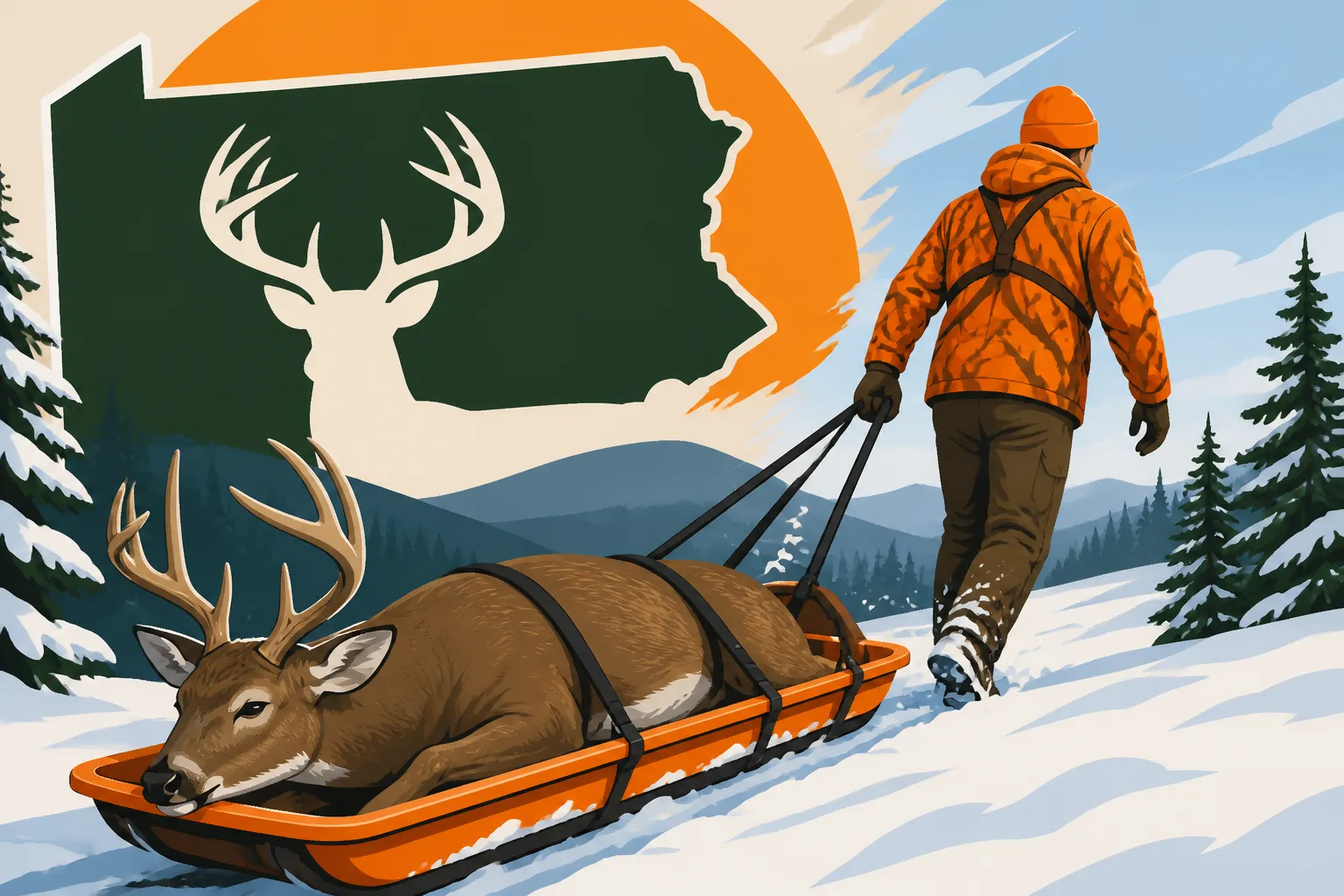
When you're dealing with snow, mud, or really any kind of ground where you want to minimize friction, a deer sled is often the superior choice. These are essentially large, durable plastic sheets or tubs designed to cradle the deer, allowing it to glide over obstacles rather than snagging. They protect the carcass from dirt and debris, which is a nice bonus, and can also make field dressing in certain conditions a little cleaner.
The primary advantage of a sled is reducing the effort required to move the animal. By distributing the deer's weight over a larger, smoother surface, the sled significantly decreases the coefficient of friction between the deer and the ground. This means less energy expended per foot, which adds up dramatically over a long haul. Sleds come in various forms, from simple plastic sheets with grommets for a rope, to more rigid, boat-like designs with reinforced edges and multiple attachment points. They are particularly effective in deep, soft snow where a dragged deer would just plow, or over slick, muddy trails where a deer would simply sink in. Dragging a Deer Off a Pennsylvania Mountain can become a much less daunting task with the right sled helping you out.
Selecting the Right Sled for Pennsylvania's Diverse Terrain
Pennsylvania’s hunting grounds are a mixed bag, offering everything from gently rolling agricultural fields to dense, rocky mountain forests. This variety means that no single sled is perfect for every scenario. What works wonders in one area might be a hindrance in another. Choosing the right sled means considering the typical conditions you hunt in and being prepared for the curveballs nature throws.
Lightweight Plastic Sleds for Snow and Smoother Ground
For many Pennsylvania hunters, especially those primarily hunting in areas with moderate snow cover or relatively smooth terrain like open woods or farm fields, a basic, lightweight plastic sled is an excellent choice. These are often made from durable, flexible polyethylene (HDPE) plastic, designed to be easily rolled up or folded for transport to and from your hunting spot. They usually feature pre-drilled holes around the perimeter for attaching your own drag rope, or come with a simple rope included.
The beauty of these sleds lies in their simplicity and effectiveness in their intended environment. In a few inches of fresh, powdery snow, a deer loaded onto one of these sleds can glide with surprising ease. They protect the carcass from absorbing water from the snow, keeping your venison cleaner. However, their flexibility can be a drawback on very rough ground. If you're pulling over sharp rocks or exposed roots, a thin plastic sled might snag, tear, or even flip, potentially dislodging the deer. They also don't offer much in the way of structural integrity, so getting a heavy deer onto one can sometimes be a two-person job, especially if you're trying to lift and slide it. Still, for tackling those long fields or relatively even forest floors during Flintlock Hunting in Pennsylvania Snow, they're a fantastic, affordable option. Many hunters swear by simple plastic utility sleds found at hardware stores, adapting them with their own ropes.
Rigid Sleds for Robust Performance on Rougher Paths
When your hunting takes you into the truly rugged parts of Pennsylvania – the steep, boulder-strewn slopes, the dense laurel thickets, or areas with frequent blowdowns – a more rigid, heavy-duty sled might be a better investment. These sleds are typically thicker and more robust, often resembling a large, shallow boat or a toboggan. They're designed to withstand more abuse, slide over obstacles more reliably, and provide greater stability for the deer.
Rigid sleds often have raised sides, which help contain the deer and prevent it from sliding off during uneven pulls. Some even incorporate runners on the bottom, similar to a traditional sled, which can improve tracking and reduce drag on packed snow or icy patches. While they are heavier and bulkier to transport into the woods, their performance on challenging terrain can save you an immense amount of effort and frustration. Imagine navigating a steep, rocky logging road with a heavy buck; a rigid sled is far less likely to tip or snag compared to its flexible counterpart. The added durability means it's less prone to punctures or tears from sharp stumps or rocks, which is critical when you're miles from the truck. Getting a Deer Out of a Pennsylvania Hollow with one of these often feels less like an impossible feat and more like a manageable challenge.
Improvised Solutions and Leveraging Your Gear
Sometimes, despite all your planning, you find yourself in a situation where you need a deer drag but don't have a purpose-built sled handy. This is where a little ingenuity and an understanding of what makes a good sled can save the day. Many hunters have successfully improvised drags using items they already carry in their pack or have access to.
A heavy-duty tarp or even a large contractor-grade garbage bag can serve as a makeshift sled. Lay it flat, position the deer in the middle, gather the edges, and tie a rope around the bundle. While not as durable or slick as a dedicated sled, it will significantly reduce friction compared to dragging the bare carcass. Backpack frames can also be surprisingly effective. If you have a robust external frame pack, you can often strap the deer onto it, or at least the hindquarters, and carry or drag it out. Even a large, sturdy hunting pack, emptied of its contents, can be used to create a "basket" effect, with the deer's front end lifted by a rope and the rear supported by the pack as you pull. Using scouting tools like GoHunt maps to identify potential obstacles or long drags before you even step foot in the woods can help you decide if you need to pack an extra tarp or be ready with an improvised solution. The key is to think about what you have that can create a smooth, durable surface between the deer and the ground.
| Drag Type | Best Use Cases | Pros | Cons |
|---|---|---|---|
| Simple Rope | Short distances, open terrain, multiple hunters | Lightweight, compact, affordable | Poor ergonomics, high friction, tiring for solo/long drags |
| Shoulder Harness | Solo drags, moderate distances, varied terrain | Distributes weight, better ergonomics, hands-free pulling | Added bulk/weight, still high friction on ground |
| Flexible Plastic Sled | Snow, soft ground, moderate distances, solo/team | Reduces friction, lightweight, protects carcass | Can snag/tear on sharp obstacles, less stable |
| Rigid Plastic Sled | Rough terrain, long distances, heavy deer, snow/mud | Highly durable, excellent friction reduction, stable | Bulky, heavier, more expensive |
| Improvised Tarp/Bag | Emergency situations, unexpected kill location | Uses existing gear, better than bare drag | Less durable, can be cumbersome, low sides |
Mastering the Art of Deer Extraction Techniques
Knowing what gear to use is one thing, but understanding how to use it effectively is another. Extracting a deer, especially a large one in challenging conditions, is a skill that improves with practice and smart planning. It's about conserving energy, utilizing the terrain, and prioritizing safety.
Strategies for the Solo Hunter in Snowy Woods
As a solo hunter in Pennsylvania, getting a deer out by yourself in the snow can feel like a monumental task. The key is to break it down into manageable steps and use smart techniques to overcome the challenges. First, before you even begin to drag, ensure the deer is field-dressed properly. This immediately removes a significant amount of weight and cools the carcass, both of which are crucial. If you're on a slope, try to position the deer so you're dragging it slightly downhill or across contours rather than straight up. Wind and Thermals on a Ridge might have dictated your approach, but now gravity can be your friend.
When actually pulling, use your entire body. If you have a shoulder harness, lean into it, engaging your legs and core. Take small, consistent steps. Don't try to pull the deer ten yards without stopping; instead, pull five feet, pause, adjust your grip, and repeat. Frequent, short breaks are far better than one long, exhausting push that leaves you completely spent. If you encounter a large log or obstacle, don't try to pull the deer straight over it. Instead, lift the deer's head and neck first, get it over the obstacle, then walk around and lift the hindquarters, or use a combination of pushing and pulling. Sometimes, if the snow is deep enough, you can even pack down a small ramp on either side of a log to make it easier for the sled to slide over.
Working Together: Team Drags and Efficiency
When you're fortunate enough to have a hunting partner or a small group, deer retrieval becomes significantly easier, but only if you work together efficiently. Communication is paramount. Before you start, decide on a leader who will call out when to pull, when to stop, and how to navigate obstacles. This prevents wasted energy and ensures everyone is working in sync.
With two people, consider using two ropes – one attached to the deer's head/antlers, and the other to its hind legs. This distributes the weight more evenly and allows for better steering, especially around trees or through thick brush. If the terrain is particularly steep or difficult, like a long, sustained uphill climb, one person can pull from the front while the other pushes from the rear, using a sturdy stick or their hands to assist. When going downhill, the person at the rear can act as a brake, slowing the descent to prevent the deer from gaining too much momentum and becoming uncontrollable. Remember to swap positions periodically to share the physical burden. These shared efforts can turn a grueling multi-hour drag into a much quicker and more enjoyable team effort, something often experienced during Deer Drives With Three or Four Hunters.
Utilizing Snow Conditions to Your Advantage
While snow can be a major challenge, certain conditions can actually work in your favor. Fresh, powdery snow, especially when it's just a few inches deep, can create a very slick surface for a plastic sled. In these conditions, the sled glides easily, almost effortlessly, reducing friction dramatically. This is the ideal scenario for long drags. However, if that powder packs down, it becomes resistant.
Wet, heavy snow is often the most difficult, as it piles up in front of the deer or sled, acting like a snowplow. In these situations, using a sled with a slightly raised front or a pointed nose can help it cut through the snow rather than plowing it. Icy conditions, while treacherous for walking, can also create an incredibly slick surface for a sled. The key here is to control your speed, especially on descents, to prevent the deer from sliding uncontrollably. Always be mindful of the underlying terrain. Even a thin layer of snow can hide uneven ground, rocks, and stumps that can snag your sled or trip you up. Scouting tools like GoHunt can provide detailed topographical maps, helping you anticipate the terrain under the snow and plan the easiest route for your drag, avoiding unnecessary elevation changes or particularly dense thickets.
Beyond the Drag: Complementary Gear and Considerations
Getting a deer out of the woods isn't just about the pull itself. It's a whole system that involves preparation, the right support gear, and a focus on safety. Thinking holistically about your retrieval strategy can make all the difference, especially when dealing with the unpredictable conditions of Pennsylvania hunting.
Deer Carts: When to Choose Wheels Over a Sled
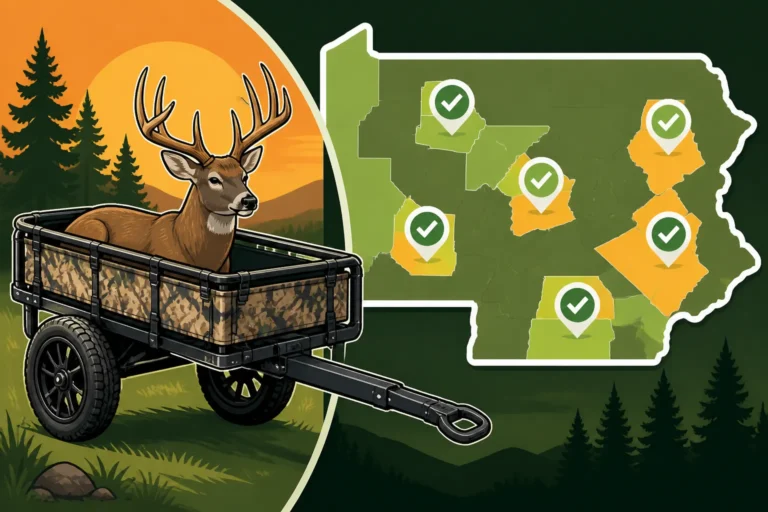
While sleds are kings in the snow, sometimes the ground is bare, or the snow cover is minimal, making a deer cart the superior option. Deer carts are essentially hand trucks designed for game, featuring two wheels and a sturdy frame onto which you strap your deer. They are incredibly efficient on relatively flat, firm ground like logging roads, old two-tracks, or open fields. Where a sled would create too much friction on dirt or grassy paths, a cart rolls easily, allowing one person to move a surprisingly heavy deer with minimal effort. Using a Deer Cart on Game Lands is often the preferred method for many hunters when the conditions allow.
However, carts have their limitations. They become a real liability in deep snow, thick mud, or extremely rocky, steep terrain. The wheels will sink, or the cart will snag on obstacles, making it harder to pull than simply dragging the deer. They are also bulkier to transport into remote areas and can be noisy on a quiet walk in. The decision between a sled and a cart often comes down to predicting the most likely conditions you’ll face. Many seasoned Pennsylvania hunters carry a compact rope drag or small flexible sled in their pack and leave a cart in the truck for when they hit a good road.
Essential Gear for a Safe and Successful Retrieval
Beyond the primary dragging tool, there are several other items that can make your deer retrieval safer, more comfortable, and ultimately more successful. First and foremost, good footwear is non-negotiable. Sturdy, waterproof boots with excellent ankle support and aggressive traction are crucial when pulling a heavy deer over uneven, potentially slippery ground. Think about Boots for Pennsylvania Mountains; they are vital for maintaining your footing and preventing slips.
A reliable headlamp or flashlight is also absolutely critical. Even if you start your drag in daylight, a longer-than-expected retrieval can quickly put you in the dark. Having hands-free light allows you to navigate the terrain, tie ropes, and perform any necessary tasks safely. Consider carrying a small first-aid kit; scrapes, blisters, and minor sprains are common during strenuous retrieves. Hydration is key too; even in cold weather, intense physical exertion can lead to dehydration, so a water bottle or hydration pack is a must. Finally, if you're hunting public land, always have an up-to-date map or a GPS device with downloaded maps (like what GoHunt offers). This helps you stay oriented, find the shortest path to your vehicle, and avoid inadvertently trespassing onto private property if you veer off course during a long drag. Knowing your exact location and the lay of the land is invaluable when you're tired and focused on pulling that deer.
The Importance of Planning and Perseverance
Ultimately, successful deer retrieval in Pennsylvania, especially in snowy conditions, often comes down to careful planning and sheer perseverance. Before you even head out, consider the terrain of your hunting area and what kind of drag or sled would be most effective. If you know you'll be hunting a particularly steep hollow or a dense thicket, pack accordingly. Scouting With the Pennsylvania Mapping Center can help you identify potential retrieve routes beforehand, marking points of easier access or less steep inclines.
Once you have your deer, don't rush the process. Take a moment to assess the situation, plan your route, and rehydrate. If you're alone, accept that it will be tough and pace yourself. Remember that every yard gained is a victory. The mental game is just as important as the physical one. Remind yourself of the delicious venison and the satisfying accomplishment that awaits you. By being prepared with the right tools, understanding effective techniques, and maintaining a positive, determined mindset, you can transform that dreaded deer drag into a manageable, albeit still challenging, part of your Pennsylvania hunting adventure.
Disclaimer
This article is for general informational purposes only and does not constitute professional advice. Laws, prices and regulations vary by location and change over time. Consult a qualified professional for guidance on your specific situation.