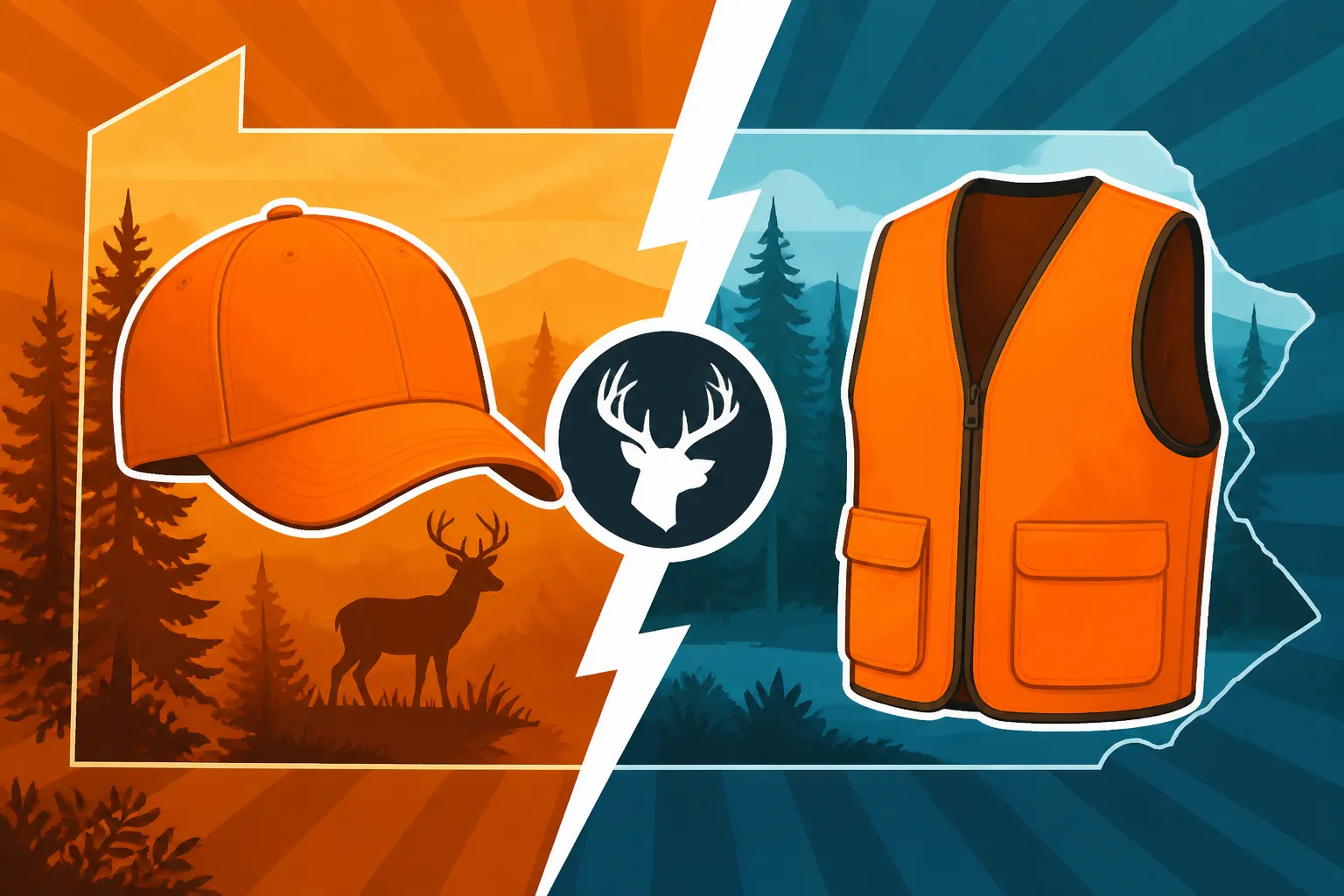
Orange Hats Versus Vests in Pennsylvania
One of the most common anxieties for hunters in Pennsylvania, especially those new to the field or returning after a long break, revolves around hunter orange. It's not just about wearing some orange; it's about wearing the right amount of the right kind of orange, at the right time. This guide will unravel the specifics of Pennsylvania's hunter orange requirements, focusing on the perennial debate of hats versus vests and offering practical advice to keep you safe and legal in the woods.
Understanding Pennsylvania's Hunter Orange Mandates
Navigating the regulations for hunter orange in Pennsylvania can feel like deciphering a complex code, especially when different seasons and species have their own unique requirements. But at its heart, the rule is about safety – making sure you're easily identifiable to other hunters, which is paramount in our busy woods.
The Basics: When and How Much Orange You Need
Let's get down to brass tacks. Pennsylvania law is pretty clear on when you need to wear hunter orange for most big game seasons, and it typically boils down to visibility. The general rule is that you must wear at least 250 square inches of fluorescent orange material on your head, chest, and back combined, visible 360 degrees. This isn't just a suggestion; it's a legal requirement that game wardens take seriously, and for good reason. Imagine still-hunting through thick mountain laurel or sitting on a stump during a deer drive; that flash of orange is often the only thing that distinguishes you from a deer.
This mandate applies to all seasons for deer, bear, and elk, including the firearms seasons and most special firearms seasons. It’s designed to prevent mistaken identity accidents, which, thankfully, have become far less common due to these regulations and continuous hunter education. It’s a small price to pay for a safer hunting experience for everyone. Many hunters, myself included, will often exceed the 250 square inches just to be extra cautious. When you're out there, especially during peak times like the opening day of rifle season, there's no such thing as being "too visible." You'll find a detailed breakdown of specific requirements in resources like When Pennsylvania Requires Hunter Orange.
Exceptions to the Rule: Archery and Spring Turkey
Now, like many rules, there are important exceptions to consider, primarily for archery deer and spring turkey seasons. If you're an archery hunter pursuing deer, the good news is that you generally do not need to wear hunter orange during the archery deer season. This allows bowhunters to utilize camouflage more effectively, which is often crucial for getting within bow range of wary whitetails. The same goes for fall archery bear season. However, if you are moving to or from your stand during the concurrent firearms deer season, or if you're participating in a deer drive during archery season, the orange requirements would apply. It’s a subtle but vital distinction that highlights the importance of understanding specific season dates and overlapping regulations.
Similarly, during the spring gobbler season, hunter orange is typically not required when you are stationary at a calling location. Many turkey hunters rely on blending into their surroundings, often setting up against a large tree trunk, to coax a wary tom into range. However, just like with archery, if you are actively moving through the woods, especially during periods when other hunting activities might be occurring, it's wise to carry orange and display it. Some hunters even carry a small piece of orange to wrap around a tree near their setup, making their general location known to other hunters approaching from a distance, then removing it when they're settled in to call. Always double-check the current regulations, especially if you're hunting during the extended hours When Spring Gobbler Hours Extend to Evening comes into play. These exceptions are in place to allow specific hunting methods to be effective while still prioritizing safety where cross-over might occur.
The Great Debate: Hats, Vests, or Both?
This is where the rubber meets the road for many hunters. When the regulation states "250 square inches visible 360 degrees," what's the best way to achieve that? Is a hat enough? What about a vest? The truth is, it's often not an either/or situation, but a combination that offers the best balance of safety and compliance.
The Case for the Hunter Orange Hat
A hunter orange hat is a staple for many, and it certainly has its advantages.
Pros of an Orange Hat:
- Simplicity and Portability: Hats are incredibly easy to throw on, take off, and pack. They don't interfere with your movements or snag on brush as easily as a vest might.
- Always Visible (Often): When you're still-hunting or sitting, your head is often the highest point of your visible profile. Even in dense cover, a bright orange hat can often be seen bobbing above the brush when the rest of your body is obscured. This is particularly true in areas with thick undergrowth or when you're navigating steep terrain where visibility might be limited from certain angles.
- Comfort: Compared to a bulky vest, a hat is generally more comfortable, especially in milder weather or when you're exerting yourself. It keeps the sun out of your eyes and fits easily into your existing layering system.
Cons of an Orange Hat:
- Limited Surface Area: This is the biggest drawback. Most hunter orange hats simply do not provide the full 250 square inches required by law on their own. While they contribute to visibility, relying solely on a hat for your orange mandate is a gamble you don't want to take with regulations. You need to verify the actual square inches of your hat.
- Obscured by Movement: While a hat is often visible, head movements, looking down, or turning away can quickly make it disappear from another hunter's line of sight, especially if they are observing you from a distance or through dense timber.
- Not Enough on Its Own: For full compliance, a hat almost always needs to be supplemented with other orange items to meet the 250 square inch, 360-degree rule. If you're sitting in a ground blind or even in a treestand, your hat might be partially obscured from certain angles, reducing that critical 360-degree visibility.
The "head-only" approach, while convenient, rarely satisfies the spirit or the letter of Pennsylvania's law unless you're wearing an unusually large or creatively designed piece of headwear. Most standard orange hats, while excellent additions to your safety gear, won't independently provide the broad, all-encompassing visibility that the regulations aim for.
The Dominance of the Hunter Orange Vest
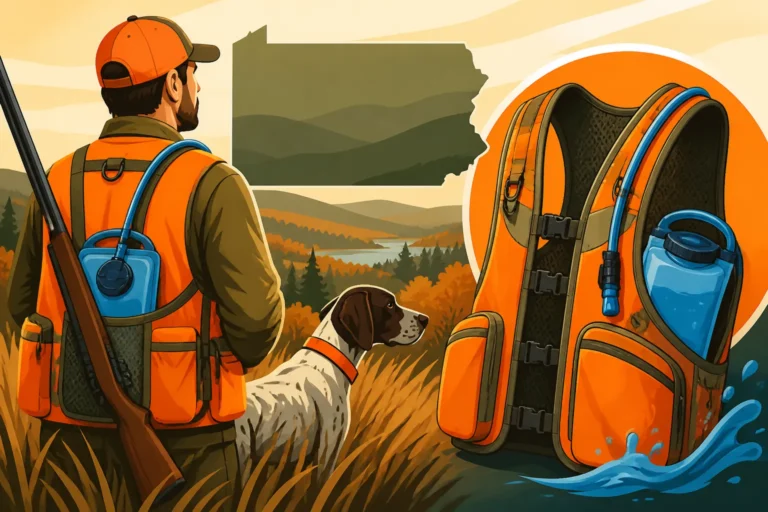
When it comes to meeting the 250-square-inch requirement and ensuring 360-degree visibility, the hunter orange vest is undeniably the workhorse.
Pros of an Orange Vest:
- Ample Surface Area: This is its primary advantage. A well-fitting hunter orange vest easily provides the required 250 square inches, often far exceeding it. This ensures that a significant portion of your torso is visible.
- High Visibility from All Angles: Vests cover your chest and back, making you visible from front, back, and often the sides, especially if it's a looser fit over your outer layers. This crucial 360-degree visibility is harder to achieve with just a hat. When you're still-hunting through diverse terrain or posted on a drive, being seen from every direction is critical.
- Clear Compliance: Wearing a quality orange vest practically guarantees you're meeting the minimum legal requirements, assuming it's correctly worn over your outermost clothing. This peace of mind is invaluable when you're focused on the hunt.
Cons of an Orange Vest:
- Can be Bulky: Depending on the material and your layering system, some vests can feel bulky or restrictive, especially if you're wearing heavy winter gear underneath. This can be a minor annoyance for some, impacting your range of motion or how your pack sits.
- Potential for Snagging: Moving through dense brush, briar thickets, or blown-down timber can cause vests to snag, tear, or become dislodged, especially if they are made of a lighter, mesh material.
- Can Get Dirty/Obscured: A vest that gets covered in mud, blood, or heavy snow can have its visibility compromised. It's important to keep your orange clean and bright. If you’re belly-crawling through a low field or pushing through thick conifer stands, parts of your vest can certainly be obscured.
Many hunters opt for a simple mesh vest that packs down small and is easy to throw over their jacket. For colder weather, some prefer a solid fabric vest that offers a bit more warmth and durability. Whatever your choice, the vest is often the cornerstone of your hunter orange strategy.
Combining for Maximum Safety and Compliance
Given the strengths and weaknesses of both hats and vests, the most prudent and effective strategy for most Pennsylvania hunters is to combine them. This isn't just about meeting the bare minimum; it's about maximizing your safety margin.
Wearing both a fluorescent orange hat and a fluorescent orange vest provides redundant visibility. If your hat is obscured by a branch, your vest is still prominent. If your vest gets muddy, your hat remains a beacon. This combination ensures that no matter what angle another hunter approaches from, or how thick the cover, a significant amount of bright orange is almost always visible.
Think about a common scenario: you're sitting with your back against a tree, maybe taking a break during Still-Hunting Pennsylvania Big Woods. Your vest covers your back, and your hat provides visibility above your head. As you stand and move, both elements work together to create a larger, more undeniable orange profile. This layering of safety is a simple, yet highly effective way to mitigate risk. Many hunters, especially during our long firearms seasons, wouldn't dream of going afield without both, considering it cheap insurance against a tragic accident. It also typically far exceeds the 250 square inch minimum, which is always a good thing.
Here's a quick comparison of the three options:
| Feature | Orange Hat Only | Orange Vest Only | Hat + Vest Combination |
|---|---|---|---|
| Meets 250 Sq Inches? | Unlikely, rarely sufficient | Yes, typically sufficient | Yes, easily exceeds |
| 360-Degree Visibility? | Limited, easily obscured by movement | Good, but can be obscured by body position/cover | Excellent, maximizes visibility from all angles |
| Comfort/Mobility | High | Moderate, can be bulky | Moderate, slight bulk increase |
| Snag/Tear Risk | Low | Moderate, depending on material | Moderate |
| Legal Compliance | Often insufficient | Usually sufficient | Optimal, exceeds requirements |
| Best Use Case | Supplement to other orange | Primary source of orange, good baseline | Recommended for maximum safety and compliance |
Practical Considerations for Wearing Orange in the Field
Beyond just the choice between a hat and a vest, there are other practical elements that can significantly impact the effectiveness of your hunter orange and, ultimately, your safety.
Material Matters and Visibility in Different Conditions
The material of your hunter orange gear isn't just about comfort; it plays a crucial role in its visibility, especially in varying conditions.
- Mesh vs. Solid Fabric: Mesh vests are lightweight, breathable, and often more affordable. They're great for warmer days or when worn over bulky layers. However, they can be more prone to snagging or tearing in heavy brush. Solid fabric vests, like those made from fleece or durable synthetic blends, offer more warmth, greater durability, and often a more consistent color. They might be less breathable, but for cold, late-season hunts, they can be ideal. The key is that the color remains vibrant. Faded orange is less effective.
- Wet Weather: A rainy or snowy day can significantly reduce visibility. Water can dull the color of some fabrics, making them less vibrant. Choosing materials that shed water, or ensuring your orange gear is designed to perform in wet conditions, is important. A good quality, waterproof or water-resistant outer shell with integrated orange can be a game-changer.
- Low Light: Dusk, dawn, and heavily overcast days are when many hunters are most active, and when visibility is naturally lower. Fluorescent orange is specifically designed to be highly visible in these conditions by reflecting light across a broader spectrum. However, a faded or dirty piece of orange will always perform worse than a clean, bright one. Keep your gear clean!
It’s also worth noting that layering is vital for Cold Weather Sitting Strategy. You want your orange to be the outermost layer, visible over all your insulation.
Strategic Placement and Maximizing Your Profile
The way you wear your orange and how you position yourself can greatly influence its effectiveness.
- 360-Degree Visibility is Key: The regulation isn't just about having 250 square inches; it's about being visible from all angles. If you're wearing a vest, make sure it's not tucked into your pack or significantly obscured by your backpack straps. If you're wearing a hat, ensure it's not constantly pulled down over your eyes or obscured by a hood.
- Elevated Positions: When hunting from a treestand, your orange is typically more visible above the ground cover. However, consider what happens when you climb down or walk away from your stand. Always assume other hunters are in the vicinity and adjust your orange accordingly.
- Still-Hunting and Drives: When Still-Hunting Pennsylvania Big Woods, you're constantly moving, and your body position changes. Your orange hat and vest should allow for full visibility regardless of your direction of travel. For Deer Drives With Three or Four Hunters, safety is paramount, and every hunter needs to be acutely aware of their orange and their fellow hunters' positions. Tools like the GoHunt app can be incredibly useful for marking fellow hunters' locations (where reception allows) and understanding terrain features that might obscure visibility. This kind of advanced planning, combined with proper orange, is critical.
Staying Compliant and Avoiding Costly Mistakes
Ultimately, your responsibility as a hunter is to know and follow the rules. Ignoring hunter orange requirements isn't just a legal infraction; it's a safety hazard that endangers yourself and others.
- Review Regulations Annually: Regulations can change. Before each hunting season, take a few minutes to review the latest Pennsylvania Hunting & Trapping Digest. It's available online and at licence issuing agents. Don't rely on what you "think" you remember from last year.
- Inspect Your Gear: Before heading afield, check your hunter orange for fading, tears, or excessive dirt. A faded vest is far less effective than a vibrant one. Replace any gear that looks questionable.
- Consequences of Non-Compliance: Not wearing the required hunter orange can result in fines and, more importantly, puts you at unnecessary risk. Game wardens are diligent about enforcing these rules because they directly relate to hunter safety. Avoid a costly mistake by simply taking the time to prepare properly.
- Leverage Technology: Mapping apps, like GoHunt, can help you understand terrain features that might obscure visibility, allowing you to choose stand locations or travel routes where your orange is most effective. Using aerial photos from tools such as Reading Aerial Photos for Big Woods Deer can help you scout for open areas or thick cover where visibility might be an issue.
It’s about making conscious choices to enhance safety, not just meeting a minimum legal standard. Pennsylvania is a state rich in hunting tradition, and a big part of that tradition is looking out for one another in the field. Wearing your orange correctly is a fundamental expression of that respect and responsibility.
Disclaimer
This article is for general informational purposes only and does not constitute professional advice. Laws, prices and regulations vary by location and change over time. Consult a qualified professional for guidance on your specific situation.