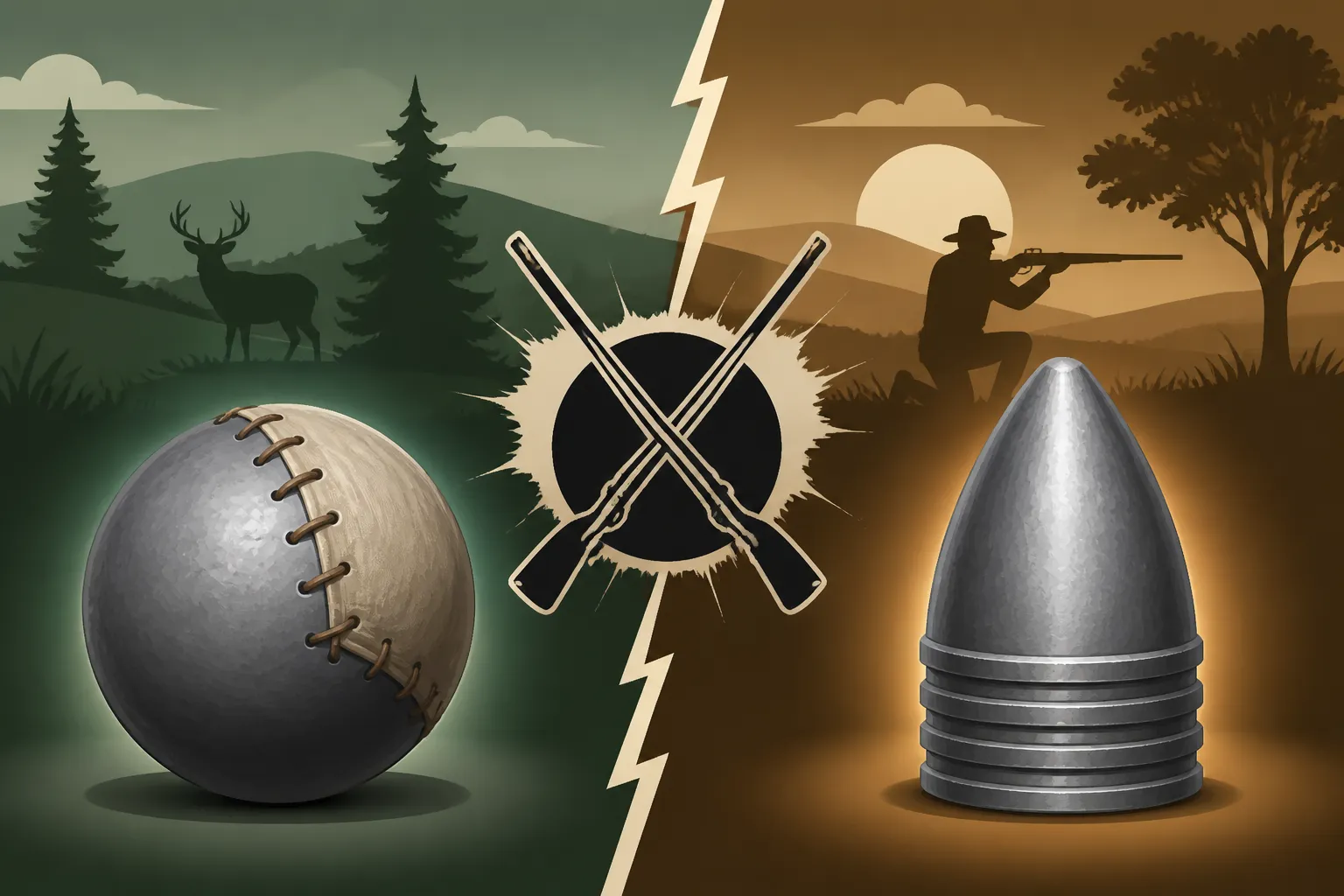
Patched Round Ball Versus Conical
Navigating the world of muzzleloading can feel like stepping back in time, and for good reason! Many of us love the challenge and tradition. But when it comes to choosing between a patched round ball and a conical projectile, it can quickly become confusing, especially with all the differing opinions and regulations out there. This guide aims to clear up that confusion, helping you understand the nuances of each option so you can make an informed decision for your next Pennsylvania hunt, ensuring you're both effective and legal in the field.
Understanding the Heart of Muzzleloading: Patched Round Ball vs. Conical
The choice between a patched round ball and a conical bullet isn't just about what looks cooler or what's new on the market; it's a fundamental decision that impacts your rifle's performance, your effective range, and even the type of muzzleloader you're using. For many, it's a balancing act between tradition, accuracy, and terminal performance. This decision often sparks lively debates around campfires, and for good reason: both have their dedicated followers and their specific strengths and weaknesses. Understanding these core differences is the first step toward making the right choice for your hunting style and the specific conditions you'll face in the Pennsylvania woods.
The Traditional Patched Round Ball
The patched round ball is the classic choice, deeply rooted in the history of muzzleloading. It's exactly what it sounds like: a spherical lead ball, typically slightly smaller than the bore diameter, wrapped in a lubricated cloth patch. This patch serves to engage the rifling, seal the bore for gas pressure, and prevent leading. When fired, the patch grips the rifling, spinning the ball and sending it downrange with surprising accuracy for its simple design, especially from a properly rifled traditional muzzleloader. For those who hunt during Pennsylvania's dedicated Flintlock Season Tactics in Pennsylvania, this is often the most common — and sometimes mandated — projectile for their traditional sidelock firearms.
The Appeal and Advantages of Round Balls
There's an undeniable charm and simplicity to the patched round ball. For hunters using traditional flintlock or percussion cap rifles, the round ball feels authentic. You're casting your own lead, cutting your patches, and truly engaging with the historical aspects of the sport.
- Historical Accuracy and Simplicity: For many, hunting with a flintlock means embracing history. The patched round ball is the projectile of choice for historical authenticity. It's a simple, elegant system that has worked for centuries.
- Accuracy at Close Range: Don't let the simplicity fool you; a properly matched round ball, patch, and powder charge can be incredibly accurate at typical woods ranges. For shots under 75-100 yards, a well-tuned traditional rifle can put round balls into tight groups. The lighter recoil also contributes to shooter comfort and consistency.
- Ease on the Bore: Lead round balls with lubricated patches are generally very forgiving on your rifle's bore. They don't typically lead up the barrel quickly, making cleaning between shots, especially important in Keeping a Flintlock Pan Dry conditions or when aiming for consistent accuracy, less of a chore.
- Cost-Effective: If you cast your own, lead round balls are incredibly inexpensive compared to many modern conical bullets. This allows for extensive practice, which is vital for proficiency with any muzzleloader.
Limitations of Round Ball Performance
While the round ball excels in tradition and short-range accuracy, it does come with significant limitations that modern hunters need to acknowledge.
- Limited Effective Range: The round ball's spherical shape means it has a very poor ballistic coefficient. It sheds velocity rapidly and drops significantly past 75-100 yards. This requires precise range estimation and holds, making longer shots ethically questionable for most hunters. For typical Pennsylvania hardwoods or thick regrowth, where shot distances are often under 75 yards, this might not be a huge issue, but in more open areas, it's a critical factor.
- Energy Transfer and Penetration: Upon impact, a round ball typically deforms into a pancake shape. While this creates a wide wound channel, its relatively light weight and lower sectional density mean it might not penetrate as deeply as a heavier, more aerodynamic conical bullet, especially through bone or on larger-bodied deer. Shot placement becomes even more paramount.
- Fussiness with Loading: Finding the right patch, lubricant, and powder charge for your specific rifle can be a process of trial and error. Consistency in patching and seating is crucial for accuracy. In the heat of the moment, fumbling with a patch can be a drawback compared to a self-contained conical.
The Modern Conical Projectile
Stepping into the more "modern" side of muzzleloading, even with traditional-looking rifles, brings us to conical projectiles. These are elongated, bullet-shaped pieces of lead, often featuring a hollow point or some other design to enhance expansion. Unlike round balls, they are typically sized to directly engage the rifling or are slightly undersized and used with a plastic sabot. While true flintlocks typically use lead conicals without sabots, the world of inline muzzleloaders has fully embraced saboted conical bullets. These are designed to push the boundaries of muzzleloader performance, offering increased range and knockdown power.
Why Hunters Turn to Conicals
Conical bullets represent a significant leap in muzzleloader technology, offering advantages that resonate with hunters looking for extended range and improved terminal performance.
- Improved Ballistics and Range: The aerodynamic shape of a conical bullet allows it to retain velocity much better than a round ball. This translates to a flatter trajectory and significantly extended effective range, often out to 150 yards or more with the right rifle and load. This can be a huge advantage when hunting Farm Country Deer Hunting in Southern Pennsylvania or on wider clearcuts where longer shots might be possible.
- Enhanced Terminal Performance: Conical bullets, especially those with hollow points or other expanding designs, are engineered for better energy transfer and deeper penetration. Their heavier weight and greater sectional density mean they're more likely to punch through bone and create a more devastating wound channel, leading to quicker, more humane kills, particularly on larger bucks.
- Easier Loading (for some): Many conicals are designed for easier loading, often with ribbed sides or a slightly undersized diameter, allowing them to be pushed down the bore without the need for a separate patch. Saboted bullets load very easily, as the plastic sabot centers the bullet in the bore. This can simplify the reloading process in the field, which can be critical if you need a follow-up shot.
- Wider Range of Options: The market for conical bullets is vast, with manufacturers like Hornady, Barnes, and PowerBelt offering a wide array of designs, weights, and materials. This allows hunters to fine-tune their projectile choice to their specific rifle, hunting conditions, and target animal. When looking into specific loads and performance data, resources like GoHunt can be incredibly useful for comparing options.
The Downsides of Conical Bullets
Despite their ballistic advantages, conicals aren't without their drawbacks, particularly when considering the traditional spirit of muzzleloading or certain regulations.
- Increased Recoil: Heavier conical bullets, especially when propelled by stout powder charges, generate noticeably more recoil than light round balls. This can affect shooter comfort, potentially leading to flinching or reduced accuracy, especially during extended practice sessions.
- Cost: Quality conical bullets, especially those with sabots or specialized designs, are significantly more expensive than casting your own round balls. This can make practice more costly.
- Bore Fouling and Cleaning: While sabots can help prevent lead fouling, the plastic itself can leave residue in the bore, which can be difficult to clean and may affect accuracy over multiple shots. Some lead conicals can also lead up the bore more aggressively than a patched round ball. Regular cleaning is essential for consistent accuracy.
- Regulations (Especially for Flintlock Season): This is a critical point for Pennsylvania hunters. For the traditional flintlock season, you are generally restricted to a "single projectile loaded from the muzzle. (Flintlock muzzleloading long guns are restricted to the use of round ball or conical projectile)." This typically implies a lead conical that directly engages the rifling, not a modern sabot. It's vital to check the current Pennsylvania Flintlock Season Rules to ensure your projectile choice is legal for the specific season you're hunting. For general muzzleloader season (often for percussion or inline rifles), sabots and modern conicals are usually perfectly fine.
When to Choose Which Projectile in Pennsylvania
The decision truly boils down to your specific hunting scenario, your firearm, and your personal preferences. There's no single "best" choice; only the best choice for you and your hunt.
Embracing the Round Ball: Tradition and Close Encounters
If you're a purist, a traditionalist, or if your hunting primarily involves close-range shots in dense cover, the patched round ball might be your ideal companion.
- Flintlock Season: If you're hunting during the dedicated Pennsylvania Flintlock season, a patched round ball is often the most traditional and reliable choice. It's what these rifles were designed for, and many hunters find immense satisfaction in connecting with that heritage. Ensure you understand Flintlock Rifles and Pennsylvania's Late Season for specific guidelines.
- Thick Woods and Short Shots: For areas like the Pennsylvania Big Woods or dense mountain laurel thickets where visibility is limited and shots are typically under 75 yards, the round ball's range limitations become less of a hindrance. Hunting Pennsylvania's Big Woods for Deer often means stalking close and taking quick shots.
- Recoil Sensitivity: For hunters who are sensitive to recoil, the lighter kick of a round ball can lead to more confident and accurate shooting.
- Personal Challenge: Many hunters appreciate the added challenge and historical connection of hunting with a round ball. It forces you to become a more skilled woodsman, focusing on stealth and shot placement.
Opting for a Conical: Range, Power, and Modern Muzzleloaders
When your priority is extended range, maximum energy transfer, or if you're using a modern inline muzzleloader, conicals often provide a significant advantage.
- Inline Muzzleloader Season: If you're using a modern inline muzzleloader, especially during the general muzzleloader seasons that often overlap with Hunting Pennsylvania's Late Archery Season or after the rifle season, conical projectiles (including sabots) are designed to maximize your rifle's potential.
- Open Terrain: In more open areas, such as large timber cuts, agricultural fields, or across wide mountain benches, where shots might stretch out to 100-150 yards, the flatter trajectory and retained energy of a conical are invaluable. This is especially true when Hunting a Standing Cornfield in Farm Country or on open ridge tops.
- Larger-Bodied Deer: While a round ball will certainly kill a deer, if you're after a particularly large-bodied buck or want to maximize your chances of a quick, clean pass-through, a well-constructed conical bullet generally offers superior terminal performance.
- Easier in-field reloading: Some conicals allow for faster, more reliable reloading, which can be a comfort if you envision needing a follow-up shot or multiple shots during Hunting Pennsylvania Concurrent Antlerless Days.
- Hunting Bear: While legal for deer, if you're pursuing Pennsylvania Black Bear Hunting with a muzzleloader, the increased weight and penetration of a quality conical are often preferred by many hunters for the added stopping power.
Practical Considerations for Both Projectiles
No matter your choice, there are always practical considerations that can make or break your success in the field.
Dialing in Your Load
This is perhaps the most critical step for any muzzleloader hunter. You cannot simply buy a box of bullets and expect them to shoot well in your rifle.
- Powder Charge: Both round balls and conicals require careful experimentation with powder charges. Start with manufacturer recommendations or common starting loads and work your way up or down in small increments. For traditional rifles, black powder or a black powder substitute like Pyrodex or Triple Seven is standard. For inlines, these, or even smokeless powder (if the rifle is specifically rated for it and legal in PA – always check regulations!), are options.
- Patching (for Round Balls): The patch thickness is crucial for accuracy. It needs to be tight enough to grip the rifling but not so tight that it's difficult to load. Lubrication (often a bore butter, bore grease, or specialized patch lube) is also key for sealing and reducing fouling.
- Sizing (for Conicals): If you're using lead conicals without a sabot, they need to be appropriately sized for your bore. Some are designed for a snug fit that engages the rifling directly. Sabots, of course, adapt a smaller bullet to a larger bore.
- Consistency is King: From seating pressure to powder measurement, consistency is paramount. Any variation can throw off your accuracy. Practice shooting from various positions you might use in the field, like Setting Up Against a Big Oak or from a rest on a log.
Bore Condition and Cleaning
Muzzleloaders, by their nature, get dirty quickly. Unlike cartridge firearms, you're loading through the same path that the combustion gases travel, leaving residue.
- Between Shots: For optimal accuracy, especially with black powder, you often need to swab the bore between shots. This removes fouling that can affect subsequent loading and bullet flight. A damp patch followed by a dry one is a common method.
- End of Day Cleaning: A thorough cleaning after each hunting trip or extensive shooting session is non-negotiable. Black powder and its substitutes are corrosive and will quickly pit and damage your bore if not cleaned promptly. Even modern powders can leave residues that build up.
- Specialized Cleaners: There are many excellent muzzleloader-specific cleaning solvents and oils designed to combat the unique fouling left by black powder and its substitutes.
Legalities in Pennsylvania
Pennsylvania has specific regulations for muzzleloaders that hunters must be aware of. The biggest distinction, as mentioned, is between the general muzzleloader season and the special flintlock season.
| Feature | Patched Round Ball | Conical Projectile (Lead) | Conical Projectile (Saboted) |
|---|---|---|---|
| Typical Firearm | Traditional Flintlock or Percussion Sidelock | Traditional Flintlock or Percussion Sidelock / Inline | Modern Inline Muzzleloader |
| PA Flintlock Season | Legal (Traditional) | Legal (Traditional Lead Conical) | Generally NOT Legal (Sabots excluded) |
| PA Muzzleloader Season | Legal | Legal | Legal |
| Accuracy Range | Excellent up to 75-100 yards | Very good up to 125-150+ yards | Excellent up to 150-200+ yards |
| Energy Transfer | Good, wide wound, but less penetration | Better penetration and expansion | Best penetration and expansion |
| Recoil | Low | Moderate | Moderate to High |
| Cost | Low (especially if self-cast) | Moderate | High |
| Loading Ease | Requires patch and careful seating | Easier than round ball, but can be tight fit | Easiest, often self-lubricating |
| Fouling | Low, easy to clean | Moderate | Moderate to high (plastic residue from sabot) |
| Historical Feel | High | Moderate | Low |
Always consult the most recent Pennsylvania Hunting & Trapping Digest for current regulations regarding muzzleloader seasons and legal projectiles. These rules can change, and ignorance is no excuse. A platform like GoHunt can often link to regulatory updates, helping you stay informed.
Choosing between a patched round ball and a conical projectile for your Pennsylvania muzzleloader hunt isn't about one being inherently "better" than the other. It's about understanding the strengths and weaknesses of each, matching them to your specific firearm and hunting conditions, and respecting the traditions and regulations of our great state. Whether you prefer the historical purity of a round ball or the extended performance of a conical, the satisfaction of harvesting game with a muzzleloader is a unique experience.
Disclaimer
This article is for general informational purposes only and does not constitute professional advice. Laws, prices and regulations vary by location and change over time. Consult a qualified professional for guidance on your specific situation.