Pennsylvania Flintlock Season Rules
For many Pennsylvania hunters, the late deer season can feel like a fleeting opportunity, especially if you haven't filled your tag yet. But for those dedicated to the traditional pursuit, Pennsylvania's flintlock season offers a unique, challenging, and deeply rewarding way to extend your time in the woods, connecting with a hunting heritage that runs centuries deep, provided you understand all the specific, sometimes intricate, rules. This guide will walk you through everything you need to know about navigating the regulations, from legal firearms to tagging requirements, ensuring your pursuit of late-season venison is both successful and fully compliant.
Understanding Pennsylvania's Flintlock Season: More Than Just Black Powder
The Pennsylvania flintlock season, often affectionately called the "primitive season," is a special time. It typically opens right after the general firearms deer season concludes, often stretching through the holiday weeks and into January. This late-season window provides an incredible chance to be in the woods when deer are often congregated around prime food sources or pushed into thicker cover, but it demands adherence to a very specific set of regulations designed to maintain its traditional, challenging character. It’s not just about using a muzzleloader; it's about using a flintlock muzzleloader, with specific rules governing ammunition and ignition.
A Walk Through History: Why Flintlock?
The focus on flintlock technology isn't an arbitrary rule; it's a deliberate nod to Pennsylvania's rich hunting heritage. Before modern cartridge firearms and even percussion cap muzzleloaders became widespread, the flintlock rifle was the primary tool for deer hunters, settlers, and frontiersmen across the state. Think of legendary long hunters like Daniel Boone traversing the Appalachians – they relied on the sparks from a flint striking steel to ignite their powder. This historical connection is precisely why the Pennsylvania Game Commission maintains the flintlock-specific regulations, honoring a method that requires immense skill, patience, and a deep understanding of your firearm. It’s a chance to truly step back in time, relying on the same principles as hunters did hundreds of years ago.
Key Dates and WMU Specifics
The exact opening and closing dates for the Pennsylvania flintlock season can shift slightly year to year, so always check the current hunting digest. Generally, it opens shortly after Christmas and continues through mid-January. This means hunters often find themselves trudging through snow-covered woods, which adds another layer of challenge and beauty to the experience. It’s important to remember that while the core rules for flintlock hunting are statewide, you must always be aware of the specific regulations for your particular Wildlife Management Unit (WMU). These can affect antler restrictions, available antlerless tags, and even sometimes local access rules. Resources like the GoHunt app are fantastic for quickly checking boundaries and regulations on the fly, right in the field. For comprehensive information on Pennsylvania deer seasons and WMU rules, it’s always wise to consult the latest guide.
Legal Firearms and Ammunition for Flintlock Hunting in Pennsylvania
Navigating the rules for what constitutes a legal flintlock firearm and appropriate ammunition in Pennsylvania can sometimes feel like deciphering an ancient text, but it's crucial for staying within the law and ensuring a safe, ethical hunt. The Pennsylvania Game Commission is very explicit about what is permitted, ensuring the spirit of traditional muzzleloader hunting is maintained.
Flintlock Rifle Requirements: Keeping it Classic
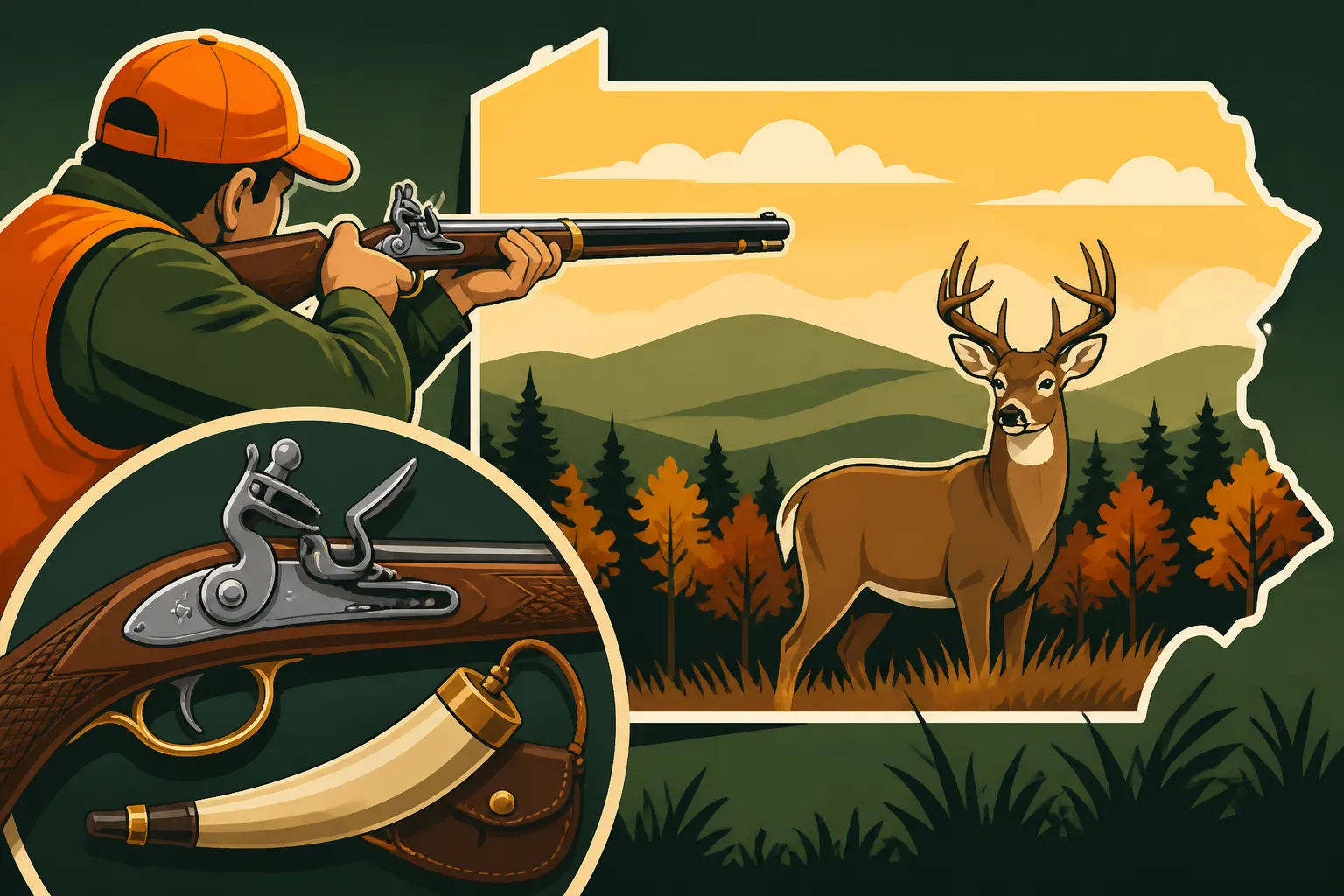
The primary rule here is that your muzzleloader must be an actual flintlock. This means no percussion caps, no inline primers, no modern ignition systems whatsoever. The firearm must be designed to ignite the main powder charge by way of a spark generated when a flint strikes a frizzen, which then ignites powder in the pan, leading to the main charge. The barrel must be 44 inches or longer, which is a nod to the historical "Pennsylvania long rifles" that were so prominent. It's not just about the ignition system, though; these traditional rifles often require a different shooting style and a deep understanding of black powder ballistics. For a more detailed look at the broad rules, our guide on Legal Firearms for Pennsylvania Deer offers additional context.
Here's a quick rundown of critical flintlock rifle requirements:
| Feature | Requirement in Pennsylvania Flintlock Season |
|---|---|
| Ignition System | Must be a true flintlock, using a flint and frizzen. |
| Barrel Type | Smoothbore or rifled. |
| Barrel Length | 44 inches or longer. |
| Sights | Open (iron) sights only. Scopes, red dots, or any magnification are prohibited. |
| Powder Type | Only FFG (or equivalent) black powder or approved synthetic black powder substitutes (like Pyrodex RS) are allowed. |
| Loading | Muzzleloading only. |
| Trigger | Single-set triggers are permitted. |
You cannot use any form of optical sight, including scopes, red dot sights, or holographic sights. Only open, metallic sights are permitted. This rule further emphasizes the traditional nature of the hunt, forcing hunters to rely on close-range shooting skills and keen vision, particularly in low light conditions or when faced with Flintlock Hunting in Pennsylvania Snow. Keeping a flintlock dry in wet weather is also a huge challenge that modern firearms don't face, so preparation is key.
Ammunition Rules: Patched Round Balls and Conicals
When it comes to ammunition, Pennsylvania's flintlock season keeps it simple and traditional. You are generally restricted to using a single projectile loaded from the muzzle. This typically means a patched round ball or a conical projectile designed for muzzleloaders. Shotgun-style loads are strictly prohibited.
- Patched Round Balls: These are historically accurate and very effective at closer ranges. They consist of a pure lead round ball wrapped in a lubricated patch (typically cotton or linen), which creates a gas seal and engages the rifling.
- Conical Projectiles: Modern conical bullets specifically designed for muzzleloaders are also generally permitted. These offer a bit more knockdown power and can sometimes be more forgiving to load.
What's not allowed? Anything that resembles a modern bullet and sabot combination. The intent is to maintain the challenge of the traditional black powder system. When loading your flintlock, only FFG (or equivalent) black powder or approved synthetic black powder substitutes are allowed. This means no modern smokeless powder, which can be extremely dangerous in a firearm not designed for it. Always double-check the hunting digest for the precise legal formulations and brands.
Licensing, Tagging, and Reporting Your Flintlock Deer
Just like any other hunting season in Pennsylvania, securing the proper licenses, correctly tagging your harvest, and reporting it afterward are non-negotiable legal requirements. These steps ensure proper wildlife management and accountability. Don't let the excitement of a successful hunt make you forget these crucial administrative details.
Securing Your Antlered and Antlerless Licences
To hunt deer during the Pennsylvania flintlock season, you’ll need a general hunting license. For antlered deer, your general hunting license includes an antlered deer tag. For antlerless deer, you’ll need to possess a valid Pennsylvania antlerless deer license for the specific WMU you are hunting in. These antlerless licenses are WMU-specific, and you must have one for the zone you are hunting in, even during the late flintlock season. Many hunters often secure their antlerless tags well in advance, sometimes as early as July, but it's not uncommon for some WMUs to still have leftover tags available as the late season approaches. Checking the Pennsylvania Game Commission website or using an app like GoHunt for real-time tag availability can be incredibly helpful. Remember that Pennsylvania Antler Restrictions by WMU still apply, so know your local rules before you pull the trigger.
The Immediate Act of Tagging Your Deer
Upon harvesting a deer with your flintlock, the first thing you need to do is immediately fill out your kill tag. This tag, which comes with your hunting license, must be completely filled out with the date, time, and WMU of the kill. It must then be securely attached to the ear of the deer before you move it from the kill site. This isn't a suggestion; it's a legal requirement. Failure to tag your deer immediately and correctly can result in fines and penalties. This process is consistent across all deer seasons, so our guide on Pennsylvania Deer Tagging Requirements can provide additional insights. Having a pen that works in cold, potentially wet, weather is a small but critical detail many hunters overlook until it's too late.
Reporting Your Harvest: The Final Step
After your successful hunt and proper tagging, the final legal step is reporting your harvest to the Pennsylvania Game Commission. You have 10 days from the date of kill to report your antlered deer, and 5 days for an antlerless deer. This can be done online through the PGC website, by mail, or by phone. Accurate and timely reporting is vital for the Game Commission to gather data on deer populations and harvest trends, which in turn influences future hunting seasons and management strategies. It's a fundamental part of a responsible hunter's duty. Don't skip this step – it's often the one that hunters, especially those new to the state or those who don't hunt frequently, forget about.
Strategies and Considerations for a Successful Flintlock Hunt
Flintlock hunting in Pennsylvania is not just about adhering to rules; it's about embracing a distinct hunting style. The limitations of the firearm, combined with the often harsh conditions of late season, demand a different approach compared to rifle season. Success often comes down to intimate knowledge of your chosen hunting area and a mastery of your traditional firearm.
Locating Late-Season Deer: Food and Cover are Key
By the time the flintlock season rolls around, the deer herd has typically been pressured for weeks, if not months, through archery and rifle seasons. Their patterns have changed, and they're often seeking refuge in the thickest cover available, venturing out primarily to feed. This makes finding reliable late-season food sources paramount. Look for standing corn, unpicked soybeans, winter wheat fields, or areas with persistent acorns or other mast that hasn't been completely consumed. Thermal cover, such as dense conifer stands, thick clearcuts, or laurel thickets, becomes critical for deer trying to conserve energy in cold temperatures. Often, deer will bed close to these food sources, minimizing their travel during daylight. Scouting before the season, perhaps by Reading Aerial Photos for Big Woods Deer or using a tool like GoHunt's satellite imagery, can give you a major advantage in identifying these areas.
Hunting in the Elements: Gear and Preparation
Late December and January in Pennsylvania can bring anything from freezing rain to deep snow. Being properly prepared for the elements is not just about comfort; it's about safety and effectiveness. Layering is crucial, with wool or synthetic base layers to wick moisture, insulating mid-layers, and a waterproof/windproof outer shell. Insulated, waterproof boots are non-negotiable, as cold, wet feet will end a hunt quickly. Beyond personal clothing, your flintlock itself needs attention. Keeping the pan dry is critical for ignition, especially in wet weather or snow. Many hunters carry a small piece of leather or a pan cover to protect the priming charge. A reliable ramrod, extra flints, and a clean-out pick are also essential field kit items. Additionally, remember that How Much Orange Pennsylvania Requires still applies during this season, so ensure you have sufficient blaze orange on your outer layer.
Shot Placement and Effective Range
A flintlock rifle, particularly with a patched round ball, has a more limited effective range compared to modern centerfire rifles. While an experienced shooter might be accurate out to 100 yards under ideal conditions, most flintlock deer are harvested at significantly closer ranges, often 50-75 yards or less. This means you need to get closer to your quarry, which demands excellent woodsmanship, patience, and scent control. Shot placement is absolutely critical; you want a clean, ethical kill, and the vital zone is relatively small. Practice extensively with your flintlock before the season, understanding its capabilities and limitations. Know exactly where your projectile will hit at various distances, and only take shots you are 100% confident in. If you're hunting in particularly rugged terrain, understanding Getting a Deer Out of a Pennsylvania Hollow is also a practical consideration.
Table: Flintlock vs. Modern Muzzleloader in PA
| Feature | Flintlock (PA Legal) | Inline Muzzleloader (Generally NOT legal in PA Flintlock Season) |
|---|---|---|
| Ignition System | Flint & Frizzen (external spark) | Percussion Cap or 209 Primer (enclosed ignition) |
| Barrel Length | 44 inches minimum (for rifles) | No minimum length restriction (typically shorter) |
| Sights | Open/Iron Sights ONLY | Scopes/Optics often permitted |
| Powder | Black Powder or approved substitutes (FFG) | Black Powder or approved substitutes (often more versatile for heavier charges) |
| Projectile | Patched Round Ball or Conical | Saboted bullets, conical bullets (wider variety) |
| "Primitive" Feel | High | Low to Moderate |
| Season Legality | PA Flintlock Deer Season | Generally NOT legal for PA Flintlock Deer Season; often legal for general firearms/muzzleloader seasons |
Common Misconceptions and FAQs About Flintlock Season in PA
Despite its long history, or perhaps because of it, the Pennsylvania flintlock season often comes with a host of misunderstandings. Clearing up these common myths is important for both new and experienced hunters alike to ensure compliance and a smooth, enjoyable hunt.
Dispelling Myths: Scopes, Inlines, and Sunday Hunting
One of the most persistent myths is that you can use a scope on your flintlock during this season. As discussed, this is unequivocally false. Only open, metallic sights are permitted. Another common misconception stems from the term "muzzleloader season." While flintlock rifles are a type of muzzleloader, Pennsylvania has a very distinct "flintlock season." This means modern inline muzzleloaders, which use percussion caps or 209 primers for ignition, are not legal during the dedicated flintlock season. They are typically allowed during the regular statewide firearms deer season or specific muzzleloader seasons, but not during flintlock. Always double-check Pennsylvania Flintlock Season Rules for the most current information. Finally, while Sunday hunting has expanded in Pennsylvania, it's crucial to confirm which specific Sundays are open for which species during the flintlock season. While deer hunting is now permitted on a few Sundays, this doesn't apply to all Sundays, and migratory bird seasons still have no Sunday hunting. Always check the official digest.
Hunting Pressure and Finding Your Own Space
Many hunters mistakenly believe that because it's a "primitive" season, flintlock hunting automatically means less hunting pressure. While it's true that fewer hunters participate compared to the general firearms season, prime public land spots, especially those near consistent food sources, can still see significant activity. Hunters during this season are often dedicated and willing to put in the effort, meaning you still need to scout and strategize to find unpressured areas. Sometimes, this means Finding Ground Others Walk Past or exploring lesser-known corners of State Game Lands or State Forests. The deeper you are willing to walk, the better your chances of encountering undisturbed deer. Leveraging mapping tools, such as the ones GoHunt offers, can help you identify remote access points and potential travel corridors where others might not venture.
Reloading and Carrying Multiple Shots
Another question that often arises is about carrying multiple loaded firearms or quick-loaders. During Pennsylvania's flintlock season, you are generally allowed to carry only one legal flintlock muzzleloader. You cannot carry multiple loaded firearms, nor can you use "quick-loaders" that hold a powder charge and projectile together for rapid reloading. While you can carry pre-measured powder charges and patched round balls for reloading in the field, the act of reloading is a deliberate, multi-step process that takes time. This further emphasizes the importance of making your first shot count, as a follow-up shot is rarely instantaneous. This isn't just a rule; it's part of the challenge and reward of the traditional flintlock experience.
Disclaimer
Please remember that hunting regulations are subject to change. While this guide provides comprehensive information, it is essential to consult the most current Pennsylvania Game Commission Hunting and Trapping Digest or their official website before heading afield. It is every hunter's responsibility to know and follow all applicable laws and regulations.