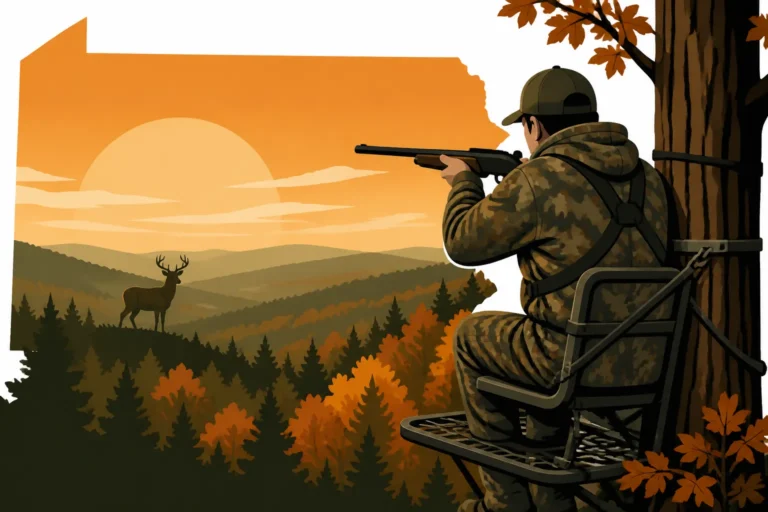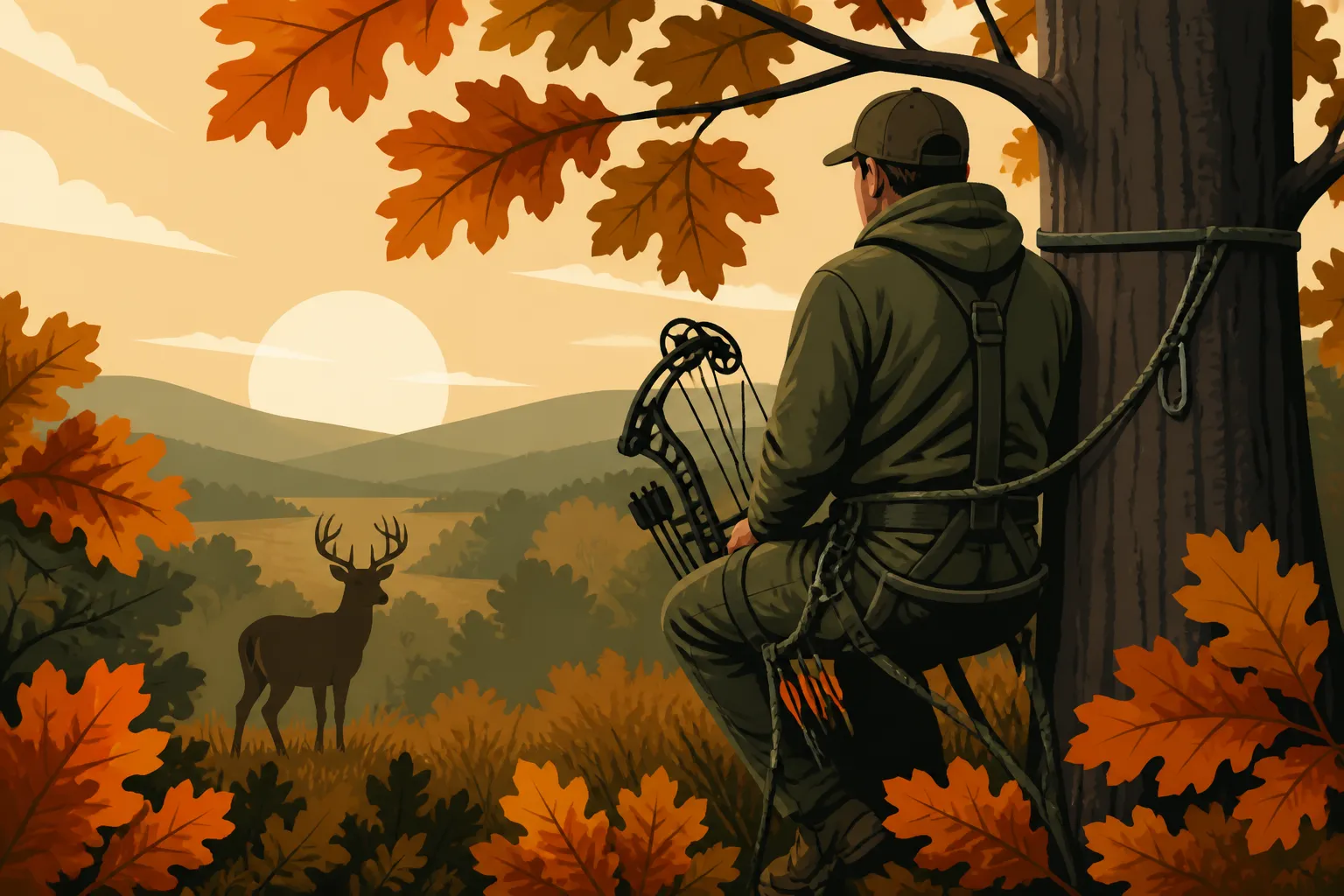
Saddle Hunting in Pennsylvania Oaks
If you've ever found yourself struggling to find the perfect tree for your stand in a dense Pennsylvania oak forest, or you're tired of hauling heavy gear deep into the big woods, then you know the frustration. Traditional treestands, while effective, can limit your mobility and force you into less-than-ideal setups. This guide dives deep into the world of saddle hunting, showing you how this versatile method can revolutionize your deer hunting success, especially when targeting those acorn-loving whitetails in the Keystone State's expansive oak timber.
Why Saddle Hunting Shines in Pennsylvania's Oak Country
Pennsylvania's forests, especially those dominated by oaks, offer incredible deer hunting opportunities. However, the terrain can be brutal. Steep hillsides, dense undergrowth, and a mix of mature timber with gnarly, crooked trees often make traditional ladder stands or even climbing stands difficult, if not impossible, to deploy effectively. That's where saddle hunting truly comes into its own, offering a level of mobility, stealth, and adaptability that static stands simply can't match. You're no longer restricted to only the perfectly straight, limb-free trees; now, almost any tree with good cover can become your perch.
The freedom to quickly adapt to changing conditions, like where the deer are currently feeding on acorns or what the wind is doing in a specific hollow, is invaluable. Traditional stands require significant time and effort to move, often limiting you to a single location for an entire hunt, or even several days. Saddle hunting, on the other hand, embraces the mobile hunter's mindset, allowing you to react to fresh sign and subtle shifts in deer behavior. It’s about becoming one with the tree, rather than just occupying it.
The Mobility Factor: Going Deeper and Faster
One of the most compelling reasons to embrace saddle hunting in Pennsylvania's oak country is the sheer mobility it affords. The entire setup – saddle, climbing method, and platform – is incredibly lightweight and compact. This means you can venture much deeper into public lands, or even across large private tracts, reaching areas that other hunters might deem too far or too difficult to access with bulkier gear. Imagine being able to pack your entire stand setup into a small backpack, allowing you to cover miles of rugged terrain without feeling bogged down.
This increased mobility isn't just about covering distance; it's about being able to respond dynamically to the deer herd. Acorn crops can be highly localized, and deer will often shift their feeding patterns based on which oak species are dropping nuts. With a saddle, if you scout a ridge one morning and find that the white oaks aren't dropping yet, but the red oaks on the next ridge are, you can quickly relocate. You can pick up and move, sometimes several times in a single day, to stay on top of the freshest sign and the most active deer. This is crucial for hunters who like to Scouting Pennsylvania Public Land Before Season to pinpoint those prime oak stands.
Furthermore, the quick setup and takedown times associated with saddle hunting mean you spend less precious hunting time on logistics and more time actually hunting. You can get into your tree before daylight with minimal disturbance and be packed up and moving to a new spot almost as quickly. This agility is a game-changer when targeting mature bucks that often become nocturnal or highly sensitive to pressure. You become less of a stationary target and more of a silent, adaptable predator.
Unmatched Stealth and Versatility
In addition to mobility, saddle hunting offers an unparalleled level of stealth and versatility, especially when navigating the diverse and often challenging trees found in Pennsylvania's oak forests. Unlike traditional stands that often require a relatively straight tree trunk, a saddle allows you to hunt from trees with odd angles, multiple trunks, or heavy limb growth that would be impossible with other setups. This opens up a huge number of potential ambush points, letting you select the tree that offers the best cover and shot opportunities, not just the most convenient one.
The saddle itself allows you to position yourself completely around the tree. This means you can use the tree trunk as a primary concealment tool, presenting a much smaller, more natural profile to approaching deer. When a deer tries to circle downwind, as they often do, you can silently shift your position around the tree, keeping the trunk between you and their line of sight. This constant ability to adjust and hide makes you incredibly difficult to spot, even for a wary old buck.
Consider hunting an old growth oak with a massive trunk and low-hanging branches. A traditional stand might force you to trim a lot of cover to get a shooting lane, revealing your position. With a saddle, you can often tuck yourself right into that natural cover, using the branches and trunk to break up your outline. This versatility also means you can hunt a wide variety of trees – from thick, gnarly red oaks on a steep hillside to more open white oaks along a bench. You can literally hang a stand on almost any tree. This adaptability is key for success, whether you're actively Still-Hunting Pennsylvania Big Woods or settling in for a long sit.
Essential Gear for Your Pennsylvania Oak Saddle Setup
Diving into saddle hunting requires a few pieces of specialized gear, but the beauty of it is that most of it is designed to be lightweight, efficient, and durable – perfect for the demanding conditions of Pennsylvania's oak forests. The right gear not only ensures your safety but also enhances your comfort and overall hunting experience. When selecting your setup, think about quietness, ease of use, and how well it packs down for those long treks into remote timber.
Investing in quality gear that fits your body type and hunting style will pay dividends in the long run. There are many options out there, so do your research and consider what features are most important to you. Many hunters find that reviewing product descriptions and user experiences on sites like GoHunt can provide valuable insights into what gear performs best in real-world scenarios, helping them make informed choices before making a purchase.
The Saddle, Ropes, and Safety
At the heart of your setup is, of course, the saddle itself. These aren't just glorified tree harnesses; they are designed for comfort during long hours suspended from a tree, distributing your weight in a way that allows you to lean and maneuver without fatigue. Saddles vary in design, from minimalist, lightweight models to more padded, feature-rich options. Your choice will depend on your personal preference for comfort versus packability. The more minimalist saddles are fantastic for deep penetration into the big woods where every ounce counts, while a slightly more padded one might be preferred for those all-day sits in colder weather during Bowhunting Pennsylvania's October Archery Season.
Crucially, every saddle setup requires a robust tether and a lineman's rope. The tether is what connects you to the tree once you're at hunting height, allowing you to lean back and pivot. The lineman's rope is your lifeline during the ascent and descent, keeping you safely attached to the tree at all times. Both of these ropes need to be high-quality, durable, and regularly inspected for wear and tear. Always remember to use your lineman's rope and tether properly. Safety is paramount, and practicing these connections at ground level before heading into the woods is non-negotiable. Ensure all knots are tied correctly and all carabiners are locked.
It's vital to choose ropes and hardware that are rated for your weight and are designed specifically for tree-saddle hunting. Familiarize yourself with how to properly attach your saddle and ropes to the tree. Some hunters opt for specialized rope tender devices that make adjusting the ropes smooth and quiet, while others prefer simple knots. Regardless of your method, being proficient and confident in your safety system is the foundation of effective saddle hunting.
Climbing Sticks and Platforms
To get to hunting height, you'll need a reliable climbing method, and for most mobile saddle hunters, that means lightweight climbing sticks. These individual sections attach to the tree and stack compactly for transport. The key here is to find sticks that are quiet to deploy, easy to attach, and provide stable steps. Many manufacturers offer options in aluminum or even carbon fiber to keep weight to a minimum. How many sticks you carry will depend on how high you typically like to hunt, but for most situations in Pennsylvania's oak timber, three to four sticks will get you to a comfortable height, typically 15-20 feet.
Once at height, a small platform provides a stable base for your feet and allows you to comfortably shift and pivot around the tree. While some advanced saddle hunters use only their climbing sticks as footrests, a dedicated platform significantly enhances comfort and shooting stability. Platforms come in various sizes and shapes, with some designed to be ultra-light and compact, while others offer more surface area for greater comfort. The right platform allows you to relax your legs, relieve pressure, and maintain proper shooting form when that moment of truth arrives.
When choosing climbing sticks and a platform, consider the bark texture of the trees you'll be hunting. Some stick designs grip better on rough oak bark than others. Test your setup in your backyard before hitting the woods to ensure everything is quiet and secure. Treestand Setups in Pennsylvania Hardwoods benefit greatly from gear that allows silent ascent and descent, which is where a well-chosen set of climbing sticks and platform truly excels.
Tactics for Saddle Hunting Pennsylvania Oaks
Saddle hunting isn't just about the gear; it's about developing specific tactics that capitalize on the system's strengths, particularly when you're targeting deer in Pennsylvania's oak-rich environments. From pinpointing the best trees to understanding shot angles, integrating saddle hunting into your overall strategy can significantly boost your success rate. The ability to be adaptable and stealthy is your biggest advantage in these challenging woods.
Effective tactics start long before you ever step into the woods with your saddle. It begins with meticulous scouting and understanding deer behavior in relation to the fluctuating acorn crop. Using tools like GoHunt's mapping capabilities can help you identify oak stands, assess terrain, and even predict potential travel corridors, allowing you to plan your approach and potential setup locations before you ever put boots on the ground.
Reading the Oak Forest: Where to Set Up
The first tactical consideration for saddle hunting in Pennsylvania oaks is knowing which oaks to hunt and where to set up in relation to them. Not all oak trees are created equal. White oaks typically drop their acorns earlier and are often preferred by deer due to their lower tannin content. Red oaks, with their higher fat content, usually drop later and provide a crucial late-season food source, especially during Hunting Pennsylvania's Late Archery Season. Your scouting should focus on identifying which oak species are currently producing, looking for fresh droppings, chewed acorn caps, and active deer trails leading to and from these areas.
Once you've found a "hot" oak, or a cluster of them, your setup needs to maximize your concealment and shot opportunities. Look for trees along subtle travel corridors that connect feeding oaks to bedding areas, or along benches and saddles on ridges where deer naturally funnel. Pay close attention to the prevailing wind and thermals. In hilly oak country, thermals often rise in the morning and fall in the evening. Positioning yourself where your scent will be carried away from the deer's approach is critical. A saddle allows you to use a slightly less ideal tree if it offers superior wind advantage or cover. Understanding Wind and Thermals on a Ridge is absolutely paramount for success.
When picking your specific tree, prioritize cover. A gnarly oak with lots of limbs and leaves can be your best friend, allowing you to completely disappear into the canopy. The saddle's versatility means you don't need a perfectly straight trunk; an angled tree might even provide better natural cover or a clearer shot lane into a specific feeding area. Think about how deer will approach and where they might pause before entering the feeding zone. That's your ideal ambush point. You might find yourself Hanging a Stand on an Oak Bench right in the middle of a prime feeding flat, a spot you might ignore with a heavier, bulkier stand.
Shot Angles and Movement from a Saddle
One of the unique advantages of saddle hunting is the incredible range of motion it provides, allowing you to take shots from angles that would be impossible or extremely awkward from a traditional stand. Because you're leaning against the tree rather than sitting on a fixed platform, you can pivot 360 degrees around the trunk, lean out, or even kneel, giving you a fluid ability to adapt to a deer's movement. This is especially beneficial when a buck circles wide or approaches from an unexpected direction, which happens frequently when hunting wary Pennsylvania whitetails.
Practicing these varied shooting positions is essential. Don't just practice shooting straight out; get comfortable with leaning left, leaning right, kneeling, and even shooting from slightly awkward angles. Your tether length will influence your range of motion, so experiment with it. Many saddle hunters prefer a longer tether for more maneuverability, but it's a balance against stability. The ability to silently shift and pivot around the tree for a clear shot often means the difference between a missed opportunity and a filled tag, particularly in thick oak timber where clear lanes can be sparse.
When that moment of truth arrives, having the flexibility to put the tree between you and the deer for a quick movement can be invaluable. If a deer hangs up at 40 yards downwind, you can subtly shift your body to present a much smaller profile, or even move to the opposite side of the tree, waiting for them to move into a better position or closer. This dynamic capability gives you a significant edge, especially when targeting educated deer during Hunting the Pre-Rut in Late October when they are often on high alert.
Overcoming Challenges and Maximizing Success
While saddle hunting offers numerous benefits, like any hunting method, it comes with its own set of challenges. Mastering the saddle isn't an overnight process; it requires practice, patience, and a willingness to adapt. Understanding and addressing these challenges head-on will help you maximize your success and truly appreciate the versatility this method brings to your Pennsylvania hunting adventures.
From staying warm during frigid late-season hunts to developing the muscle memory for a quick and silent setup, continuous improvement is key. The initial learning curve might feel a bit steep, but the rewards – increased mobility, stealth, and a deeper connection to the environment – are well worth the effort.
Comfort for Long Sits in Cold Weather
One of the most common concerns for new saddle hunters is comfort, especially during long sits in the often-chilly Pennsylvania weather. Unlike a treestand with a seat and backrest, a saddle supports you by your hips and rear, allowing you to lean. While surprisingly comfortable once you get used to it, maintaining warmth during a sedentary hunt requires a deliberate strategy. Layering your clothing effectively is paramount, focusing on moisture-wicking base layers, insulating mid-layers, and a windproof outer shell. Merino wool and high-quality synthetics are your friends here.
Consider adding specialized accessories designed for saddle hunting comfort. Many saddle hunters use insulated seat pads or "bridge-slingers" that attach to their saddle, offering extra padding and insulation for your rear. Keeping your feet warm is also crucial, as cold feet can quickly end a hunt. Insulated boots combined with warm socks are a must, and some hunters even use insulated boot covers or portable heated insoles. A small "tree skirt" or wrap can also help block wind and retain body heat, turning your tree into a more comfortable, warmer perch. For more tips on how to handle the chill, check out Cold Weather Sitting Strategy.
Don't underestimate the power of a hot drink in an insulated thermos. A warm cup of coffee or tea can provide a much-needed internal boost on a frigid morning. Also, remember that some fidgeting is normal in a saddle; use quiet clothing and movements to adjust your position periodically to maintain circulation and comfort. The goal is to make yourself as comfortable as possible so you can remain focused and motionless when deer are present.
Practice Makes Perfect: Mastering the Saddle
Just like learning to shoot a bow or call a turkey, becoming proficient at saddle hunting takes practice. It’s not something you should try for the first time on opening day of deer season. The learning curve involves getting comfortable with the climbing method, finding your sweet spot in the saddle, and developing the muscle memory for quiet, efficient setups and movements. This dedication to practice will build confidence and ensure your safety and success in the field.
Start by practicing in your backyard or a safe, low-traffic area. Spend time climbing up and down, experimenting with your climbing sticks and platform. Work on making your setup as quiet and quick as possible. Get into your saddle at hunting height and spend an hour or two just sitting, leaning, and practicing different shooting angles. This will help you identify any areas of discomfort, adjust your gear, and build endurance. You’ll quickly learn how your weight distribution feels and how to best use your tether for stability and mobility.
Practicing in different types of trees will also prepare you for the varied bark and limb structures you’ll encounter in Pennsylvania’s oak forests. The more you practice, the more intuitive the movements will become, allowing you to focus on the hunt itself rather than the mechanics of your setup. This is also a great time to practice drawing your bow or raising your rifle from various positions in the saddle, ensuring you can make a clean, ethical shot when the opportunity arises. Treat your practice sessions as mini-hunts, complete with your packed gear, to truly simulate real-world conditions.
| Feature | Traditional Treestand (Lock-on/Climber) | Saddle Hunting |
|---|---|---|
| Mobility | Low to Moderate | High (lightweight, compact) |
| Stealth | Moderate (fixed position, larger profile) | High (can use tree for concealment, smaller profile) |
| Comfort | High (seat, backrest) | Moderate to High (requires practice, specialized gear) |
| Tree Selection | Limited (straight, limb-free trees) | Highly Versatile (any tree with sufficient girth) |
| Learning Curve | Low to Moderate | Moderate to High (requires practice and patience) |
| Pack Weight | Moderate to Heavy | Low to Moderate |
| View/Shot Angle | Limited (fixed shooting lanes) | 360-degree (pivot around tree) |
Disclaimer
This article is for general informational purposes only and does not constitute professional advice. Laws, prices and regulations vary by location and change over time. Consult a qualified professional for guidance on your specific situation.