Upland Vests With Water Capacity
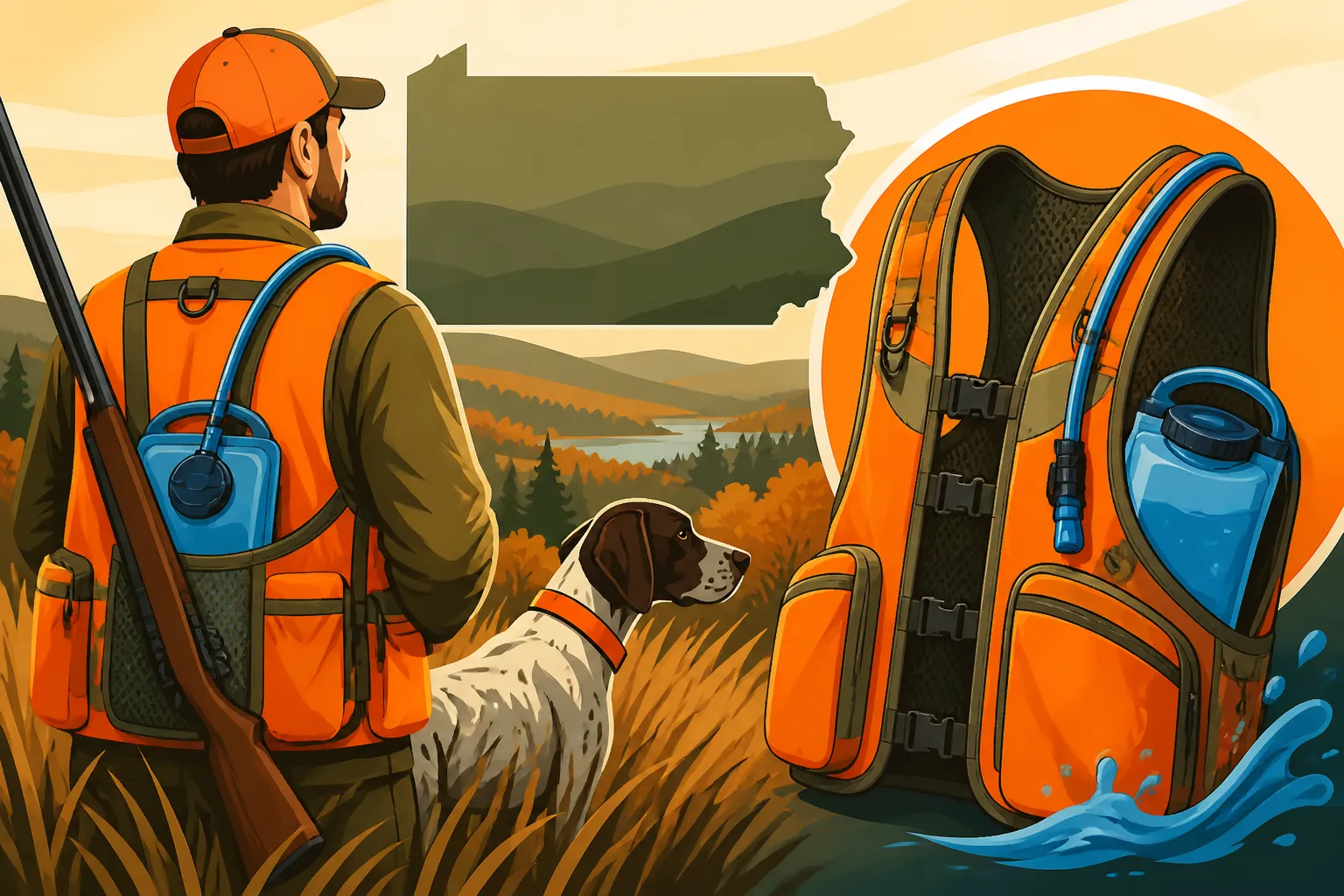
There’s nothing quite like the feeling of chasing grouse through a thick patch of mountain laurel or pushing pheasants out of a goldenrod field on a crisp October morning in Pennsylvania. It’s invigorating, challenging, and deeply rewarding. But let's be honest, it's also hard work, and that hard work can make you and your hunting partner—especially if that partner has four paws—seriously thirsty. Many of us have been there, parched and miles from the truck, wishing we had carried more than a single water bottle in a flimsy backpack. This guide is all about solving that problem, helping you choose the perfect upland vest with integrated water capacity so you can stay hydrated and focused, no matter how far afield you roam.
Why Integrated Water Capacity is a Game Changer for Upland Hunters
The demands of upland hunting in Pennsylvania are unique. You're rarely sitting still. Instead, you're constantly on the move, climbing hills, pushing through thick cover, and navigating varied terrain. This level of activity, especially in early season warmth or during long, late-season hunts, means you're burning calories and losing fluids at a rapid pace. Traditional gear often falls short in providing convenient, ample hydration, leaving both hunters and their valuable bird dogs vulnerable to dehydration.
Staying Hydrated in Pennsylvania's Diverse Uplands
Think about the sheer variety of cover you might encounter across Pennsylvania. One minute you're wading through a dense clearcut, the next you're traversing a rocky oak ridge, and then you're descending into a creek bottom. Each of these environments presents different challenges, but they all share one constant: the need for hydration. Early fall days, even with a chill in the air, can quickly lead to dehydration when you're exerting yourself, especially if you're layering up for the morning cool that turns into midday warmth. It’s not just about comfort; it's about performance and safety. A dehydrated hunter experiences fatigue, reduced concentration, and even impaired decision-making – all things you absolutely don't want when handling firearms and navigating rugged ground.
Imagine busting through heavy cover, adrenaline pumping, trying to get ahead of a flushing bird. Your heart rate is up, you're breathing hard, and sweat is starting to trickle down your back. If you have to stop, fumble with a backpack, and uncap a bottle every time you need a drink, you're breaking your rhythm and potentially missing opportunities. An integrated water system means quick, easy access, allowing you to take sips on the fly without breaking stride. This convenience becomes a serious advantage when you’re chasing those elusive Ruffed Grouse, Pennsylvania's State Bird or working a field for Stocked Pheasants in Pennsylvania. It allows you to focus on the hunt, not on managing your thirst.
The Unsung Hero: Hydrating Your Bird Dog
While your own hydration is crucial, for many upland hunters, the true MVP in the field is their bird dog. These incredible athletes work tirelessly, covering exponentially more ground than their human counterparts. Whether you’re running a speedy English Setter, a methodical German Shorthaired Pointer, or a tenacious Beagle on rabbits, their energy output is immense. Their body temperature can soar, and they absolutely depend on regular water intake to stay safe and perform at their peak. For a dog, especially on a warm day, a lack of water can quickly escalate from performance drop-off to a serious health emergency.
I've seen firsthand how quickly a dog can fade without proper hydration. A dog that's panting excessively, lagging behind, or losing its nose isn't just less effective; it's at risk. Carrying enough water for both of you, and having it readily accessible, is an act of responsible dog ownership. Many upland vests with water capacity include easy-to-reach pockets for a collapsible dog bowl or even a dedicated spout for quick dog drinks. This means you don't have to carry a separate backpack just for your dog's water, or worse, rely on questionable puddles. Keeping your dog properly hydrated ensures they can maintain that legendary drive and focus, making for a more successful and humane hunt. Rabbit Hunting With Beagles in Pennsylvania or Grouse Hunting Pennsylvania Cover can be grueling for our canine companions, and ample water is non-negotiable.
Understanding Different Water Carrying Systems in Upland Vests
When you start looking at upland vests designed for hydration, you'll primarily find two main approaches: bladder systems (hydration reservoirs) and bottle pockets. Some innovative designs even offer a combination or adaptable features. Each has its pros and cons, and understanding them will help you choose what best suits your hunting style.
Bladder Systems (Hydration Reservoirs)
Hydration bladders, often called reservoirs, are sealed bags that typically sit in a dedicated compartment in the back of the vest. A tube extends from the bladder over your shoulder, usually with a bite valve at the end, allowing for hands-free sipping.
Pros:
- Hands-Free Convenience: This is the big one. You can take a drink without stopping, breaking your gun mount, or even using your hands. Just grab the bite valve and sip. This is especially advantageous when you're moving through thick brush or need to keep your focus entirely on the dogs or the cover ahead.
- Large Capacity: Bladders usually come in 1-liter, 2-liter, or even 3-liter capacities, allowing you to carry a substantial amount of water for long days afield or for hydrating both yourself and your dog. A 2-liter bladder can feel like a bottomless well compared to a couple of 16-ounce bottles.
- Even Weight Distribution: Because the bladder sits flat against your back, the weight of the water is distributed broadly and close to your body, often making it feel less cumbersome than bottles rattling around in pockets. This helps maintain balance, especially on uneven terrain or when climbing over obstacles.
Cons:
- Cleaning and Maintenance: This is often cited as the biggest drawback. Bladders and their tubes need to be cleaned thoroughly after each use to prevent mold and bacteria buildup. This can be a bit fiddly, requiring special brushes and drying racks.
- Refilling Mid-Hunt: If you run out of water and need to refill, it typically means taking the bladder out of the vest, which can be inconvenient in the field.
- Temperature Regulation: In hot weather, the water in the bladder can warm up, especially if it's been against your back for hours. Some bladders and vests offer insulated sleeves, but it's still a consideration. In very cold weather, the bite valve and hose can freeze, though this is less common during upland seasons in Pennsylvania.
- Difficulty Gauging Remaining Water: Unless your bladder has a clear window, it can be hard to tell exactly how much water you have left without taking the vest off or giving it a squeeze.
Bottle Pockets and Holsters
Many upland vests forgo a dedicated bladder and instead feature reinforced pockets or holsters specifically designed to carry water bottles. These are typically located on the sides or lower back of the vest.
Pros:
- Easy Access and Refilling: Bottles are simple to grab, drink from, and return to their pockets. If you need a refill, it's as easy as swapping out a spent bottle for a fresh one from your truck or a cooler. You can also easily add electrolytes to one bottle and keep plain water in another.
- Simpler Cleaning: Cleaning a water bottle is usually a quick rinse, much less involved than a bladder system.
- Versatility: You can carry different types of drinks in different bottles – water, sports drinks, even a small thermos of coffee on a cold morning. You can also easily dedicate one bottle for your dog with a collapsible bowl.
- Visibility of Water Level: You can clearly see how much water you have left in each bottle at a glance.
Cons:
- Less Secure (Potentially): Depending on the design, bottles can sometimes bounce or even fall out if not securely fastened in their pockets, especially when you're running or scrambling through dense cover. This is a crucial factor to consider; a good design will have elastic or drawstrings to secure bottles.
- Less Even Weight Distribution: The weight of multiple bottles can feel less integrated than a bladder, potentially shifting more as you move, though well-designed vests mitigate this.
- Capacity Limitations: While you can carry several bottles, their combined capacity might be less than a large bladder, or if it's equal, it might take up more prime pocket space.
Combination Systems and Integrated Features
Some of the more advanced upland vests attempt to offer the best of both worlds, providing a main compartment that can house a hydration bladder and additional external pockets or sleeves designed for bottles. Others have expandable pockets that can snugly fit a bottle but lie flat when empty. This versatility can be a huge advantage for hunters who want options depending on the length and intensity of their hunt.
For instance, a vest might feature a large game bag and a rear panel that accommodates a 2-liter bladder, but also include two mesh pockets on the sides where you can slip a 20-ounce bottle each. This way, you can bring extra water for a long hunt, separate plain water from an electrolyte drink, or easily carry water specifically for your dog. Serious hunters who extensively plan their routes using tools like GoHunt, often appreciate this level of adaptable gear, knowing they can tailor their setup to the specific demands of the day, whether they're still-hunting the big woods or working the edges of farm country.
| Hydration System Type | Pros | Cons | Best Use Case |
|---|---|---|---|
| Hydration Bladder | Hands-free, large capacity, even weight | Hard to clean, difficult to refill mid-hunt | Long, continuous movement, high exertion, dog hunting |
| Bottle Pockets | Easy access, simple cleaning, versatile | Can bounce, less even weight, capacity limits | Shorter hunts, easy refills, varying drink needs |
| Combination | Flexible capacity, hands-free & easy access | Can be heavier, potentially more complex | All-around hunter, adaptable to various conditions |
Key Features to Look for Beyond Water Capacity
While water capacity is your primary focus for this type of vest, it's far from the only consideration. A great upland vest needs to perform many functions, and a well-designed one will integrate all these features seamlessly to enhance your comfort, efficiency, and safety in the field.
Comfort and Fit for Long Pennsylvania Days
You're going to be wearing this vest for hours, potentially covering miles over challenging terrain. Comfort isn't a luxury; it's a necessity. Look for vests with highly adjustable straps – shoulder, sternum, and waist straps are key. These allow you to customize the fit, ensuring the vest sits snugly without chafing or bouncing, and that the weight is distributed properly across your shoulders and hips. Padded shoulder straps are non-negotiable, especially when carrying a full load of water, shells, and birds.
The overall design should allow for a full range of motion, letting you swing your shotgun smoothly without the vest catching or shifting. This is critical for quick shots on flushing birds. Many brands offer different sizing options (S/M, L/XL) or highly adjustable "one-size-fits-most" designs. Pay attention to how the vest sits when loaded. Does it sag? Does it ride up? A good fit means you almost forget you're wearing it, allowing you to focus on the hunt itself, whether you're navigating Hunting Pennsylvania Clearcuts and Regrowth or traversing steep inclines.
Durability and Materials for Rugged Cover
Pennsylvania's upland cover can be brutal on gear. Briar patches, multiflora rose, hawthorns, and dense thickets are notorious for snagging and tearing fabric. Your vest needs to be tough enough to withstand this abuse season after season. Look for vests made from heavy-duty, briar-resistant materials like Cordura nylon (typically 500D or 1000D) or rugged canvas. Reinforced stitching at stress points – like where straps attach or pockets are sewn – is also a sign of a quality, durable vest.
Consider the material of the game bag as well. It should be robust enough to carry multiple birds without tearing, but also easy to clean. Some vests feature a waterproof lining in the game bag to prevent blood from soaking through, which is a nice touch. Spending a bit more upfront on a durable vest will save you money and frustration in the long run, preventing premature wear and tear after just a few seasons.
Storage and Organization
Beyond water, an upland vest is your mobile command center for the day. You need easy access to shells, a whistle, a GPS or phone, maybe a first-aid kit, and of course, a place for your harvested birds.
- Shell Loops/Pockets: Dedicated shell loops or large, easily accessible pockets for boxes of shells are a must. They should hold shells securely but allow for quick retrieval.
- Game Bag: A well-designed game bag is crucial. Look for one that's large enough to hold multiple birds (pheasants, grouse, rabbits), preferably with a breathable or mesh design to promote airflow and prevent birds from overheating, especially on warmer days. Easy access to the game bag, perhaps from the sides, is also a plus.
- Accessory Pockets: Pockets for your dog's whistle, a handheld GPS or smartphone, keys, license, and perhaps a small snack are invaluable. Many vests include zippered pockets for secure storage of valuables and open pockets for quick-grab items. Some even integrate a specific pocket for a GoHunt subscription, ensuring your mapping tools are always at hand.
- D-rings/Loops: Small loops or D-rings are great for attaching a dog leash, water bottle, or other accessories.
Blaze Orange Integration
Safety is paramount in the field, and in Pennsylvania, hunter orange requirements are specific. During certain seasons, you're required to wear a certain amount of fluorescent orange material visible 360 degrees. Many upland vests come with integrated blaze orange panels or are entirely blaze orange to meet these requirements.
Always check the current regulations for the species and season you're hunting, but generally, a vest with ample orange coverage is a smart choice. Some vests offer removable or expandable orange panels, allowing you to adapt to different regulations or conditions. This ensures you're not only visible to other hunters but also that you're compliant with the law, preventing any unnecessary headaches. For more on this, check out Pennsylvania Hunter Orange Rules.
Choosing the Right Upland Vest for Your Pennsylvania Hunting Style
With so many options out there, narrowing down the perfect upland vest can feel overwhelming. The best approach is to consider your personal hunting habits, the type of terrain you typically cover, and whether or not you hunt with a dog.
Solo Hunter vs. Hunting with Dogs
Your decision will be heavily influenced by whether you hunt with a canine companion.
- Solo Hunter: If you're hunting without a dog, your water needs might be slightly less, allowing you to prioritize a lighter vest or one with slightly less overall capacity, as you only need to hydrate yourself. You might prefer bottle pockets for easier access to different drinks for yourself. Your storage needs might focus more on shells, maps, and snacks.
- Hunting with Dogs: If you're running one or more bird dogs, their hydration becomes a top priority. You'll likely need a larger water capacity, often making a 2-liter or 3-liter bladder system a very attractive option, as it can carry enough for both of you. Look for vests with a dedicated spot for a collapsible dog bowl or an easy-to-use water source for your dog. Game bag size is also a bigger consideration, as you'll likely be bringing home more birds. Vests designed specifically for dog handlers often have features like D-rings for attaching leashes or GPS collars.
Terrain and Weather Considerations
The specific challenges of Pennsylvania's diverse landscape and variable weather patterns also play a significant role.
- Thick Cover (e.g., Laurel Patches, Clearcuts): If you spend a lot of time busting through dense brush, durability is key. Look for vests made of tough, briar-proof fabrics. Bottle pockets should be very secure to prevent snagging or losing bottles. A bladder system might be preferred here to keep everything streamlined and snag-free. Good shoulder padding is essential for comfort when pushing through resistance.
- Open Fields (e.g., Pheasant Fields, Farm Country): In more open terrain, visibility and lightweight comfort might take precedence. Breathable materials are a plus, especially on sunny days. Bottle pockets might be more convenient for quick sips when you're not constantly fighting brush. If you're doing a lot of Hunting Pennsylvania Farm Country Edges, you might prefer a vest that allows for quick access to your rangefinder or binoculars.
- Steep and Hilly Terrain (e.g., Big Woods, Ridge and Valley): If you're hunting areas with significant elevation changes, weight distribution is paramount. A vest that carries its load close to your body and distributes it across your hips (with a good hip belt) will prevent fatigue. Bladder systems often excel here due to their even weight distribution. Consider vests that allow for easy access to items even when climbing. Boots and Packs for Steep Country are essential, and a well-fitting vest completes that setup.
- Early Season Warmth vs. Late Season Cold: For early archery or small game seasons when temperatures can still be quite warm, breathability in the vest material and the game bag is vital. You'll want good airflow to prevent overheating. As seasons progress into colder weather, insulation becomes more important, and a vest that layers well over thicker clothing without feeling bulky is ideal. Ensure your water system won't freeze in extreme cold.
Budget vs. Features
Like any piece of gear, upland vests range widely in price. It's important to balance your budget with the features you truly need.
- Entry-Level Vests: You can find basic vests with some water capacity at lower price points. These are often sufficient for occasional hunters or those who don't venture too far from the truck. They might have simpler designs, fewer pockets, and less durable materials.
- Mid-Range Vests: These offer a good balance of features, durability, and comfort. You'll start to see better quality materials, more thoughtful pocket arrangements, and more sophisticated hydration systems (either a good bladder or secure bottle pockets). Many hunters find their sweet spot in this range.
- High-End Vests: Premium vests typically boast the most durable materials, advanced ergonomic designs, and every conceivable feature. They often excel in modularity, allowing you to customize pocket placement or add accessories. Brands that specialize in upland gear, often those favored by competitive hunters or those who hunt nearly every weekend, fall into this category. If you hunt frequently and demand the best performance and longevity, a high-end vest can be a worthwhile investment.
Ultimately, the best upland vest with water capacity for you is the one that fits comfortably, stands up to the rigors of Pennsylvania's diverse hunting grounds, and keeps you and your dog hydrated and effective in the field. Take the time to try on different vests, load them up with your typical gear (and some water!), and simulate your hunting movements to ensure it's the right fit for your adventures.
Disclaimer
This article is for general informational purposes only and does not constitute professional advice. Laws, prices and regulations vary by location and change over time. Consult a qualified professional for guidance on your specific situation.