Shot Placement on a Black Bear
Hunting black bears in Pennsylvania is an exhilarating experience, but it comes with a unique set of challenges, especially when it's time to make the shot. Unlike deer, bears have a different anatomy and are incredibly tough, leading many hunters to struggle with determining the most effective shot placement for a quick, ethical harvest. This comprehensive guide will walk you through the intricacies of black bear anatomy, pinpoint the best places to aim, and offer crucial advice for situations when things don't go exactly as planned.
Understanding Pennsylvania Black Bear Anatomy
Getting a clean, ethical harvest on a Pennsylvania black bear starts with truly understanding what's inside that fur-covered body. Bears are built differently from deer, and what might be a surefire shot on a whitetail could leave you with a long, frustrating track on a bruin. Their bone structure is robust, their muscles are dense, and that thick hide and layer of fat can make finding the vitals a real challenge, even at close range.
The Bear's Vital Zone: Heart and Lungs
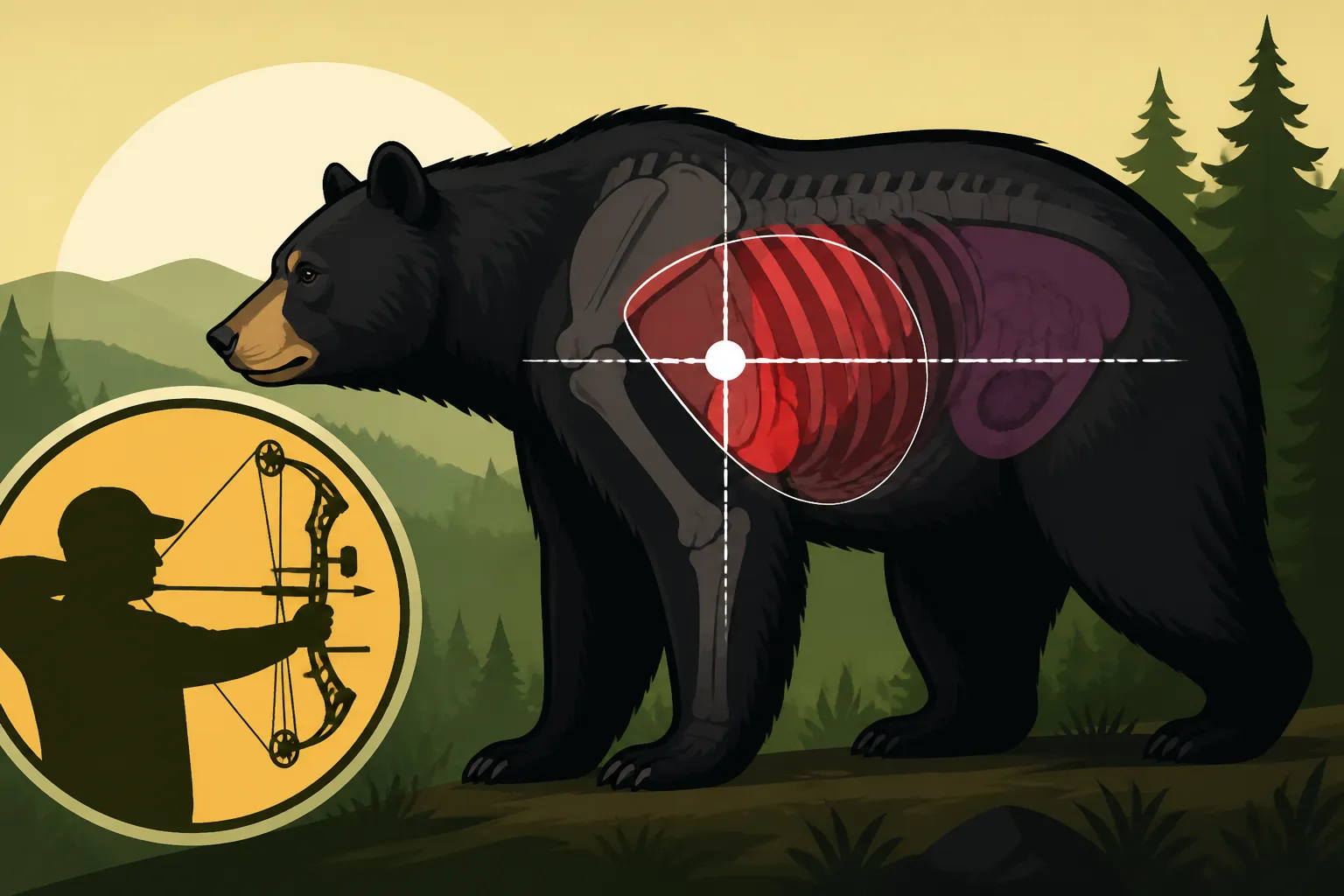
When we talk about the "kill zone" on any animal, we're almost always referring to the heart and lungs, and bears are no exception. These organs are crucial for life, and a shot that disrupts them quickly leads to incapacitation and a humane harvest. The lungs are a large target, sitting high in the chest cavity, protected by the ribs. The heart is a smaller, tougher target nestled low and slightly forward between the lungs. On a bear, this vital zone is often perceived to be further back than it actually is, thanks to their shoulder structure and deep chest.
Imagine a line running up the bear's leg, just behind the shoulder. This line, when extended upward to about two-thirds of the way up the body, will generally encompass the sweet spot for the lungs. The heart lies lower, about a third of the way up from the belly, right behind that leg line. Hitting both lungs is often the goal, as it creates a large wound channel and rapid blood loss, leading to a quick expiration. A direct heart shot is even more immediately fatal but presents a smaller target. Knowing the precise location, especially relative to the shoulder, is critical. A mapping tool like GoHunt can even help you visualize this on a topographical map, allowing you to mentally prepare your shot angle based on your anticipated position relative to the bear.
Skeleton and Muscle Considerations
A bear's skeletal structure is dense and powerful. Their shoulders are incredibly muscular and reinforced with heavy bones, designed for digging, climbing, and fighting. This means a direct shoulder shot, while perhaps breaking bone, might not penetrate to the vitals and can result in a wounded animal that’s difficult to recover. The goal is to slip the projectile just behind the shoulder blade, avoiding the heavy bone and driving straight into the lung cavity.
Think about the angle of the shot. If the bear is quartering away, a shot that enters behind the rib cage on the near side could angle forward and still hit the off-side lung and possibly the heart. However, a bear quartering towards you can be a much trickier shot, as the shoulder and chest bone offer considerable protection. It's often best to wait for a broadside or quartering-away shot if possible. Many seasoned hunters will tell you that patience is your greatest ally when Hunting Pennsylvania's Black Bear Population. Always consider the bone structure and muscle groups, aiming to thread your shot around them to reach the soft tissue of the vitals.
Ideal Shot Placement for Quick Harvest
Now that we've covered the anatomy, let's zero in on the best places to aim to ensure a quick and ethical harvest. The goal is always to incapacitate the bear as rapidly as possible, minimizing suffering and ensuring a successful recovery. This comes down to two primary shot angles: broadside and quartering away.
Broadside Shot: The Classic Kill Zone
The broadside shot is generally considered the most forgiving and effective shot for black bears. With the bear standing perfectly perpendicular to you, you have a clear view of the entire side of its body. The ideal aim point here is simple: draw an imaginary line vertically up the back of the bear's front leg. Then, draw a horizontal line about one-third of the way up the body from the belly. Where these two lines intersect is the prime location for a heart shot. Moving slightly higher and a few inches back from this point will put you squarely in the double-lung zone.
This shot placement ensures your bullet or arrow passes through both lungs, causing massive trauma and rapid blood loss. If you hit the heart as well, the bear's lights will go out even faster. The key is to avoid aiming too far forward, which can result in a devastating but non-lethal shoulder hit, or too far back, leading to a gut shot. A true broadside shot allows for maximum penetration through soft tissue, bypassing major bone structures, and achieving the desired effect. This is the shot scenario you should practice for most when preparing for Pennsylvania Black Bear Hunting.
Quartering Away: A Great Option for Angling
A quartering-away shot occurs when the bear is angled slightly away from you, presenting its ribs on the far side more prominently. This can be an excellent shot opportunity, sometimes even better than a broadside shot, especially for archers. The key is to aim for the opposite front shoulder. Imagine the projectile traveling through the bear's body and exiting through the shoulder on the far side.
For a quartering-away bear, you'll want to aim slightly behind the last rib on the near side, angling forward towards the opposite shoulder. This trajectory ensures that your shot travels through the vital organs – typically piercing both lungs and potentially the heart – before impacting the opposite shoulder. The advantage here is that the vitals are often more exposed, and the angle can help avoid the heavy shoulder bone on the entry side while still ensuring a devastating hit. Just be careful not to aim too far back, especially if the quartering angle is steep, as this can easily result in a gut shot. This scenario highlights the importance of understanding target angles, a skill that can be refined by studying different animal positions on digital mapping platforms like GoHunt.
Shot Placement Challenges and Considerations
Even with a solid understanding of bear anatomy, hunting them presents unique challenges that can make textbook shot placement difficult. Factors like thick cover, nervous bears, and varying distances all play a role in making a clean shot easier said than done. It’s crucial to anticipate these scenarios and know how to react, or, just as importantly, when not to shoot.
Dealing with Thick Cover and Angles
Pennsylvania's bear habitat is often characterized by dense forests, thickets of mountain laurel, and steep, rugged terrain. Bears are masters of moving silently through this heavy cover, and you might only get a fleeting glimpse or a partially obscured view. This is where patience truly becomes a virtue. Never take a shot if you can't clearly identify your target and confidently place your shot in the vital zone. Shooting through brush or at a partially obscured animal significantly increases the risk of a wounded bear and a lost opportunity.
Angles are also paramount. A bear might be uphill, downhill, or on a steep sidehill. Each of these angles changes the internal position of the vitals relative to your line of sight. For instance, a bear directly below you on a steep hill means your shot will be dramatically downward. You'll need to adjust your aim point lower on the bear's back to ensure the projectile travels through the chest cavity rather than over it. Similarly, an uphill shot requires aiming slightly higher. Always visualize the projectile's path through the bear, not just where it enters the fur. This is also why scouting with detailed maps is important; understanding the terrain where you might encounter a bear can help you anticipate challenging shot angles, a feature where tools like GoHunt excel for planning Scouting Pennsylvania Public Land Before Season.
What About Brain or Spine Shots?
While a headshot (specifically the brain) or a spine shot can be immediately incapacitating, they are generally not recommended for big game hunting, especially bears, for a few critical reasons. The brain is a remarkably small target, especially on a moving or nervous animal. A slight miss can result in a jaw shot, blinding the bear, or other non-lethal but horrific wounds that leave the animal to suffer. Similarly, the spine is a thin column. While a direct hit will drop the bear instantly, a miss by even an inch can result in a flesh wound that allows the bear to escape.
Ethical hunting prioritizes quick, humane kills with the highest probability of success. The heart-lung area offers a much larger, more forgiving target. Unless you are an absolute expert marksman at extremely close range with a perfectly stationary animal, stick to the chest cavity. The risk of wounding and losing a bear is simply too high when aiming for the brain or spine, and as responsible hunters, we want to avoid that outcome at all costs.
Following Up After the Shot
Making a good shot is only half the battle. What you do in the minutes and hours following the shot is just as critical for a successful and ethical recovery. Bears are notoriously tough, and even a well-placed shot doesn't always result in an immediate drop. Knowing when to track, what to look for, and how to stay safe is paramount.
The "Wait and Listen" Rule
After you've taken a shot at a bear, the very first thing you should do is not immediately run to where it was standing. Instead, take a deep breath, mark the exact spot where the bear was, and listen. Listen for crashing, rolling rocks, or any sounds indicating the bear's direction of travel and if it eventually went down. Note the time of the shot. If you shot with a rifle, reload immediately. If you shot with a bow, stay quiet and calm.
The general rule of thumb for bears, especially if you suspect a solid hit, is to wait a minimum of 30 minutes for a rifle shot and at least an hour for an archery shot. Bears, like all big game, can run a significant distance even with a mortal wound. Rushing in too quickly can push a mortally wounded bear further, making recovery much harder, or even dangerous if it decides to double back. If you heard a distinct "thump" of a bullet hitting flesh, or saw the bear stumble, that's a good sign, but still, give it time. When considering Archery and Muzzleloader Bear Tactics, the wait time can be even more crucial due to potentially smaller wound channels from traditional archery equipment.
Interpreting the Blood Trail and Sign
Once you've waited the appropriate amount of time, approach the shot site cautiously. Look for blood, hair, bone fragments, or disturbed earth where the bear was standing. Bears have dense, dark fur, and their fat can sometimes "plug" smaller wound channels, resulting in less external bleeding than you might expect from a deer. This means every speck of sign is critical.
Look for consistency in the blood. Bright red, frothy blood usually indicates a lung hit. Darker, chunky blood with gut contents points to a gut shot – a scenario where you'll need to back out and wait much, much longer (6-8 hours, or even until morning if shot late in the day) to give the bear time to expire. Hair color can also give clues about where the bear was hit (dark body hair vs. lighter belly hair). If you find bone, note its size and shape; small fragments suggest a rib hit, larger ones might indicate a leg or shoulder. Use flagging tape to mark the trail every few yards, looking not just for blood on the ground but on leaves, branches, and even high up on brush where the bear might have brushed past. Losing a blood trail can be one of the most disheartening experiences in hunting, but careful tracking can prevent it, as discussed in Tracking a Deer in Pennsylvania Snow.
| Shot Placement Type | Ideal Scenario | Blood Trail Expectation | Recovery Time (Approx.) | Key Considerations |
|---|---|---|---|---|
| Broadside | Bear standing perpendicular | Good, frothy red | 30 min (rifle) / 1 hour (bow) | Aim behind shoulder, 1/3 up body. Avoid heavy bone. |
| Quartering Away | Bear angled slightly away | Good, possibly internal | 30 min (rifle) / 1 hour (bow) | Aim for opposite shoulder. Good for deeper penetration. |
| Quartering Toward | Bear angled slightly toward | Poor, risky | N/A (avoid if possible) | High risk of hitting heavy shoulder bone or non-vitally. |
| Head/Spine | Extreme close range, stationary | Minimal or none | Immediate (if hit) | High risk of wounding. Not recommended for most hunters. |
| Gut/Paunch | Accidental, too far back | Dark, greenish, foul odor | 6-8+ hours, overnight | Back out immediately. Very difficult, unethical shot. |
When to Call for Help
Don't be afraid to call for help if the trail goes cold or if you're uncomfortable tracking alone, especially in thick cover. Losing a bear is a tragedy, and many experienced hunters are willing to assist. In Pennsylvania, it is legal to use a leashed tracking dog to help recover wounded big game, which can be an invaluable resource. If you've exhausted your efforts and darkness is approaching, it's often best to back out, mark your last sign, and return in the morning with fresh eyes and possibly more help. A lost animal is a tough lesson, but leaving it to suffer is worse. Learning proper techniques for Field Dressing a Deer in Cold Weather can also help with immediate processing once a bear is recovered, ensuring the meat is handled properly.
Disclaimer
Hunting is an inherently dangerous activity. This guide provides information for educational purposes only. Always prioritize safety, follow all local and state regulations, and ensure you are proficient with your chosen weapon. The advice given here is not a substitute for professional instruction or direct experience in the field. Conditions can vary, and responsible hunting requires sound judgment, ethical decision-making, and respect for wildlife.