Grouse Hunting Pennsylvania Regrowth
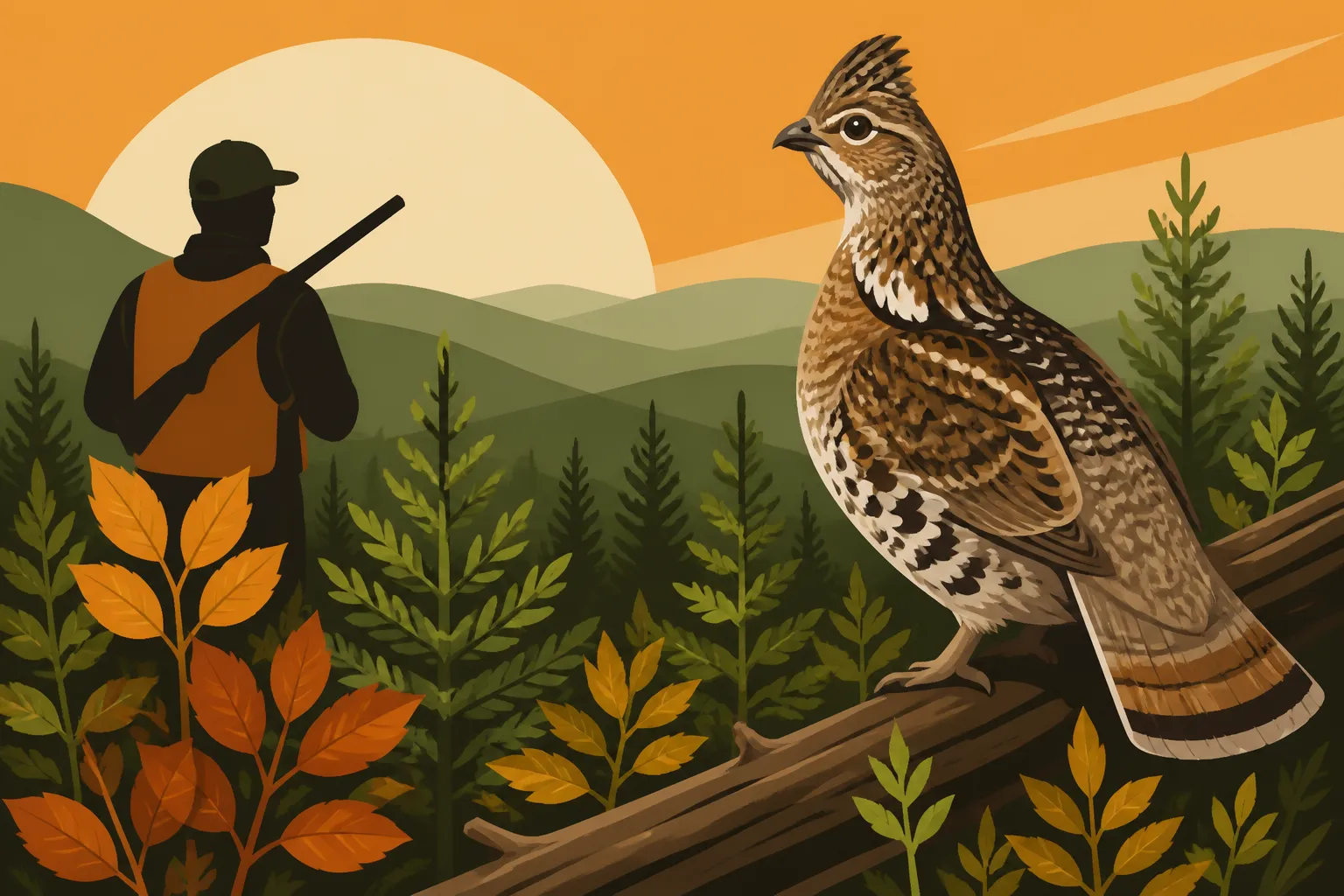
Grouse hunting in Pennsylvania’s dense regrowth can feel like looking for a needle in a haystack—a very noisy, thorny haystack, at that. It’s a physical challenge, a test of patience, and often a humbling experience even for seasoned wingshooters. This comprehensive guide will delve into the specific types of regrowth habitat that ruffed grouse call home in the Keystone State, share effective strategies for navigating these challenging coverts, and outline the essential gear you’ll need to increase your chances of finding—and hopefully bagging—this elusive bird.
Understanding Pennsylvania's Regrowth Habitat for Grouse
Ruffed grouse are creatures of the thick stuff, thriving in what many other wildlife species find impenetrable. In Pennsylvania, this means they gravitate towards what we often call "regrowth" or "early successional habitat." This isn't just any old woods; it's a specific ecological stage crucial for their survival.
Why Regrowth is King for Grouse
When we talk about regrowth in Pennsylvania hunting circles, we're primarily referring to areas that have experienced significant disturbance, leading to a flush of new, dense growth. This often includes clear-cuts after timber harvests, areas recovering from natural events like fires or severe windstorms, or even old, abandoned farm fields that are slowly reverting to forest. The critical factor is the age of this growth: grouse need extremely thick, low-lying cover that provides both protection from a multitude of predators, like coyotes and various raptors, and shelter from harsh winter weather.
Mature, open timber stands, while beautiful, generally lack the dense understory that grouse require. They just don't offer the hiding spots or the diverse food sources these birds depend on. Think about it: a grouse out in open woods is a sitting duck for a hawk circling overhead. But in a dense thicket of young saplings, briars, and low shrubs, they can disappear instantly, making life much harder for predators and, let's be honest, for hunters too. This vital habitat also provides a buffet of food sources, from the buds of aspen and birch to the fruits of hawthorn and greenbrier, and a myriad of insects during the warmer months. It's a full-service restaurant and fortress all rolled into one.
Identifying Prime Regrowth Coverts
Finding the right age class of regrowth is paramount to consistent grouse hunting. Generally, the sweet spot for grouse cover is often in areas that are 5 to 20 years post-disturbance. Too young, and the cover might not be dense enough or provide sufficient food. Too old, and the saplings have grown into poles, the canopy has closed, and the understory has thinned out, making it too open for grouse preference. What you're really looking for is a tangled mess of young trees, shrubs, and briars.
Specific plant species are often indicators of good grouse habitat. Look for dense stands of aspen, particularly if mixed with other hardwoods. Crabapple thickets, grapevines climbing through young trees, greenbrier, and multiflora rose are all excellent signs. Areas with dogwood and hawthorn trees are also fantastic, as these provide crucial food sources throughout the fall and winter. Often, you'll find these desirable species concentrated in brushy stream bottoms or along the edges where regrowth meets older timber. These "edge habitats" are transition zones that grouse frequently utilize for feeding and moving between different cover types.
To efficiently scout and locate these promising areas, mapping tools are your best friend. Services like GoHunt can be invaluable. You can use their satellite imagery layers to identify recent clear-cuts or areas that show signs of early successional growth. Many public lands, including Pennsylvania State Game Lands and State Forests, also offer timber harvest plans or maps detailing recent cuts. Combining aerial imagery with ground-level scouting, perhaps by reviewing Reading Aerial Photos for Big Woods Deer for similar principles, allows you to pinpoint these prime locations before you even step foot in the woods. Knowing Why Young Forest Matters to Grouse will greatly enhance your ability to identify promising areas.
Key Tactics for Hunting Regrowth Coverts
Hunting grouse in thick regrowth demands a unique approach. It's not about long-range shooting; it's about anticipation, quick reflexes, and often, sheer grit. Whether you're hunting with a dog or going solo, adjusting your methods to the cover is crucial.
Still-Hunting the Thickets
For many lone grouse hunters, still-hunting is the primary tactic. This isn't your typical deer still-hunt where you might sit for long periods. Instead, it's a slow, methodical creep-and-pause strategy. You move just a few steps, then stop for 30-60 seconds, listening intently and scanning every shadow. Grouse are masters of camouflage and will often hold incredibly tight, letting you walk right past them before exploding into flight. That pause gives them a chance to get nervous and flush, often when you least expect it.
Focus your attention on listening for the subtle rustle of leaves, the quick buzz of wings as a bird takes off, or even the faint cackle of a flushed grouse. Always be ready for a shot; your gun should be mounted and ready to swing. Try to work into the wind if possible. While grouse don't rely on scent like deer, the wind will help muffle your own sounds, giving you a slight advantage. When working through particularly dense patches, try to walk parallel to the heaviest cover, like a thick briar patch or a stand of young conifers. Birds will often use these areas for escape, and by working the edges, you might intercept them as they try to slip away. It’s a very different approach from deer hunting, focusing on flushing rather than spotting. For more specific tactics on this, check out Flushing Grouse Without a Dog.
Hunting With Dogs
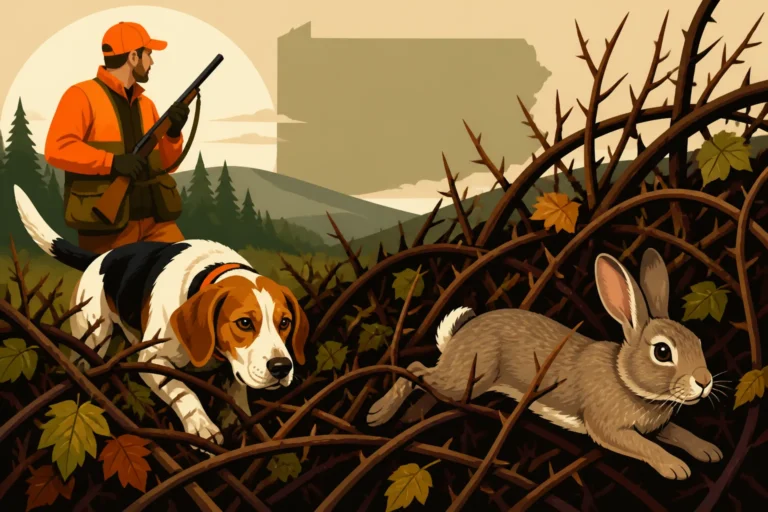
Hunting grouse with a well-trained dog is an unparalleled experience, but it presents its own set of challenges in Pennsylvania's dense regrowth. Pointing dogs like English Setters or German Shorthaired Pointers excel at finding and holding birds, allowing the hunter to move in for the flush and shot. Flushing dogs, such as English Springer Spaniels or Labrador Retrievers, are designed to put birds into the air within gun range. Regardless of breed, a dog’s primary job in this cover is to get the bird up and, hopefully, into a shooting lane.
The biggest challenge with dogs in thick cover is keeping track of them. Bells on collars are common, but even with a bell, a dog can quickly disappear in a dense clear-cut. This is where modern technology, like GPS collars, truly shines. While not specifically naming brands, these devices allow you to track your dog's exact location, preventing lost dogs and ensuring you can follow a point effectively. Working a dog slowly and deliberately is paramount. Give them time to thoroughly investigate every clump of cover. Rushing through will lead to missed birds and frustrated dogs. Remember, your canine partner is working hard, often encountering thorns and rough terrain. Considering gear like Bird Dog Boots and Cut Pads can keep them comfortable and hunting longer.
Working a Covert Effectively
Whether you're hunting solo or with a partner, having a plan for how you'll move through a grouse covert is essential. Random wandering often leads to missed opportunities and inefficient hunting. One effective strategy is to "grid" a patch of woods, moving in a systematic pattern to cover the area thoroughly. Alternatively, you can follow natural contours, such as walking along the top of a bench, or paralleling a stream or old logging road.
If you're hunting with multiple people, spacing is crucial. Maintain safe distances and keep track of everyone's position, pushing birds towards each other or towards known open shooting lanes. The goal is to maximize the chances of a bird flushing within someone's shooting window. Grouse shots are almost always at close range and require instinctive shooting, so be prepared for a quick reaction. Remember that these birds will often flush from unexpected locations, making it a true challenge. For deeper insights into navigating these challenging terrains, consider reading about Grouse Hunting Pennsylvania Cover.
Gear and Preparation for Dense Cover
Grouse hunting in Pennsylvania regrowth is a brutal test for both hunter and gear. The thick briars, thorny bushes, and constant battle with entangled branches will quickly expose any weaknesses in your setup. Proper equipment isn't just about comfort; it's about safety and effectiveness.
Shotgun and Ammunition Choices
When it comes to shotguns for grouse in Pennsylvania, fast-handling and open chokes are the name of the game. You're looking for a quick-swinging firearm that you can get on target almost instinctively.
- Gauge: The 20-gauge shotgun is incredibly popular for grouse, and for good reason. It's lighter to carry all day, often results in a more compact firearm, and its recoil is generally more manageable than a 12-gauge. While a 12-gauge offers a denser pattern with more pellets, the reality of grouse hunting is that most shots are incredibly close—often under 20 yards—where a lighter 20-gauge throws plenty of lead to do the job. For a detailed breakdown, see Best Shotgun Gauge for Pennsylvania Grouse.
- Choke: This is perhaps the most critical component. Forget your full or modified chokes; for grouse in thick cover, you want the most open pattern possible. Skeet or Improved Cylinder chokes are ideal. These allow your shot pattern to open up quickly, giving you a wider margin for error on those lightning-fast, close-range flushes.
- Shot Size: Typically, #7.5 or #8 lead shot is preferred. These smaller pellets provide a dense pattern, which is exactly what you need for a fast-flying bird. It's also vital to be aware of non-toxic shot regulations. While most of Pennsylvania allows lead shot for upland birds, some specific areas, like certain State Park hunting zones or federal wildlife areas, may require non-toxic alternatives. Always check the current Pennsylvania Game Commission regulations for your hunting area.
| Shotgun Gauge | Recommended Choke | Shot Size (Lead) | Typical Range (Yards) | Notes |
|---|---|---|---|---|
| 12 Gauge | Skeet / Imp. Cyl. | #7.5 or #8 | 10-25 | Heavier, more recoil; larger pattern |
| 20 Gauge | Skeet / Imp. Cyl. | #7.5 or #8 | 10-20 | Lighter, fast-handling; ideal for dense cover |
| 28 Gauge | Skeet / Imp. Cyl. | #7.5 or #8 | 8-18 | Very light, less range; excellent for experts |
Essential Clothing and Navigation
Your clothing choices can make or break a grouse hunt in dense cover. Durability and protection from the elements and thorns are paramount.
- Clothing: Forget denim jeans; they'll be shredded in an hour. Durable brush pants or chaps made from tough materials like canvas, waxed cotton, or heavy-duty synthetics are an absolute must to protect your legs from briars, multiflora rose, and jagged branches. Layering is also crucial. You'll be exerting a lot of energy, so start with moisture-wicking base layers, add insulating layers, and top with a tough, briar-resistant outer shell. You’ll be hot one minute and cold the next, especially if you pause for extended periods.
- Hunter Orange: Pennsylvania has specific requirements for hunter orange during various seasons. For small game, generally, 250 square inches of fluorescent orange on the head, chest, and back are required when still-hunting or hunting with a dog. Even when not legally required (e.g., during the early archery overlap), wearing hunter orange is a smart safety decision in dense, visually challenging terrain, especially if other hunters are around. Be sure to understand Pennsylvania Hunter Orange Square Inches for precise requirements.
- Navigation: It is incredibly easy to get disoriented in the tangled mess of a regrowth covert. What looks like a straight line quickly becomes a zigzag through impenetrable briars. A reliable GPS unit or a robust mapping app on your smartphone, like GoHunt with its offline map capabilities, is essential. Mark your vehicle's location and any key features like old logging roads or clear-cut boundaries. Always carry a traditional compass and a paper map as a backup, because electronics can fail, especially in remote areas. Knowing how to read terrain and orient yourself is a vital skill.
- Water and Snacks: Hunting thick cover is physically demanding. You'll be pushing through resistance constantly. Carry plenty of water to stay hydrated and some high-energy snacks to keep your fuel levels up throughout the day. A good upland vest with dedicated water capacity, as discussed in Upland Vests With Water Capacity, is an excellent choice.
Safety and Ethics in Thick Grouse Woods
Hunting grouse in Pennsylvania's dense regrowth isn't just physically demanding; it also requires a heightened awareness of safety and ethical considerations. The very nature of the habitat—low visibility, rugged terrain, and quick shots—introduces unique challenges.
Prioritizing Hunter Safety
Safety should always be your top priority, especially when navigating dense, low-visibility cover.
- Communication: If you're hunting with partners, constant communication is non-negotiable. Yell "Hunter!" if you hear someone approaching, especially if you're out of sight. Establish clear zones of fire and stick to them. Before entering a new section of cover, ensure everyone knows the plan. In a thicket, it's incredibly easy to lose sight of your partners, so verbal cues are essential. Never assume you know where someone is; confirm their location.
- Target Identification: This is perhaps the most critical safety rule in thick cover. You'll get fast flushes, often with only a split second to react. In this chaos, it is absolutely paramount that you are 100% sure of your target and, even more importantly, what is beyond it. Never, under any circumstances, shoot at sound or movement. You must positively identify the grouse and ensure your shot won't endanger another hunter, a dog, or any non-game animal. The split-second decision can be tough, but a missed bird is always better than an unsafe shot.
- Terrain Awareness: Grouse coverts are rarely manicured. Expect steep hillsides, slippery leaves, hidden rocks, rotten logs, and dense, entangled vegetation. Twisted ankles and falls are common. Wear sturdy boots with good ankle support. Walk slowly and deliberately, always watching your footing. If you're navigating challenging terrain with a heavy hunting vest, a fall can be even more dangerous. Being mindful of your footing will help you stay safe and comfortable throughout your hunt.
Respecting the Resource and Other Users
As hunters, we are stewards of the land and its wildlife. Our actions reflect on the entire hunting community.
- Follow Regulations: Always adhere to bag limits and season dates for ruffed grouse. These regulations are in place to ensure the sustainability of the population. Report any violations you witness; poaching undermines conservation efforts. Understanding the full scope of Pennsylvania Grouse Flush Rate Surveys and population trends helps us appreciate why these regulations are vital.
- Leave No Trace: Pack out everything you pack in, including spent shotgun hulls. Leaving trash in the woods detracts from the experience for everyone and can be harmful to wildlife. Our goal is to leave the land in better condition than we found it.
- Courtesy to Others: Public lands in Pennsylvania are shared spaces. You might encounter hikers, birdwatchers, mountain bikers, or other hunters. Be courteous and respectful. If you encounter someone, identify yourself as a hunter, and ensure your firearm is carried safely. On private land, obtaining explicit permission is a must, and respecting the landowner's property and requests builds goodwill. Understanding that you might share the woods with others, as discussed in Hunting Pressure on Pennsylvania Game Lands, helps to foster a respectful outdoor community.
Grouse hunting in Pennsylvania regrowth is a challenging, yet incredibly rewarding pursuit. It demands resilience, quick thinking, and a deep appreciation for the wild places these remarkable birds call home. With the right knowledge, tactics, and gear, you can unlock the secrets of these thorny coverts and experience the thrill of the king of game birds.
Disclaimer
Please note: Hunting regulations and seasons in Pennsylvania are subject to change. Always consult the most current Pennsylvania Game Commission digest or website before planning your hunt to ensure compliance with all laws and regulations. Safety should always be your top priority in the field.