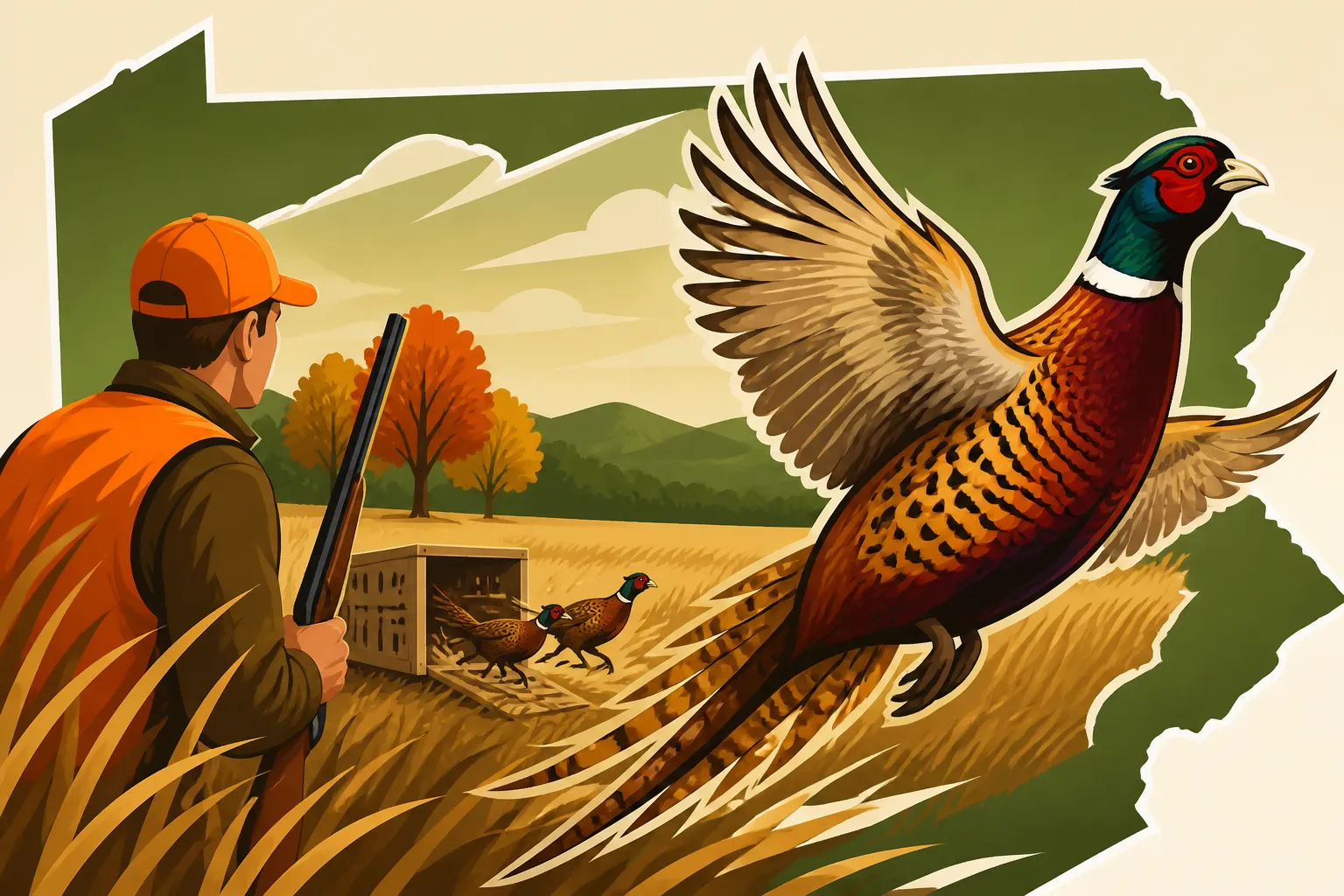
Hunting Stocked Pheasant Release Sites
Hunting stocked pheasants in Pennsylvania can sometimes feel less like a traditional wild bird hunt and more like a footrace in a cornfield, especially if you're hitting the popular spots right after a release. Many hunters find themselves frustrated by the crowds, the unpredictable flight of newly released birds, and the sheer challenge of actually getting a shot off before another hunter or dog gets to them. This guide aims to cut through that frustration, offering practical, in-depth strategies for navigating Pennsylvania's stocked pheasant release sites, improving your success rates, and ensuring you still have an enjoyable day afield, even when things get a little chaotic.
Understanding Pennsylvania's Stocked Pheasant Program
For many, the thought of pheasants conjures images of wild birds busting out of CRP fields in the Dakotas. Pennsylvania's reality is a bit different. While we do have efforts to establish wild pheasant recovery areas, the majority of the pheasant hunting opportunities across the state come from birds raised at game farms and released specifically for hunters. Understanding the mechanics of this program is crucial to adapting your approach and increasing your chances of success.
The Why and How of Stocking
The Pennsylvania Game Commission (PGC) undertakes a monumental task each year, raising and releasing tens of thousands of pheasants across hundreds of sites. The primary goal is to provide accessible hunting opportunities, especially in regions where wild pheasant populations are non-existent or too low to sustain hunting pressure. These birds are bred and raised in facilities like the PGC's Western Game Farm in Cambridge Springs, the Northcentral Game Farm in Williamsport, and the Southeast Game Farm in Schwenksville. The process is incredibly intensive, ensuring a steady supply of robust birds ready for release. They're often raised from chicks, fed a specific diet, and conditioned to some extent, though they are still farm-raised and not fully "wild" in their behaviors.
Trucks roll out from these farms, often under the cloak of darkness or in the very early morning hours, to distribute birds to designated release sites. These sites are typically on State Game Lands, some State Forests, and even some cooperating private lands enrolled in the Hunter Access Program. The PGC aims to spread these releases out, both geographically and temporally, over several weeks of the season to ensure opportunities for a broader range of hunters. However, the exact timing and location can still lead to concentrated hunting pressure, which is something every hunter needs to anticipate and plan for. It's a huge undertaking, designed to keep the tradition alive and introduce new hunters to the sport. Knowing How Pennsylvania Stocks Pheasants helps paint a clearer picture of what you're up against.
Getting Your Pheasant Permit and Understanding Season Dates
Before you even think about stepping foot onto a pheasant release site, you absolutely need to have your ducks – or in this case, pheasants – in a row with your licensing. Beyond a general hunting license, Pennsylvania requires a specific The Pennsylvania Pheasant Permit for anyone 12 years of age and older who wishes to harvest pheasants. This permit is an additional cost but directly supports the stocking program, so it's money well spent if you enjoy this type of hunting. You can purchase this permit online through the PGC's website or at any license issuing agent. Don't leave home without it; game wardens regularly check for this specific permit at release sites.
Beyond the permit, you need to be acutely aware of the Pennsylvania Pheasant Season Dates. These dates are usually split into an early general season, a late general season, and sometimes special youth or extended seasons. The PGC often releases pheasants just prior to or on the opening days of these seasons, and then periodically throughout the season. Checking the most current PGC hunting and trapping digest is non-negotiable. Missing a key release date by even a day or two can mean the difference between seeing plenty of birds and walking empty cover. Knowing When Pennsylvania Stocks Pheasants is half the battle; the other half is being there!
Finding Official Release Sites and Anticipating Pressure
The PGC provides a comprehensive list of official pheasant release sites, usually available on their website and through their interactive mapping tools. This is where a tool like GoHunt can really shine, allowing you to overlay these official release areas with land ownership maps, topography, and even recent satellite imagery to get a better sense of the terrain. These sites are often selected for their suitable habitat, typically a mix of dense cover like switchgrass, corn stubble, brushy edges, and woodlands that provide adequate escape routes and holding areas for the released birds.
Once you've identified a few potential spots, the next step is anticipating pressure. Release sites, especially those easily accessible or near major population centers, can draw significant crowds, particularly on opening days and weekend mornings following a release. This means you might find yourself sharing the field with dozens of other hunters, many of whom also have well-trained dogs. This intense Hunting Pressure on Pennsylvania Game Lands can drastically change how pheasants behave, often making them run rather than fly, or flush wildly out of range. Don't be surprised if you arrive before legal shooting hours and already see a string of vehicles parked along the road. It's the reality of public land, stocked bird hunting in Pennsylvania.
Tactics for Hunting Stocked Pheasants
Hunting stocked pheasants isn't just about showing up; it's about having a strategy. Because these birds are often less "wild" than their ancestors, their behavior can be somewhat predictable, but they quickly learn from pressure. Adapting your gear and approach can make a significant difference in your success rate.
Gearing Up: Shotguns, Chokes, and Loads
Your choice of shotgun, choke, and ammunition is critical for these fast-flying, hard-hitting birds. For shotguns, a 12 gauge or 20 gauge is generally preferred. While a 12 gauge offers a heavier shot charge and more pellets, a 20 gauge can be lighter to carry all day, quicker to shoulder, and still perfectly lethal at typical pheasant ranges. Consider this excellent discussion on 12 Gauge Versus 20 for Stocked Pheasants. Whatever gauge you choose, reliability is paramount, as you might need quick follow-up shots.
When it comes to chokes, a modified or improved cylinder is often a great all-around choice. Stocked pheasants can flush anywhere from 15 to 40 yards, and these chokes offer a good balance of pattern density and spread for varying distances. For very dense cover where shots are likely to be close, an improved cylinder might give you a slightly wider pattern to work with. If you expect longer shots or are hunting areas with more open fields, a modified choke might be slightly more forgiving. This ties into the broader topic of Choke Choice for Fast Flushes.
Ammunition-wise, use field loads appropriate for pheasants. Generally, 1 1/4 ounce of #4 or #5 lead shot in a 12 gauge, or 1 ounce of #5 or #6 lead shot in a 20 gauge, works very well. These shot sizes deliver enough energy to cleanly bring down a pheasant without excessive overkill. Remember, lead shot is generally legal for upland birds in Pennsylvania, except in specific areas requiring non-toxic shot (like some federal refuges). Always double-check local regulations for any specific site you plan to hunt.
| Shotgun Gauge | Recommended Choke | Recommended Shot Size | Typical Range |
|---|---|---|---|
| 12 Gauge | Modified/IC | #4 or #5 Lead | 20-45 yards |
| 20 Gauge | Modified/IC | #5 or #6 Lead | 15-40 yards |
| 28 Gauge | Improved Cylinder | #6 Lead | 10-30 yards |
| .410 Bore | Modified | #6 Lead | 10-25 yards |
Working the Cover: Flushing Strategies
Pheasants are masters of using available cover to their advantage. When freshly stocked, they might hold tight, but after a day or two of pressure, they become much more prone to running. Your strategy needs to account for this. The most effective method is to walk through cover slowly and methodically, making sure to hit every patch of dense grass, briars, and brush. Don't just walk the edges; get into the thick stuff where birds like to hide.
When hunting in a group, a "line" approach is often best. Spread out, maintain visual contact, and walk at a consistent pace. This method helps to push birds forward, hopefully causing them to flush within range of one of the hunters in the line. Pay close attention to changes in elevation, fence lines, and breaks in cover – these are often natural escape routes or holding areas for running birds. If you're hunting alone, focus on smaller, isolated patches of cover, or work zig-zag patterns through larger fields. Use the wind to your advantage, if possible, as birds typically flush into the wind.
Another key is to pause frequently. Experienced pheasant hunters know that a quick stop, even for just 10-15 seconds, can often make a nervous pheasant, thinking it's been bypassed, suddenly flush. This tactic works exceptionally well on birds that are trying to sneak ahead of you. Be ready to mount your gun quickly because when they go, they often go fast. Also, don't overlook areas that seem less appealing. Sometimes the birds that escape initial pressure will move to thinner, less obvious cover that other hunters overlook.
Hunting With or Without a Dog
A well-trained bird dog can make an immeasurable difference when hunting stocked pheasants. Breeds like Labrador Retrievers, German Shorthaired Pointers, English Setters, and Brittany Spaniels are phenomenal at scenting, flushing, and retrieving these birds. A good dog will systematically work the cover, find birds that humans would walk past, and, crucially, retrieve downed birds that might otherwise be lost in dense vegetation. Losing a bird is incredibly frustrating and unethical, and a dog vastly minimizes this risk.
If you are hunting with a dog, ensure it's well-conditioned and obedient. Release sites can be busy, and an out-of-control dog can interfere with other hunters or even put itself in danger. Keep your dog hydrated, especially on warmer days, and check for burrs and ticks regularly. A GPS collar, like those integrated with GoHunt mapping systems, can be invaluable for keeping tabs on your dog in thick cover or when working large fields.
For hunters without a dog, success is still absolutely possible, but it requires even more diligent cover-working and careful attention to where birds might be holding. Consider hunting with a buddy or two to form a line, similar to how dogs would work. This helps cover more ground and increases the chances of flushing birds. Without a dog for retrieval, marking where a bird falls is paramount. If a bird drops, immediately identify a landmark (tree, bush, fence post) and walk directly to that spot. If you lose sight of it, grid-search the area meticulously. It's often the diligent hunter, not just the one with the fanciest gear, who finds the most success.
Maximizing Your Chances and Navigating Challenges
Hunting stocked pheasants isn't always easy, but with the right mindset and a few strategic adjustments, you can significantly improve your experience and your harvest.
Timing Your Hunt: When to Be There
Timing is everything with stocked birds. The earliest you can legally be at a release site is often the best. Pheasants are most active and least pressured right after they're put out. If you can hunt on a weekday, especially mid-week, you'll generally encounter fewer hunters than on a weekend. Many hunters descend on release sites on Saturday mornings, so if you can wait until Saturday afternoon, or even Sunday, some of the initial chaos might have subsided, and birds that survived the initial onslaught might have settled into harder-to-reach cover.
The PGC typically announces When Pennsylvania Stocks Pheasants, often specifying certain weeks or days. Pay close attention to these announcements. Arriving a day or two after a release can still be productive, as not all birds are taken on the first push. However, if a week has passed since a major release, the numbers will naturally be lower, and the remaining birds will be much warier. Some hunters even find success late in the season, after several stocking cycles, as the birds that have evaded pressure for weeks can become quite challenging, offering a more "wild" bird experience.
Consider weather conditions too. A light snow can make tracking running birds easier, and cold, blustery days might keep other hunters home, reducing competition. Birds also tend to hold tighter in nasty weather, making them more likely to flush within range. Conversely, warm, sunny days can make birds more active and prone to running, and can also lead to more hunters being out.
Dealing with Other Hunters: Crowds and Etiquette
One of the biggest realities of hunting stocked pheasant release sites is the presence of other hunters. This can be a source of frustration, but with proper etiquette and a proactive approach, it can be managed. First and foremost, safety is paramount. Always be aware of other hunters' locations, especially when swinging on a bird. Never shoot in the direction of another hunter or their dog. This is where practicing proper Pennsylvania Hunter Orange Rules, wearing the required 250 square inches, becomes incredibly important.
Communication is key. If you're working a field parallel to another group, make eye contact, wave, and perhaps even exchange a few words about which direction you're heading. Most hunters are respectful if given the chance. Sometimes, coordinating a drive with another small group can actually be more effective than everyone working independently, especially on larger fields.
If a site is simply too crowded, don't be afraid to leave. Having a few backup spots in mind is always a good idea. Using resources like the Using the Pennsylvania Mapping Center can help you scout less-used corners of Game Lands or identify smaller, more obscure release areas that might see less pressure. Remember, hunting is supposed to be enjoyable, and sometimes finding solitude is worth the extra drive.
Post-Shot Recovery and Ethical Considerations
Making a clean, ethical shot is paramount. Pheasants are tough birds, and they can carry a lot of lead. Aim for the vitals, generally the breast and wing-butt area. Once a bird is down, immediately mark its location and go straight to it. A winged bird can run incredibly fast and disappear into cover. If you're hunting without a dog, grid-search the area where you last saw it. Spend as much time as necessary to recover every bird you shoot. Losing a downed bird is not only a waste but also disrespectful to the game and the effort of the stocking program.
Once recovered, dispatch the bird quickly and humanely if it's still alive. Tag your pheasant immediately according to PGC regulations (though often, pheasants just need to be included in your daily bag limit and do not require a specific tag like deer or turkey). Keep the bird cool to preserve the meat, especially on warmer days. Many hunters carry a game vest with a blood-proof pouch or a small cooler in their vehicle. The goal is a quick, clean harvest, followed by respectful handling of the game.
Disclaimer
Please be aware that hunting regulations and seasons in Pennsylvania can change. Always consult the most current Pennsylvania Game Commission hunting and trapping digest or visit their official website before heading afield to ensure you are up-to-date on all rules, regulations, and season dates. This content is for informational purposes only and does not constitute legal advice.