Rabbit Hunting Thick Brush and Briars
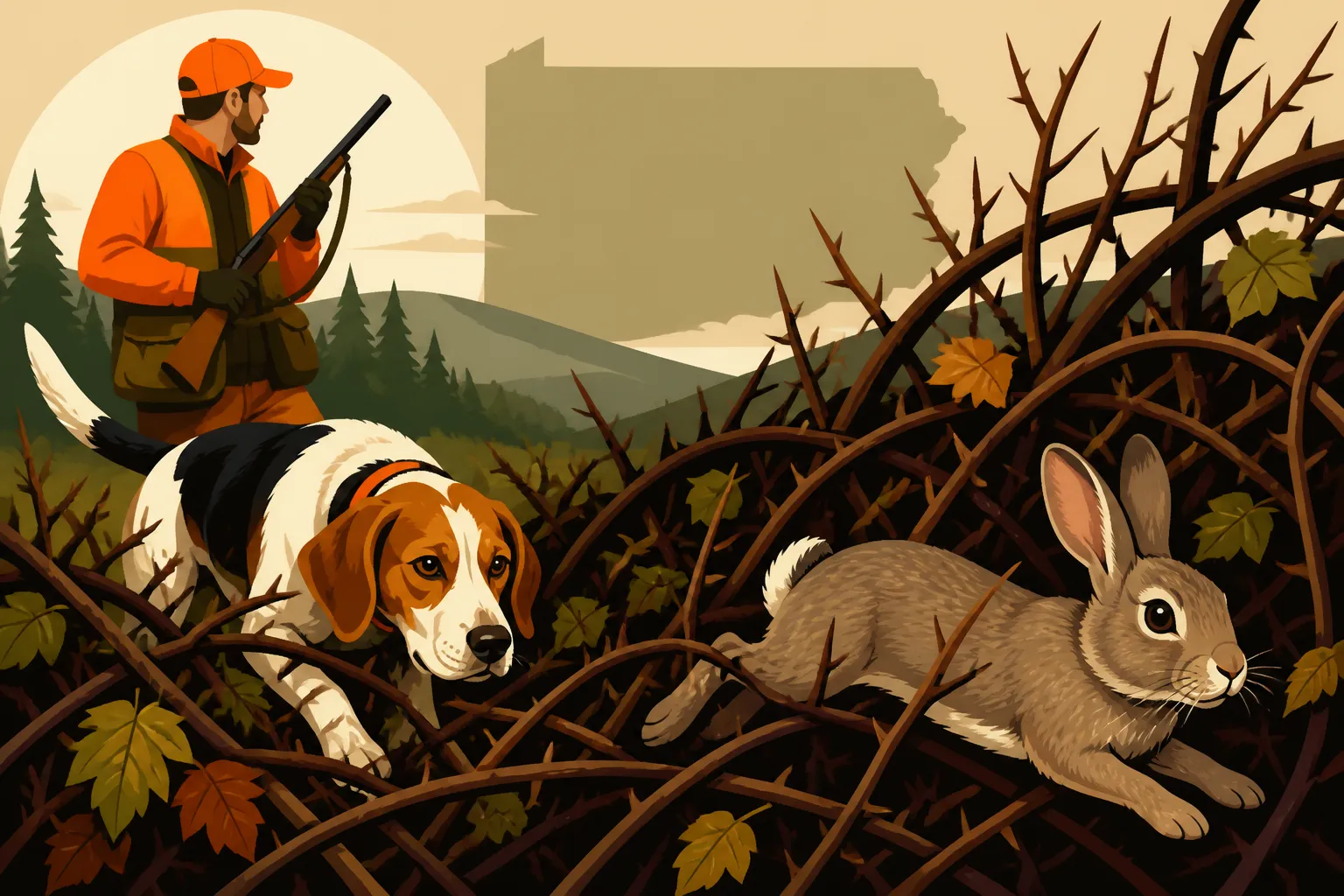
Hunting rabbits in Pennsylvania often means facing down some of the thickest, most impenetrable cover imaginable. If you've ever tried to follow a cottontail into a briar patch, you know the frustration: they simply vanish into a thorny fortress that seems specifically designed to thwart hunters. But don't despair! This guide is all about equipping you with the knowledge, the right gear, and the proven tactics to effectively pursue these elusive small game animals even in their most tangled hideouts across our great state.
Understanding Why Rabbits Live in the Toughest Cover
When you're slogging through a patch of multiflora rose that seems to grab at you from every angle, it's easy to wonder why any animal would choose to live there. But for a rabbit, these dense, thorny thickets aren't a challenge; they're a lifeline. Cottontails are prey animals, and their entire existence revolves around avoiding predators, whether that's a sharp-eyed hawk circling overhead, a slinking fox, or even a determined coyote.
Their natural instincts drive them deep into the densest available cover. Think of it from their perspective: a briar patch or a clearcut thick with regenerating saplings and greenbriar offers an unparalleled refuge. It's difficult for larger predators to navigate, limiting their speed and agility, and the sheer volume of vegetation breaks up a rabbit's silhouette, making it incredibly hard to spot. These areas also provide year-round shelter from harsh weather, be it a driving rain or a bitter winter wind. Plus, these very places often contain the young, succulent shoots, bark, and grasses that make up a significant portion of a rabbit's diet. So, for a rabbit, the nastier the cover, the safer and happier they are.
In Pennsylvania, you'll find rabbits in various types of thick cover. Look for them in overgrown fencerows that have become tangled masses of grapevines and briars, in the edges of clearcuts where timber has been harvested and new growth is exploding, around old foundations with brush piles, and in dense patches of honeysuckle. Even along farm country edges, where fields meet woodlands, you'll often find strips of thick brush that serve as rabbit superhighways and safe havens. It's truly a testament to their survival instincts that they thrive in places we find so difficult to penetrate.
Essential Gear and Tactics for Navigating the Briar Patch
Successfully hunting rabbits in thick cover is as much about preparation and persistence as it is about shooting skill. The cover itself is the primary challenge, and you need to be dressed and equipped to not just survive it, but to effectively work through it.
Dressing for Battle: Protection is Key
Forget your lightweight deer hunting apparel; rabbit hunting in briars demands rugged durability. The first rule of engagement is protection. You need to dress in layers that can withstand constant abuse from thorns, branches, and rough terrain.
- Heavy-Duty Brush Pants: These are non-negotiable. Look for pants made of tough canvas, Cordura, or other briar-proof synthetic materials. Brands like Filson, Orvis, or even some workwear brands offer excellent options. These often feature reinforced fronts, sometimes even double-layered, to protect your legs from punctures and scrapes. Trust me, a day in the briars without proper brush pants will be a painful lesson you won't soon forget. You might also consider reading about Brush Pants for Pennsylvania Briars to dive deeper into this essential piece of kit.
- Sturdy, Waterproof Boots: You'll be walking uneven ground, often wet, and thorns can pierce lesser footwear. Opt for boots with good ankle support, durable leather or synthetic uppers, and thick soles. Waterproofing is crucial for keeping your feet dry when pushing through dew-laden grass or muddy areas.
- Durable Jacket or Vest: A tough outer layer is necessary. A good upland vest offers protection for your torso, often has game bags in the back for your rabbits, and plenty of front pockets for shells, a water bottle, and other essentials.
- Eye Protection: This is critically important. Branches, thorns, and snapped twigs can easily whip back into your face. A pair of shooting glasses, even clear ones on cloudy days, will prevent serious injury.
- Gloves: Thick leather or synthetic gloves will protect your hands when pushing through thorny bushes or climbing over downed logs.
- Hunter Orange: In Pennsylvania, during small game season, you need to wear 250 square inches of fluorescent orange on your head, chest, and back. This is for your safety and the safety of anyone you're hunting with. Always check the current regulations, but a solid orange hat and vest are usually sufficient. For more details on this, you can look up Pennsylvania Hunter Orange Rules.
Firearm Choices for Close-Quarters Action
When hunting rabbits in dense cover, shots are almost always up close and personal, and often fleeting. This isn't the place for long-range precision.
- Shotguns Reign Supreme: A shotgun is the tool for the job. The spreading pattern of shot allows for quick, reactionary shots at fast-moving targets in tight spaces.
- Gauge: 12, 16, or 20 gauge shotguns are all excellent choices. A 12-gauge offers the most pellets for a wider pattern, but a lighter 20-gauge can be quicker to shoulder and less tiring to carry all day. The classic 16-gauge splits the difference nicely. A .410 can work for experienced shooters in extremely dense cover where shots are exceptionally close, but its limited pellet count and tight pattern make it less forgiving.
- Chokes: An open choke is your friend here. Improved Cylinder or even Cylinder choke patterns will give you the widest spread, increasing your chances of connecting with a rabbit that bursts out unexpectedly. Full or Modified chokes are generally too tight for the typical close-range shots encountered in briars.
- Shot Size: Size 6 or 7.5 lead shot (where legal) is usually ideal for cottontails. These sizes provide a good balance of pellet count and energy for clean kills.
- Safety Considerations: In thick cover, muzzle control is paramount. Always be aware of where your muzzle is pointing, especially when navigating dense vegetation or walking with others. Ensure your safety is on until you're ready to shoot.
| Gauge | Common Shot Sizes | Choke Recommendation | Pros | Cons |
|---|---|---|---|---|
| 12 Ga | 6, 7.5 | Improved Cylinder | More pellets, wider pattern | Heavier, more recoil, can be cumbersome |
| 20 Ga | 6, 7.5 | Improved Cylinder | Lighter, less recoil, quicker swing | Fewer pellets than 12ga |
| .410 | 6, 7.5 | Full (for tight cover) | Very light, low recoil | Very limited range, significantly fewer pellets, less forgiving |
Hunting Tactics Without a Dog
If you're hunting sans canine, success depends on patience, thoroughness, and often, a hunting partner or two.
- "Kicking" Brush Piles and Patches: This is the most direct method. Systematically walk through every piece of thick cover, literally kicking at the base of brush piles and dense bushes. Rabbits often won't flush until you're right on top of them. Walk slowly, pause frequently, and be ready to shoulder your gun instantly.
- Using Natural Funnels and Edges: Rabbits, despite their love for thick cover, will often use small trails or the edges of dense patches to move. If you're hunting with a partner, one can push the cover while the other positions themselves slightly ahead, ready to intercept a rabbit that slips out the other side or darts down an escape route. This strategy is also useful when you're Hunting Pennsylvania Farm Country Edges, where rabbits often hold tight along the transition zones.
- Patience and Persistence: You might work a patch for several minutes without a flush, only for a rabbit to jump just as you think it's barren. Be thorough, work every corner, and don't give up too quickly on a good-looking spot.
- Still-Hunting/Stalking: In some situations, especially if the cover isn't completely impenetrable, you can try to slowly still-hunt, moving a few steps and pausing to look for subtle signs like twitching ears or the glint of an eye. This takes immense patience but can be rewarding.
The Unmatched Advantage of a Good Rabbit Dog
While you can hunt rabbits without a dog, there's a reason why the beagle is practically synonymous with rabbit hunting in Pennsylvania: they are simply unmatched. A good rabbit dog transforms the experience from a laborious slog into an exhilarating chase. For many, Rabbit Hunting With Beagles in Pennsylvania is the ultimate small game pursuit.
Why Beagles are King
Beagles, and other similar small hounds, possess a combination of traits that make them perfect for rabbit hunting:
- Exceptional Scenting Ability: Their noses are incredible, allowing them to pick up the faint scent trail of a rabbit, even one that's been sitting motionless in thick cover.
- Persistence: They will follow that trail with unwavering determination, pushing through briars and brush without complaint.
- Vocalizations: This is the "music" of rabbit hunting. A beagle on a hot track will bay or "give tongue," signaling to the hunter exactly where the rabbit is and which direction it's headed. This allows you to anticipate the rabbit's movements.
- The "Circle" Trait: Rabbits, when pressed by a dog, tend to run in large circles. They instinctively want to return to their home territory. A good beagle will stick to that circle, eventually bringing the rabbit back past the hunters.
Training and Working Dogs in Thick Cover
While some beagles are born with an innate drive, proper training and experience are crucial.
- Obedience and Recall: Before anything else, your dog needs to respond to basic commands. In dense cover, a GPS collar (many of which are compatible with mapping services and data from GoHunt to show you where your dog is in relation to property lines and terrain) is an invaluable tool for tracking your dog's movements and ensuring its safety, but it doesn't replace solid training.
- Teaching Them to Push Cover: Young dogs need encouragement to get into the thick stuff. Start in smaller, less intimidating patches and praise them when they dive in.
- Understanding the Chase: Learn to interpret your dog's barks. A steady, consistent bay usually means a hot track. When the barking becomes excited or changes tone, the rabbit might be about to jump or is running hard.
- Intercepting the Circle: This is where the hunter's skill comes in. Once the dog has a rabbit circling, position yourself where you think the rabbit will reappear. This is often along an edge, a small trail, or a less dense part of the cover. Listen to the dog, watch the terrain, and be ready.
- Safety for Your Canine Partner: Dogs working in thick cover face hazards. Check their paws frequently for cuts or thorns. Keep them hydrated, especially on warmer days. Be aware of hidden dangers like old barbed wire, discarded trash, or even venomous snakes (though less of a concern in colder rabbit seasons).
The Thrill of the Chase
There's something uniquely exhilarating about hearing a beagle open up on a fresh track. The anticipation builds as the barks get closer, then fade as the rabbit circles, only to return. It's an active, engaging form of hunting that combines the dog's instincts with the hunter's strategic positioning. It’s an experience that truly connects you to the natural world.
Staying Safe and Legal While Rabbit Hunting in PA
Hunting in thick cover presents unique challenges, not just for success, but for safety and legal compliance. Always prioritize these aspects.
Hunter Orange Rules in Small Game Season
As mentioned earlier, during small game seasons in Pennsylvania, hunters are required to wear at least 250 square inches of fluorescent orange on the head, chest, and back combined, visible 360 degrees. This rule is designed to prevent accidents in areas where visibility can be limited, and hunters might be close to one another without realizing it. Even if you're hunting alone, wearing orange is a smart practice, as other users of public land might be out.
Navigating Difficult Terrain
Briar patches, old clearcuts, and overgrown areas are inherently treacherous. Be mindful of your footing. Hidden stumps, rocks, holes, and tangled vines can easily cause a fall, especially when your attention is focused on flushing game. Use a walking stick for balance if needed. Always look where you're stepping, and take your time. If hunting on steep ground, remember that Entry Routes on Steep Ground require extra caution, and the dense cover only adds to the challenge.
Shot Placement and Background
In dense cover, identifying your target and, crucially, what lies beyond it, can be incredibly difficult. A rabbit might burst out, offering only a fleeting glimpse. You must be absolutely certain of your target and that your shot has a safe background. Never shoot into a "curtain" of brush if you don't know what's behind it. If hunting with partners or dogs, always communicate your position and be aware of theirs.
Respecting Property Lines
Much of Pennsylvania's best rabbit habitat is found on private land, often along farm borders or woodlots. Always secure written permission before hunting on private property. Tools like the GoHunt app can be invaluable for pinpointing property boundaries, helping you ensure you're always on land where you have permission to hunt. Straying onto posted land, even inadvertently, can lead to serious legal trouble and damages the reputation of all hunters. Remember to consult What Pennsylvania Trespass Law Requires for specific regulations.
Pennsylvania Rabbit Seasons and Bag Limits
Pennsylvania's rabbit season typically runs for an extended period, starting in late October and often continuing into late February, with a break during the main firearms deer season. There's usually a generous daily bag limit, often four rabbits per hunter per day. Always double-check the current year's digest from the Pennsylvania Game Commission (PGC) for exact dates and limits, as these can change. You can usually find up-to-date information on Pennsylvania Small Game Seasons and Bag Limits.
Carcass Care in the Field
Once you've harvested a rabbit, proper field care is important to ensure good-tasting meat. Field dress the rabbit as soon as possible by making a small incision and removing the entrails. This allows the carcass to cool down quickly. In colder weather, this is less urgent, but on warmer fall days, rapid cooling prevents spoilage. Carry a small game bag or a pocket in your vest specifically for game. Once home, clean and butcher the rabbit, then refrigerate or freeze the meat promptly.
Happy hunting, and may your briar patches be productive!
Disclaimer
Hunting is an inherently dangerous activity. This guide provides general information and recommendations. Always consult the official Pennsylvania Game Commission hunting regulations for the current season, specific Weapon Management Unit (WMU) rules, license requirements, and safety guidelines before heading afield. Adhere strictly to all local, state, and federal laws. Hunter education is mandatory in Pennsylvania, and continuous learning and safe practices are essential for responsible hunting.