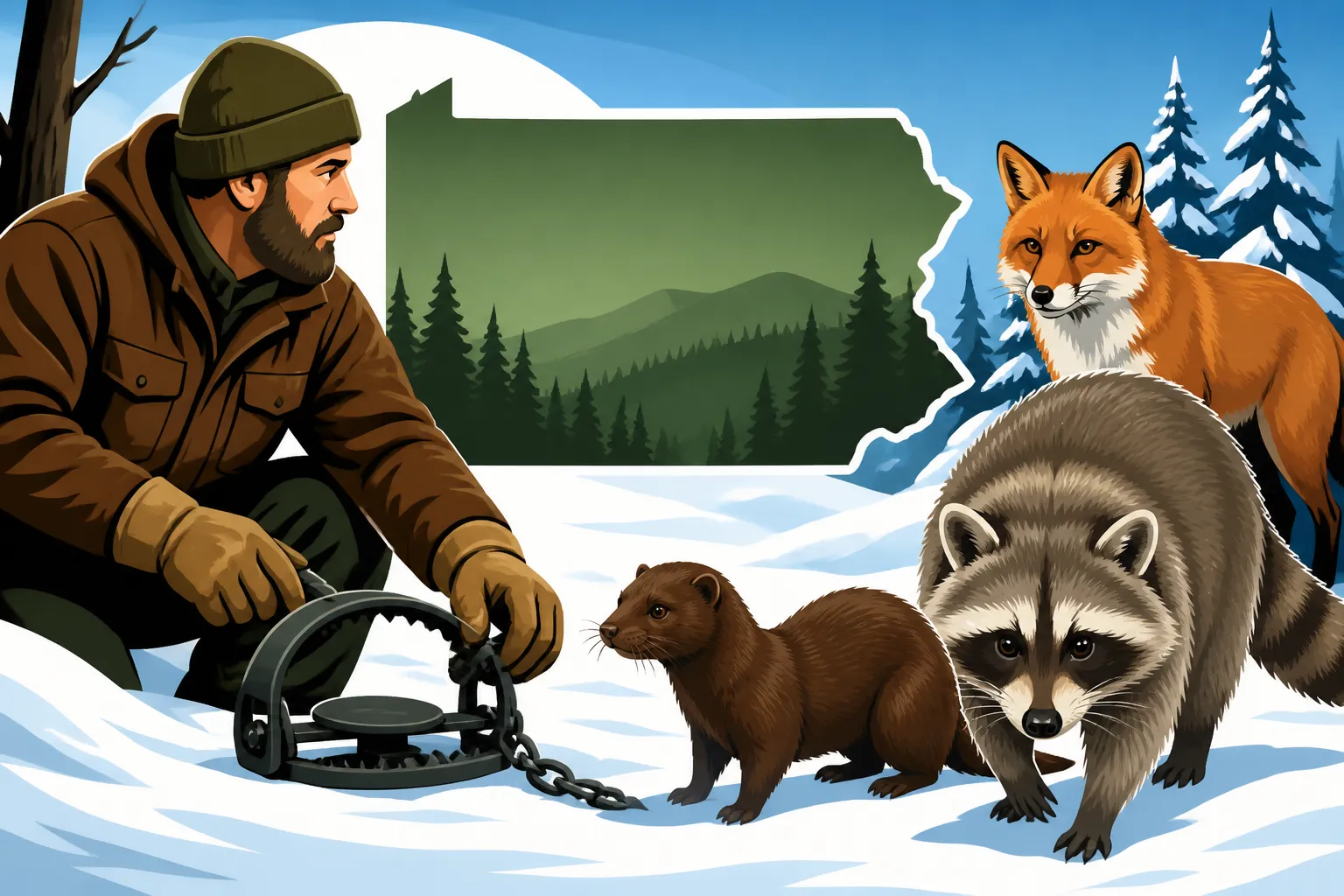
Trapping Furbearers in Winter
Winter trapping furbearers in Pennsylvania can feel like an entirely different sport than during the mild fall, presenting unique challenges that test even the most seasoned trapper. The frozen ground, heavy snow, and biting cold can be incredibly frustrating, leading to frozen traps, missed opportunities, and just plain discomfort. This comprehensive guide is here to walk you through the intricacies of navigating Pennsylvania's winter conditions, helping you adapt your techniques, understand specific regulations, and ultimately find success when the temperatures plummet.
Navigating Pennsylvania's Winter Furbearer Seasons and Regulations
Before you even think about setting steel in the frozen earth, understanding the specific seasons and complex regulations for furbearers in Pennsylvania is absolutely paramount. The rules can be quite intricate, varying by species, and even by method of take, especially once the ground freezes and snow blankets the landscape. Many of the prime furbearer seasons extend well into the depths of winter, offering fantastic opportunities if you're prepared.
Key Winter Seasons for Common Furbearers
While some furbearer seasons might start in the fall, many important ones continue through December, January, and even into February and March. For instance, the general trapping season for species like red fox, gray fox, raccoon, opossum, skunk, and weasel typically runs from late October through mid-February. This means a significant portion of your trapping efforts will be conducted in truly cold conditions. Beaver and otter seasons often open in December and continue into March, with specific dates varying by zone, especially for beaver. Mink and muskrat seasons generally mirror the fox and raccoon season, making them prime targets for water sets that must contend with ice. Coyotes, bless their cunning hearts, are open for trapping year-round, but winter often brings a prime coat and less natural food, making them more susceptible to well-placed sets.
Remember that certain species, like bobcat and fisher, require a special permit in addition to your regular furtaker license. These permits are allocated through a lottery system, and their seasons are much shorter and more geographically restricted, often falling within specific weeks in December or January. Always double-check the current Pennsylvania Game Commission digest or the Pennsylvania Furtaker Licence Requirements to confirm exact dates and any special provisions for your target species and chosen Wildlife Management Unit (WMU).
Understanding Tagging, Reporting, and Special Permits
Pennsylvania has clear rules about how and when to tag and report your furbearer harvests. For most common furbearers, you'll need to immediately tag the animal at the kill site with a tag from your furtaker license. The tag must remain with the hide until it is processed or sold. For bobcat and fisher, the process is even more stringent. If you're fortunate enough to harvest one of these elusive creatures, it must be reported to the Game Commission within 48 hours and then presented for legal review and CITES tagging by an official within a specified timeframe, usually within 10 days of harvest. This CITES tag is crucial for legal possession and sale, so don't skip this step. Beaver and otter also have specific tagging requirements and harvest limits that vary by WMU, so it’s essential to be aware of those details as well. Always refer to the most current regulations to ensure you're in compliance. Ignoring these small but crucial details can lead to fines and loss of trapping privileges, which is a headache no one wants.
Essential Gear and Techniques for Frozen Ground Trapping
Winter trapping in Pennsylvania isn't just about different seasons; it demands a completely different approach to gear and technique. The battle against frozen ground, snow, and ice is constant, and if you're not prepared, you'll spend more time fighting the elements than catching furbearers.
Specialized Tools for Frozen Earth
When the ground is hard as concrete, your standard trowel just isn't going to cut it. A robust, heavy-duty rock bar or digging tool is absolutely indispensable. You'll need something with weight and strength to break through frozen soil and ice. Some trappers even carry a small, portable torch or propane weed burner to thaw a spot for a trap bed, though this requires careful attention to safety and fire prevention, especially in dry conditions. For securing traps, you'll find that heavy-duty stakes are often not enough; earth anchors or rebar stakes driven deep with a heavy hammer are crucial for holding your traps in place against strong animals or frost heave. If you're using snares, make sure your anchor points are solid and your support wires are rigid enough to hold the snare loop open in varying snow conditions.
Another essential item for winter is waxed dirt or treated trap bedding. Regular dirt will freeze solid overnight, locking up your trap's mechanism and preventing it from firing. Waxed dirt is specially prepared soil that has been coated with paraffin wax, making it impervious to moisture and freezing. You can buy it pre-made, or many dedicated trappers make their own. The alternative is to use dry, fine peat moss, which also resists freezing, though it can absorb some moisture over time. Spreading a layer of waxed dirt or peat moss over your trap and covering it helps insulate it and keeps it operational. When using the GoHunt app for scouting, you can even mark areas where you've stored supplies like waxed dirt or extra stakes, making your winter sets more efficient.
Weatherproofing Your Traps and Sets
Beyond the trap bed, protecting your entire set from the elements is critical. Snowfall can quickly bury traps, making them ineffective. Consider using larger pan covers or sifting pans to prevent snow from accumulating directly on the trap mechanism. For water sets targeting beaver or otter, ice becomes the primary enemy. Traps need to be set deep enough to avoid surface ice, or in areas where currents keep the water open. Specialized dive poles and stable platforms are key to keeping water sets operating smoothly.
Body-grip traps, often called conibears, are fantastic for winter water sets because they are less affected by freezing ground and can be entirely submerged. However, even these can freeze into the ice if not set properly or in an active current. For land sets, many trappers will use "blind sets" where the trap is placed directly in an animal's travel path, relying on the animal to step directly into it, rather than being drawn by bait. This minimizes the exposed bait or lure that can freeze or get covered by snow. When building cubby sets, ensure the roof provides ample overhang to keep snow from piling directly onto the trap. Remember that winter means frequent checks; a frozen or snow-covered trap is a wasted opportunity and an inhumane capture device.
Effective Winter Trapping Sets for Pennsylvania Furbearers
Adapting your trapping sets to winter conditions is where skill and experience truly shine. The methods you use in October might be completely useless in January, so knowing how to modify or entirely switch up your approach is crucial.
Land-Based Sets in Snow and Frozen Ground
For species like coyotes and foxes, dirt hole sets are perennial favorites, but winter demands modifications. Instead of digging directly into frozen ground, many trappers will prepare trap beds in advance, digging out the spot before the freeze and then filling it with a mixture of dry dirt and leaves, or even a small amount of commercially available antifreeze solution (check regulations to ensure legality, as some states restrict this). When the snow flies, you can then clear the snow from your pre-dug bed and quickly install your trap with waxed dirt. Another option is a "post set" or "flat set," where a piece of wood or a chunk of bait is positioned on the surface, and a foothold trap is carefully concealed nearby, often using natural materials like leaves or dry grass that won't freeze. These sets are easier to establish on frozen ground than traditional dirt holes.
Snares become incredibly effective in winter, especially for coyotes and foxes traversing established trails or pinch points in the snow. Animals tend to stick to paths of least resistance when snow is deep. Placing snares in these natural funnels, like deer trails through thick cover or alongside logging roads, can be highly productive. Just ensure your snares are set at the correct height for the target animal and are anchored securely. You can find excellent advice on specific snare setups for different furbearers in articles like Predator and Furbearer Hunting in Pennsylvania.
Water-Based Sets in Icy Conditions
Muskrats, mink, beaver, and otter are still active in winter, often under the ice. For muskrats and mink, finding open water at spring seepages, drain tiles, or around beaver dams can be gold. Body-grip traps or small footholds can be placed at these locations. For muskrats under the ice, "push-up" sets (where a trap is placed inside an artificial feeding mound near a lodge) or setting traps on submerged runs can be effective.
Beaver and otter are powerful swimmers, and their sets require sturdy traps. Submerged body-grip traps (Conibear 330s for beaver, 220s for otter) placed in their travel lanes or at the entrances to their lodges and bank dens are common. The trick is keeping the set free of ice. Some trappers will build a "beaver hut" or "otter hut" using branches and mud over a submerged trap to create a pocket of open water. Alternatively, setting traps under thick ice using a "dive pole" where the trap is suspended below the ice, often baited with castor mound lures or fresh poplar branches, can be very productive. Just make sure your anchors are solid, and you're aware of the specific regulations for beaver and otter, as the harvest limits and tagging rules can be quite strict. Remember that mapping tools like GoHunt can help you identify creeks, beaver ponds, and potential dens from satellite imagery before you even set foot in the snow, saving valuable scouting time.
| Furbearer | Primary Winter Habitat | Preferred Winter Set Types | Common Challenges |
|---|---|---|---|
| Coyote | Open fields, wood edges, travel corridors | Dirt hole (modified), flat set, post set, snares on trails | Frozen ground, deep snow, highly wary |
| Red/Gray Fox | Woodlots, farm edges, dense cover | Dirt hole (modified), flat set, cubby sets, snares | Frozen ground, snow accumulation |
| Raccoon | Wooded stream banks, culverts, farmsteads | Cubby sets, pocket sets, dog-proof traps | Freezing bait, ice on water sets |
| Mink | Small streams, creeks, beaver dams, culverts | Pocket sets, cubby sets, bottom-edge sets | Ice formation, finding open water |
| Muskrat | Marshes, ponds, slow streams, under ice | Push-up sets, diving sets, bank den sets | Finding open water, freezing solid |
| Beaver | Rivers, large streams, ponds, lodges | Submerged body-grip sets, castor mound sets | Thick ice, strong current, heavy traps |
| Otter | Rivers, large streams, large ponds | Crossover sets, bank slides, submerged body-grip sets | Thick ice, strong current, finding active areas |
| Bobcat | Remote forests, dense cover, rocky outcrops | Cubby sets, walk-through sets (snare or foothold) | Low population density, special permits |
| Fisher | Dense woodlands, hemlock thickets | Cubby sets, elevated body-grip sets | Low population density, special permits |
Overcoming Common Winter Trapping Challenges
No matter how prepared you think you are, winter trapping will throw curveballs. Anticipating these challenges and having a plan to deal with them is part of the game.
Dealing with Frozen Ground and Snow Accumulation
The primary challenge of winter land trapping is undoubtedly frozen ground. As discussed, pre-making trap beds or using specialized tools like rock bars and thaw torches helps. Another trick is to use "dry sets" which rely on covering the trap with dry, anti-freezing material like waxed dirt or peat moss. You can even create an elevated bed using a wooden platform or a large flat rock, placing your trap on top and then camouflaging it with natural materials that won't freeze to the trap.
Snowfall itself is a double-edged sword. Fresh snow can provide excellent camouflage for your sets and helps with scent control, but too much snow can bury a trap, render it inoperable, or make it impossible to find. After a heavy snow, you might need to visit your trap lines specifically to clear snow from your sets or reset them entirely. Some trappers use small flags or markers (well-hidden from casual observers) to help locate buried traps under deep snow, but be mindful of regulations regarding markers on public lands like those detailed in Scouting Pennsylvania Public Land Before Season. Scent plays a huge role in winter as well; animals are often more hungry and less pressured, but cold weather can diminish the throw of lures and baits. Using stronger, more persistent lures, or those designed for cold weather, can make a difference.
Battling Ice on Waterways and Equipment Freeze-Ups
For water trappers, ice is the relentless adversary. When conditions are variable, open water can freeze over quickly, locking up traps or making access impossible. Regularly checking water sets is critical. If surface ice is forming, you might need to break it and reset deeper, or move to areas with stronger currents or spring seeps that remain open. Using heavier anchors for your traps in running water is also essential, as ice flows can drag lighter setups away.
Equipment freeze-ups aren't just for water traps. Even land traps, if not properly bedded with waxed dirt or peat moss, can freeze solid. Your trap springs can become sluggish in the extreme cold, so ensure they are well-maintained and lubricated with a cold-resistant lubricant. Carrying a small bottle of denatured alcohol can help de-ice pan mechanisms or trigger components in a pinch. Finally, don't forget yourself! Dressing in layers, with good insulated boots and waterproof outerwear, is not just about comfort; it's about safety. Hypothermia is a serious risk when you're out in the elements checking traps for hours.
Staying Safe and Ethical in the Winter Woods
Beyond the technical aspects of trapping, it's vital to prioritize safety and ethical practices, especially in the harsh winter environment. This includes knowing your limits, being prepared for emergencies, and ensuring humane treatment of animals.
Personal Safety in Harsh Conditions
Winter in Pennsylvania's wilder areas can be unforgiving. Always inform someone of your trapping plans, including your route and estimated return time. Carry a fully charged cell phone (and a portable charger, as cold drains batteries quickly), a first-aid kit, and emergency supplies like extra warm clothing, a fire starter, and high-energy snacks. OnX or the GoHunt app are invaluable for navigation, especially if unexpected snow covers familiar landmarks. Dress for success with multiple layers, focusing on wool or synthetic materials that wick moisture and insulate even when wet. Good, waterproof, insulated boots are non-negotiable for keeping your feet warm and dry. Falling into icy water or getting lost in a blizzard can quickly turn dangerous.
Ethical Trapping and Responsible Practices
Ethical trapping means checking your traps frequently, ideally every 24 hours. This minimizes the animal's stress and exposure to the elements, especially in freezing temperatures. Knowing how to quickly and humanely dispatch a captured animal is also a critical skill every trapper must master. Be mindful of non-target captures; using species-specific baits, lures, and trap sizes can help. If you do catch a non-target animal, know the proper release techniques if it's not a legal furbearer or is out of season.
Always adhere to trap setback distances from roads, trails, and dwellings. These regulations are designed for public safety and to maintain a positive public image for trapping. Responsible trappers are stewards of wildlife, contributing to management efforts and providing valuable insights into furbearer populations. By following all regulations, practicing humane trapping, and sharing your knowledge, you help ensure that the tradition of trapping continues in Pennsylvania.
Disclaimer
Please note that hunting and trapping regulations in Pennsylvania are subject to change. Always consult the most current Pennsylvania Game Commission hunting and trapping digest or their official website before heading afield. This guide is for informational purposes only and does not supersede official regulations.