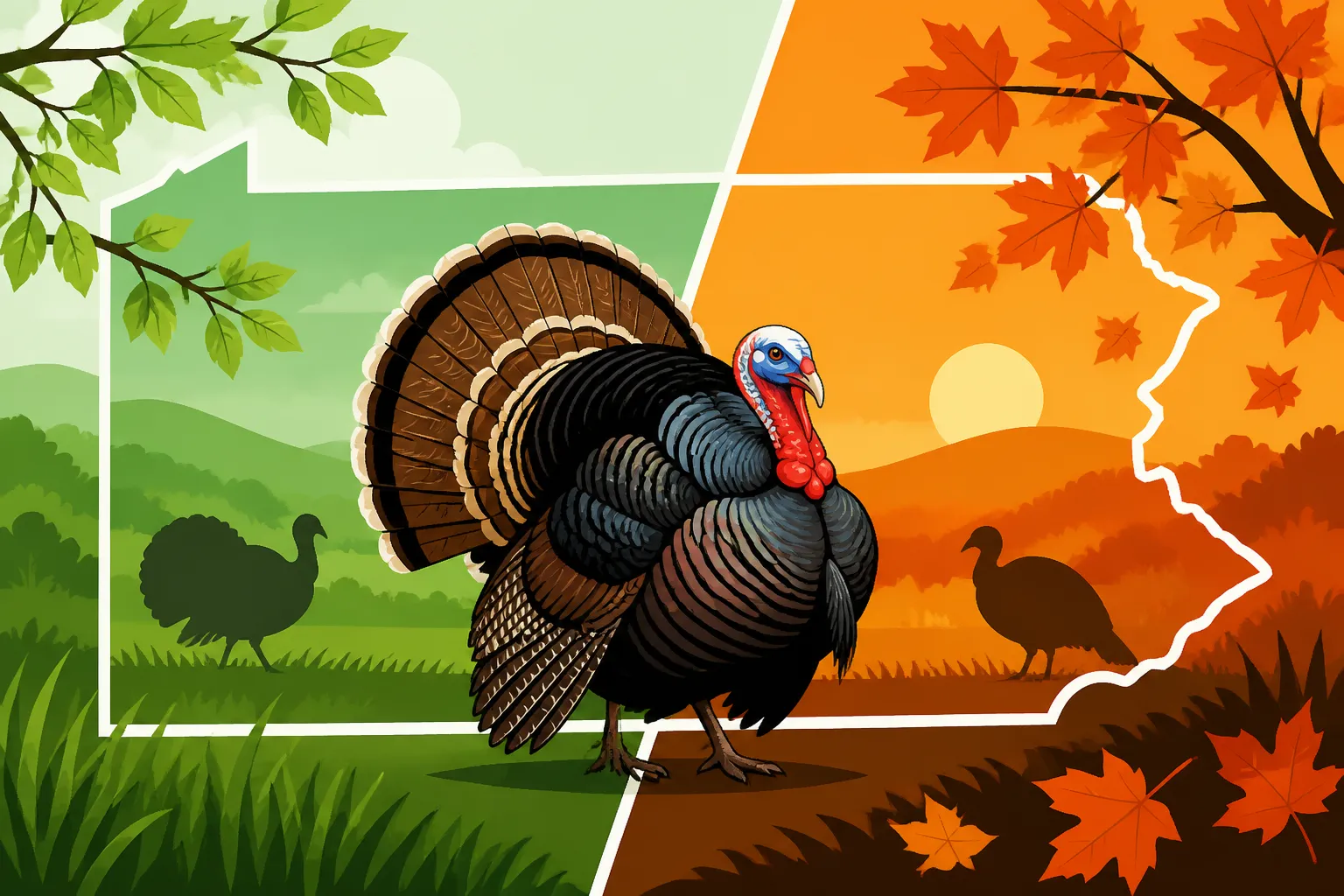
Pennsylvania Spring and Fall Turkey Seasons
There’s nothing quite like the sound of a gobbler hammering at dawn, or the subtle chatter of a fall flock working its way through the timber. But let’s be honest, trying to keep up with Pennsylvania’s wild turkey seasons can feel like deciphering ancient scrolls. The dates shift, the rules change by region, and it’s easy to get tangled up in what’s legal when. This guide is here to untangle all that confusion, giving you a clear, comprehensive breakdown of both spring and fall turkey seasons in the Keystone State, so you can hunt with confidence and enjoy every moment in the woods.
Understanding Pennsylvania's Wild Turkey Populations and Management
For many of us, wild turkeys are more than just game birds; they're an iconic symbol of Pennsylvania's diverse wildlife. But their presence in such huntable numbers today wasn't always a given, and their continued health relies on careful management. It’s a dynamic balance, and understanding it can help us appreciate the seasons we cherish.
The State of the Pennsylvania Turkey Flock
Pennsylvania boasts a robust wild turkey population, a true conservation success story. Not too long ago, these magnificent birds were nearly wiped out due to habitat loss and unregulated hunting. However, dedicated efforts by the Pennsylvania Game Commission (PGC), including trap-and-transfer programs and sound habitat management, brought them back from the brink. Today, turkeys thrive across much of the state, from the sprawling forests of the northern tier to the agricultural landscapes of the southeast.
However, it's not all smooth sailing. Just like any wildlife population, turkeys face challenges. Habitat fragmentation due to development, severe weather events impacting nesting success, and diseases like Lymphoproliferative Disease (LPD) or Avian Influenza can all have localized effects on numbers. When you're out there, you might notice fluctuations; one year birds are everywhere, the next they seem elusive. This isn't usually a sign of overall crisis, but rather the natural ebb and flow influenced by these factors. Tracking these trends is vital for hunters who want to understand the bigger picture. The PGC uses various metrics, including poult-to-hen ratios, to gauge reproductive success and overall flock health. These numbers directly influence season lengths and bag limits, which sometimes creates frustration for hunters who feel a season is too short, but it's always rooted in the best available science to ensure sustainable populations for generations to come.
How the PGC Manages Turkey Seasons
The Pennsylvania Game Commission takes a science-based approach to managing wild turkey populations, which is why the season dates and regulations can sometimes feel intricate. Their goal is to provide ample hunting opportunities while ensuring the long-term health and stability of the turkey flock. This management strategy involves extensive data collection throughout the year. PGC biologists conduct spring gobbler harvest surveys, fall turkey harvest data analysis, and crucially, summer brood surveys. These surveys, often aided by citizen scientists, help estimate the number of poults (young turkeys) surviving to adulthood, providing a snapshot of reproductive success and informing population estimates.
The state is divided into 23 Wildlife Management Units (WMUs), and turkey management, particularly in the fall, is often tailored to these specific regions. What's allowed in one WMU might differ significantly from another, reflecting local population densities, habitat conditions, and historical harvest data. This nuanced approach allows the PGC to be flexible, shortening or eliminating fall seasons in areas where turkey numbers might be struggling, or expanding opportunities where populations are robust. It can be a pain to remember which WMU you're in and what its specific rules are, but it's all designed to keep our turkey hunting heritage strong. This regional variation is a key reason why you absolutely have to check the current digest every year and maybe even use a mapping tool like GoHunt to pinpoint WMU boundaries when planning your hunt.
Diving Deep into the Spring Gobbler Season
Ah, spring gobbler season! For many, it's the highlight of the hunting year. That electric feeling of a cold morning, listening for that first thundering gobble to break the silence, is truly special. But to enjoy it responsibly and legally, you need to be dialed into the specifics of Pennsylvania's regulations.
Key Dates and Season Structure for Spring
Pennsylvania's spring gobbler season is generally a bit more straightforward than the fall hunt, but it still has its nuances. Typically, the season kicks off with a dedicated youth hunt day, usually a Saturday in late April. This is a fantastic opportunity for young hunters, often accompanied by a mentor, to get out there before the general season pressure sets in. It provides a less competitive environment, allowing them to focus on learning and experiencing the thrill of the hunt. You can always find the specific Youth Gobbler Hunt Date in the annual digest, and it’s a great way to introduce the next generation to the woods.
Following the youth day, the general statewide spring gobbler season usually runs for about four to five weeks, stretching from early May into late May or early June. During this period, hunting hours typically begin at one-half hour before sunrise. This timing is critical, giving hunters just enough light to get to their setup and be ready for the first roost gobble, but not so early that it interferes with the turkeys' natural morning routine. For the majority of the season, hunting historically ended at noon, giving birds a break in the afternoon. However, the Pennsylvania Game Commission has adjusted this in recent years, extending hunting hours to sunset for specific periods during the season. It’s always important to check When Spring Gobbler Hours Extend to Evening to ensure you're hunting within legal hours, as this can change. These extended hours offer more flexibility, especially for those who might struggle to get out early or want to try some afternoon scouting for the next morning.
Licensing and Permitting for Spring Turkeys
To participate in Pennsylvania's spring gobbler season, your first step, as with any hunting in the state, is to secure a general Pennsylvania hunting license. This is your baseline permit and covers most small game and the primary deer and turkey seasons. However, the spring gobbler season has a unique requirement: your general hunting license only comes with one spring turkey tag, allowing you to harvest one bearded bird. If you're looking for the chance at a second spring gobbler, you’ll need to purchase a separate Pennsylvania Special Wild Turkey Licence Cost. This additional tag allows you to harvest a second bearded turkey during the spring season. It's a fantastic option for dedicated turkey hunters who want to maximize their time afield and perhaps fill their freezer with another delicious wild bird.
For new hunters, or those looking to introduce someone to the sport, Pennsylvania also offers mentored youth and mentored adult permits. These programs allow individuals who haven't completed hunter education to hunt under the direct supervision of a licensed adult. It’s a crucial pathway for getting new blood into hunting, and turkey season is an excellent time to use these permits. Just remember that mentored hunters must adhere to all the same bag limits and regulations as fully licensed hunters, and their mentor must always be within arm's reach. Always consult the current hunting digest for the precise rules and requirements for all licenses and permits, as they can be updated annually.
Bag Limits, Hours, and Other Rules
The bag limit for spring gobbler season in Pennsylvania is fairly straightforward: one bearded turkey. This means hens are off-limits, and you're specifically targeting the male birds, or sometimes an older hen with a beard (which is legal). That first bearded bird is tagged using the harvest tag that comes with your general hunting license. If you've purchased the special wild turkey license, you can then harvest a second bearded bird using that additional tag. It’s crucial to understand that even with two tags, you can only harvest one bird per day. So, no double-headers in the same morning!
As for hunting hours, this is where it pays to be vigilant and check the most current regulations. Historically, spring gobbler hunting concluded at noon for the entire season. This was a long-standing tradition aimed at reducing pressure on breeding birds and allowing them to resume normal activities in the afternoon. However, in recent years, the PGC has experimented with and implemented extended hunting hours, allowing hunting until sunset for a portion of the season. For example, some years have seen extended hours begin in mid-May and continue through the season's close. This change has been met with mixed feelings by hunters, but it does offer more flexibility for those who can't get out early or want to try some afternoon calling.
Another vital rule to remember is the prohibition on Sunday hunting for turkeys for much of the season. While some Sunday Hunting Rules in Pennsylvania have changed for deer and bear, migratory bird and turkey hunting generally remain closed on Sundays, with a few exceptions. It's essential to consult the current digest each year for specific Sunday hunting exceptions related to turkeys. As always, mandatory hunter orange rules vary by season and location, so always be aware of what is required when traveling to and from your hunting location, even if you don't need to display it while stationary and hunting.
Navigating Pennsylvania's Fall Turkey Seasons
While spring gobbler hunting gets a lot of the spotlight, the fall turkey season offers a completely different, yet equally rewarding, experience. It's a time when flocks are together, and the strategies shift from calling in lovesick gobblers to breaking up family groups and trying to call them back together. But the fall season is also where the regulations can become a bit more complex, varying considerably by region.
Varied Fall Season Lengths by WMU
Unlike the fairly uniform spring season, Pennsylvania's fall turkey season is a patchwork of dates and durations, meticulously designed by the PGC based on regional turkey populations. This means you absolutely cannot assume the season length or even if there is a season will be the same across the state. Some Wildlife Management Units (WMUs) in areas with robust and healthy turkey populations might enjoy a longer season, often split into several segments throughout October and November. These longer seasons provide more opportunities and flexibility for hunters.
Conversely, other WMUs, particularly those where turkey populations are struggling due to habitat loss, poor reproduction in recent years, or other environmental factors, might have a much shorter season – sometimes just a few days or a week. And in some extreme cases, a WMU might have no fall turkey season at all. This highly localized approach is critical for sustainable management, but it places a significant responsibility on the hunter to know the exact regulations for their chosen hunting grounds. It's not uncommon for a hunter to find that the WMU next door has a completely different set of dates. Using an online mapping tool, like the one offered by GoHunt, that clearly overlays WMU boundaries can be incredibly helpful here. Don't just rely on general knowledge; always double-check the Pennsylvania Fall Turkey Seasons by WMU in the current digest before heading out. Ignoring these differences could lead to a costly mistake.
Tagging and Reporting Requirements for Fall
When it comes to tagging a fall turkey in Pennsylvania, the process largely mirrors the spring season, but with some key differences in what constitutes a legal bird. During the fall season, the bag limit is generally one turkey, regardless of sex or beard status. This means you can harvest a hen or a jake (young male) or a mature gobbler. You will use one of the two tags that come with your general hunting license – often referred to as the "statewide" deer/turkey tag. If you purchased the Special Wild Turkey License, that tag also becomes valid for a second fall turkey, allowing you to harvest two turkeys in total during the fall season (or one in spring and one in fall, or two in spring and none in fall if you managed that).
Just like in the spring, once you've harvested a turkey, it must be legally tagged immediately after the kill. This involves filling out the appropriate information on your harvest tag – typically the date, time, and WMU of harvest – and attaching it securely to the bird. The tag must remain affixed until the bird is processed for consumption or taxidermy. Reporting your harvest is also a mandatory step. You can report your turkey online through the PGC website, via phone, or by mail. It’s crucial to report your harvest promptly, generally within 10 days of the kill. This data is invaluable to the PGC in assessing population health and making future management decisions. Familiarize yourself with the full Pennsylvania Turkey Tagging and Reporting requirements to ensure compliance and contribute to effective wildlife management.
Understanding Fall Bag Limits and Methods
The fall turkey bag limit in Pennsylvania is typically one turkey per hunter per fall season, irrespective of sex or age, using your general hunting license tag. If you've purchased the special wild turkey license, you can take a second turkey during the fall season, again, any sex or age. The key distinction from spring is that the "bearded bird" rule does not apply in the fall; any legal turkey is fair game. This means you're often targeting the general flock dynamics rather than just the mature gobblers.
The methods for hunting fall turkeys are also distinct. While calling in a dominant gobbler is the hallmark of spring, fall hunting often revolves around locating flocks, dispersing them, and then using assembly calls, clucks, and lost yelps to call them back together. This "break-up and call-back" strategy is highly effective when done correctly. Hunters will often try to sneak close to a visible flock, then run in, shouting and making noise to scatter the birds in all directions. Once the birds have scattered, the hunter finds a strategic spot to sit, ideally within earshot of where the flock scattered, and then begins to call. The goal is to imitate the plaintive cries of a lost turkey trying to re-establish contact with its family group. The Kee-Kee Run call, mimicking the whistle of a young lost turkey, is particularly effective in the fall.
Another popular method is still-hunting, slowly moving through the woods, stopping frequently to listen and look for sign. Turkeys are constantly scratching for acorns, beechnuts, and other food sources in the fall, leaving tell-tale signs on the forest floor. Finding fresh scratchings can lead you to a feeding flock. Unlike spring, where decoys are almost universally used, they are less common in fall turkey hunting, though some hunters might use them in specific scenarios to draw in a reassembling flock. Always ensure your chosen hunting method aligns with the legal requirements outlined in the current Pennsylvania Hunting and Trapping Digest.
The Importance of the Special Wild Turkey License
For dedicated turkey hunters in Pennsylvania, the Special Wild Turkey License isn't just an optional extra; it's a game-changer that significantly expands your opportunities afield. Understanding its purpose and how to utilize it effectively is key to maximizing your turkey hunting success, whether in spring or fall.
When and Why You Need It
The Special Wild Turkey License, as the name suggests, is specifically designed for those who wish to harvest an additional wild turkey beyond what the general hunting license allows. Your standard hunting license provides one spring gobbler tag and one fall turkey tag. This is perfect for many hunters who are happy with one bird per year. However, if you have your sights set on a second spring gobbler, or if you want the flexibility to harvest a second turkey during the fall season, then this special license becomes absolutely necessary. It's an extra opportunity, a second chance, or simply more time in the field chasing these wary birds.
The primary reason to purchase this license is simple: it allows you to fill a second tag. In the spring, this means another bearded gobbler. Imagine putting in the effort, finding a new area, and having another opportunity to call in a bird after you’ve already filled your first tag. In the fall, it provides for an additional turkey of any sex or age, giving you more options to pursue scattered flocks. The cost for this license is generally quite reasonable, usually around $20-25 for residents, and it's well worth the investment for the added hunting days and potential harvest. You can buy it when you purchase your initial hunting license or at any time afterward, though it’s wise to get it early to avoid any last-minute rushes. Understanding The Special Wild Turkey Licence and its modest cost makes it an easy decision for many avid turkey hunters.
Maximizing Your Opportunities with a Second Tag
Having a second turkey tag, courtesy of the Special Wild Turkey License, opens up a world of strategic possibilities and can genuinely increase your overall success rate. Without it, once you tag your first bird, your spring season is effectively over, or your fall season is limited to one harvest. But with that second tag in your pocket, you can hunt with a different mindset.
In the spring, this means you can afford to be more selective with your first bird, perhaps holding out for that truly dominant gobbler you've been scouting. Once you fill that tag, you still have the option to pursue another, potentially on different public land or a new private property, or even a different WMU if the dates align. It encourages continued participation and allows you to enjoy more of the season. For instance, after harvesting a bird in a heavily pressured area, you might use your second tag to explore new territory, perhaps leveraging resources like GoHunt to scout less-traveled State Game Lands or State Forests.
In the fall, the second tag provides similar flexibility. If you've been successful in breaking up a flock and calling in a bird early in the season, you have the option to pursue another flock later, or perhaps focus on a different WMU with a different season structure. It’s particularly valuable for hunters who enjoy sharing their harvest with family and friends or who simply love the unique challenge of fall turkey hunting. This extra tag isn't just about bagging another bird; it's about extending your time in the woods, refining your skills, and making the most of Pennsylvania's diverse turkey hunting opportunities.
Common Challenges and Hunter Responsibilities
Turkey hunting in Pennsylvania is a cherished tradition, but it’s not without its challenges. From navigating complex regulations to upholding ethical standards, every hunter plays a crucial role in maintaining the integrity of the sport and ensuring its future.
Navigating WMU Boundaries and Regulations
One of the most persistent frustrations for Pennsylvania hunters, especially those who hunt in multiple regions or close to WMU borders, is the inherent complexity of Wildlife Management Unit boundaries and their associated regulations. While the WMU system is essential for managing game populations effectively across diverse habitats, it can feel like a bureaucratic labyrinth at times. Imagine having fantastic turkey habitat just across the road, only to find out it's in a different WMU with completely different fall turkey season dates or antler restrictions if you're hunting deer. This isn't just a minor inconvenience; it can be a real headache, leading to accidental violations if you're not paying extremely close attention.
The best way to combat this challenge is to be meticulously prepared. Before every hunting trip, especially if you're venturing into unfamiliar territory, consult the latest Pennsylvania Hunting and Trapping Digest. Cross-reference the WMU map with your intended hunting location. Digital tools have become invaluable here. Platforms like GoHunt, for example, offer detailed mapping overlays that clearly show WMU boundaries, often right on your phone, making it easier than ever to see precisely which regulations apply to your current position. Don't rely on memory or hearsay; the WMU rules for Pennsylvania Fall Turkey Seasons by WMU or even specific deer season structures can vary greatly. Taking the time to understand these boundaries and the specific rules for your hunt area is a fundamental hunter responsibility and prevents unnecessary legal trouble.
Ethical Hunting and Public Perception
Beyond the legalities, every Pennsylvania turkey hunter carries the weight of ethical responsibility and the impact our actions have on public perception. The future of hunting relies heavily on how we present ourselves and conduct our sport. Ethical hunting goes far beyond simply following the law; it encompasses respect for the game, the land, and other users of the outdoors. This means practicing good sportsmanship, knowing your effective range for a clean kill, and taking responsible shots. No one wants to wound a bird, especially when trying to bring it in with careful calling.
Safety is paramount, especially when hunting such a popular species. Turkey hunting, particularly in the spring, requires extreme caution due to the use of camouflage and calling. Positive identification of your target is non-negotiable. Never shoot at sound or movement. It is your responsibility to ensure you are shooting at a legal turkey and nothing else. Knowing the Legal Shooting Hours helps ensure you have sufficient light to make a positive ID. Furthermore, respecting private property and landowners is crucial. Always obtain permission before hunting on private land, and leave no trace behind. The behavior of a few can unfortunately cast a shadow on the entire hunting community. By upholding the highest standards of ethics and safety, we not only ensure a positive experience for ourselves but also secure the future of turkey hunting in Pennsylvania for generations to come. And if you ever witness unethical or illegal behavior, don't hesitate to do your part and report it to the Pennsylvania Game Commission; they have a dedicated system for Reporting a Poacher in Pennsylvania.
Preparing for Your Pennsylvania Turkey Hunt
Success in the turkey woods, whether chasing spring gobblers or fall flocks, often comes down to preparation. It's more than just having the right gear; it's about understanding the birds, their environment, and making sure you're ready for whatever the Pennsylvania woods throw at you.
Scouting and Habitat Clues
Effective scouting is arguably the most critical component of a successful turkey hunt, and it differs significantly between spring and fall. In the spring, your focus should be on locating roosting sites and identifying areas with good gobbler activity. This often means early morning drives or walks before season, listening for those tell-tale gobblers sounding off from their roost trees. Look for large trees, often evergreens or tall hardwoods, along ridge lines or near creek bottoms, where turkeys prefer to spend the night. Fresh droppings and wing feathers under these trees are clear indicators of an active roost. During the day, look for strut zones – open areas where gobblers display for hens – and travel corridors between feeding areas and roosts. Knowing Where Pennsylvania Gobblers Roost is half the battle.
Fall scouting is a bit different. While roosts are still important, the primary focus shifts to food sources. Turkeys are constantly foraging in the fall, so identifying areas with abundant acorns, beechnuts, dogwood berries, or even agricultural waste grains in farm country will put you on birds. Look for fresh turkey scratchings in the leaf litter, which will be much larger than squirrel or deer scratchings. Flocks will often move predictably through the woods, following mast crops. Identifying these patterns can help you get ahead of them or predict where they’ll be. You’ll also want to find good areas for breaking up a flock, perhaps a clearing or a ridge top that offers good visibility. Understanding these habitat clues, combined with checking satellite imagery on a platform like GoHunt, can dramatically increase your chances of finding birds during either the Fall Turkey Tactics in the Big Woods or in farm country.
Essential Gear and Call Selection
Having the right gear and, crucially, knowing how to use it, is non-negotiable for turkey hunting. Your shotgun is paramount, and while 12-gauge is most common, 20-gauge shotguns are also highly effective, especially with modern tungsten loads. Pattern your gun with your chosen choke and load at realistic turkey hunting distances (20-40 yards) well before the season. You need to know exactly how your gun performs. A good turkey vest is invaluable, providing pockets for calls, shells, water, and often a comfortable padded seat to keep you still and quiet during those long waits. For a deeper dive, check out a guide on Turkey Gear for a Pennsylvania Spring.
Call selection is highly personal, but most hunters carry a variety. For spring, a diaphragm call is essential for hands-free calling when a gobbler is close. Slate or glass calls offer realistic hen sounds and are great for working birds at mid-range. A box call is excellent for loud, clear yelps that carry across open terrain. Don't forget a locator call (owl hooter, crow call) to get a gobbler to reveal his position without directly calling to him. In the fall, your call selection might lean more towards kee-kee runs and assembly calls, mimicking lost young birds. Practice, practice, practice! Turkeys have incredible hearing, and sounding realistic makes all the difference. Beyond these, full camouflage (including face mask and gloves) is a must, as turkeys have incredibly keen eyesight. Bring binoculars to scan for approaching birds, and a comfortable pair of boots for all the walking.
Best Practices for Success in Both Seasons
Successful turkey hunting in Pennsylvania isn't just about showing up; it's about understanding turkey behavior, adapting your tactics, and making smart decisions in the field. Both spring and fall offer unique challenges and rewards, demanding different strategies from the hunter.
Spring Gobbler Tactics That Work
Spring gobbler hunting is all about deception and patience. Once you've located a gobbler, whether on the roost or after he's pitched down, the goal is to convince him to come to you. Start by setting up quickly and quietly in a spot with good visibility and a clear shot lane, ideally with something solid at your back to break up your outline. Use subtle calls initially, mimicking a hen just waking up and getting off the roost. The key is to sound confident but not overbearing. Many hunters find success with a soft tree yelp to imitate Calling a Pennsylvania Gobbler Off the Roost.
Patience is a virtue. Gobblers are notorious for "hanging up" – getting within sight but refusing to come the last few yards. They expect the hen to come to them. This is where strategic decoy placement can be critical. A jake and hen decoy setup can sometimes be enough to draw that reluctant gobbler into range. If he hangs up, resist the urge to move too quickly. Try varying your calls, soft clucks and purrs can sometimes seal the deal. If he eventually walks off, you might try a wide flanking maneuver to get ahead of him and set up again. Remember, gobblers have excellent eyesight, so remaining perfectly still is paramount. A good setup, often against a big oak or a thick pine, is crucial for breaking up your silhouette and providing cover. For more specific advice, consider resources on Setting Up Against a Big Oak.
Fall Turkey Strategies
Fall turkey hunting demands a completely different approach, centered around the flock dynamics rather than the individual gobbler's desire to breed. The most common and often most effective fall tactic is the "break-up and call-back" method. The idea is to locate a flock, then aggressively move in to scatter them as widely as possible. Running, shouting, and making a racket will send the birds flying and running in every direction. This creates a natural instinct for the scattered birds to want to reassemble.
Once the flock is broken, find a quiet spot to set up, ideally near where the birds scattered, or in an area where they are likely to reassemble (like a common travel corridor or feeding area). Then, wait patiently for 15-30 minutes before you start calling. Start with soft, plaintive yelps, clucks, and the distinctive "kee-kee run" of a lost young turkey. As individual birds or small groups begin to filter back, they will often respond to your calls, looking for their flock mates. Be ready, as fall turkeys can come in silently and quickly, often from unexpected directions.
Still-hunting is another effective fall strategy. This involves moving very slowly and quietly through the woods, stopping frequently to scan, listen, and glass for turkeys. Fall turkeys are constantly scratching for food, and those sounds can carry a long way. Use your ears as much as your eyes. When you spot a flock, you can either try to get ahead of them for an ambush, or attempt to scatter them for a call-back setup. Remember that fall turkeys are often less vocal than their spring counterparts, so keen observation skills are essential. Resources like Breaking Up a Fall Turkey Flock can offer more nuanced advice for these scenarios.
Summary of Pennsylvania Turkey Seasons
Understanding the differences between spring and fall turkey seasons in Pennsylvania is crucial for any hunter. Here's a quick overview of the key distinctions:
| Feature | Spring Gobbler Season | Fall Turkey Season |
|---|---|---|
| Primary Target | Bearded Gobblers (and bearded hens) | Any turkey (gobbler, hen, jake, jenny) |
| Motivation | Breeding instinct (gobblers seeking hens) | Flocks reassembling after dispersal, foraging |
| Season Length | ~4-5 weeks, statewide (youth day + general season) | Varies by WMU: few days to several weeks, or closed |
| Bag Limit | One bearded bird (general tag), second with special | One turkey (general tag), second with special |
| Hunting Hours | Typically 1/2 hour before sunrise to noon (some extensions possible late season) | 1/2 hour before sunrise to sunset (WMU specific) |
| Key Tactics | Decoy use, close-range calling (yelps, clucks, purrs) | Break-up and call-back, still-hunting, kee-kee runs |
| Key Calls | Yelp, cluck, purr, gobble, cut, lost yelp, locator | Kee-kee run, assembly yelp, cluck, lost yelp |
| Licensing | General Hunting License + optional Special Wild Turkey License for 2nd bird | General Hunting License + optional Special Wild Turkey License for 2nd bird |
| Mandatory Orange | Typically not required while stationary, but may be required while moving to/from stand | Varies (check digest annually for specific requirements) |
Disclaimer
The information provided in this guide is intended for general informational purposes only and is subject to change. Hunting regulations, season dates, and licensing requirements in Pennsylvania are set by the Pennsylvania Game Commission and can be updated annually. It is the hunter's sole responsibility to consult the most current official Pennsylvania Hunting and Trapping Digest and relevant PGC publications before participating in any hunting activity. Failure to do so may result in legal penalties.