Deer Management Assistance Program Permits
Hunting in Pennsylvania often presents a unique set of challenges, especially when it comes to managing deer populations on specific tracts of land or securing enough antlerless tags for a productive season. Many hunters find themselves wanting to help landowners with deer management efforts, or simply desire more opportunities to fill their freezers. This guide will meticulously break down the Pennsylvania Game Commission's Deer Management Assistance Program (DMAP), explaining exactly what these permits are, how they work, and how you, as a hunter, can utilize them to your advantage while contributing to sound wildlife management.
Understanding the Deer Management Assistance Program DMAP
The Deer Management Assistance Program, or DMAP, is a crucial tool developed by the Pennsylvania Game Commission (PGC) to help landowners and public land managers address localized deer management needs. It's designed to provide additional antlerless harvest opportunities on specific properties where deer populations may be impacting agricultural crops, forest regeneration, or other ecological objectives. Think of it as a targeted approach to deer management that supplements the broader, Wildlife Management Unit (WMU)-wide antlerless license system.
What DMAP Permits Are and How They Work
At its core, a DMAP permit is an additional antlerless deer tag specifically valid for a designated DMAP property. Unlike your general WMU-specific antlerless license, which allows you to harvest an antlerless deer anywhere within that WMU (provided you have permission), a DMAP permit is tied to a particular piece of land. This distinction is vital. It means that if you possess a DMAP permit for, say, State Game Lands (SGL) 100 DMAP Unit A, you can only use that permit to harvest an antlerless deer on that specific SGL DMAP unit.
The program initiates when a landowner or public land cooperator (such as a state park, state forest district, or municipality) applies to the PGC for DMAP status for their property. To qualify, private property typically needs to be at least 50 acres and demonstrate a clear need for increased deer harvest, perhaps due to agricultural damage or forest regeneration issues. Once approved, the PGC allocates a certain number of DMAP "coupons" to that landowner or cooperator, based on the property's size and deer management objectives. These coupons are then distributed to hunters, who use them to purchase the actual DMAP permits. It’s a direct way for hunters to assist in local deer population control and for landowners to gain effective management help.
Who is Eligible for a DMAP Permit?
It's important to clarify eligibility from two perspectives: the property owner and the hunter. From the property owner's side, eligibility hinges on having suitable acreage (minimum 50 acres for private land) and a demonstrated need for deer management. This could be anything from farmers experiencing crop destruction to foresters struggling with overbrowsing young trees. Public land cooperators, like those managing state parks or portions of state forests, also participate to meet specific habitat goals.
For you, the hunter, eligibility for a DMAP permit is straightforward: you become eligible once you receive a DMAP coupon number from an approved DMAP property owner or cooperator. You cannot directly apply for a DMAP permit without first obtaining one of these coupons. This means building relationships with landowners or actively seeking out public land DMAP opportunities is your primary pathway. Some state agencies and even private organizations manage DMAP properties and offer coupons to hunters. The Pennsylvania Game Commission provides a list of public DMAP areas, which is an excellent resource for hunters looking for opportunities. These permits are an excellent way to extend your hunting season, especially if WMU-specific antlerless tags in your preferred area sold out quickly. You'll find that DMAP permits often offer a valuable additional chance to hunt antlerless deer.
The Benefits of Utilizing DMAP Permits
DMAP permits offer a wealth of advantages for hunters and land managers alike, going beyond simply putting another deer tag in your pocket. They open doors to extended opportunities and contribute significantly to targeted, localized deer management efforts across the Commonwealth.
Extending Your Hunting Opportunities
One of the most immediate and appealing benefits for hunters is the potential to extend your time afield. DMAP permits allow you to harvest additional antlerless deer during the open seasons (archery, firearms, muzzleloader, late archery) on the specific property for which the permit was issued. This is particularly valuable in WMUs where regular antlerless licenses are highly sought after and often sell out quickly. Imagine a scenario where you failed to secure an antlerless tag for your preferred WMU, or perhaps you filled your regular tags early in the season and wish to continue hunting. A DMAP permit provides that second, or even third, chance, giving you more days in the woods and more opportunities to connect with deer.
This extension isn't just about volume; it's about flexibility. DMAP seasons generally run concurrent with regular statewide or WMU-specific seasons, meaning you can use these permits during various phases of the hunt. This allows for diverse hunting strategies, whether you're sitting in a treestand during the peak of the rut with your archery gear or participating in a late-season deer drive with your firearms. For hunters who value every moment spent pursuing game, the added opportunities provided by DMAP permits are truly a game-changer. Remember, while a Pennsylvania Antlerless Licence Cost is similar, the DMAP permit is tied to a specific parcel, not the entire WMU.
Targeted Deer Management for Specific Properties
Beyond individual hunting benefits, DMAP permits play a crucial role in ecological and agricultural management. They enable landowners and public land managers to address specific, localized issues caused by deer overpopulation. For farmers, this means a significant reduction in crop damage, which can translate into substantial financial savings and more productive fields. For foresters and conservationists, it means healthier forests, allowing sensitive understory plants and tree seedlings to regenerate without being excessively browsed by deer.
DMAP permits are also increasingly relevant in areas designated as Chronic Wasting Disease (CWD) Management Areas. By allowing increased antlerless harvest in these zones, the program aids in controlling deer densities, which can be a key strategy in mitigating the spread of this devastating disease. Hunters who choose to hunt on DMAP properties within CWD Management Areas are actively contributing to the health of the broader deer herd. Learning about Chronic Wasting Disease in Pennsylvania is crucial if you hunt in these areas. The program provides a scientific, data-driven approach to management, ensuring that hunting serves a vital conservation function beyond recreation, promoting a healthier ecosystem for all wildlife.
How to Acquire and Use a DMAP Permit as a Hunter
Obtaining and utilizing a DMAP permit involves a slightly different process than purchasing your standard hunting licenses. It's less about a general purchase and more about receiving an allocation from a specific property owner or manager. Understanding these steps is key to successfully hunting on DMAP land.
Finding Available DMAP Properties
The first and most critical step for a hunter is to realize you don't apply for a DMAP permit directly from the PGC. Instead, you receive a DMAP "coupon number" from an approved DMAP property owner or cooperator. This coupon number is what allows you to purchase the actual permit. So, how do you find these properties?
Your best bet is to actively seek them out. The Pennsylvania Game Commission's website is a primary resource, offering a list of public DMAP properties (like specific State Game Lands units, State Forest units, or State Park sections) that have been approved for the program. These listings usually indicate where the coupons are available and sometimes even contact information. For private lands, it often comes down to networking and building relationships with landowners. If you have permission to hunt a private property and notice significant deer damage, you might suggest to the landowner that they look into applying for a DMAP. Many farmers and large private landowners are keen to reduce deer impacts, and offering your hunting services could be mutually beneficial. Tools like GoHunt can also be helpful here; while not directly showing DMAP properties, their mapping features can help you identify large land tracts or public areas that might participate, allowing you to then do further research. This is where your personal initiative in Getting Private Land Permission in Pennsylvania truly pays off.
Purchasing Your DMAP Permit
Once you have a valid DMAP coupon number, the purchasing process is straightforward. You can buy your DMAP permit through the Pennsylvania Game Commission's official licensing system, either online via their website or in person at any authorized licensing agent (sporting goods stores, county treasurers, etc.). When prompted, you'll enter the unique DMAP coupon number associated with the property. The cost of a DMAP permit is generally the same as a regular antlerless license for residents and non-residents.
It's crucial to understand that a DMAP permit, once purchased, is valid only for the specific DMAP unit indicated on the permit and associated with that coupon number. You cannot use a DMAP permit issued for SGL 100 DMAP Unit A on SGL 100 DMAP Unit B, let alone a different WMU entirely. Always double-check the details on your permit to ensure you are hunting in the correct designated area. This specificity is what makes the program so effective for targeted management. Utilizing the convenience of Buying Pennsylvania Licences Online makes this process quick and efficient once you have your coupon.
Tagging and Reporting Your DMAP Harvest
Just like with any other deer harvest in Pennsylvania, strict rules apply to tagging and reporting a deer taken with a DMAP permit. As soon as you harvest an antlerless deer using your DMAP permit, you must immediately fill out the harvest tag (provided with the permit) and attach it to the deer's ear. All required information on the tag must be legible and accurate. Failure to tag the deer properly and immediately is a serious violation.
After tagging, the next step is to report your harvest. This can be done online through the PGC website or by calling a toll-free number provided by the PGC. You'll need to provide details such as your customer ID, the DMAP permit number, the date and time of harvest, and the county and WMU where the deer was taken. Accurate and timely harvest reporting is absolutely vital for the PGC's management efforts. This data helps them assess the effectiveness of the DMAP program and make informed decisions about future allocations. Remember, prompt and accurate Pennsylvania Deer Tagging Requirements are non-negotiable for all legal harvests.
DMAP Permit Rules and Regulations You Need to Know
Navigating the world of hunting regulations can sometimes feel like a maze, and DMAP permits have their own set of specific rules that hunters need to be aware of. While they share many similarities with general antlerless licenses, there are key distinctions that ensure the program's effectiveness and legal compliance.
Season Dates and Legal Weapons
DMAP permits do not create new, standalone hunting seasons. Instead, they operate within the framework of existing statewide or WMU-specific deer seasons. This means that if you have a DMAP permit for a particular property, you can use it to harvest an antlerless deer during any open archery, firearms, muzzleloader, or late archery season that is valid for that specific location. For example, if you have a DMAP permit for a private tract in WMU 2D, you'll adhere to the 2D archery, regular firearms, and late seasons for antlerless deer.
The same principle applies to legal weapons. You must use a firearm, bow, or muzzleloader that is legal for deer hunting during the season you are hunting in that WMU or specific management area. For instance, if you're hunting a DMAP property in a "Special Regulations Area" where rifles are generally restricted, you'd be limited to shotguns, muzzleloaders, or archery equipment, consistent with the standard rules for that area. It's crucial to consult the current PGC Digest for specific Pennsylvania Deer Seasons and WMU Rules to ensure your weapon and season align with the DMAP property's location.
Antler Restrictions and DMAP
Here's an important point of clarity: DMAP permits are exclusively for antlerless deer. This means that antler restrictions, which dictate the minimum number of points an antlered deer must have to be legal, do not directly apply to the DMAP tag itself. When you fill your DMAP permit, you are harvesting an antlerless deer by definition.
However, this doesn't mean you can disregard antler restrictions entirely while hunting on a DMAP property. If you are hunting during a concurrent season where both antlered and antlerless deer are legal game (e.g., during the firearms season), and you possess both an antlered tag and a DMAP antlerless tag, you must still adhere to the antler restrictions for any antlered buck you might consider harvesting. The DMAP permit simply provides an additional opportunity for an antlerless deer, separate from the rules governing antlered deer. Always know your Pennsylvania Antler Restrictions by WMU if you're carrying a general archery or rifle tag in addition to your DMAP.
DMAP vs. Regular Antlerless Licences: A Comparison
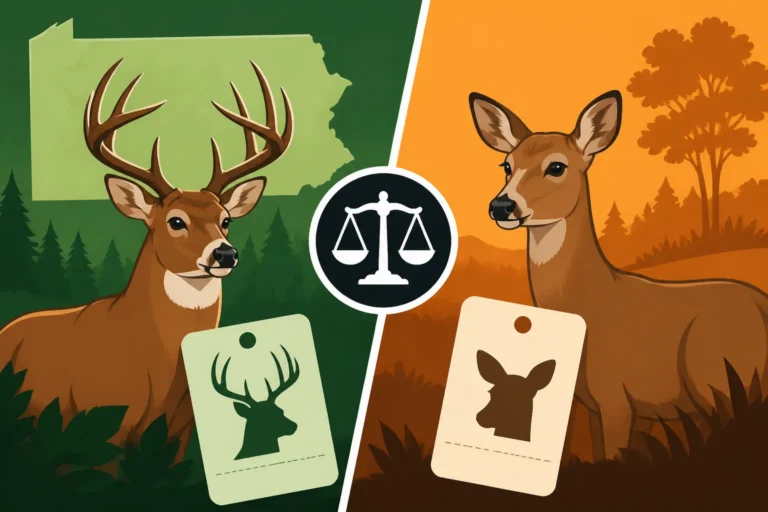
Understanding the subtle differences between DMAP permits and standard WMU antlerless licenses is key to making informed decisions as a hunter. While both allow for the harvest of antlerless deer, their purpose, acquisition, and validity differ significantly.
Here's a breakdown to help clarify:
| Feature | DMAP Permit | Regular Antlerless License |
|---|---|---|
| Purpose | Targeted deer management on specific properties for habitat/crop protection. | General deer population control across an entire WMU. |
| Acquisition | Requires a coupon number from an approved DMAP property owner/manager, then purchased through PGC. | Purchased directly from PGC (online/agent) for a specific WMU. |
| Validity | Valid only on the specific DMAP property listed. | Valid anywhere within the specified WMU (with permission). |
| Quantity | Property owners determine coupon allocation. Hunters can hold multiple DMAP permits, usually up to WMU limit. | Hunters can hold multiple, but allocation is by WMU and sells out. |
| Cost | Generally the same as a regular antlerless license. | Standard PGC antlerless license fee. |
| Availability | Varies by property owner distribution; public DMAP lists exist. | Sales begin in July, often sell out quickly in popular WMUs. |
| Antler Rules | For antlerless deer only; antler restrictions irrelevant to the DMAP tag. | For antlerless deer only; antler restrictions irrelevant to the antlerless tag. |
The crucial takeaway is that DMAP permits are a highly specific tool. While you can typically hold multiple antlerless licenses up to the WMU limit, the DMAP system allows you to acquire additional antlerless tags for specific locations where management is needed. This makes them a fantastic complement to your general hunting licenses, especially if you have particular properties you frequent or wish to assist in targeted management efforts.
Maximizing Your Success with DMAP Properties
Securing a DMAP permit is just the first step. To truly make the most of this unique opportunity and fulfill the program's management goals, a thoughtful approach to scouting and landowner relations is paramount.
Scouting and Understanding the Property
Just because a property has a DMAP designation doesn't mean the deer will be waiting by the road for you. Effective scouting remains absolutely crucial. Even on smaller, private DMAP tracts, understanding the lay of the land, identifying deer patterns, locating preferred food sources, pinpointing bedding areas, and establishing quiet entry and exit routes will significantly increase your chances of success. Spend time walking the property before the season, looking for rubs, scrapes, tracks, and droppings. Identify pinch points, funnels, and natural travel corridors that deer use.
If it's a public DMAP property, such as a designated section of State Game Lands or State Forests, leverage available mapping tools. GoHunt's detailed maps or the Pennsylvania Mapping Center can provide invaluable aerial views and topographical information to help you identify potential hotspots. Look for edges, clearcuts, mature timber, and water sources. Even on public DMAP lands, deer can be pressured, so finding those less-traveled spots often yields the best results. This diligence is not much different than Scouting Pennsylvania Public Land Before Season, just applied to a more defined parcel. Always respect property boundaries, whether marked or implied, and follow any specific guidelines provided by the DMAP cooperator or landowner.
Ethical Hunting and Landowner Relations
The success of the DMAP program, particularly on private land, hinges entirely on the cooperation and responsible behavior of hunters. When you receive a DMAP coupon from a landowner, you're not just getting a permit; you're often being granted a privilege and a responsibility. Being an ethical and respectful hunter is paramount to maintaining not only your access but also the future availability of DMAP opportunities for other hunters.
This means communicating clearly with the landowner. Discuss their specific goals for deer management, their preferred hunting methods, and any restrictions they might have (e.g., specific areas off-limits, vehicle access rules). Always report your harvest to them, even if it's just a text message, as they are often required to track hunter success for their DMAP application. Offer to help with property tasks if appropriate, or simply express your gratitude for the opportunity. Leaving the property cleaner than you found it, being mindful of noise, and always having a plan for deer retrieval are all small gestures that build trust and ensure a positive relationship. Remember, these landowners are investing their time and effort into the DMAP program, and your respectful participation helps them achieve their goals. By doing so, you're helping secure future hunting access and demonstrating the positive impact hunters have on conservation. Finding these hidden gems of access is part of the challenge, and proving yourself reliable is key to Finding Ground Others Walk Past.
Disclaimer
Please remember that hunting regulations, season dates, and program specifics can change. Always consult the most current Pennsylvania Game Commission Hunting and Trapping Digest or their official website for the latest and most accurate information before planning your hunt. This guide is for informational purposes only and should not be considered legal advice.