Applying for a DMAP Permit
It's no secret that getting your hands on an antlerless deer tag in Pennsylvania can sometimes feel like trying to win the lottery, especially in those high-demand Wildlife Management Units (WMUs) that sell out almost instantly. For hunters and landowners alike, effectively managing deer populations on specific tracts of land, whether it’s your backyard woodlot or a vast public forest, requires flexible tools beyond the standard WMU allocations. This guide will walk you through everything you need to know about the Deer Management Assistance Program (DMAP) permits, from what they are to how you, as a hunter, can secure and utilize one to contribute to localized deer management efforts.
What Exactly is the DMAP Program in Pennsylvania?
The Deer Management Assistance Program (DMAP) is a really clever initiative by the Pennsylvania Game Commission designed to give landowners and land managers a more precise tool for controlling deer populations on specific properties. Think of it as a targeted approach to deer management, moving beyond the broad strokes of WMU-wide antlerless tag allocations. Instead of just relying on the general statewide or WMU-specific antlerless harvest, DMAP allows managers to issue additional antlerless harvest permits for their particular parcel of land.
This program truly shines in situations where a property might be experiencing overbrowsing, agricultural damage, or simply needs a higher deer harvest to meet specific ecological or management objectives. It’s a way to fine-tune deer numbers in areas that truly need it, without necessarily impacting the broader WMU harvest strategy. For instance, a farmer losing crops to deer, or a forester struggling with regeneration in a particular timber stand, can enroll their property in DMAP to get more boots on the ground, so to speak, to help bring those deer numbers into balance.
The key distinction is that DMAP permits aren't just handed out willy-nilly. Properties must meet certain criteria and have a demonstrable need for increased deer harvest. This means the program is rooted in sound scientific management principles, aiming to protect habitats, promote forest regeneration, or mitigate agricultural damage. It’s a win-win: landowners get help managing their deer, and hunters get additional opportunities to harvest an antlerless deer, often in areas where regular tags are hard to come by or specifically needed for localized control.
The Purpose Behind DMAP Tags
At its heart, DMAP is about habitat health and mitigating deer-related conflicts. Deer are prolific browsers, and without adequate control, their populations can quickly outstrip the carrying capacity of their habitat. This leads to what foresters call "deer browse lines," where young trees and shrubs are eaten to the point they can't grow, severely impacting forest regeneration and biodiversity. On agricultural lands, unchecked deer numbers can devastate crops, causing significant financial losses for farmers.
The Pennsylvania Game Commission initiated DMAP to address these very real problems on a more localized scale. It allows for a surgical approach to deer management, focusing effort where it's most needed. Unlike the general antlerless tags you buy for a WMU, DMAP permits are tied directly to a specific property and are part of a targeted management plan for that piece of ground. It ensures that the deer harvested directly contribute to the specific management goals of the enrolled property.
How DMAP Differs from Standard Antlerless Tags
Understanding the difference between a DMAP permit and your standard WMU-specific antlerless license is crucial. While both allow you to harvest an antlerless deer, their origins and purposes are quite distinct. Your regular antlerless license is tied to a specific WMU, and you purchase it directly from the Game Commission. It's part of a broad management goal for an entire region, dictated by factors like deer density, forest health, and harvest data across that large WMU.
A DMAP permit, on the other hand, starts with a landowner or public land manager. They apply to the Game Commission to have their property enrolled in DMAP, outlining their specific management goals and the estimated number of antlerless deer they need harvested. If approved, the Game Commission allocates a certain number of DMAP "coupons" to that property. The landowner then distributes these coupons to hunters. As a hunter, you take one of these coupons, and then you can "redeem" it for an actual DMAP permit. This permit is also WMU-specific, but it's only valid on the enrolled DMAP property for which it was issued. It’s a permit that comes with a specific address attached, making it a powerful tool for hyper-local deer management.
Here's a quick comparison:
| Feature | Standard Antlerless Tag | DMAP Permit |
|---|---|---|
| Origin | Purchased directly from PGC for a specific WMU. | Landowner applies for DMAP, receives coupons, distributes to hunters. |
| Validity | Valid throughout the chosen WMU. | Valid only on the specific DMAP-enrolled property. |
| Purpose | General WMU-wide deer population management. | Targeted, property-specific deer management (habitat, agriculture). |
| Availability | Limited by WMU allocation, often sells out quickly. | Issued by landowners/managers, additional to WMU allocation. |
| Cost | Standard antlerless license fee. | Standard antlerless license fee plus a redemption fee. |
| Harvest Limit | Counts towards your personal statewide antlerless limit. | Counts towards your personal statewide antlerless limit. |
How Hunters Obtain and Redeem a DMAP Permit
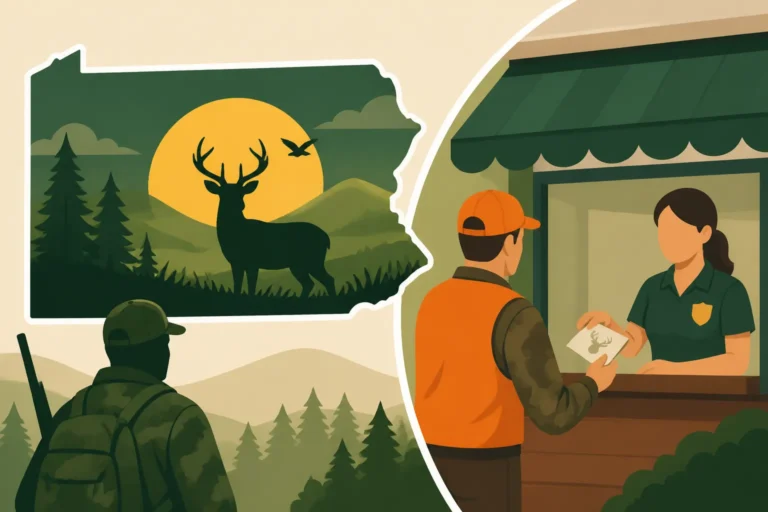
For many hunters, the primary question isn't how landowners enroll their property, but how they can get their hands on one of these valuable DMAP permits. The process is a little different from simply buying a regular antlerless tag, but it's straightforward once you understand it. Essentially, it involves getting a DMAP "coupon" from a participating landowner or manager and then redeeming that coupon for the actual permit.
This often means establishing a relationship with a landowner who has enrolled their property in DMAP. It could be a private farmer who needs help reducing deer numbers in their cornfields, or it could be a public land manager overseeing a tract of State Game Lands or State Forests that have specific habitat restoration goals. Sometimes, the Pennsylvania Game Commission itself, or the Bureau of Forestry, will enroll certain tracts of public land in the DMAP program, and hunters can obtain coupons directly from them.
Finding DMAP Properties and Obtaining Coupons
The first step for a hunter wanting a DMAP permit is to find a property that is enrolled in the program and offering coupons. This might sound like a challenge, but there are several avenues.
- Networking with Landowners: If you already hunt private land or know landowners in areas with high deer densities, talk to them! Many farmers and timberland owners would be thrilled to have responsible hunters help them manage deer damage. If their property isn't already in DMAP, you might even suggest they look into the program.
- Public Land Opportunities: Keep an eye on announcements from the Pennsylvania Game Commission and the Department of Conservation and Natural Resources (DCNR). Specific State Game Lands and State Forests are often enrolled in DMAP. Information on these properties, including how to obtain coupons, is usually released closer to the license sale dates. For example, some State Parks now allow hunting and may participate in DMAP to manage localized deer populations.
- PGC Website and Resources: The PGC website is your best friend here. They typically provide lists or maps of enrolled DMAP properties, especially public land tracts, along with instructions on how to acquire coupons. It’s worth checking this regularly before hunting season begins.
- Mapping Tools: Platforms like GoHunt, with their detailed land ownership and public land layers, can be invaluable for identifying potential DMAP areas, particularly when researching public land parcels mentioned in PGC announcements. While GoHunt itself won't tell you which private lands are DMAP enrolled (that's landowner-dependent), it can certainly help you visualize and plan your approach to public DMAP tracts. You can use it to scout the terrain, identify potential bedding areas, and plan your approach once you secure a coupon for a specific property.
Once you’ve identified a property, you’ll need to contact the landowner or manager to request a DMAP coupon. They’ll issue you a physical coupon with a unique identification number, which is what you'll use to redeem your permit. Sometimes there are specific dates or events for coupon distribution, especially on public lands, so be sure to check those details.
Redeeming Your DMAP Coupon for a Permit
After successfully acquiring a DMAP coupon from an enrolled property, the next step is to redeem it for your actual DMAP permit. This is where you finalize the process and officially secure your tag.
- Locate Your Coupon Number: Each DMAP coupon will have a unique number printed on it. This is crucial for the redemption process.
- Online or In-Person Redemption: You can redeem your DMAP coupon either online through the Pennsylvania Game Commission's licensing system or in person at any license issuing agent (like a sporting goods store or county treasurer's office). Redeeming online is usually the quickest and most convenient method.
- Enter Coupon Information: When redeeming, you'll enter the unique DMAP coupon number. The system will then identify the specific property and WMU associated with that coupon.
- Pay the Fee: There is a fee for redeeming a DMAP permit, which is separate from your general hunting license. Currently, the cost for a DMAP permit is usually the same as a regular antlerless license.
- Receive Your Permit: Once the transaction is complete, you'll receive your DMAP permit, which looks much like a regular antlerless tag but will clearly indicate "DMAP" and the specific DMAP unit number and WMU it's valid for.
Remember, DMAP permits are allocated in addition to the standard WMU antlerless allocations. This means that if you've already purchased your full complement of WMU antlerless tags, you might still be able to obtain and use a DMAP permit, depending on the rules for that specific program year and the number of DMAP permits you're allowed to hold. Always check the current regulations published by the PGC.
Understanding Your DMAP Tag and Its Rules
So, you've successfully navigated the process and now hold a shiny new DMAP permit. Congratulations! But before you head out into the woods, it's vital to understand the specific rules and regulations that come with this type of tag. DMAP permits have unique conditions compared to your standard WMU antlerless licenses, and knowing these will ensure you hunt legally and ethically.
The most critical rule is that a DMAP permit is only valid for antlerless deer on the specific DMAP unit (property) for which it was issued. You cannot use a DMAP permit obtained for State Game Lands 100 in WMU 2F to harvest a deer on private property in WMU 2F, nor can you use it on another State Game Lands property that isn't the designated DMAP unit. This specificity is the whole point of the program – to achieve localized deer management goals.
Additionally, DMAP permits are generally valid during any established antlerless deer season for that particular WMU. This includes archery season, the firearms season, and the late antlerless seasons. However, always double-check the specific DMAP property's rules, as some might have particular hunting access dates or methods that differ slightly from general WMU regulations. For example, some public DMAP units might have specific instructions for vehicle access or parking that you'll need to follow.
Tagging and Reporting Your DMAP Harvest
Just like any other deer you harvest in Pennsylvania, tagging and reporting a deer taken with a DMAP permit are mandatory and follow specific procedures. This is not the time to get complacent; accurate reporting is what helps the Game Commission measure the success of their management programs.
When you harvest an antlerless deer using your DMAP permit, the first thing you must do is fill out your tag completely and immediately. Attach the tag to the deer's ear before you move the animal from the kill site. Make sure all the information is accurate, including the date, time, and specific WMU and DMAP unit number. This unit number is particularly important for DMAP permits, as it ties the harvest back to the specific property where the management effort is focused.
Beyond tagging, you are required to report your harvest within 24 hours. This can be done online through the Pennsylvania Game Commission's website, or by phone. When reporting, you'll need to specify that it was a DMAP harvest and provide the unique DMAP unit number. This reporting data is critical for the Game Commission and the participating landowner to assess the impact of the program on that specific property's deer population and to plan for future management efforts. Failing to report a harvest, or misreporting it, is a violation of game law.
DMAP Permits and Antler Restrictions
It's important to remember that DMAP permits are specifically for antlerless deer. However, the presence of antler restrictions in your WMU still plays a role, even when you're specifically targeting antlerless animals. A DMAP tag is only for does or unantlered deer. If you're hunting in a WMU with specific antler restrictions, like the three-up rule, those rules still apply to any antlered deer you might encounter and choose not to shoot with an antlered tag.
The DMAP program is focused solely on removing female deer to control population growth. This means you need to be absolutely certain of your target before pulling the trigger. Misidentifying a button buck as an antlerless deer happens, but it's crucial to exercise caution. Take your time, confirm your target is truly an antlerless deer, and make a clean shot. Understanding Judging Antler Points Before the Shot is a good skill to have, even when primarily hunting does, to ensure you don't accidentally harvest a legal buck if you're holding an antlered tag, or mistake a small buck for a doe if you're only carrying an antlerless tag.
Benefits and Considerations of Hunting with DMAP
Hunting with DMAP permits offers a unique set of advantages, both for the individual hunter and for broader deer management efforts in Pennsylvania. However, like any specialized hunting opportunity, there are also a few considerations to keep in mind. Understanding both sides will help you make the most of this program.
For many hunters, the biggest benefit is the increased opportunity to harvest an antlerless deer. In WMUs where regular antlerless tags sell out fast, or in highly pressured public land areas, a DMAP coupon can be a golden ticket. It allows you to contribute directly to localized management goals while also putting venison in your freezer. It’s also an excellent way to gain access to private lands that you might not otherwise be able to hunt, forging valuable relationships with landowners.
Furthermore, DMAP hunting often means you're hunting in areas where there's a recognized need for deer reduction. This can sometimes translate to higher deer densities in specific locations, increasing your chances of success. It provides a sense of purpose beyond just recreation, knowing you're actively participating in habitat conservation and responsible wildlife management.
Advantages for the Pennsylvania Hunter
The advantages of pursuing DMAP permits are plentiful for the proactive hunter.
- Expanded Hunting Opportunities: DMAP permits provide additional antlerless tags beyond the standard WMU allocations. This is especially beneficial in popular WMUs where regular antlerless licenses are snapped up quickly. It's an extra chance to fill the freezer, plain and simple.
- Access to Managed Private Lands: For hunters who struggle to find private land access, DMAP can open doors. Landowners enrolled in DMAP are actively seeking hunters to help meet their harvest goals. This can lead to new hunting spots and lasting relationships with landowners. It might even be your first opportunity for Hunting Small Private Tracts in Pennsylvania.
- Contributing to Conservation: Hunting on a DMAP property means you're directly helping to achieve specific habitat or agricultural management goals. This active participation in conservation is rewarding and vital for maintaining healthy ecosystems.
- Targeted Hunting: DMAP properties often have higher localized deer densities or specific deer issues, potentially leading to more consistent hunting opportunities compared to areas where deer numbers are already well-balanced.
- Learning and Scouting: Utilizing DMAP often requires direct communication with landowners or managers, which can provide invaluable insights into deer movement, preferred bedding areas, and feeding patterns specific to that property. Using tools like GoHunt to scout a DMAP property beforehand can also give you an edge, allowing you to identify terrain features, thick cover, and potential ambush points.
Imagine a scenario where your local WMU antlerless tags sold out in minutes, but you know of a farm nearby that's always complaining about deer damage. If that farmer enrolls in DMAP, getting a coupon from them means you get to hunt that specific issue, helping them out while securing a tag you might otherwise have missed.
Potential Drawbacks and Considerations
While DMAP offers great opportunities, it's not without its own set of considerations. Being aware of these will help manage your expectations and ensure a positive hunting experience.
- Limited Geographic Scope: DMAP permits are hyper-specific. You can only use them on the designated DMAP unit. This means if you obtain a permit for a particular State Game Lands section, you can't use it even on an adjacent section of the same State Game Lands if it's not part of that specific DMAP unit. This requires careful attention to boundaries, which is where a robust mapping application like GoHunt can be exceptionally helpful in staying within the lines.
- Additional Cost: While the permit itself is priced like a regular antlerless license, you're buying it in addition to your general hunting license and any WMU-specific antlerless tags you might purchase. Factor this into your budget.
- Coupon Availability: There's no guarantee that coupons will be available for every DMAP property, especially popular public lands. It often comes down to timing and being proactive in securing one.
- Property-Specific Rules: Each DMAP property might have its own unique set of rules regarding access, hunting hours, and allowed methods, above and beyond general PGC regulations. Always clarify these with the landowner or manager before you hunt. For instance, some private landowners may require you to check in and out daily, or have specific parking instructions.
- Ethical Considerations: When hunting on private land, remember you are a guest. Uphold the highest standards of respect for the property and the landowner. Failure to do so can jeopardize future access for yourself and other hunters. This is also important when considering Getting Private Land Permission in Pennsylvania for other non-DMAP opportunities.
DMAP permits are a fantastic tool for both deer management and hunter opportunity. They demand a bit more effort upfront in securing the coupon and understanding the property-specific rules, but the rewards—more venison, new hunting grounds, and direct contribution to conservation—are often well worth it.
Disclaimer
The information provided in this guide is for general informational purposes only and does not constitute legal advice. Hunting regulations, seasons, and licensing requirements are subject to change by the Pennsylvania Game Commission. Always consult the most current official Pennsylvania Hunting & Trapping Digest or the Pennsylvania Game Commission website before planning any hunting activities. Adherence to all local, state, and federal laws is the responsibility of the hunter.