How DMAP Permits Differ From Antlerless Tags
The Pennsylvania hunting regulations can feel like a labyrinth at times, especially when you're trying to figure out the nuances between different types of deer tags. One common point of confusion for many hunters is understanding the distinction between a standard antlerless deer license and a DMAP (Deer Management Assistance Program) permit. It's easy to assume they're just two names for the same thing – a way to harvest a doe – but there are some critical differences that can impact your hunting strategy and where you can legally fill those tags. This guide is here to untangle that knot, providing clear, practical insights so you can confidently plan your next hunt.
Understanding the Standard Pennsylvania Antlerless Deer License
When most Pennsylvanians talk about a "doe tag," they're usually referring to the standard antlerless deer license. These are the workhorses of deer management across the Commonwealth, designed to help control the overall deer population within specific geographic regions known as Wildlife Management Units (WMUs).
Purpose and Allocation of Antlerless Tags
The fundamental purpose of the regular antlerless deer license is broad, regional deer population control. Each year, the Pennsylvania Game Commission (PGC) assesses deer populations and habitat conditions within each of the state's 22 WMUs. Based on these assessments, they allocate a specific number of antlerless licenses to each WMU. The goal is to balance the deer herd with the carrying capacity of the land, mitigate crop damage, and reduce deer-vehicle collisions. Without these licenses, local deer populations could explode, leading to widespread ecological damage and an unhealthy herd.
For hunters, these tags are essential for participating in the antlerless deer seasons, which include portions of the archery, firearms, and muzzleloader seasons. They allow you to legally harvest a deer without antlers (or a deer with antlers shorter than 3 inches in WMUs with special antler restrictions). The process for obtaining these licenses begins in early summer, with resident sales starting on specific dates, followed by non-resident sales, and then subsequent rounds for unsold tags. Historically, popular WMUs, especially those in the agricultural belts or closer to major population centers, tend to sell out quickly. It pays to be ready when Pennsylvania Antlerless Licences Go on Sale.
How to Obtain a Regular Antlerless License
Acquiring a standard antlerless license involves a multi-step process that can feel like a rush against the clock, especially for sought-after WMUs. First, you must possess a valid general hunting license. Once you have that, you can apply for an antlerless license for your chosen WMU. This is typically done online through the PGC's website or at a license issuing agent.
The key thing to remember is that these are WMU-specific. If you buy an antlerless license for WMU 2B, you can only use it in WMU 2B. You can't just pick up a tag for a neighboring WMU and use it where you plan to hunt if it's outside your designated WMU. This is why understanding Pennsylvania Deer Seasons and WMU Rules is so crucial. The allocation system is designed to distribute hunting pressure and achieve specific harvest goals within each WMU. For many hunters, getting a tag in a preferred WMU means being online or at an agent on the very first day they become available. If you miss out, you might have to wait for subsequent rounds or look for leftover tags, which can be scarce depending on the WMU.
Diving Into the Deer Management Assistance Program (DMAP) Permits
While standard antlerless licenses address deer management at a broad, WMU-wide scale, DMAP permits are much more surgical. They're designed to tackle localized deer problems, often related to specific land parcels, whether private or public. Think of it as precision deer management.
The Specificity of DMAP
DMAP permits are issued for specific properties and are a direct response to documented issues like overbrowsing, agricultural damage, or habitat degradation on those individual tracts of land. A landowner, whether private or a public entity like the Department of Conservation and Natural Resources (DCNR) for state forest land, or the PGC for State Game Lands, applies for DMAP permits. They must demonstrate a need for additional deer harvest beyond what the regular antlerless season typically provides.
For example, a farmer might have severe crop damage from deer, or a state park might be seeing its understory decimated by an overabundance of whitetails, impacting forest regeneration. In these cases, the PGC, after reviewing the application and conducting field surveys, may issue DMAP permits. Each permit is tied to a unique DMAP unit number and is valid only on the specific property for which it was issued. This is a critical distinction from a general antlerless tag that can be used anywhere within its assigned WMU. You really need to understand the boundaries when using one.
Obtaining and Using a DMAP Permit
To get a DMAP permit, you first need a valid general hunting license. DMAP permits can be acquired in one of two ways:
- Through a Landowner: A landowner who has been approved for DMAP permits can issue them directly to hunters they grant permission to hunt on their property. This often happens with private landowners who want specific hunters to help them manage their deer herd.
- Public Land DMAP: For public land DMAP units (like on some State Game Lands, State Forests, or State Parks), permits are typically sold directly by the PGC, often online, and are usually first-come, first-served. It's advisable to check the PGC website for a list of available public DMAP units, their unit numbers, and how many permits are remaining. Tools like GoHunt can sometimes offer insights or features to help identify these specific units, making it easier for you to plan your hunt around available permits.
When you obtain a DMAP permit, it will have the unique DMAP unit number printed on it. This means you can only harvest an antlerless deer on that specific property. These permits are non-transferable, meaning you cannot give your DMAP permit to another hunter. When you fill a DMAP tag, it still counts toward your individual antlerless deer bag limit, but it's an additional opportunity specific to that property. This makes them incredibly valuable for targeted management and for hunters seeking extra chances to fill their freezer on particular properties.
Key Differences: Antlerless License vs. DMAP Permit
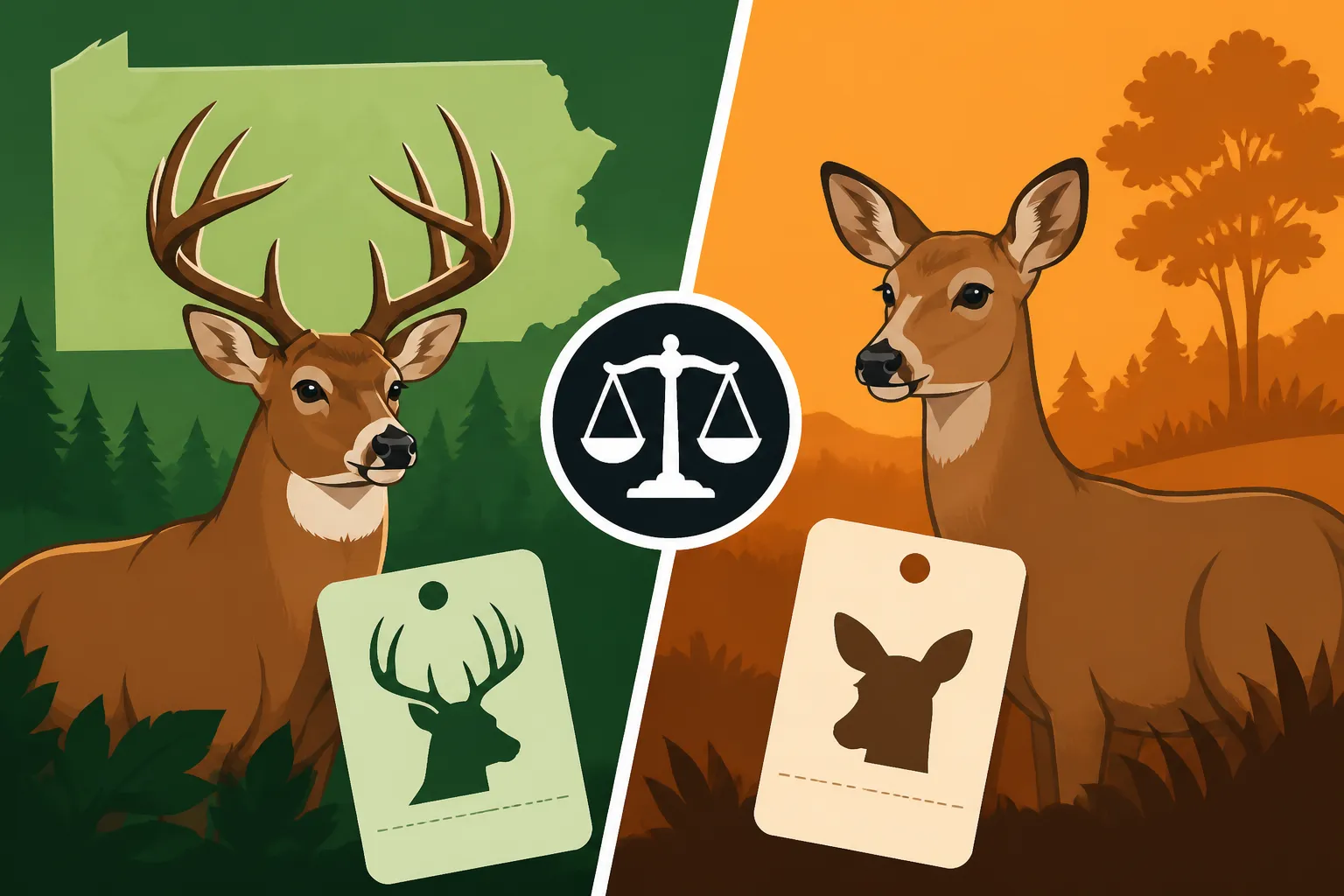
While both allow you to harvest an antlerless deer in Pennsylvania, their fundamental differences dictate their purpose, acquisition, and use. Misunderstanding these can lead to frustration or, worse, a violation.
Comparing Purpose and Scope
The most significant divergence lies in their purpose and geographical scope.
- Antlerless License: This is a tool for statewide or WMU-wide deer population management. Its goal is to achieve a desired regional harvest within a large WMU. When you buy one, you're contributing to that broader goal, and you can use it anywhere within that entire WMU where legal hunting is permitted (public or private land, with permission). It’s about balancing the herd across a vast area. For example, if you have an antlerless tag for WMU 4E, you can use it on dozens of different public and private tracts throughout that entire region.
- DMAP Permit: This is a tool for site-specific deer management. Its purpose is to address localized deer impacts on a particular piece of land, whether it's managing forest regeneration on a specific section of state forest or reducing crop damage on a single farm. The permits are literally tied to a specific parcel identified by a unique DMAP unit number. You cannot use a DMAP permit from one property on another, even if they're in the same WMU.
This difference in scope means that a DMAP permit often offers a more focused hunting experience, sometimes in areas that might otherwise have restrictions or where specific deer numbers are a problem. This hyper-local focus makes them a powerful tool for landowners but requires hunters to be very precise about where they are hunting.
Acquisition and Flexibility
The process of getting and using these tags also varies quite a bit, impacting a hunter's flexibility.
- Antlerless License: Acquired through a centralized system (PGC website/agents) and is subject to WMU-specific quotas and sale dates. If your preferred WMU sells out, you might be out of luck for that specific area unless you wait for leftover sales. Once you have it, it's very flexible within the WMU boundaries. You might use it while Hunting Pennsylvania State Forests or on private ground you have permission for.
- DMAP Permit: Can be obtained directly from a participating landowner or, for public lands, directly from the PGC. DMAP permits are often available later in the season, sometimes even after regular antlerless tags for a WMU have sold out, offering a unique opportunity. However, their flexibility is severely limited to the exact property for which they were issued. This means you might get an extra tag, but you're constrained to hunting a very specific piece of ground. For those who do their homework, though, these can be golden tickets for additional hunting days.
Here's a quick table to summarize the core differences:
| Feature | Standard Antlerless License | DMAP Permit (Deer Management Assistance Program) |
|---|---|---|
| Purpose | Broad WMU-wide deer population management | Site-specific deer impact mitigation (habitat, crop damage) |
| Scope of Use | Anywhere within the designated WMU | Only on the specific property/DMAP unit for which it was issued |
| Acquisition | PGC online/license agent; WMU-specific quotas | From landowner or PGC (for public DMAP units); unit-specific |
| Availability | Subject to WMU sell-out; early sale dates | Often available later in season; tied to specific parcels |
| Transferable? | No | No |
| Counts Towards | Individual antlerless bag limit | Individual antlerless bag limit |
| Cost | Standard license fee | Standard license fee |
Strategic Use of Both for Pennsylvania Hunters
Understanding these differences isn't just about avoiding trouble; it's about maximizing your hunting opportunities and becoming a more effective deer manager. Pennsylvania hunters can strategically combine both types of permits to extend their season, increase their harvest, or target specific properties.
Leveraging Both for Extended Opportunity
Imagine you primarily hunt a large tract of State Game Lands in WMU 2G. You secure your general hunting license and an antlerless tag for 2G early in the season. You spend time scouting, set up a few stands, and during the archery season, you're fortunate enough to fill that tag with a nice doe. Great! Now, your WMU 2G antlerless tag is filled.
However, you also know of a farmer in an adjacent WMU, say WMU 3A, who has a DMAP unit because of consistent crop damage. He’s always looking for responsible hunters to help him out. You reach out, get permission, and he issues you a DMAP permit for his farm. Now, even though your general WMU 2G antlerless tag is filled, you have an additional opportunity to harvest a doe on that specific farm in WMU 3A. This strategy effectively gives you another chance to hunt antlerless deer, often on a property where you might not otherwise have an opportunity if you didn't have specific permission or if the WMU's general antlerless tags were already sold out. This can be especially useful for those looking to stock their freezer and can allow you to continue hunting after the Hunting the Second Week of Rifle Season when many tags might be filled.
Focusing on Specific Management Needs
Sometimes, hunters aren't just looking for another deer; they're looking to help manage a specific property. Maybe you have access to a small woodlot near your home or a friend’s farm where you've noticed significant browse pressure or other signs of an overabundant deer population. If that landowner participates in DMAP, securing one of those permits means you are directly contributing to the health of that local ecosystem or farm.
This focused approach is incredibly rewarding. You're not just hunting; you're actively participating in conservation and land stewardship. For example, if you're scouting in an area and notice significant signs of overbrowsing, perhaps with limited new tree growth, that could be a property where DMAP permits are actively being used to improve habitat. Tools like GoHunt can sometimes aid in identifying such areas or connecting hunters with landowners. Understanding the local impact of deer, from What Changes When Beech Nuts Drop affecting food sources to general habitat degradation, informs your decisions on where and how you apply for these permits.
In essence, the standard antlerless license is your foundational tool for general hunting and statewide management, while the DMAP permit is your specialized tool for targeted, property-specific deer management. By understanding and utilizing both, you can become a more versatile and effective hunter in Pennsylvania, helping to manage the deer herd while maximizing your time afield.
Disclaimer
Hunting regulations are subject to change. Always consult the most recent Pennsylvania Hunting & Trapping Digest or the Pennsylvania Game Commission's official website before heading afield to ensure you are compliant with all current laws and regulations.