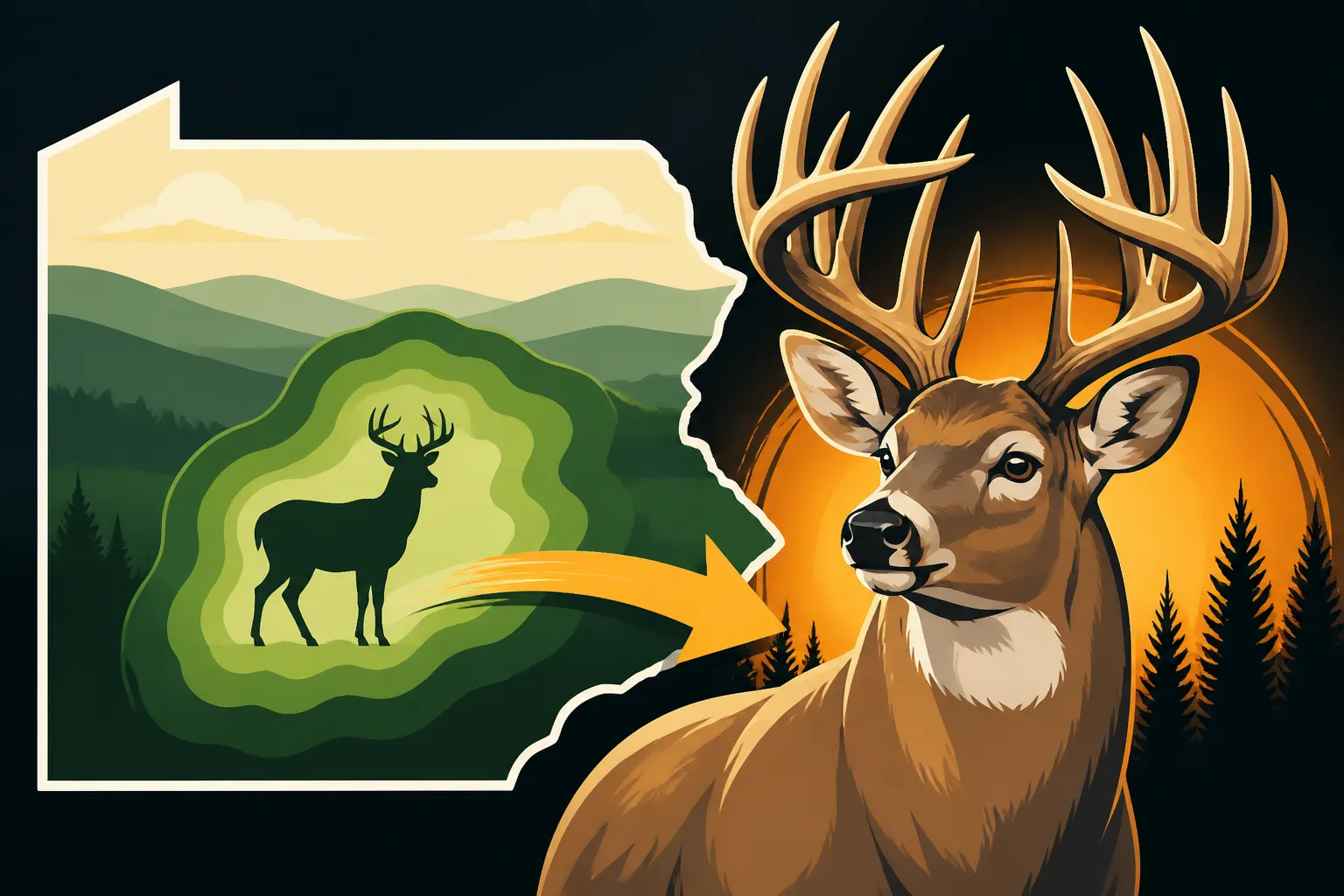
Where Pennsylvania’s Biggest Bucks Come From
For many of us who hunt in Pennsylvania, the dream of harvesting a truly magnificent buck, one with heavy antlers and a wide spread, is a powerful motivator. But where do these big bucks come from in a state as diverse in habitat and hunting pressure as ours? It's a question that can spark endless debate around the deer camp fire, and the truth is, it's not a simple answer. This guide will dive deep into the factors that contribute to trophy buck growth, examining the different regions of Pennsylvania and how a combination of genetics, nutrition, age, and smart hunting strategies come together to produce those elusive giants.
Understanding the Foundation of Big Bucks
Before we can even talk about specific locations, it's crucial to grasp the fundamental building blocks that allow a buck to grow impressive antlers. It’s not just luck; it’s a complex interplay of biology and environment. Hunters often focus solely on antler size, but that’s merely a symptom of deeper, underlying factors at play.
Age Structure: The Number One Factor
Let's be brutally honest: you simply won't see a truly massive rack on a yearling buck, or even a two-and-a-half-year-old in most cases. Age is, without a doubt, the single most important component in a buck reaching its full antler potential. Bucks continue to grow antlers that increase in size, mass, and point count year after year until they hit their prime, usually between 4.5 and 6.5 years old. Younger bucks are still putting most of their energy into body growth, and while they might have respectable racks, they haven't "filled out" yet.
This reality is precisely why the Pennsylvania Game Commission implemented Pennsylvania Antler Restrictions by WMU years ago. The goal was to protect younger bucks, allowing them to survive past their first year or two and contribute to a healthier, older age structure in the herd. While there was plenty of grumbling when the rules first came out, most hunters now agree that these regulations have had a profound impact, letting more bucks reach maturity and display their genetic potential. Without the opportunity to age, even a buck with incredible genetics and ample food won't ever show you what he's truly capable of.
Nutrition and Habitat Quality
Imagine trying to build a house without enough lumber or good tools. That's essentially what a buck faces if it doesn't have access to high-quality nutrition. Antler growth is incredibly energy-intensive, requiring massive amounts of protein, minerals, and carbohydrates. Bucks need consistent access to excellent food sources throughout the year, especially during the spring and summer when antlers are actively growing. Areas rich in agricultural crops like corn, soybeans, and alfalfa provide a consistent, energy-dense buffet that is hard to beat.
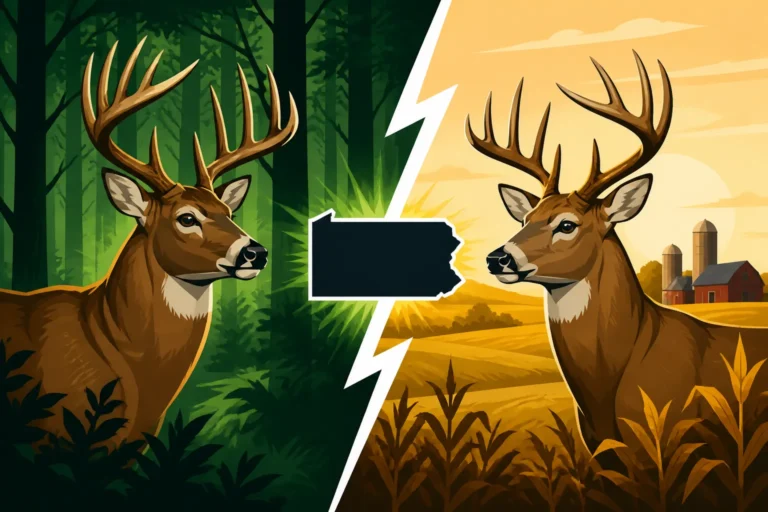
Contrast this with the more challenging conditions found in vast tracts of big woods, where forage might be abundant but often lacks the concentrated nutrient punch of cultivated fields. While big woods deer can and do grow impressive antlers, it often takes them longer to reach peak size because their growth rate isn't fueled by the same consistent, high-octane diet. Mineral intake, particularly calcium and phosphorus, also plays a significant role in antler mineralization, and natural mineral licks or areas with specific soil compositions can be beneficial. It's a constant quest for fuel, and the better the fuel, the bigger the rack.
Farm Country: The Land of Giants?
When you hear whispers of record-book bucks in Pennsylvania, more often than not, those whispers lead back to the rich agricultural landscapes of the southern and southeastern parts of the state. It's not a coincidence; these areas offer a unique combination of factors that seem tailor-made for producing monster whitetails.
Abundant Food Sources
If there's one thing farm country has in spades, it's food – and not just any food, but calorie-dense, protein-packed forage available practically year-round. Fields of corn, soybeans, alfalfa, and winter wheat stretch for miles, providing deer with a nutritional goldmine. Bucks can literally live their entire lives within a few hundred acres, moving from cover to crop fields, never lacking for a meal. This consistent, high-quality diet translates directly into robust body growth and, consequently, superior antler development. Compare this to the natural browse found in dense forests, which can be less nutritious and more spread out.
Consider a buck living on the edge of a massive cornfield. From late summer through fall, he's gorging on high-energy corn, building up fat reserves and fueling his antler growth. After the harvest, waste grain still provides a valuable food source, and winter wheat fields offer green browse when other options are scarce. This constant availability means bucks don't experience the nutritional stress that deer in less food-rich environments often endure, allowing them to put all their energy into maximizing antler mass and length. It’s a literal all-you-can-eat buffet that many other regions just can’t replicate. You can learn more about specific tactics for these areas in Hunting a Standing Cornfield in Farm Country.
Pressure and Sanctuary
It might seem counterintuitive, but the high human population density often found in farm country can actually contribute to bucks reaching older ages. While hunting pressure can be intense in small, accessible woodlots, larger farms and private lands often become de facto sanctuaries for mature deer. Many farmers are hesitant to allow just anyone to hunt, or they may only allow trusted friends or family, creating islands of low-pressure refuge. Bucks learn these boundaries quickly, retreating to unhunted creek bottoms, dense hedgerows, or thick stands of timber on private property during daylight hours.
These pockets of sanctuary, combined with abundant food, allow bucks to live long enough to reach their prime. Even on public access areas or smaller private tracts, the sheer amount of cover provided by unharvested crops, CRP fields, and dense fencerows gives bucks ample places to hide. It's a game of cat and mouse where the "cats" (hunters) often find themselves restricted to small areas, while the "mice" (big bucks) have vast, nutrient-rich hideouts. This blend of food and relative safety is a powerful formula for growing record-class whitetails. For those interested in understanding the differences between deer in these areas, check out Big Woods Versus Farm Country Deer.
The Big Woods: Mountain Monarchs
While farm country often yields the most impressive raw numbers of big bucks, there's a special reverence among Pennsylvania hunters for a true "mountain monarch" – a buck that has survived and thrived in the rugged, vast expanses of the state's northern tier and central highlands. These bucks tell a different story, one of resilience and hard-won survival.
Surviving the Wilderness
Life in Pennsylvania's big woods is tough for a deer. Food sources are naturally less concentrated and often lower in nutritional value compared to agricultural areas. Deer have to travel further to find adequate browse, and they face harsher winters with deeper snow and more limited forage. This means that bucks in these areas typically grow at a slower rate, and it takes them longer to reach their peak antler size. A 4.5-year-old buck in the big woods might only have the antler mass of a 3.5-year-old buck from prime farm country.
However, the very challenges of the wilderness often mean that the bucks that do survive to older ages are incredibly tough and cunning. These are deer that have learned to evade predators, navigate vast forests, and find hidden pockets of food. The immense amount of escape cover – thick mountain laurel, regenerating clearcuts, and remote hollows – allows these bucks to evade hunters, often until they reach truly old age classes. The low hunting pressure in many remote areas means fewer encounters with hunters, giving them a higher chance of survival. Tactics for hunting these areas can be found in Hunting Pennsylvania's Big Woods for Deer.
Genetics and Solitude
Despite the tougher conditions, the big woods still harbor excellent genetics. Given enough time and sufficient, even if less abundant, nutrition, these bucks can grow truly impressive racks. The solitude of the deep woods contributes significantly to this. Deer that aren't constantly stressed by human presence or aggressive competition for food and mates can direct more energy towards growth. While they might not be as heavy-bodied as their farm country cousins, the sheer wildness of a big woods buck, often with a unique, rugged antler configuration, makes them a highly sought-after trophy.
The vastness of the terrain also means that deer populations can be more dispersed, and while deer densities are lower, those mature bucks often have less competition for resources. They become masters of their domain, knowing every ridge, bench, and water source. The satisfaction of harvesting a big woods buck isn't just about the antler score; it's about the challenge, the journey into the wilderness, and the respect for an animal that has truly earned its impressive headgear against all odds. Understanding Where Big Woods Bucks Bed is often key to finding these secluded giants.
Key Pennsylvania WMUs and Counties for Trophy Bucks
Alright, so we've talked about the "why," now let's get into the "where." While big bucks can pop up anywhere, certain regions and specific Wildlife Management Units (WMUs) consistently produce more mature, heavy-antlered deer due to the confluence of ideal habitat, pressure dynamics, and effective management strategies.
Top-Performing WMUs
When you look at harvest data and trophy records from the Pennsylvania Game Commission, some WMUs consistently stand out for producing quality bucks. Generally, WMUs that feature a significant amount of mixed agricultural and forested land, particularly in the southern and western parts of the state, tend to do very well. WMUs like 2B, 2D, 2F, 2G, 3A, and 4C often get mentioned in discussions about bigger deer. WMU 2B, for instance, which encompasses the Pittsburgh metropolitan area, benefits from incredible food sources and large, unhunted suburban tracts that act as de facto refuges. The antler restrictions in these WMUs, combined with plentiful food, allow bucks to reach older age classes.
Other WMUs might be known for sheer number of deer harvested, but not necessarily the biggest racks. The "best" WMU depends on whether you're prioritizing quantity or quality. For trophy hunters, it's often about finding that sweet spot where food, age structure, and lower hunting pressure (or strategic hunting pressure) converge. Pennsylvania Deer Harvest Records provide a fascinating look at these trends over time, allowing hunters to see which WMUs are consistently producing. These areas often blend private lands with pockets of public access, requiring hunters to be diligent in their scouting and access planning.
Counties with a Reputation
Drilling down further, certain counties have earned a reputation over the years for producing exceptional bucks. While harvest numbers can fluctuate, counties like Allegheny, Washington, Greene, Fayette, Westmoreland, and Butler in the southwest consistently show high quality deer harvests, benefiting from a rich blend of agricultural fields, mature timber, and suburban sanctuaries. Moving eastward, counties such as Lancaster, York, and Chester in southeastern Pennsylvania, despite being densely populated, also produce remarkable deer for the same reasons – abundant food and areas of reduced hunting pressure on private lands.
In the big woods regions, counties like Potter, Tioga, Elk, and McKean are famed for their challenging hunting and the potential for a true wilderness giant, even if the overall deer density and average antler size might be lower. Hunters often refer to these as "big woods counties," and for good reason. They may not have the highest buck-to-hunter ratios or the most easily accessible deer, but the bucks that are there are often mature, robust, and have earned their impressive racks through sheer survival. If you're looking for where Best Pennsylvania Counties for Big Bucks are, these are the ones that frequently come up in conversation among seasoned hunters.
| Region Type | Primary Food Source | Hunting Pressure | Average Buck Age | Antler Size Potential | Common Habitat |
|---|---|---|---|---|---|
| Farm Country | Abundant crops (corn, soybeans, alfalfa) | Variable (high in accessible areas, low in private sanctuaries) | Higher | Excellent (often heavier, wider) | Mixed agriculture, woodlots, hedgerows |
| Big Woods | Natural browse (acorns, mountain laurel, diverse forest plants) | Lower (but higher in accessible public land) | Moderate to High (but slower growth) | Good to Excellent (often taller, rugged) | Mature timber, clearcuts, dense understory |
The Hunter's Role: Strategy for Success
Finding a big buck isn't just about knowing where to go; it's about how you approach the hunt. Your personal strategy, patience, and commitment to learning deer behavior are just as critical as the habitat itself. After all, even the best habitat won't give up its secrets easily.
Patience and Passing Younger Bucks
This might be the hardest lesson for many hunters, especially those new to the sport. It takes immense discipline to watch a legal, but young, buck walk by when you've been sitting for hours, or even days, without seeing much. However, if your goal is to consistently pursue and harvest truly large bucks, passing on those 1.5 and 2.5-year-old deer is non-negotiable. Every young buck you pass has the potential to grow into a mature buck in future seasons. This practice, when adopted by enough hunters in an area, significantly improves the local age structure of the buck herd.
It’s about understanding that instant gratification often leads to less satisfying long-term results. Focus on the thrill of the hunt, the challenge of scouting, and the satisfaction of knowing you're contributing to a healthier deer population. This mindset also makes the eventual success even sweeter, knowing you waited for that truly special animal. It means embracing the journey, not just the destination, and recognizing that not every deer needs to be a target. This ethos is at the heart of many discussions about What Antler Restrictions Did to Buck Ages.
Scouting, Intel, and Utilizing Resources
Big bucks are masters of evasion. They don't just wander around hoping you find them. To consistently connect with mature deer, you need to become an expert scout. This means year-round effort, long before the season even opens. Look for old rub lines, historical scrape locations, prominent trails, and bedding areas. Pay attention to food sources as they change throughout the year – where are the acorns dropping in late summer, or where are the best browse plants in a clearcut?
Modern technology has given us incredible tools for this. Aerial imagery from services like Google Earth or dedicated hunting apps like GoHunt can help you dissect terrain, identify pinch points, funnels, and potential bedding areas without ever stepping foot in the woods. These platforms allow you to overlay property lines, locate water sources, and plan your entry and exit routes meticulously. Understanding Reading Aerial Photos for Big Woods Deer can give you a significant edge. Combine this with trail cameras to gather real-time intelligence on deer movement patterns, and learn to interpret fresh sign. The more intel you gather, the smaller the woods become, and the better your chances of intercepting a mature buck, especially during the peak of Hunting the Peak Rut Week in Pennsylvania.
Understanding Antler Restrictions and Their Impact
Pennsylvania's antler restrictions have been one of the most significant changes in deer management in recent history, completely reshaping the landscape of deer hunting in the state. While initially met with skepticism, their impact on the age structure and quality of bucks has been undeniable.
The "Three Up" Rule and Its Evolution
For most of Pennsylvania, the rule states that a legal buck must have at least "three points on one side" (not including the brow tine). This means that a spike, a fork horn, or even a buck with two points and a brow tine on one side would be illegal unless it met the three-point criteria. However, in specific WMUs (primarily those with lower deer densities or historically lower buck age structures), the restriction is even stricter, requiring "four points on one side." This "three up" or "four up" rule was a direct response to concerns about too many young bucks being harvested, leading to a population dominated by yearlings.
The core idea behind these rules was simple: protect most of the 1.5-year-old bucks, allowing them to survive another year or two, thereby increasing the number of 2.5 and 3.5-year-old bucks in the herd. This shift in age structure meant that hunters would see more mature bucks, and those bucks would have had more time to grow larger antlers. The initial adjustment period was tough for many hunters, as it required significant changes in how they identified legal deer and often meant passing up bucks they would have previously harvested. However, the data now clearly shows that these rules have been successful in achieving their goal.
Regional Differences and Hunter Perception
The varying antler restrictions across WMUs reflect the different deer densities, habitat types, and hunting pressures present throughout the state. WMUs with generally poorer habitat and lower deer densities often have the more conservative "four points on one side" rule, aiming to accelerate the growth of older bucks in those challenging environments. Conversely, WMUs with richer habitats and higher deer populations might stick with the "three points on one side" rule. This tiered approach is designed to tailor management to local conditions, ensuring the most effective outcome for each area.
Over time, hunter perception has largely shifted from resistance to acceptance, and even enthusiasm. Many hunters now appreciate seeing more mature bucks in the woods and the increased challenge and reward that comes with it. It has fostered a culture of patient hunting and a greater appreciation for the biology of deer. While the debate over whether the rules are "perfect" continues, most agree that they have fundamentally improved the quality of the buck herd across Pennsylvania. This evolution of the rules and their effects is a crucial aspect of Pennsylvania Antler Restrictions by WMU and impacts every hunter's approach.
Disclaimer
Please note that hunting regulations, seasons, and licensing requirements in Pennsylvania are subject to change. Always consult the most current Pennsylvania Game Commission Digest or visit their official website before planning any hunting trip to ensure you are compliant with all applicable laws and regulations.