Buck Age Structure Since Antler Restrictions
For years, Pennsylvania hunters wrestled with a common frustration: seeing plenty of deer, but very few mature bucks. It felt like every legal buck taken was a young, often small-racked deer, leaving little hope for those truly impressive wall-hangers. This guide dives deep into how Pennsylvania’s antler restrictions were introduced and, more importantly, how they’ve fundamentally reshaped the age structure of our buck population, offering a fresh perspective on hunting deer in the Keystone State.
The Rationale Behind Pennsylvania's Antler Restrictions
It wasn't that long ago that a "spike buck"—a young male deer with antlers no more than a few inches long—was a perfectly legal target for any hunter with a valid tag. While it might seem like a minor detail, this widespread harvest of yearling bucks had a profound impact on the overall health and age diversity of our deer herd. Hunters often felt stuck in a cycle of seeing only young, immature bucks, which certainly wasn't the most fulfilling hunting experience for many.
The "Spike Buck" Problem
Before antler restrictions, the tradition of "if it's brown, it's down" was prevalent for many deer hunters. This meant that the vast majority of bucks harvested were 1.5 years old, barely out of their fawn spots. These yearling bucks, often with small spikes or basket racks, bore the brunt of hunting pressure. The problem wasn't just about antler size; it was about the age structure itself. When you consistently remove the youngest, most virile males from the population, you prevent them from reaching their biological potential, both in body size and antler development. It also meant that older, more experienced bucks were much rarer, making the woods feel a little less wild and the challenge a bit diminished.
Think about it: year after year, the young ones were culled before they ever had a chance to mature. This led to a population where older bucks, those wise, wary creatures with impressive racks, were a true rarity. Hunters who dreamed of chasing a seasoned Pennsylvania whitetail often found themselves disappointed, seeing little more than young, inexperienced deer. This situation became a major talking point around hunting camps and fire rings across the state, sparking a desire for change.
Shifting to a Quality Deer Management Approach
The Pennsylvania Game Commission, listening to the concerns of hunters and wildlife biologists alike, began exploring a concept known as Quality Deer Management (QDM). The core idea of QDM isn't necessarily about growing "trophy" deer, though that can be a pleasant byproduct. It's about fostering a more natural, balanced age structure within the buck population, allowing more males to survive to older age classes. The goal was simple: let more young bucks live longer, giving them a chance to mature physically and genetically. This, in turn, could lead to a healthier herd, better buck-to-doe ratios, and a more diverse hunting experience.
The implementation of antler restrictions was a significant step in this direction. Instead of just "any antlered deer," hunters were required to pass on younger bucks that didn't meet specific antler point or length criteria. This forced a shift in mindset and strategy for many, asking them to observe deer more closely and make more selective decisions in the field. It was a bold move, and like any big change, it was met with both excitement and skepticism from the hunting community. However, the long-term vision was to create a more resilient and rewarding deer hunting environment for everyone.
How Antler Restrictions Reshaped Buck Age Structure
The introduction of antler restrictions was truly a watershed moment for deer management in Pennsylvania. It wasn't just a new rule; it was a fundamental shift in how we approach hunting our whitetails, and the results have been remarkable, even if they took some getting used to. Many of us remember those first few seasons, squinting through binoculars trying to count points, or agonizing over passing on a buck we might have shot a few years earlier.
The Initial Impact on Yearling Bucks
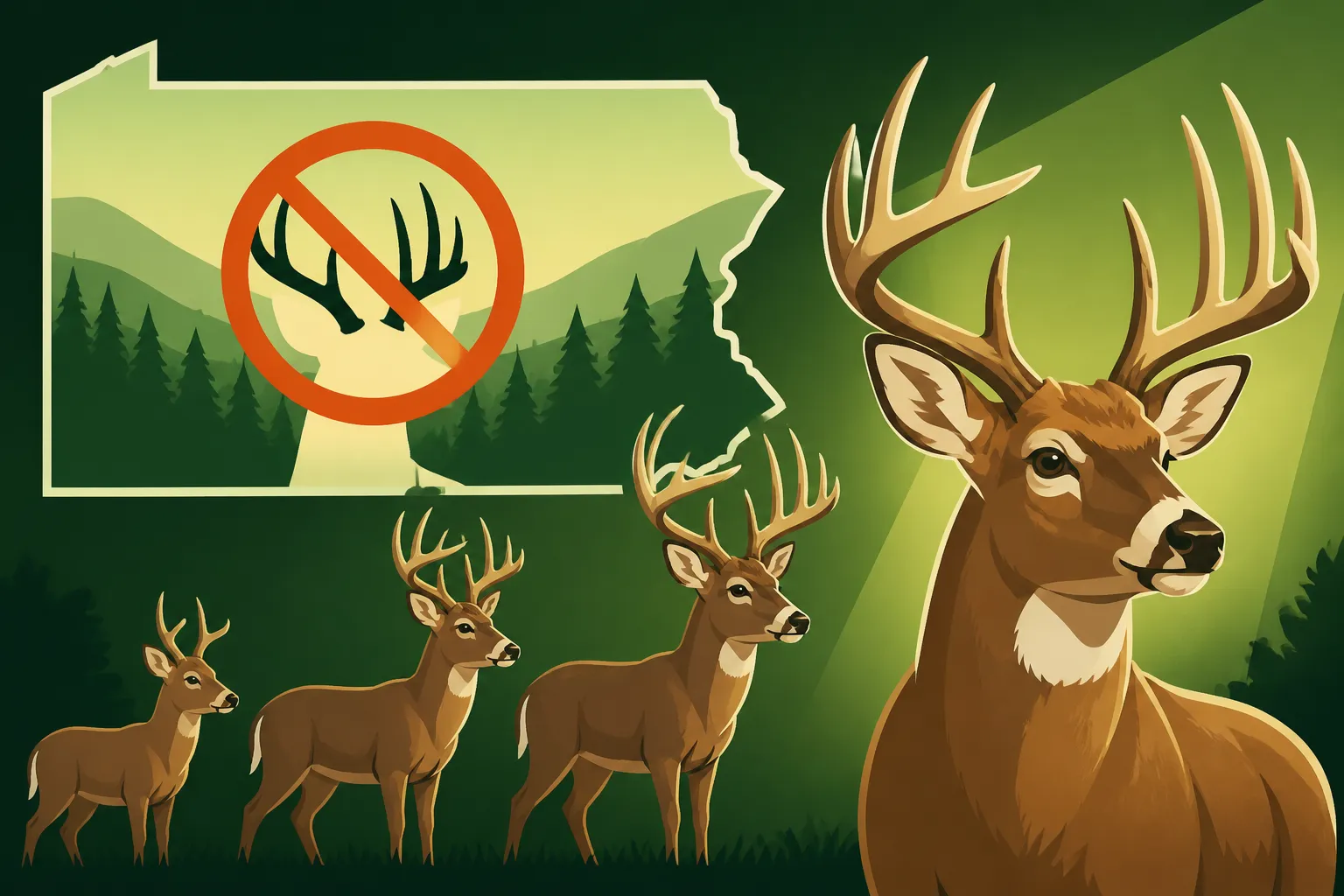
The most immediate and dramatic effect of antler restrictions was a significant increase in the survival rate of yearling bucks – those 1.5-year-old deer. Suddenly, hunters couldn't just shoot any buck that walked by. They had to ensure the deer met the minimum antler requirements for their specific Wildlife Management Unit (WMU). This meant that countless young bucks, previously destined for the freezer, were given a reprieve. These deer, which might have only sported spikes or small forks, were now legally protected, allowing them another year to grow.
This initial shift was tangible. During the first few seasons under the new rules, many hunters reported seeing fewer "legal" bucks, which led to some understandable frustration. However, what they were actually witnessing was the direct effect of passing on those young deer. The woods weren't empty of bucks; they were simply full of bucks that were now off-limits, which was exactly the intention. This period was crucial in building the foundation for a more mature buck population.
Growth in Older Age Classes
The real magic began to unfold in the years following the initial implementation. Those yearling bucks that survived the hunting season weren't just disappearing; they were getting older. The increased survival of 1.5-year-old bucks directly translated into a surge in the 2.5-year-old age class the following season. And those 2.5-year-olds? Many of them survived to become 3.5-year-olds, and even older. This created a ripple effect, building a more balanced age pyramid for bucks across the state.
Suddenly, seeing a 2.5 or even a 3.5-year-old buck became a much more common occurrence for hunters. These are deer that are physically more mature, often displaying larger bodies and more developed antlers. This change was exactly what biologists and many hunters had hoped for – a true shift towards older bucks being present in the population, making for a more challenging and rewarding hunt. Tools like GoHunt, for example, can show you historical harvest data which illustrates this shift, making the impact clear. It's not just anecdotal; the numbers reflect a healthier, more mature buck age structure. If you're wondering How Many Pennsylvania Bucks Reach Age Three, the answer has definitely improved since these regulations were put in place.
Data and Observation
The proof of the pudding is in the eating, as they say, and for antler restrictions, the data tells a compelling story. Post-restriction Pennsylvania Deer Harvest Records clearly show a decrease in the harvest of yearling bucks and a corresponding increase in the harvest of older age classes. The percentages of 2.5-year-old and older bucks in the annual harvest jumped significantly, demonstrating that more bucks are indeed surviving to older ages.
Beyond the raw numbers, the anecdotal evidence from hunters is equally powerful. Conversations around campfires shifted from lamenting the lack of mature deer to excitedly discussing encounters with 2- and 3-year-old bucks. While opinions still vary on the overall "trophy" quality, there's a general consensus that hunters are simply seeing more mature deer during the season. This allows for more selective hunting opportunities, where hunters can truly pass on younger deer in hopes of finding that older, wiser buck. It's a testament to how well-thought-out wildlife management can positively influence both the resource and the experience for those who cherish it.
Understanding the "Three Up" Rule and WMU Variations
One of the nuances that can sometimes trip up even seasoned hunters in Pennsylvania is the variation in antler restrictions across different WMUs. It's not a one-size-fits-all rule, and understanding these differences is crucial for ethical and legal hunting. This adaptability is part of what makes Pennsylvania's deer management approach so dynamic, even if it adds a layer of complexity for us hunters.
The Evolution of Antler Rules
When antler restrictions were first introduced, they largely followed a statewide framework, often based on the number of points on one antler or total points. However, as biologists gathered more data and understood the varying habitat conditions and deer densities across Pennsylvania, it became clear that a blanket rule might not be the most effective for every region. Different parts of the state have different challenges and opportunities when it comes to deer management, from the rugged "Big Woods" country to the agricultural landscapes of the southeast.
This led to the evolution of WMU-specific rules, with some areas, particularly in what's considered "Big Woods" regions, implementing a "three up" rule. This means a legal buck must have at least three points on one antler, excluding the brow tine (unless it's truly a point that can hold a ring). It's a rule designed to protect even more 2.5-year-old bucks in areas where deer density might be lower or habitat less productive, allowing them an even greater chance to develop. It can be a little confusing, and hunters definitely need to be sharp when identifying a legal buck in the field. Knowing What Counts as a Legal Pennsylvania Buck is paramount.
Impact of WMU-Specific Rules
The reason for these WMU-specific antler restrictions is rooted in ecological reality. Deer populations and habitat quality aren't uniform across our state. In areas with higher deer densities and better nutrition, bucks tend to develop larger antlers at a younger age. In these regions, a less stringent antler restriction might still allow enough young bucks to mature. Conversely, in WMUs with lower deer densities, poorer soils, or intense hunting pressure, a more protective rule like the "three up" is designed to ensure a greater number of bucks survive to older age classes.
For example, WMUs like 2F or 2G, which encompass vast tracts of big woods, often have more stringent antler requirements. This is because deer in these areas typically grow slower and may not develop significant antler growth until they are 2.5 or even 3.5 years old. The Three Up WMUs and What Changed article can provide more specific details on these zones. This tailored approach allows the Game Commission to fine-tune its management goals, working towards a healthier and more mature buck population in each distinct region. As hunters, it places the responsibility on us to not only know the statewide rules but also the specific regulations for the WMU we're hunting in. Planning your hunt, perhaps with digital tools like those from GoHunt, becomes even more important when navigating these varying regulations.
Implications for Hunters: Strategy and Expectations
Antler restrictions didn't just change the deer; they changed the hunters too. The way we scout, the way we make decisions in the field, and even our overall expectations for a hunting season have all been recalibrated. For many, it's been a journey of adaptation, but one that has ultimately led to a richer understanding of Pennsylvania's whitetail deer.
Adapting Hunting Strategies
The most obvious change for hunters was the need to become better at identifying deer before taking a shot. Gone were the days of simply looking for antlers; now, you had to count points, differentiate brow tines, and understand the specific rules for your WMU. This meant more time observing, more patient waits, and often, letting smaller bucks walk, even if they were the only deer you'd seen all morning. This shift encourages hunters to spend more time Scouting Pennsylvania Public Land Before Season, learning to differentiate buck age classes and identifying areas where older bucks might be holding out.
For many, this led to a more engaged and perhaps more challenging form of hunting. It forces you to become a better woodsman, learning to age deer on the hoof and understand the subtle behavioral differences between a yearling and a mature buck. Strategies for Hunting the Pennsylvania Rut in November might now focus more on patterns of older deer, which behave differently than younger ones. It's about being more selective, more patient, and ultimately, more respectful of the resource.
The Trade-off: Fewer Bucks, but Older Bucks
It’s important to acknowledge that antler restrictions haven't been universally lauded by all hunters, and for good reason. For some, particularly those who simply want to put venison in the freezer or introduce new hunters to the sport, the more stringent rules can feel like an added barrier. There’s a perception among some that there are now "fewer legal bucks" in the woods, even if the age structure of those bucks has improved. This can lead to longer waits, or even tag soup for hunters who prioritize ethical compliance with the rules.
However, the trade-off is significant: while the overall number of harvestable bucks might feel lower in some areas, the quality of the buck population, in terms of age and maturity, has undeniably increased. Hunters are now more likely to encounter bucks that are 2.5 years old or older, deer that offer a greater challenge and a more substantial reward. It’s a shift from a quantity-based harvest to a more quality-oriented experience, something that many dedicated hunters have come to appreciate. It's a balancing act that the Pennsylvania Game Commission continues to monitor, aiming to satisfy diverse hunter expectations while maintaining a healthy deer herd.
Long-Term Herd Health and Future Outlook
Beyond the immediate hunting experience, the long-term benefits of antler restrictions for overall herd health are substantial. A more balanced age structure in the buck population contributes to a healthier genetic pool and more efficient breeding. When older, more dominant bucks are present, they are more likely to participate in the breeding cycle, which can lead to stronger, healthier fawns. This contributes to the overall vitality of Pennsylvania's White-Tailed Deer Across Pennsylvania population.
The future outlook for buck age structure in Pennsylvania appears robust, largely thanks to these regulations. While there will always be fluctuations due to environmental factors, habitat changes, and Pennsylvania Deer Population Estimate dynamics, the foundation for a sustainable, healthy, and more mature buck population has been firmly laid. For hunters, this means the opportunity to pursue deer that embody the wild spirit of Pennsylvania, making each encounter a truly memorable event. It’s a testament to adaptive management and the willingness of hunters to embrace change for the betterment of the resource.
Buck Harvest Age Structure Comparison (Hypothetical)
This table illustrates a hypothetical shift in buck harvest age structure before and after the widespread implementation of antler restrictions in Pennsylvania. Actual percentages would vary by WMU and year, but the general trend would reflect this.
| Buck Age Class | Pre-Antler Restrictions (Harvest %) | Post-Antler Restrictions (Harvest %) | Key Impact |
|---|---|---|---|
| 0.5 years (Fawns) | < 1% | < 1% | Rarely legal, no significant change |
| 1.5 years (Yearlings) | 65-75% | 20-30% | Dramatic decrease due to protection |
| 2.5 years | 15-20% | 40-50% | Significant increase in survival & harvest |
| 3.5 years | 5-10% | 15-20% | Notable increase in older bucks |
| 4.5+ years | < 5% | 5-10% | Slight increase in very mature bucks |
This table clearly shows the intentional and successful shift in the age of bucks harvested, indicating that more young bucks are surviving to become older, more mature deer.
Disclaimer
This article is for general informational purposes only and does not constitute professional advice. Laws, prices and regulations vary by location and change over time. Consult a qualified professional for guidance on your specific situation.