Pennsylvania Turkey Harvest Numbers
It can feel incredibly frustrating to spend countless hours scouting and calling, only to come up empty-handed during Pennsylvania's turkey seasons. Many of us have experienced those quiet mornings or silent woods where it feels like the birds have simply vanished. This comprehensive guide dives deep into Pennsylvania's turkey harvest numbers, helping you understand the trends, the factors influencing them, and what these statistics really mean for your hunting strategy, ultimately helping you find more success in the field.
Understanding Pennsylvania's Turkey Harvest Data
When we talk about hunting, especially turkey hunting in Pennsylvania, numbers often come up – how many birds were harvested, what's the success rate, are the populations up or down? These aren't just dry statistics; they're vital pieces of a much larger puzzle that helps the Pennsylvania Game Commission (PGC) manage this iconic species. For hunters, understanding where these numbers come from and what they signify can offer valuable insights into future seasons and potential strategies.
What Data the PGC Collects
The PGC diligently collects a wide array of data points to paint a comprehensive picture of our wild turkey populations and hunter success. The most direct and crucial piece of information comes from mandatory harvest reports. Every hunter who successfully bags a turkey, whether during the spring gobbler season or the fall hunt, is required by law to report their harvest to the PGC within a specified timeframe. This report usually includes the date of harvest, the Wildlife Management Unit (WMU) where the turkey was taken, and whether it was a male or female bird. This seemingly simple data collection is the backbone of understanding harvest trends. Beyond that, the PGC also conducts extensive biological surveys, such as brood surveys in summer, where volunteers and staff count poults to hens, giving them an idea of reproductive success. These surveys, combined with hunter reports, allow the PGC to estimate population sizes and health.
Why Harvest Reports Are Crucial
Think of harvest reports as the essential feedback loop from the field. Without accurate and timely reporting from hunters, the PGC would be operating in the dark, unable to make informed decisions about season lengths, bag limits, or even management strategies aimed at habitat improvement. When hunters fail to report their harvests, it creates gaps in the data, leading to potentially skewed population estimates. This can have real-world consequences, potentially leading to overly conservative or, worse, overly liberal season structures that don't align with the actual health of the turkey population. Your five minutes spent reporting a bird online or over the phone directly contributes to the sustainability of Pennsylvania's wild turkey resource for generations to come. It’s not just a legal requirement; it’s a commitment to conservation.
How Data Informs Management
The PGC uses all this collected data to make critical management decisions that impact every turkey hunter in the state. For instance, if harvest numbers show a consistent decline in a particular WMU, coupled with low poult-to-hen ratios from brood surveys, it signals a potential problem. This might prompt the PGC to shorten seasons, reduce bag limits, or intensify habitat improvement projects in that specific area. Conversely, if data indicates a healthy and growing population, they might consider expanding opportunities. This science-based approach ensures that turkey populations remain robust and provides sustainable hunting opportunities. Understanding these underlying mechanics can help you appreciate why certain regulations are in place and how your actions as a hunter play a direct role in the bigger picture of wildlife conservation in the Commonwealth.
Spring Gobbler Success Rates and Trends
For many, the spring gobbler season is the pinnacle of turkey hunting, a time when the woods come alive with the sounds of drumming and gobbling. But how successful are hunters truly, and what do the numbers tell us about the state of this cherished tradition? Pennsylvania’s spring gobbler harvest numbers offer a fascinating look into the ebb and flow of turkey populations and hunter effort across the state.
Long-Term Spring Trends
Looking back over the decades, Pennsylvania's spring gobbler harvest numbers have seen their share of peaks and valleys. Historically, the 1990s and early 2000s were often considered a golden era for turkey hunters, with robust populations leading to impressive harvest totals. However, in more recent years, many hunters have felt a noticeable decline in the number of birds they encounter, and the harvest data often reflects this. We've seen periods of lower overall harvests, which can be attributed to various factors like poor brood production in previous years, increased predator pressure, or even changing weather patterns during nesting season. It's a constant balancing act for the PGC to manage these fluctuations. While frustrating in the short term, these trends highlight the dynamic nature of wildlife populations and the ongoing need for adaptive management strategies to ensure future opportunities.
Recent Season Highlights and Lowlights
Focusing on the more immediate past, recent spring gobbler seasons have presented a mixed bag for hunters. Some years might see a slight bump in harvest numbers, often coinciding with an exceptionally mild winter or a successful hatch two years prior, as it takes a jake two years to become a mature gobbler. However, other years have been particularly challenging, with lower harvest figures leaving many hunters scratching their heads. For example, a severe late spring frost during nesting season can decimate a year's poult crop, leading to fewer jakes and gobblers down the line. It's these year-to-year variances that keep us on our toes and often dictate whether we hear consistent gobbling or experience silent, frustrating hunts. Keeping an eye on the Pennsylvania Game Commission's annual reports helps gauge expectations for the upcoming season, giving you an edge in preparing for what might lie ahead.
WMU-Specific Spring Harvests
It's a common misconception that turkey populations are uniform across the state. The truth is, success rates and turkey abundance can vary dramatically from one Wildlife Management Unit to another. Some WMUs, particularly those with a mix of mature timber, agricultural fields, and consistent forest management, tend to consistently produce higher spring harvests. For example, WMUs in the north-central and south-central regions, often referred to as "big woods" country or areas with significant public land, can be strongholds for wild turkeys. Conversely, more fragmented landscapes or WMUs with high hunting pressure might show lower harvest numbers. This WMU-specific data is incredibly useful for planning your hunts. If you're consistently striking out in one area, checking the harvest reports for nearby WMUs might reveal a more promising locale. Websites and apps like GoHunt can provide valuable mapping tools that integrate public land boundaries with terrain features, helping you scout new areas more effectively. Understanding the nuances of Pennsylvania Turkey Population Trends by WMU can significantly influence your decision on where to buy your tag or focus your scouting efforts.
Fall Turkey Hunting Harvest Dynamics
The fall turkey season in Pennsylvania offers a completely different challenge and experience than the spring hunt. Instead of chasing vocal gobblers, fall hunting often involves breaking up flocks and calling in scattered birds. The harvest dynamics of the fall season reflect this difference, showing distinct patterns and success rates compared to the spring.
Fall Harvest Differences by WMU
Just like in spring, fall turkey harvest numbers are not evenly distributed across Pennsylvania. The fall season is often influenced heavily by mast crops, particularly acorns, which can concentrate birds in specific timber stands. Areas with abundant oak forests, like parts of the Allegheny National Forest or Michaux State Forest, might see higher fall harvests in good mast years. However, other WMUs, especially those with less public land or different forest compositions, may have more modest harvest figures. Additionally, the PGC sometimes adjusts fall season lengths and bag limits by WMU based on population assessments and prior harvest data, further shaping the local harvest dynamics. This variation means that what works in one part of the state for fall turkeys might not be effective in another, reinforcing the need to understand local conditions and regulations.
The Challenge of Fall Hunting
Fall turkey hunting is often considered more challenging than spring gobbler hunting, and the harvest numbers often bear this out. While spring hunters focus on a single, responsive gobbler, fall hunters are typically looking for flocks of birds – hens with their poults, or groups of jakes. The strategies, such as breaking up a flock and then calling individual birds back, require a different skill set and a lot of patience. This inherent difficulty, combined with factors like dense fall foliage and birds being less vocal, generally leads to lower overall harvest numbers in the fall compared to the spring. It's a more nuanced hunt, demanding keen observation, tracking skills, and a solid understanding of turkey behavior outside of the breeding season. Hunters who master Fall Turkey Hunting in Pennsylvania often develop a deep appreciation for the complex social structures of turkey flocks.
Impact of Changing Fall Seasons
The PGC has historically adjusted the length and structure of Pennsylvania's fall turkey seasons, which directly impacts harvest numbers. In recent years, some WMUs have seen reduced season lengths or even temporary closures for fall turkey hunting, often in response to concerns about declining turkey populations or low brood success. These adjustments are made with the long-term health of the turkey population in mind, aiming to reduce pressure on hens and ensure enough birds make it through winter to breed in the spring. While such changes can be disappointing for hunters, they are crucial for conservation. Monitoring these regulatory shifts is essential for any hunter planning a fall turkey trip, as what was legal last year might be different this season. Keep an eye on the Pennsylvania Fall Turkey Seasons by WMU to stay informed about these critical updates.
Factors Influencing Turkey Harvest Numbers
Turkey harvest numbers don't exist in a vacuum; they're the result of a complex interplay of environmental factors, biological realities, and hunter behavior. Understanding these influences can help demystify those frustrating seasons and offer a clearer picture of what to expect in the woods. It's rarely just one thing that impacts the harvest; it's usually a combination of forces.
Weather's Role in Success
Weather is an undeniable kingmaker or breaker when it comes to turkey hunting success and overall harvest numbers. During the spring, a stretch of unseasonably cold, wet weather can make birds less active and less willing to gobble, impacting hunter opportunities. Persistent rain can also depress nesting success, as cold, wet conditions are detrimental to poult survival, leading to fewer birds two years down the road. In the fall, early heavy snows or extreme cold can push birds into winter feeding patterns prematurely, making them harder to locate. Conversely, mild winters can lead to higher overwinter survival rates, boosting populations. Prolonged droughts can affect food sources, potentially forcing turkeys to travel further for sustenance. These meteorological roulette spins play a huge part in how many turkeys end up in the game bag each season.
Brood Production and Its Lag Effect
Perhaps the most significant biological factor influencing future turkey harvests is successful brood production. Brood surveys, which count the number of poults seen with hens during the summer, are a key indicator of the health of the turkey population. A strong hatch means more jakes will be available in the spring two years later, and more young birds will be available for the fall season. Conversely, a poor hatch due to factors like cold, wet springs during nesting season, high predator loads, or habitat degradation, will inevitably lead to lower harvest numbers in subsequent seasons. This "lag effect" means that current hunting success is often a reflection of conditions from one or two years prior. It takes a couple of seasons for the impact of good or bad hatches to fully manifest in the harvest data. Understanding Pennsylvania Turkey Brood Survey Results provides critical context to current hunting conditions.
Habitat Quality and Turkey Carrying Capacity
The quality and availability of suitable habitat directly dictate how many turkeys a given area can support – its carrying capacity. Turkeys need a mosaic of different habitat types: mature timber for roosting, open fields or clearings for strutting and feeding, and dense cover for nesting and escape from predators. Fragmentation of habitat due to development, poor timber management practices, or lack of early successional growth can reduce the number of turkeys an area can sustain. The PGC and other conservation groups work tirelessly on habitat improvement projects, such as prescribed burns, selective timber harvesting, and establishing food plots, all aimed at enhancing conditions for turkeys and other wildlife. A robust and diverse habitat base is the foundation for healthy turkey populations and, by extension, consistent harvest opportunities.
Hunter Participation and Effort
Finally, the human element, hunter participation and effort, significantly influences harvest numbers. Even if turkey populations are booming, if fewer hunters head afield or if those hunters aren't putting in the necessary effort, the overall harvest could appear lower. Conversely, an increase in hunter numbers or a surge in effort, perhaps driven by good weather or reports of abundant birds, could lead to a higher harvest even with a stable population. Factors like ease of access to public land, economic conditions affecting free time, and hunter education initiatives can all play a role in how many people are out there pursuing turkeys. It's a dynamic equation where biological factors set the stage, but hunter engagement ultimately determines the final tally.
Reading Between the Lines of Harvest Reports
Harvest numbers, while incredibly informative, are just that—numbers. To truly understand what they're telling us about Pennsylvania's turkey populations and hunting opportunities, we need to dig a little deeper and consider the context. Simply looking at the raw count of harvested birds doesn't always tell the whole story.
Interpreting Hunter Success Rates
Beyond the total number of birds harvested, the PGC also calculates hunter success rates. This metric, often expressed as a percentage, tells us what proportion of active turkey hunters successfully harvested a bird. A 15% success rate means that for every 100 hunters who went out, 15 of them bagged a turkey. This can be a more nuanced indicator than raw harvest numbers alone. For instance, if the total harvest goes down, but the hunter success rate remains stable or even increases slightly, it might suggest that fewer people are hunting, rather than a catastrophic decline in the turkey population itself. Conversely, if the success rate plummets even with a similar number of hunters, that's a stronger signal of a difficult season or lower bird numbers. It's crucial to look at both figures in tandem to get a clearer picture of hunter opportunity and population health.
Understanding "Hunter Effort"
Hunter effort is another critical, yet often unquantified, piece of the puzzle. The PGC knows how many licenses are sold, but it's much harder to precisely measure how many hours hunters spend in the woods, how many different areas they scout, or how persistent they are after a silent morning. If hunters are less dedicated, perhaps due to challenging conditions or a perception of low bird numbers, the harvest will naturally be lower. On the other hand, a surge in highly motivated and skilled hunters could artificially inflate harvest numbers even with a stable population. While direct measurement is difficult, the PGC does consider trends in license sales and general feedback to estimate overall effort. This is where personal experience can often fill in the gaps that statistics can't capture. If you've spent days hearing no gobbling, you know the effort was high, but the birds weren't cooperating.
The Story Beyond the Numbers
Ultimately, harvest numbers provide a snapshot, but they don't tell the entire story of the turkey woods. They don't capture the experience of a sunrise listen, the thrill of a close encounter, or the satisfaction of deciphering turkey sign. They don't quantify the hours spent scouting new ground, practicing calls, or introducing a youngster to the tradition. While statistics are vital for management, for many of us, turkey hunting is about much more than just the harvest. It’s about being immersed in nature, honing skills, and connecting with a wild landscape. The numbers are a tool, but the real story unfolds with every sunrise we greet from a camo blind or against a big oak. Remember, even in years with lower harvest numbers, the sheer experience of Spring Gobbler Hunting in Pennsylvania remains invaluable.
The Future of Pennsylvania Turkey Hunting
The health of Pennsylvania's wild turkey populations and the future of turkey hunting are constant topics of discussion among hunters and wildlife managers alike. While challenges exist, ongoing efforts in conservation and research aim to ensure that this cherished tradition continues for generations to come.
PGC Management Strategies
The Pennsylvania Game Commission is continuously adapting its management strategies to address the evolving needs of wild turkeys. This includes regular population monitoring through harvest data and brood surveys, habitat improvement projects on public and private lands, and predator management initiatives where appropriate. They also engage in research to better understand turkey biology, disease impacts, and factors affecting reproductive success. For instance, studies on the impact of West Nile Virus on turkey populations are ongoing, much like the concerns around West Nile Virus and Pennsylvania Grouse. These efforts are designed to maintain healthy, resilient turkey populations capable of withstanding environmental fluctuations and providing sustainable hunting opportunities. The PGC's decisions on season lengths and bag limits are always a direct reflection of these scientific assessments.
Hunter's Role in Conservation
As hunters, we play an indispensable role in the future of turkey hunting. Beyond simply following regulations, our contributions extend to accurate harvest reporting, which provides crucial data for management. Participating in voluntary brood surveys, like those organized by the PGC, helps gather invaluable information about reproductive success. Financially, through the purchase of hunting licenses and stamps, we directly fund conservation efforts. Moreover, being responsible stewards of the land, respecting private property, and practicing ethical hunting methods contribute to a positive public image of hunting, which is vital for its long-term viability. By staying informed, engaged, and proactive, we ensure our voices are heard and our traditions preserved. You can learn more about how your licence fees directly contribute by reading about Pennsylvania Hunting Licences and What They Cost.
Leveraging Technology for Insights
In today's world, technology offers hunters unprecedented access to information and tools that can enhance their understanding of turkey populations and improve their hunting success. Online mapping tools, often available through platforms like GoHunt, allow hunters to scout remotely, identify potential habitat, and understand public land boundaries and access points. Apps that overlay historical harvest data or PGC survey results onto maps can provide hyper-local insights into where birds might be concentrated or where populations are struggling. While nothing replaces boots on the ground, these digital resources can streamline scouting efforts and help hunters make more informed decisions about where and when to hunt. This integration of technology with traditional hunting wisdom can be a powerful combination for the modern turkey hunter, whether they're planning a challenging Run-and-Gun Turkey Tactics on Game Lands adventure or a stealthy hunt on private property.
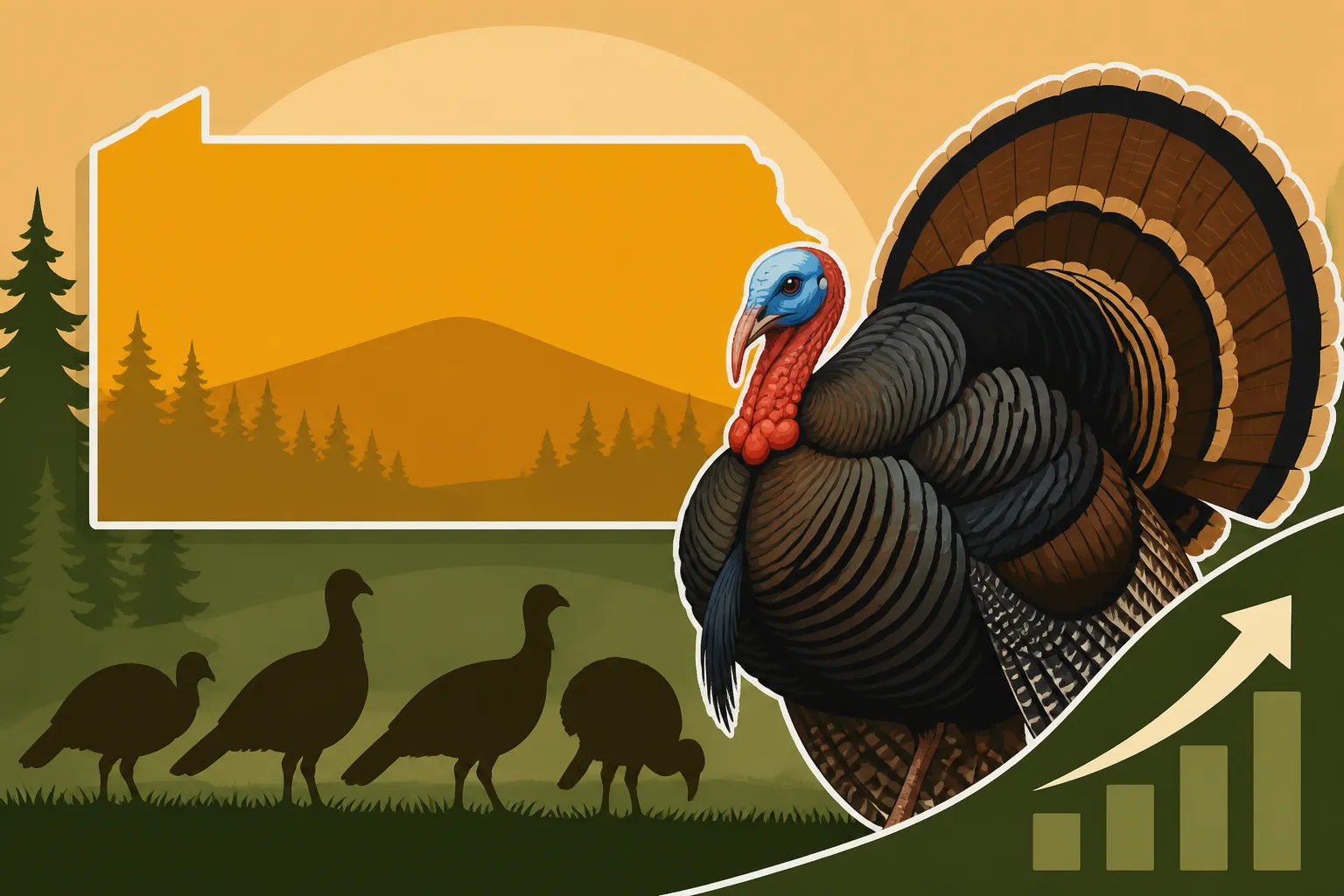
Pennsylvania Turkey Harvest Numbers: A Quick Look
Understanding the bigger picture of turkey harvest numbers in Pennsylvania helps us appreciate the scale and challenges of managing this incredible game bird. This table provides a snapshot of general trends, though specific WMU data will always offer more granular insights.
| Season Type | Typical Annual Harvest (Approximate) | General Trends | Key Influencing Factors |
|---|---|---|---|
| Spring Gobbler | 30,000 – 45,000 | Fluctuates year-to-year based on prior brood success and weather; generally stable with minor dips. | Previous year's poult survival, winter severity, spring weather, hunter effort. |
| Fall Turkey | 8,000 – 15,000 | Lower and more variable than spring; heavily impacted by season length adjustments and mast crops. | Acorn crop abundance, season length by WMU, general population health, hunter participation. |
Please note: These numbers are approximate and vary significantly by year and WMU. Always consult the official Pennsylvania Game Commission harvest reports for the most current and precise data.
Disclaimer
The information provided in this guide is for general informational purposes only and is not intended as legal advice or an endorsement of any specific hunting practice. Hunting regulations, seasons, and licensing requirements are subject to change. Always consult the official Pennsylvania Game Commission regulations and current digest before participating in any hunting activity. Ethical hunting practices and respect for wildlife are paramount.