How Much Ground the Elk Range Covers
It can feel overwhelming, trying to wrap your head around just how much ground Pennsylvania's magnificent elk herd truly covers. You might be picturing a small, isolated pocket of wilderness, or perhaps you've heard tales of elk sightings far outside the traditional range. The truth is, pinpointing the exact boundaries of "elk country" is a bit like trying to draw a circle around a cloud – it shifts, it expands, and it's much larger than many realize. This guide will help you understand the historical expansion, current core, and fringe areas of Pennsylvania's elk range, providing clarity for both hunters and wildlife enthusiasts.
Understanding Pennsylvania's Elk Range: Where the Herd Roams
When most people think of Pennsylvania elk, their minds immediately jump to places like Benezette, Winslow Hill, and the main viewing areas. And while these spots are certainly at the heart of the herd's territory, the actual elk range extends far beyond those well-traveled roads. It’s a vast, rugged landscape predominantly found in the north-central part of the state, encompassing a patchwork of state forests, game lands, and private properties.
The initial reintroduction efforts in the early 20th century focused on a few core areas, but over the decades, as the herd grew and management strategies evolved, the elk slowly but surely expanded their domain. They're intelligent, adaptable animals, and they've learned to thrive in various habitats, from dense conifer stands to open agricultural fields that border the deeper woods. This natural dispersion means that while there's a recognized "core" elk range, the animals themselves don't always respect those invisible lines, leading to exciting—and sometimes surprising—sightings in adjacent areas. Many hunters who spend time in the state's central counties, even if not specifically targeting elk, understand the sheer wildness of the landscape and the potential for encountering these majestic animals. If you're planning a trip to this region, it's a good idea to research Pennsylvania Elk Herd Size and Range to get a broader understanding of their distribution.
The Core of Pennsylvania Elk Country
The heart of Pennsylvania's elk range primarily lies within five counties: Cameron, Clinton, Elk, Forest, and McKean. Within these counties, particularly the central and eastern portions, you'll find the highest concentrations of elk and the most consistent opportunities for viewing or hunting. This region is characterized by expansive tracts of public land, including some of Pennsylvania's largest state forests and State Game Lands. The terrain is often steep, broken by deep hollows and covered in mixed deciduous and coniferous forests. Access roads can be limited, and cell service is spotty at best in many locations, truly giving you a sense of being in the wild.
For those interested in the history of this restoration, understanding How Elk Returned to Pennsylvania provides context for why these specific areas became central to their recovery. The efforts weren't just about putting animals back on the ground, but about creating sustainable habitats where they could flourish. The Pennsylvania Game Commission, along with conservation partners, has played a crucial role in habitat improvement projects, such as creating food plots and maintaining clearings, which benefit not only elk but a host of other wildlife. These efforts have directly contributed to the current geographical footprint of the herd.
Fringe Areas and Dispersal
Beyond the core counties, elk sightings and even small resident groups can occasionally be found in neighboring counties. Counties like Clearfield, Potter, and Centre often report elk activity, particularly in areas that connect directly to the main range. These "fringe" areas might not hold the same densities as the core, but they represent the natural expansion of a healthy, growing herd. It's not uncommon for younger bulls, in particular, to disperse widely in search of new territory or breeding opportunities. This phenomenon makes every deep woods hike or scouting trip a potential adventure.
However, understanding these dispersal patterns is critical for hunters. The Pennsylvania Game Commission designates specific Pennsylvania Elk Hunt Zones within the primary range to manage harvest and ensure sustainable populations. While an elk might wander into an adjacent county, it doesn't necessarily mean that county is open for elk hunting. Always refer to the most current regulations and WMU maps if you are fortunate enough to draw an elk tag. Utilizing modern mapping tools, like those offered by GoHunt, can be incredibly helpful in visualizing these zones and understanding the terrain, especially when you're scouting specific areas.
The Historical Expansion and Current Core of Elk Country
Pennsylvania's elk story is one of remarkable conservation success. From being extirpated in the state by the late 1800s, the herd has rebounded thanks to reintroduction efforts and dedicated management. This journey from non-existence to a thriving population has naturally led to a significant expansion of their range, a testament to the resilience of these animals and the foresight of conservationists.
The historical timeline of elk expansion shows a gradual but steady push from the initial release sites. Early on, the focus was simply on getting a foothold, but as numbers grew, the elk began to explore. River valleys, old logging roads, and connecting ridgelines served as natural corridors for movement. This expansion wasn't always linear; sometimes small groups would establish themselves, only to be absorbed back into the main herd or relocate due to pressure or better forage elsewhere. It's a dynamic process, and the boundaries of "elk country" are constantly, if subtly, shifting. This ongoing process of expansion is a fascinating aspect of wildlife management, showcasing how a species can reclaim its historical territory when given the chance.
Mapping the Elk’s Domain
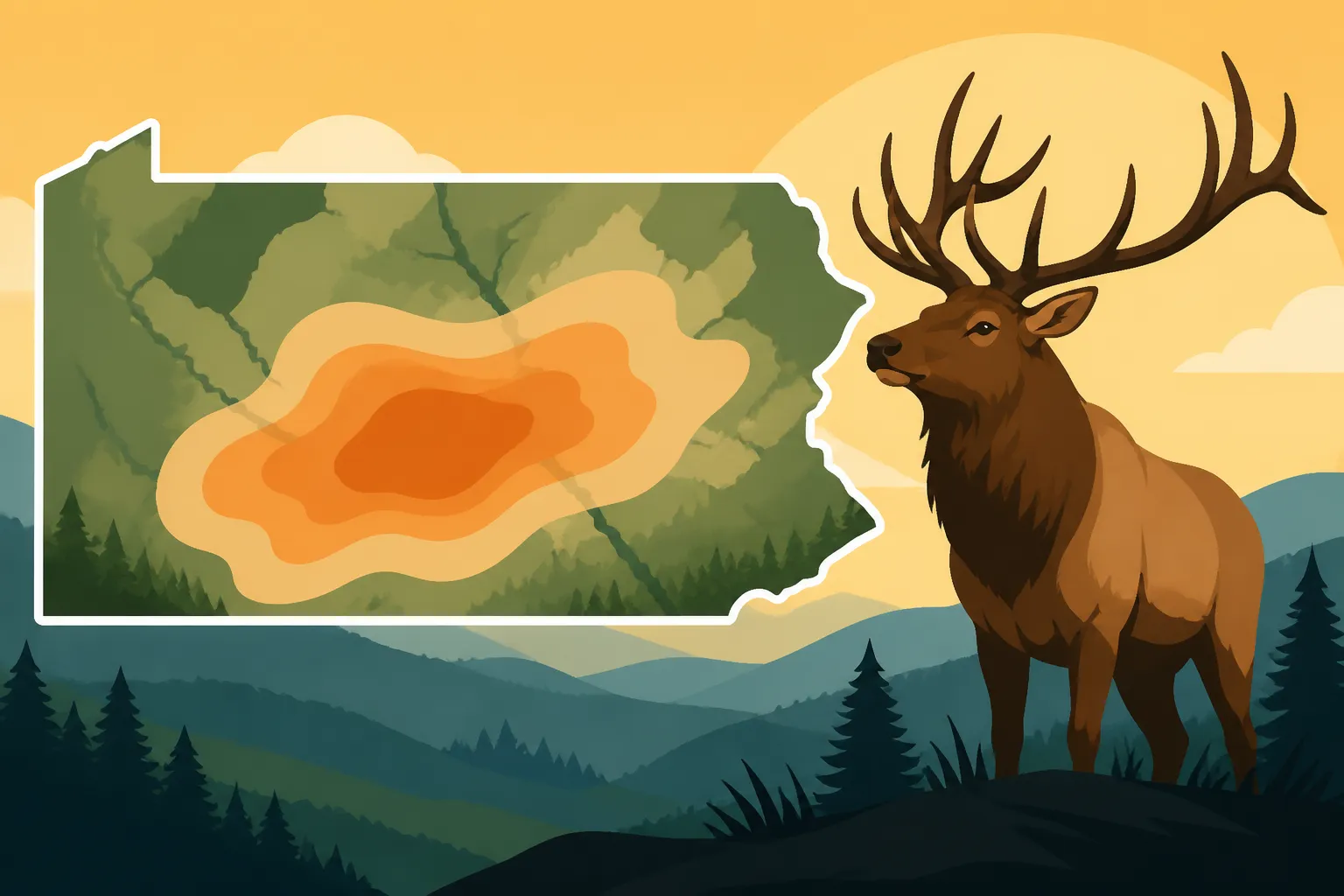
To truly grasp the scope of the elk range, it helps to look at a map. Imagine the state of Pennsylvania, then locate the major blocks of public land in the north-central region. That's where you start to see the contiguous forest blocks that form the backbone of elk country.
Here's a simplified look at the primary elk range by county:
| County Name | General Elk Presence | Primary Land Use | Notes |
|---|---|---|---|
| Elk County | Core, high density | State Forest, Game Lands, Private Timber | Home to Benezette, Winslow Hill. High viewing potential. |
| Cameron County | Core, high density | State Forest, Game Lands, Private Timber | Significant public land, important rutting areas. |
| Clinton County | Core, moderate to high density | State Forest, Game Lands, Private Timber/Farms | Eastern edge of main range, excellent remote hunting opportunities. |
| McKean County | Core, moderate density | Allegheny National Forest, State Forest, Private | Northwestern extent, connects to ANF. |
| Forest County | Core, moderate density | Allegheny National Forest, State Forest, Private | Western extent, heavily forested. |
| Clearfield County | Fringe, occasional | State Forest, Game Lands, Private Timber/Farms | Southern border, increasing sightings. |
| Potter County | Fringe, occasional | State Forest, Game Lands, Private Timber | Northern border, increasing sightings. |
This table illustrates that while specific counties form the core, the ecosystem they inhabit is a larger, interconnected web of forests and open spaces. Public lands like Elk State Forest Public Ground and the Quehanna Wild Area Hunting are vital components of this habitat, offering both refuge and foraging grounds for the herd. When you’re looking at these areas, you understand why the Game Commission prioritizes initiatives like buying adjacent private parcels to consolidate public access and expand crucial habitat.
Recent Shifts and Future Projections
In recent years, especially with a robust and expanding herd, there's been a noticeable push into areas that were once considered marginal. Farmers on the fringes of elk country are increasingly encountering elk in their fields, prompting new considerations for wildlife management. This expansion demonstrates the herd's health but also creates challenges, particularly concerning agricultural damage. The Game Commission actively monitors these movements and adjusts management strategies accordingly.
What does the future hold for Pennsylvania's elk range? It's likely to continue expanding, albeit slowly, into suitable habitat that offers food and cover. Areas of the Allegheny National Forest, for example, which share borders with existing elk range in McKean and Forest counties, could see a more consistent elk presence over time. Habitat improvements and the maintenance of large, contiguous blocks of forest will be key to supporting this natural progression. For those who enjoy Hunting the Pennsylvania Wilds, these trends mean more opportunities to experience a truly wild landscape, even if an elk isn't on your tag.
Navigating the Elk Range: Tips for Hunters and Viewers
Whether you're a seasoned hunter with a coveted elk tag or simply hoping to catch a glimpse of these magnificent animals, understanding how to navigate and appreciate the elk range is paramount. The terrain is often challenging, and the animals can be incredibly elusive, making preparation and respect for the environment crucial.
For hunters, drawing an elk tag is a once-in-a-lifetime opportunity for most, and scouting is an absolute must. The sheer size of the elk hunt zones means you can't just show up and expect success. You need to identify specific travel corridors, bedding areas, and feeding locations. Using detailed topographic maps, combined with digital mapping applications like GoHunt, can help you interpret the landscape and mark potential hotspots. Remember, elk are intelligent and quickly learn to avoid human pressure, so finding those less-accessed spots can make all the difference. Understanding things like Wind and Thermals on a Ridge are crucial when planning your approach.
For the Elk Viewer
For wildlife enthusiasts, the prime viewing spots are well-known and often crowded during peak seasons, especially the fall rut. Locations like Winslow Hill and the viewing areas in Benezette are popular for a reason—the elk are often visible in the fields and along the roadsides. However, if you're looking for a more solitary experience or want to truly immerse yourself in the wildness of elk country, consider exploring some of the less-trafficked public lands. Hiking into areas within Public Land Inside Pennsylvania Elk Country can offer a quieter experience, though success isn't guaranteed.
It's important to remember that elk are wild animals, and their behavior can be unpredictable. Always maintain a safe distance, especially from cows with calves or from rutting bulls. While they might appear docile, they are powerful and can be dangerous if provoked or if they feel threatened. Observing them through binoculars or a spotting scope provides a much safer and less intrusive experience for both you and the elk. Early mornings and late evenings are generally the best times for viewing, as elk are most active during these crepuscular hours.
For the Elk Hunter
If you've been lucky enough to secure a Pennsylvania Elk Licence Application and drawn a tag, your journey into the elk range will be far more intense. It requires physical stamina, keen observational skills, and a deep understanding of elk behavior. The hunt often involves covering significant ground on foot, navigating dense cover, and dealing with unpredictable weather conditions. Preparation is key; this isn't a casual deer hunt. You'll want to study the Pennsylvania Elk Hunt Zones in detail, potentially visiting your assigned zone multiple times before the season opens.
Moreover, respect for the land and fellow hunters is paramount. Many hunters dream of this opportunity, and maintaining ethical hunting practices and minimizing your impact on the environment ensures the continued health of the herd and the tradition of elk hunting in Pennsylvania. Consider taking a guided trip or hiring a knowledgeable outfitter, especially if it's your first elk hunt. Their experience can be invaluable in navigating the vastness of the range and understanding the subtleties of elk behavior in a hunting scenario.
The Pennsylvania elk range is a truly special place, a testament to what dedicated conservation can achieve. Whether you're planning an ambitious hunt or a quiet viewing trip, understanding its expansive and ever-evolving boundaries is the first step towards an unforgettable experience in Pennsylvania's wild heart.
Disclaimer
This article is for general informational purposes only and does not constitute professional advice. Laws, prices and regulations vary by location and change over time. Consult a qualified professional for guidance on your specific situation.