Pennsylvania Record Book Bull Elk
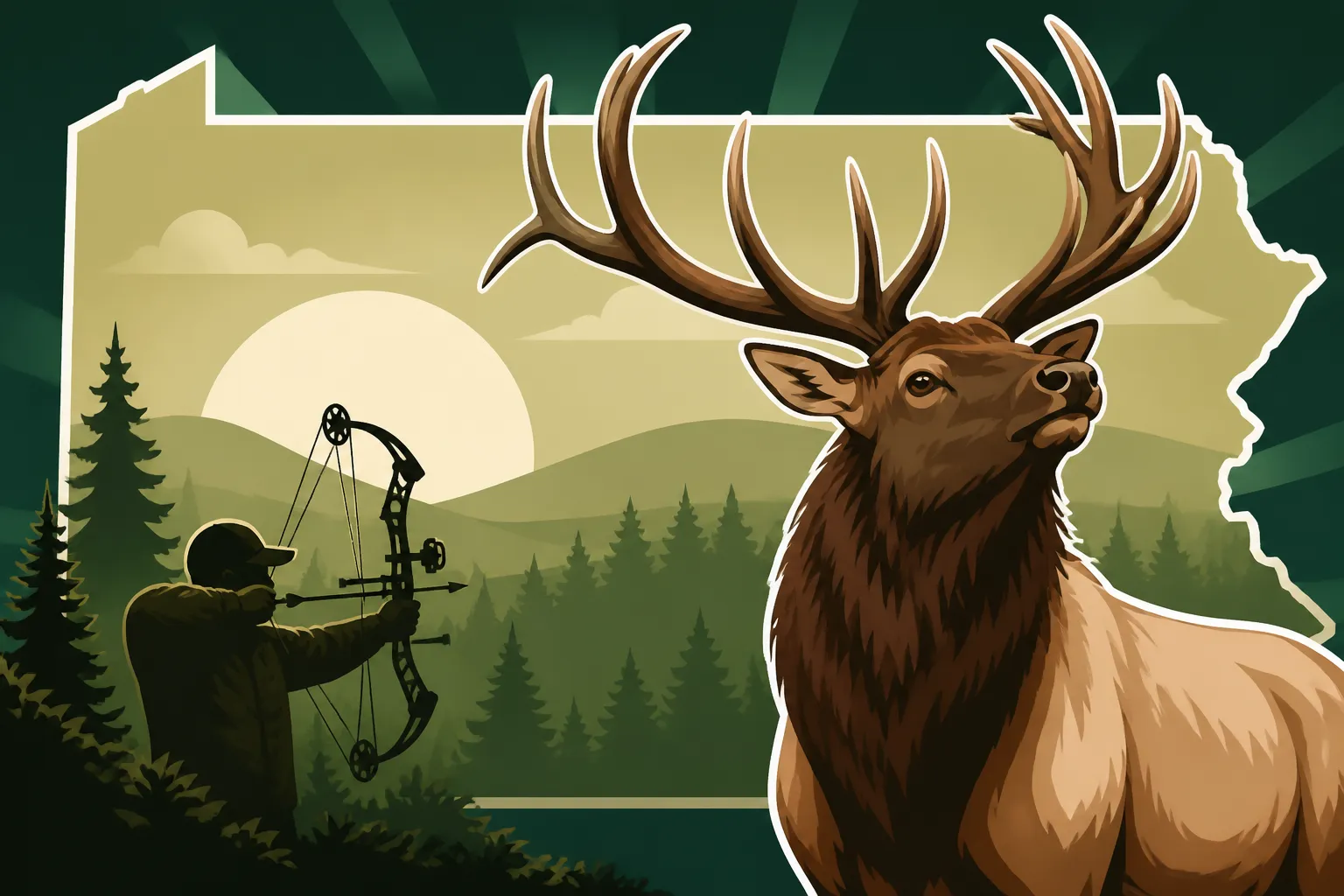
For many Pennsylvania hunters, the thought of a record book bull elk isn't just a dream; it's the pinnacle of a lifelong pursuit. These magnificent animals roam our state's wild lands, representing a triumph of conservation and a testament to the rugged beauty of the Elk State. This guide will walk you through what it means for a Pennsylvania bull elk to make the record books, how these impressive animals are measured, and the rich history behind our state's truly monumental herd.
Understanding Pennsylvania Elk Record Books
When we talk about "record book" elk, we're typically referring to prestigious organizations that document exceptional trophies based on a standardized scoring system. These aren't just lists of the biggest animals; they're meticulously maintained archives that reflect the health of wildlife populations and the success of conservation efforts. For Pennsylvania, where the elk herd has been brought back from near extinction, every entry is a point of pride.
The Major Record-Keeping Organizations
The most widely recognized record book for North American big game, including elk, is Boone and Crockett Club. Established over a century ago by Theodore Roosevelt and his peers, it promotes ethical hunting and wildlife conservation through fair chase principles. Their scoring system is universally accepted and provides a consistent method for comparing trophies across decades and different regions. A "Boone and Crockett bull" is synonymous with an absolutely world-class animal.
Another significant record book is Pope and Young Club, which specifically recognizes trophies taken with archery equipment under fair chase conditions. While Boone and Crockett covers all legal methods of take (rifle, muzzleloader, archery), Pope and Young focuses solely on bowhunting. Given that Pennsylvania offers an archery elk season, this record book is particularly relevant for those dedicated stick-and-string hunters hoping to tag a giant. There are also state-level record books, sometimes maintained by hunting organizations within Pennsylvania, that may have slightly different criteria or focus on state-specific achievements. These often celebrate local hunters and local trophies, providing another avenue for recognition within the hunting community.
What the Records Really Measure
It’s easy to think of a record book as just a list of the biggest racks, but it’s much more nuanced. The scoring systems are designed to measure the symmetry, mass, length, and spread of the antlers, providing a comprehensive assessment of the animal's maturity, genetics, and habitat quality. For elk, scores are often broken down into "typical" and "non-typical" categories. A typical elk has antlers with a relatively symmetrical pattern of points, whereas a non-typical has abnormal points or variations that deviate from the standard symmetrical form. Both are celebrated, but they are judged differently to ensure fair comparison within their respective categories. This distinction allows recognition for both the classic, majestic rack and the unique, sometimes gnarly, characteristics of an older bull.
Qualifying for the Record Books: The Scoring Process
The process of officially scoring an elk for a record book is incredibly detailed and requires a certified measurer. It’s not something you do in the field; rather, it's a careful, post-hunt procedure that ensures accuracy and adherence to strict rules. Understanding this process can help you appreciate what makes a bull truly exceptional.
Antler Measurements and Criteria
Boone and Crockett, the gold standard, uses a series of measurements that quantify the various aspects of an elk's antlers. This includes the length of the main beams, the length of all points (tines), the circumference measurements at several points along the main beam (known as mass measurements), and the greatest spread between the antlers. For typical elk, symmetry is key. Deductions are made for any differences in length or mass between corresponding points on the left and right antlers. The goal is to find the most symmetrical, impressive typical rack.
Non-typical elk, on the other hand, are scored differently. While the basic measurements are similar, non-typical points are added to the score rather than being deducted for asymmetry. This celebrates the unique character of these racks, which often come from older bulls that have developed fascinating, unpredictable antler growth. The final score is the sum of all these individual measurements, minus any applicable deductions for typical categories. The entire process requires precision, often using flexible steel tapes to follow the curves of the antlers accurately. The antlers must also undergo a mandatory 60-day drying period before official measurement to account for any shrinkage. This drying period ensures that all recorded scores are consistent and comparable over time.
Minimum Scores and What They Mean
Each record-keeping organization sets minimum score requirements for entry. For Boone and Crockett, a typical American elk generally needs to score a certain number of points (check their official website for current figures, as these can be updated), and a non-typical often requires an even higher score due to the added points. These minimums are not arbitrary; they represent a threshold of exceptional quality that only a small percentage of harvested animals achieve. Reaching these minimums signifies an outstanding trophy and a truly memorable hunt.
Achieving a record book score is often the result of several factors converging: exceptional genetics within the elk population, a rich habitat providing ample nutrition, and the bull reaching an older age where its antler growth potential is maximized. Hunters who pursue these animals understand that it's about more than just pulling the trigger; it's about appreciating the culmination of biological and environmental factors that produce such a magnificent creature. The Pennsylvania Game Commission's careful management of the herd, including monitoring Pennsylvania Elk Herd Size and Range and ensuring Elk in the Pennsylvania Wilds have suitable habitat, directly contributes to the potential for these record-class animals.
Historical Perspective and Where the Big Bulls Come From
The existence of record book bull elk in Pennsylvania is a modern marvel, a testament to one of America’s greatest wildlife restoration stories. Understanding this history helps contextualize the magnificent animals we see today and where the best chances for encountering a giant might lie.
The Pennsylvania Elk Restoration Story
Pennsylvania's elk population was completely wiped out by the late 19th century due to unregulated hunting and habitat loss. However, thanks to dedicated conservation efforts, primarily through the reintroduction of elk from western states in the early 20th century, the herd slowly began to recover. For decades, the population was carefully managed, and it wasn't until the early 2000s that Pennsylvania truly saw a boom in its elk numbers and an increase in trophy quality. This turnaround is a source of immense pride for the state's hunting and conservation communities, making every large bull a symbol of successful wildlife management. Learning How Elk Returned to Pennsylvania highlights the dedication involved.
The habitat in the Pennsylvania Wilds, particularly the mixture of mature forests, regrowth, and agricultural fields, provides a rich environment for elk. These diverse food sources, coupled with plenty of cover and relatively low hunting pressure (due to the limited number of tags), allow bulls to mature and express their full genetic potential in terms of antler growth. This careful balance ensures that the dream of a record book elk remains alive for future generations.
Prime Elk Country for Trophy Bulls
While elk range across several counties in north-central Pennsylvania, certain areas are more renowned for producing larger bulls. Places like Elk, Cameron, Potter, and Clearfield counties, often within or bordering the State Game Lands and State Forests of the Pennsylvania Wilds, are frequently mentioned as hotspots. These areas provide the ideal mix of remote, rugged terrain for security, abundant browse, and agricultural edges for high-energy forage. The specific characteristics of the terrain, including elevation changes and water sources, can also play a role in where the largest bulls establish their territories.
For those lucky enough to draw one of the coveted elk tags, understanding these prime areas becomes critical. Resources like the Pennsylvania Mapping Center or third-party mapping applications such as GoHunt can be invaluable for scouting. These tools help hunters identify habitat features, potential bedding areas, and travel corridors where a trophy bull might be found. They can also help you understand public land boundaries, which is crucial when planning a hunt in the Pennsylvania Elk Hunt Zones.
| Record Book | Category | Minimum Score (Typical) | Minimum Score (Non-Typical) | General Focus |
|---|---|---|---|---|
| Boone & Crockett | American Elk | Consult B&C website | Consult B&C website | All legal methods of take |
| Pope & Young | American Elk | Consult P&Y website | Consult P&Y website | Archery only |
Note: Specific minimum scores for Boone & Crockett and Pope & Young can change. Always refer to their official websites for the most current information.
The Quest for a Record Bull: What Hunters Should Know
Drawing a Pennsylvania elk tag is a once-in-a-lifetime opportunity for most hunters, given the lottery system. The odds are stacked against you, but if you're one of the fortunate few, the pursuit of a record book bull becomes a very real, albeit challenging, endeavor. It requires meticulous preparation, extensive scouting, and a deep understanding of elk behavior.
Preparation is Key for a Successful Hunt
Before you even step foot in elk country with a tag, the work begins. Researching the unit you've drawn is paramount. Understanding the terrain, access points, and historical elk movements will give you a significant advantage. This is where tools like GoHunt shine, allowing you to pour over topo maps, aerial imagery, and even historical weather patterns to formulate a strategy. You'll want to study the Pennsylvania Elk Application Dates and understand the draw process long before you ever get a tag in hand.
Physical conditioning is also crucial. Elk country in Pennsylvania is often steep, rugged, and densely forested. Being able to hike long distances with a pack, navigate challenging terrain, and potentially pack out a massive animal is no small feat. Practicing with your rifle or bow at realistic hunting distances, including shots uphill and downhill, is also non-negotiable. Don't underestimate the mental fortitude required for an elk hunt; these animals are incredibly wary, and opportunities can be fleeting. Knowing your Shot Placement on a Black Bear might seem unrelated, but accuracy and calm under pressure apply to all big game.
Scouting for the Giant
For hunters with a tag, scouting trips are essential. This isn't just about looking for elk; it's about looking for sign of large, mature bulls. Look for big tracks, large rubs on trees (especially those showing significant antler width), and deep wallows. Focus your efforts in areas with prime feed, good cover, and natural travel corridors. Early season scouting, even without a tag, can provide valuable insights into where the biggest bulls are spending their time. Scouting Pennsylvania Public Land Before Season is a common strategy for all big game hunters, and it applies to elk even more so.
Consider employing trail cameras in strategic locations, particularly near wallows or well-used trails, to help identify potential record book contenders. Be mindful of regulations regarding trail camera use on public lands. If you're fortunate enough to spot a bull, spend as much time as possible observing its patterns, its preferred feeding and bedding areas, and how it reacts to pressure. This intimate knowledge can be the difference between a close encounter and a missed opportunity when the season opens. Observing Elk Viewing in Pennsylvania areas, even if just to understand elk behavior, can be beneficial.
The Hunt Itself: Strategy and Patience
When the season finally arrives, it's a blend of executing your plan and adapting to conditions. Elk are known for their powerful bugles, especially during the rut, and learning to call effectively can be a game-changer. Both cow calls and bull bugles can be used to locate animals and draw them in, but understanding when and how to use them is an art. Whether you are Rattling and Grunting in Pennsylvania for deer or bugling for elk, vocalizations are powerful tools.
Patience is perhaps the most critical virtue. Unlike deer, where you might see multiple animals in a day, elk opportunities can be few and far between. Holding out for a truly record-class animal requires discipline, especially when you know there are other, smaller bulls in the area. Often, the biggest bulls are the most elusive, staying deep in cover and moving cautiously. Hunting the thermals and wind correctly, using natural funnels, and being prepared for a long haul are all part of the equation. If you are successful, the challenge doesn't end. Handling a Bear After the Shot is similar to handling an elk, requiring careful field dressing and extraction. The reward, however, of a Pennsylvania record book bull elk is a memory that will last a lifetime.
Disclaimer
This article is for general informational purposes only and does not constitute professional advice. Laws, prices and regulations vary by location and change over time. Consult a qualified professional for guidance on your specific situation.