Why Young Forest Matters to Grouse
For those of us who cherish the explosive flush of a ruffed grouse from thick cover, the last few decades in Pennsylvania have been tough. We've watched their numbers dwindle, and it can feel like a mystery, leaving many wondering what exactly happened to our state bird. This guide aims to pull back the curtain on one of the most critical, yet often misunderstood, factors in their survival: the vital role of young forest habitat. We'll delve into why this specific type of environment is non-negotiable for grouse and what its decline means for their future.
Understanding the Ruffed Grouse Habitat Needs
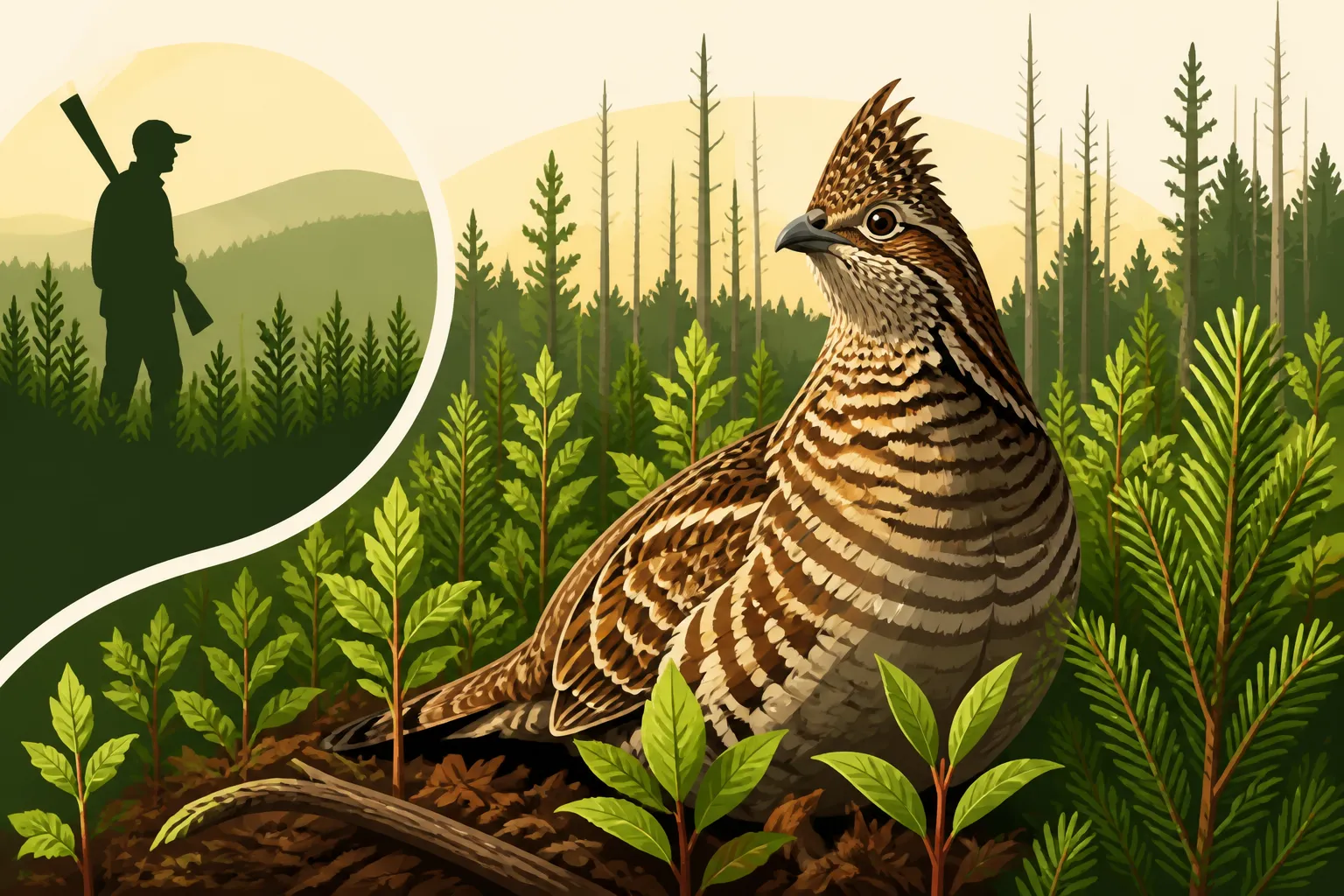
The ruffed grouse, that magnificent woodland drummer, isn't just any bird that lives in the woods. It's a specialist, an absolute connoisseur of certain types of forest cover, particularly the dense, regenerating growth that we call young forest. Without this specific environment, their chances of survival plummet dramatically. When we think about what a grouse needs, it boils down to three core elements: constant protective cover, a reliable food source, and sanctuary from the myriad predators that call the Pennsylvania woods home.
The Life Cycle and Cover Requirements
From the moment a grouse chick hatches, its life is dictated by cover. These tiny, vulnerable birds need immediate refuge from everything that sees them as a meal, whether it's a hawk soaring overhead, a fox patrolling the forest floor, or a weasel slinking through the underbrush. Young forest, with its tangled web of saplings, briars, and low-growing shrubs, provides just that. It's an impenetrable fortress where a chick can disappear in an instant. As they grow, even adult grouse, powerful flyers as they are, still rely heavily on this dense cover. They aren't birds of open timber or mature, park-like forests. They thrive in the thick stuff, the places where you have to push your way through, where visibility is limited to a few yards at best. This is where they drum, where they nest, and where they spend their entire lives. Without this crucial escape cover, every moment is a risk, and every day is a gamble.
Think about walking through a young clearcut that's five to fifteen years old. It’s shoulder-high or taller, a dense jungle of birch, aspen, oak sprouts, and blackberry bushes. You can barely see your feet, let alone a bird hunkered down just a few yards away. That's precisely what a grouse needs to feel safe. Compare that to a mature oak forest where you can see for a hundred yards or more. While beautiful, that open understory offers no real protection for a ground-dwelling bird like the grouse. The changing landscape, from clearcuts and natural disturbances like fires and floods to mature, shaded canopies, directly impacts where grouse can survive and thrive. This is why Ruffed Grouse, Pennsylvania's State Bird are so sensitive to changes in forest structure.
Food Sources in Young Forests
Beyond just safety, young forests are also a veritable smorgasbord for grouse. As a forest regenerates after a disturbance like a timber harvest, the amount of sunlight reaching the forest floor explodes. This surge of light allows a diverse array of plants to flourish, many of which provide crucial food sources for grouse throughout the year. In the spring and summer, they forage on the tender leaves, buds, and berries of plants like greenbrier, clover, aspen buds, and various grasses. As fall approaches, the fruit of hawthorns, dogwood, and blackberry become critical.
During the lean winter months, when much of the ground food is buried under snow or simply gone, grouse switch their diet to tree buds, particularly those of aspen and birch. These specific tree species are often abundant in young, regenerating forest stands, having been stimulated by the increased sunlight and reduced competition from larger, older trees. So, a healthy young forest isn't just a home; it's a grocery store, providing a consistent and varied diet that is essential for survival, especially when winter's grip tightens. The lack of these specific food plants in mature forests further highlights the grouse's reliance on early successional habitats.
Protection from Predators
It's a tough world out there, and ruffed grouse face a daunting array of predators, both on the ground and from the air. From red-tailed hawks and great horned owls to coyotes, foxes, and bobcats, everything seems to want a grouse for dinner. This is where the sheer density of young forest cover truly shines as a life-saving feature. The interwoven branches, thick saplings, and dense undergrowth create a physical barrier that makes it incredibly difficult for predators to hunt effectively.
A hawk can't easily spot a camouflaged grouse through a thick canopy of young trees. A fox struggles to navigate the tangled brush, giving a flushing grouse precious extra seconds to escape. This "structural complexity" provides the grouse with both visual concealment and physical obstruction, turning the habitat into a natural fortress. Without this dense cover, a grouse standing in open timber becomes an easy target, a sitting duck (or, rather, a sitting grouse). The effectiveness of this protective cover is paramount in mitigating the constant pressure from predators, allowing grouse populations to sustain themselves. This is a primary reason why Ruffed Grouse Decline in Pennsylvania is so closely tied to habitat changes.
| Habitat Type | Key Characteristics for Grouse | Predator Protection | Food Abundance | Movement Ease for Hunter | Grouse Preference |
|---|---|---|---|---|---|
| Young Forest | Dense saplings, briars, shrubs, regenerating hardwoods (5-20 yrs) | Excellent | High (buds, berries) | Difficult | High |
| Mature Forest | Tall, widely spaced trees, open understory, shaded forest floor | Poor | Low (limited understory) | Easy | Low |
| Mixed Growth | Patches of young and old, typically found near edges | Moderate | Moderate | Moderate | Moderate |
The Decline of Young Forest in Pennsylvania
Understanding why young forest matters so much for grouse is only half the battle. The other, more somber, half is understanding why it's disappearing from our landscape. It's not a sudden event, but rather a slow, steady change in forest dynamics over many decades, driven by a combination of historical shifts and modern challenges. This decline is directly implicated in the long-term trends showing Pennsylvania grouse numbers today are significantly lower than they once were.
Historical Logging Practices vs. Modern Forestry
Go back a hundred or more years in Pennsylvania, and much of the state was clear-cut, often multiple times, to fuel industrial growth and build America. While this was devastating to the mature forests, it inadvertently created vast expanses of the perfect young forest habitat that grouse absolutely loved. Imagine millions of acres of regenerating woodlands – it was a grouse paradise. After these initial intense logging periods, the forests were largely left alone to regrow.
However, modern forestry practices, while far more sustainable and scientifically managed, often don't replicate the scale or type of disturbance that historically benefited grouse. Modern cuts are usually smaller, more selective, and focused on sustainable timber yield rather than wholesale regeneration across vast tracts. This isn't a criticism of modern forestry, but simply an acknowledgment that its goals and methods differ from the massive, often unplanned, disturbances of the past. As a result, the widespread, abundant young forest that once characterized much of Pennsylvania has become fragmented and less common.
Forest Maturation and Habitat Loss
The biggest culprit in the decline of young forest is simply time. Forests mature. If left undisturbed, a young, brushy clearcut eventually grows into a mature, open-understory forest. The tall trees shade out the low-growing shrubs and saplings, the canopy closes, and the dense, tangled cover that grouse need simply vanishes. This natural process is inevitable. Without regular disturbance—whether it's logging, fire, or severe weather events like ice storms—our forests naturally progress towards older age classes.
For many decades, Pennsylvania's public and private forests have been aging without enough widespread, impactful disturbance to "reset" portions of the landscape back to that early successional stage. This means that year after year, more acres transition from young, ideal grouse habitat to mature forests that offer little for them. It’s not just a subtle change; it’s a complete transformation of the habitat structure, directly leading to fewer places where grouse can successfully live and raise broods. This gradual shift explains When Pennsylvania Grouse Numbers Crashed – it wasn't a single event, but a cumulative loss of their preferred habitat over time.
The Impact of West Nile Virus
While not strictly a habitat issue, it would be remiss not to mention the confounding factor of West Nile Virus (WNV). While the primary driver of grouse decline is habitat loss, WNV has been shown to have a significant impact on grouse populations, particularly in certain areas. This mosquito-borne illness can be lethal to grouse, and some research suggests that even if habitat were perfect, WNV could still suppress populations. It's a complex interaction: while habitat loss makes grouse more vulnerable to all pressures, WNV adds another layer of mortality that further challenges their recovery. It's a stark reminder that conservation often involves tackling multiple threats simultaneously. For more detailed information on this, consider reading West Nile Virus and Pennsylvania Grouse.
The Role of Active Forest Management
Given the critical importance of young forest, it becomes clear that simply "leaving the woods alone" isn't a viable strategy for grouse conservation. Nature, left to its own devices, will continue to move towards mature forests. Therefore, active forest management, often involving practices that mimic natural disturbances, is absolutely essential to create and maintain the habitat grouse desperately need. This is where modern conservation steps in, trying to reverse the trends seen in Pennsylvania Grouse Flush Rate Surveys.
Timbering and Regeneration
The most effective and widely used tool for creating young forest is timber harvesting. A properly managed timber cut, particularly a clearcut or a patch cut, removes existing trees and allows sunlight to flood the forest floor. This stimulates a burst of new growth from dormant seeds and root sprouts, quickly transforming the area into dense, regenerating cover. It might look messy to the casual observer, but to a grouse, it looks like home. These cuts are often strategically planned on public lands like State Game Lands and State Forests.
However, not all cuts are created equal. The size, shape, and frequency of cuts, as well as the species left to regenerate, all play a role in how beneficial the outcome is for grouse. Forestry professionals and wildlife biologists work together to design these harvests specifically with grouse in mind, ensuring a diverse mosaic of age classes across the landscape. This provides not only the necessary thick cover but also a variety of food sources and drumming logs that are crucial for grouse survival and reproduction. This careful planning is also why Timber Cuts and Where Deer Move After can impact other species, and wildlife managers must consider the needs of multiple animals.
Prescribed Burns and Habitat Restoration
While timbering is a primary tool, prescribed fire is another incredibly valuable, though less widely utilized for grouse, management technique in certain forest types. Historically, natural wildfires, ignited by lightning or Native Americans, played a role in shaping forest structure. Prescribed burns, controlled fires set by trained professionals, can achieve similar effects by reducing leaf litter, stimulating new plant growth, and setting back succession to an earlier stage.
In Pennsylvania, prescribed burns are more commonly used for oak regeneration and wildfire hazard reduction, but they can also create patchworks of young growth beneficial to grouse, particularly in drier ridge top areas or where understory control is needed. By removing competing vegetation and opening up the canopy, fire encourages the growth of herbaceous plants and shrubs, enhancing both cover and food availability. It's a powerful tool, but one that requires careful planning and execution to ensure ecological benefits are realized without unintended consequences. You can often find information about these efforts by looking into Prescribed Burns on Pennsylvania Game Lands data.
Balancing Wildlife Needs and Timber Production
The beauty of sustainable forestry for grouse is that wildlife habitat creation doesn't have to be at odds with timber production. In fact, they can go hand-in-hand. By carefully planning harvests, foresters can achieve their timber objectives while simultaneously creating and maintaining the young forest habitat that grouse, woodcock, and many other wildlife species depend on. It's a win-win scenario where the economic value of timber helps fund the habitat work, and the habitat work ensures healthy wildlife populations.
This integrated approach is complex, requiring long-term planning, ecological understanding, and collaboration between state agencies, private landowners, and conservation organizations. It means looking at the forest not just as a collection of trees, but as a dynamic ecosystem that needs periodic disturbance to remain healthy and diverse. The challenge lies in expanding these practices to a scale large enough to significantly impact regional grouse populations.
What Hunters Can Do to Help (and Find Grouse)
As grouse hunters, we're not just consumers of the resource; we're often its most passionate advocates. Understanding the plight of the grouse and the importance of young forest empowers us to be part of the solution, both by supporting conservation and by intelligently pursuing these challenging birds.
Identifying Young Forest on Public Lands
Finding grouse means finding young forest, and thankfully, modern tools make this easier than ever. When you're Scouting Pennsylvania Public Land Before Season, don't just look for big timber. Focus your attention on recent timber cuts, regenerating clearcuts, and areas of dense shrubby growth. These areas are often marked on mapping applications. Services like GoHunt, along with the Pennsylvania Mapping Center, offer incredible satellite imagery and public land layers that can help you identify these critical young forest patches from your home computer or even on your phone in the field. Look for areas with a noticeably lighter green tint on satellite maps, indicating recent regrowth, or areas marked with specific forestry unit designations.
Many State Game Lands and State Forests actively manage for young forest, and you can often find information about recent timber harvests or habitat improvement projects on their respective websites. Pay attention to the age of the regrowth; areas that are 5-20 years post-harvest tend to be the sweet spot for grouse. Beyond that, the cover can start to thin out too much. Always be on the lookout for dense pockets of greenbrier, grapevines, aspen, and hawthorn. When you locate these areas, you're not just finding a place to hunt; you're finding a place where grouse can actually survive. This approach is key to Finding Grouse Cover on Game Lands.
Supporting Conservation Efforts
If you love grouse hunting, you have a direct role to play in their future. The easiest way is by supporting organizations that actively work on habitat restoration and advocating for sound forest management policies. Groups like the Ruffed Grouse Society (RGS) are at the forefront of creating and maintaining young forest habitat, often partnering with state agencies and private landowners. Your membership, donations, or even volunteering for habitat projects can make a tangible difference.
Furthermore, make your voice heard with your elected officials and the Pennsylvania Game Commission (PGC) about the importance of active forest management. Emphasize that practices like timbering, when done correctly, are not destructive but essential for wildlife diversity. Every hunting license you buy also contributes to the PGC's efforts, which include significant habitat work. Being an informed and engaged conservationist is one of the most powerful things a grouse hunter can do. Consider learning more about Whether Pennsylvania Grouse Can Recover and how you can contribute.
Hunting Strategies in Regenerating Areas
Once you've identified those promising young forest patches, your hunting strategy needs to adapt to the dense cover. This isn't wide-open woods hunting; it's a grind, often requiring you to push through thickets where every step is a deliberate effort. Don't expect to see birds from a distance. Flushes will be close, fast, and often obscured.
Work slowly and methodically, covering every inch of the thickest stuff. Often, grouse will hold tight, allowing you to walk right past them before flushing. Pay attention to natural funnel points, edges where the young forest meets older timber, or areas around old logging roads that provide slightly easier travel for you but still offer dense cover for the birds. If you're Flushing Grouse Without a Dog, a stop-and-go cadence can sometimes make a nervous bird flush as you pause, thinking you've passed. Keep your gun mounted and ready, as shooting opportunities will be fleeting. It’s hard work, but the reward of a wild grouse flush in dense cover is unlike anything else. This style of hunting is often called Grouse Hunting Pennsylvania Cover for a reason – it's all about the cover.
Disclaimer
This article is for general informational purposes only and does not constitute professional advice. Laws, prices and regulations vary by location and change over time. Consult a qualified professional for guidance on your specific situation.