Whether Pennsylvania Grouse Can Recover
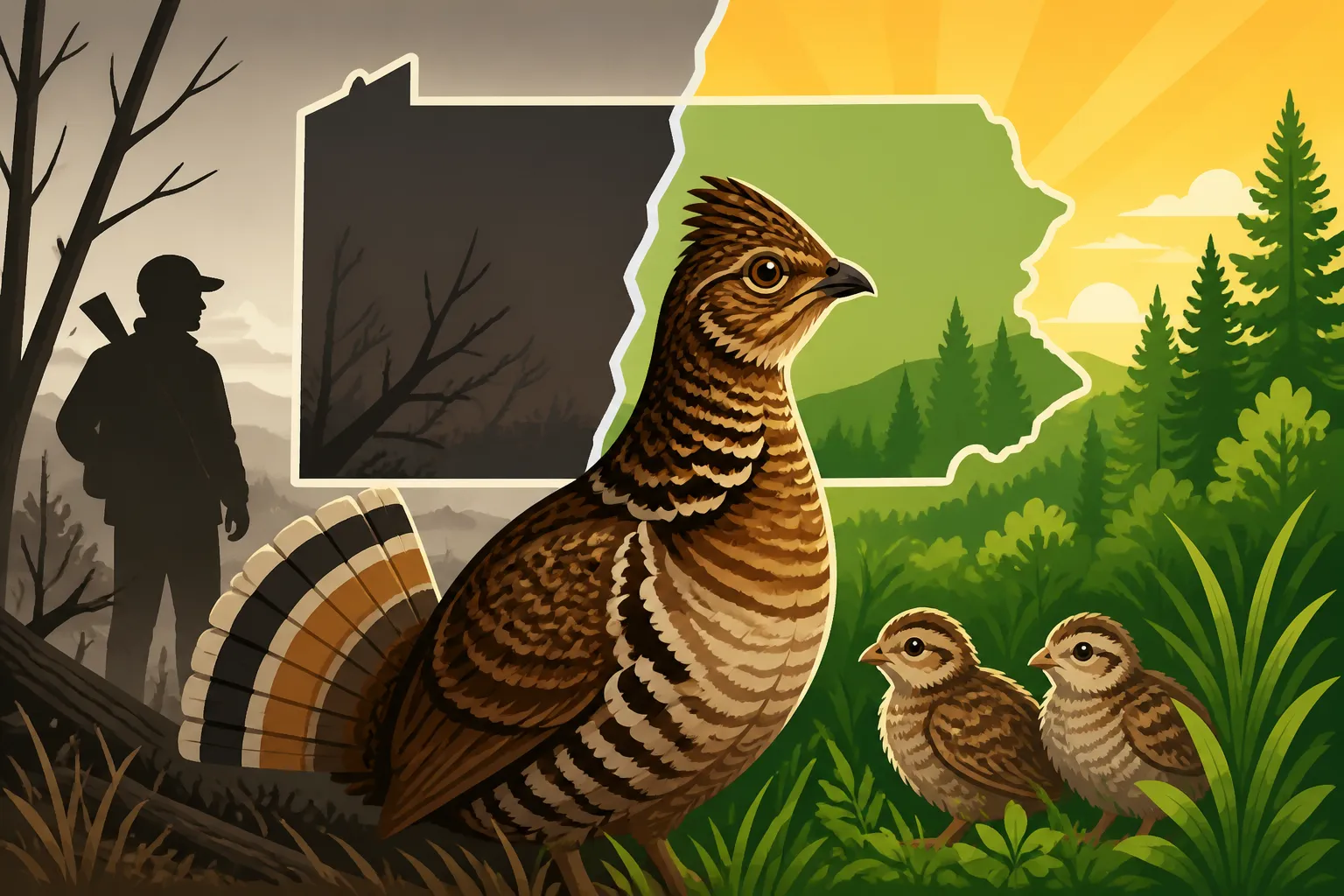
For those of us who grew up with the distinctive drum of a ruffed grouse echoing through the Pennsylvania woods, the silence of recent decades can be heartbreaking. It’s a real punch to the gut when you walk classic coverts that used to hold birds and now find nothing but echoes. This guide dives deep into the question that weighs heavily on many of our minds: can Pennsylvania's iconic ruffed grouse truly recover, and what are the chances we'll hear that drumming regularly again?
The Historical Decline of Pennsylvania's Ruffed Grouse
The decline of the ruffed grouse in Pennsylvania isn't a simple story; it's a complex tapestry woven with threads of environmental change, disease, and shifting land use. For generations, the ruffed grouse was the undisputed king of Pennsylvania's game birds, beloved for its explosive flush and challenging hunt. But something changed, and the numbers began to dwindle, leaving many of us scratching our heads and wondering what went wrong. Understanding the past is crucial if we're to have any hope for the future.
Habitat Loss and Fragmentation
One of the most significant factors in the grouse's downturn has been the gradual, but relentless, loss of critical young forest habitat. Ruffed grouse thrive in early successional forests – those dense, brushy areas created by timber harvests, clearcuts, or natural disturbances like fires. These thickets provide essential cover from predators, abundant food sources like buds and berries, and nesting sites safe from prying eyes.
Historically, Pennsylvania's landscape experienced cycles of logging and regrowth, which naturally created these varied forest structures. However, as forestry practices shifted, and large-scale timbering declined or moved towards more mature, even-aged stands, the continuous creation of young forest slowed dramatically. Furthermore, residential and commercial development carved up existing wildlands, leading to habitat fragmentation. Smaller, isolated patches of suitable cover make it harder for grouse populations to thrive, as birds can't easily disperse, find mates, or escape localized threats. This fragmentation also exposes them to more edge predators, like raccoons, opossums, and domestic cats, which thrive in disturbed environments. If you've ever scouted a new public land block and noticed endless acres of mature, open timber, you’ve seen firsthand why grouse struggle. There's simply nowhere for them to hide, nowhere for them to raise their chicks safely.
West Nile Virus: A Silent Killer
While habitat issues laid the groundwork for vulnerability, the arrival of West Nile Virus (WNV) truly delivered a devastating blow. WNV, a mosquito-borne illness, was first detected in North America in 1999 and quickly spread across the continent. By the mid-2000s, it was confirmed in Pennsylvania's ruffed grouse populations, and research has since shown a strong correlation between WNV prevalence and steep declines in grouse numbers. West Nile Virus and Pennsylvania Grouse is a topic many of us wish we didn't have to talk about, but it's a harsh reality.
The virus affects the grouse's central nervous system, often leading to disorientation, weakness, and eventually death. Unlike many other bird species that can develop immunity or recover, grouse appear to be particularly susceptible, with high mortality rates following exposure. This isn't just a slight dip in numbers; it’s been a significant, widespread reduction in grouse populations across multiple states, including Pennsylvania. The insidious nature of WNV is that it's largely invisible to us hunters. We don't see sick birds staggering through the woods; we just notice fewer flushes, year after year. It's a silent killer that has fundamentally changed the outlook for this species, acting as a constant pressure even in areas with seemingly good habitat.
Other Contributing Factors
Beyond the primary culprits of habitat and WNV, other factors have undoubtedly played a role in the grouse's struggles. Predator populations, particularly those adapted to human-altered landscapes, have thrived. While grouse have evolved defenses against natural predators, a landscape with fragmented cover and abundant generalist predators can be an uphill battle. Coyotes, foxes, and various raptors are always on the prowl, and without dense cover, grouse become easy targets, especially during nesting season.
Weather patterns can also have a localized impact. Unseasonably cold, wet springs can decimate chick survival rates, as young grouse are highly vulnerable to hypothermia. While these are natural fluctuations, repeated bad weather years in already struggling populations can severely hinder recovery. Additionally, other less-understood diseases or environmental contaminants might play a minor role, though WNV remains the most widely cited and researched disease impactor. It's a compounding effect: a stressed population due to poor habitat is far less resilient to disease or adverse weather. It's like trying to recover from a serious illness when you're already run down and malnourished.
| Factor | Primary Impact on Grouse | Severity of Impact |
|---|---|---|
| Young Forest Habitat Loss | Lack of food, cover, nesting sites | High |
| Habitat Fragmentation | Reduced dispersal, increased predation | High |
| West Nile Virus (WNV) | Direct mortality, neurological damage | Very High |
| Increased Predation | Higher mortality, especially for chicks | Moderate to High |
| Adverse Weather (Spring) | Reduced chick survival | Moderate (localized) |
| Other Diseases/Pollutants | Potential stress, unknown impacts | Low to Moderate |
Current Efforts to Aid Grouse Recovery
Despite the grim reality of recent declines, there are dedicated individuals and organizations working tirelessly to give the ruffed grouse a fighting chance in Pennsylvania. It's not a lost cause, but it requires a long-term vision and significant effort to reverse decades of environmental shifts.
Habitat Management Initiatives
The most tangible and impactful efforts are focused squarely on habitat. Recognizing that young forest is the cornerstone of grouse survival, the Pennsylvania Game Commission (PGC) and other agencies have ramped up their forest management activities on public lands. Why Young Forest Matters to Grouse isn't just a talking point; it's a guiding principle. This includes timber sales designed to create diverse age classes of trees, clearcuts that regenerate into thick sapling growth, and even prescribed burns in certain areas to set back succession and promote desirable plant communities.
These efforts are often concentrated on State Game Lands and State Forests, which comprise vast tracts of hunting land across the Commonwealth. Foresters are now specifically targeting areas to create drum-heavy habitat, managing for a mosaic of forest types rather than uniform, mature stands. Organizations like the Ruffed Grouse Society (RGS) also work closely with landowners and public land managers, providing expertise and sometimes funding for specific habitat projects. They advocate for timber harvests that benefit grouse and other early successional species, demonstrating that sustainable forestry and wildlife conservation can go hand-in-hand. When you see a recent clearcut on a Game Lands map that you're looking at on your GoHunt app, understand that it might just be a deliberate effort to create future grouse cover. These areas, while sometimes appearing stark initially, are vital nurseries for game birds.
Research and Monitoring
Understanding the problem is the first step to solving it, and that's where rigorous research and monitoring come into play. The PGC, in collaboration with universities and conservation groups, conducts various surveys to track grouse populations and assess the impact of WNV. This includes drumming surveys, where biologists listen for the distinctive drumming sound of male grouse in the spring to estimate population trends. Pennsylvania Grouse Flush Rate Surveys also offer valuable data, providing direct evidence of bird presence and density.
Beyond simple counts, researchers are actively studying WNV in grouse, trying to understand how the virus impacts individual birds and populations, and if there are any emerging resistances or mitigating factors. This scientific approach helps guide habitat management decisions, ensuring that conservation dollars and efforts are spent in the most effective ways. It's a continuous learning process, adapting strategies as new information becomes available about the virus and grouse ecology. Without this ongoing research, our efforts would be little more than guesswork.
Partnership and Funding
No single entity can tackle a problem as vast as grouse recovery alone. It takes a village, or in this case, a coalition of state agencies, non-profits, private landowners, and dedicated hunters. Organizations like the Ruffed Grouse Society and Audubon Pennsylvania are instrumental in advocating for and funding habitat projects. These groups often secure grants, organize volunteer workdays, and educate the public on the importance of young forest ecosystems.
Hunters, through their license fees, also directly contribute to these efforts. A portion of every hunting license sold in Pennsylvania goes towards wildlife management, including habitat improvement projects on public lands. Additionally, federal programs like the Wildlife and Sport Fish Restoration Program funnel excise taxes from firearms, ammunition, and archery equipment back into state-level conservation. It's a powerful cycle: hunters pay for licenses and gear, which funds habitat work, which ideally, in turn, leads to more wildlife. This collaborative approach is vital for sustaining the long-term, landscape-scale changes needed for grouse to thrive once more.
The Road Ahead: Challenges and Optimism for Grouse
Looking to the future, the path to widespread ruffed grouse recovery in Pennsylvania is undoubtedly challenging, but it's not without glimmers of hope. We've identified the hurdles, and we're implementing solutions, but nature works on its own timeline.
Hurdles to Widespread Recovery
The biggest ongoing hurdle remains West Nile Virus. Even with excellent habitat, the constant pressure of WNV means that grouse populations might struggle to reach their historical highs. It's a biological reality we're still grappling with, and finding a direct solution to WNV in wild bird populations is incredibly complex, if not impossible with current technology. Until grouse develop stronger natural resistance or some environmental factor reduces mosquito populations significantly, WNV will continue to be a cap on their recovery potential.
Another challenge is the sheer scale and time commitment required for habitat creation. Forest management is a long game. A clearcut today won't be prime grouse habitat for several years, and managing large tracts for diverse age classes requires continuous planning and investment. Furthermore, securing funding and political will for timber harvests, especially in areas where public perception might oppose it, can be an ongoing struggle. It's a constant push and pull, trying to balance multiple conservation goals with public opinion and economic realities. Even when you're using a tool like GoHunt to pinpoint ideal cover, it’s important to remember that such cover is finite and often hard-won.
Localized Success Stories and Future Outlook
Despite the broader challenges, there are localized success stories that offer a beacon of hope. In areas where intensive young forest management has been consistently applied over many years, grouse populations have shown signs of stabilizing, or even modest increases. Where Pennsylvania Grouse Still Hold On often correlates directly with these targeted habitat efforts. These "hotspots" demonstrate that when prime habitat is available, grouse can and will respond, even with WNV in the background. It tells us that while WNV is a serious threat, it's not necessarily an extinction-level event if we can give the birds every other advantage.
The future outlook, while cautious, leans towards measured optimism. Widespread recovery to the numbers seen in the mid-20th century might be unrealistic given WNV, but localized recoveries and a stronger, more resilient population across the state are absolutely achievable. It will depend on continued dedication to habitat creation, smart forest management, and ongoing research into the virus and grouse ecology. It also requires sustained support from hunters and conservationists who understand that patience and persistence are key. Habitat Work on Pennsylvania Public Land is a testament to this ongoing effort.
What Hunters Can Do to Help
As hunters, we have a vital role to play in the conservation of ruffed grouse. Our financial contributions through license purchases and memberships in organizations like the Ruffed Grouse Society are critical. Beyond that, becoming informed advocates for science-based forest management is essential. Speak to your local Game Commission wildlife biologist or forest manager, attend public meetings, and understand the role of timbering in healthy forest ecosystems.
Consider volunteering for habitat projects in your area. Many public lands rely on volunteers to clear invasive species, plant beneficial trees and shrubs, or help with other hands-on work. When you're in the woods, be mindful of reporting sick or unusual-looking birds to the PGC. Every piece of data helps researchers understand the health of our wildlife. Finally, support organizations that are actively working on grouse conservation; your membership or donation directly fuels their efforts to create more drumming logs and thickets for our beloved grouse. Grouse Hunting Pennsylvania Cover starts with ensuring there's cover to hunt, and that's something we can all contribute to.
Disclaimer
This article is for general informational purposes only and does not constitute professional advice. Laws, prices and regulations vary by location and change over time. Consult a qualified professional for guidance on your specific situation.