Pennsylvania Dove and Woodcock Flights
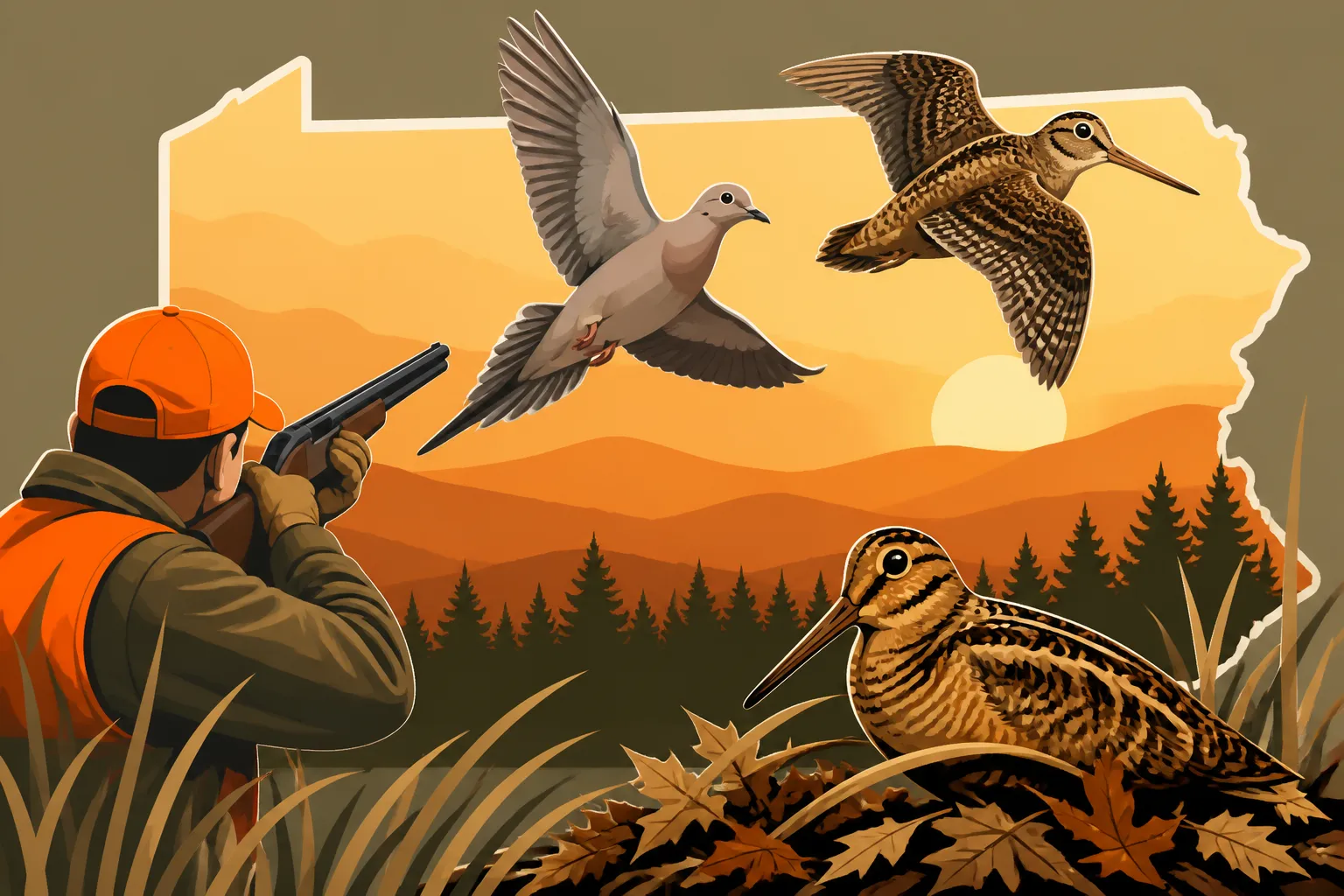
Trying to predict the movements of small, migratory game birds like doves and woodcock in Pennsylvania can feel like trying to catch smoke with your bare hands. One day a field is teeming with doves, the next it’s empty, and locating those elusive woodcock in thick cover can test the patience of even the most seasoned hunter. This guide will help you decipher the patterns of these fascinating birds, from their seasonal migrations to the specific habitats they prefer, ensuring you're in the right place at the right time.
Understanding Pennsylvania Dove Migration and Habitat
Doves are one of the earliest migratory birds to kick off the hunting season in Pennsylvania, offering a fantastic opportunity to shake off the summer rust. Their movements are highly dependent on food sources and weather, making scouting an absolute must.
Early Season Dove Movements
When Pennsylvania's dove season opens, often in early September, you're primarily targeting resident birds. These doves have spent the summer raising broods and establishing local feeding and roosting patterns. They're often found in areas with plentiful seeds, especially freshly cut agricultural fields like wheat, barley, millet, or even silage cornfields. The key here is "freshly cut" – once fields are tilled or picked over, doves move on rapidly. You'll also find them congregating around water sources, especially during hot, dry spells, as they need to drink regularly. Power lines and dead trees near these food and water sources often serve as convenient staging areas before they drop into a field to feed or fly to water.
As the season progresses into late September and early October, colder fronts begin to push migratory doves down from farther north. These birds are often less patterned to specific local fields and can show up in large numbers, providing some of the most exciting action. However, just as quickly as they arrive, a strong cold snap can push them right through Pennsylvania to points south, which is a common frustration for many dove hunters. Knowing when these colder pushes are expected can give you a crucial edge, as you might only have a few days to capitalize on a fresh influx of birds.
Ideal Dove Habitat and Food Sources
Pennsylvania doves have a clear preference for open, agricultural landscapes, particularly those with a mix of croplands, scattered trees, and water. Beyond the initial lure of freshly cut grain fields, doves will utilize areas with natural weed seeds such as ragweed, pokeweed, and smartweed. Fields managed specifically for doves, often planted with sunflowers or millet, are goldmines if you can find them. These fields provide abundant, accessible seed, which is exactly what doves are looking for to fuel their migration.
Another critical habitat feature is a reliable water source. Doves need to drink at least once a day, sometimes more, especially in warm weather. Look for ponds, shallow creeks, or even muddy puddles in fields. They prefer open edges where they can land safely and observe their surroundings before venturing to the water's edge. Roosting cover, usually a stand of scattered deciduous or coniferous trees, is also essential. Doves will loaf in these trees between feeding and drinking forays, providing another predictable spot to intercept them. You can use mapping apps like GoHunt to pinpoint agricultural fields, identify water sources, and even spot power lines or tree lines that might serve as flight paths or roosting areas.
Decoding Woodcock Flights and Habitat Preferences
Woodcock, often called "timberdoodles," are charming and challenging migratory game birds that provide a unique hunting experience in Pennsylvania's coverts. Unlike doves, they prefer dense, moist woodlands.
Woodcock Migration Patterns
Pennsylvania's woodcock season typically opens in October, coinciding with their southward migration from breeding grounds in the northern states and Canada. Early season birds might be local residents, but the bulk of the hunting opportunity comes from "flight birds" pushing through. These migratory woodcock are driven by cold fronts, which freeze the ground and make their primary food source—earthworms—inaccessible. A hard frost in Canada or northern New England can send waves of woodcock into Pennsylvania within a day or two.
The peak of the woodcock migration through Pennsylvania usually occurs in mid to late October, sometimes bleeding into early November, depending on the severity of the weather. They move south at night, often resting and feeding during the day in suitable coverts. Understanding these migration triggers is paramount; a sudden drop in temperature coupled with northwesterly winds often signals an influx of new birds. Knowing when to hit the woods after a significant cold front can dramatically increase your chances of finding these secretive birds, as they'll be concentrated in prime feeding areas.
Preferred Woodcock Coverts
Woodcock are specialists when it comes to habitat. They absolutely adore moist, young forest stands, often found near streams, swamps, or damp bottomlands. Think dense thickets of alder, willow, aspen, or young maple, typically less than 20 years old. These dense environments provide both cover from predators and the soft, moist soil they need to "pulp" with their long bills for earthworms. Abandoned apple orchards that have grown into brushy tangles can also be prime woodcock magnets, especially if they're near water or other preferred cover.
When scouting for woodcock, focus on transition zones: where thick cover meets a slightly more open area, or where a damp flat abuts a hillside. They often utilize small pockets of cover that might be overlooked by deer hunters. The presence of woodcock "splats" (distinctive white and black droppings) or "borings" (small holes where they've probed for worms) are clear indicators that birds are or have been present. While hunting for bigger game like deer, keep an eye out for these subtle signs, as you might stumble upon a prime woodcock covert that you can return to when the season opens. Utilizing topographical maps or a tool like GoHunt can help you identify these low-lying, brushy areas near water sources.
Essential Gear and Tactics for Migratory Bird Hunting
Successfully hunting doves and woodcock often comes down to having the right equipment and employing smart, adaptable tactics. These birds present different challenges, so your approach needs to be tailored.
Shotgun Choices and Ammunition
For doves, a fast-swinging, lightweight shotgun is ideal. Many hunters favor 20-gauge or 12-gauge automatics or over/unders, allowing for quick follow-up shots on these acrobatic flyers. Because doves are typically taken at reasonable ranges over open fields, an improved cylinder or modified choke is generally sufficient. As for ammunition, light target loads or field loads with 7 ½ or 8 shot are perfect. You're looking for a dense pattern that can reliably connect with a small, fast-moving bird without over-penetrating. Always carry plenty of shells, as dove hunting can involve a lot of shooting!
Woodcock hunting, on the other hand, often happens in extremely dense cover, making snap shooting at close range the norm. Here, a more open choke, like a cylinder or skeet choke, is preferred to get a wider pattern quickly. A lightweight 20-gauge or even a 28-gauge can be fantastic for woodcock, as their quick handling is a huge advantage in thick brush. Smaller shot sizes, typically 8 or 9, are appropriate, as woodcock are delicate birds and you want a dense pattern for those close-range, fleeting glimpses. Many upland hunters use specialized upland vests that carry plenty of shells, a water bottle for themselves and maybe a dog, and have a game bag for harvested birds. Good, waterproof boots are essential for navigating the wet, swampy coverts woodcock inhabit.
| Feature | Mourning Dove | American Woodcock |
|---|---|---|
| Habitat | Open fields (cut grains), power lines, water | Moist, young woods (alder, aspen), thickets |
| Primary Food | Seeds (wheat, millet, sunflower, weed seeds) | Earthworms |
| Migration Trigger | Food availability, cold fronts from north | Freezing ground, cold fronts from north |
| Season Peak | Early Sept (residents), mid-Oct (migrants) | Mid-Oct to early Nov (migrants) |
| Typical Range | 15-40 yards | 5-20 yards |
| Choke Choice | Improved Cylinder, Modified | Cylinder, Skeet |
| Shot Size | 7 ½, 8 | 8, 9 |
| Best Hunting Time | Mornings, late afternoons/evenings | Mid-day (when worms are active) |
| Dog Work | Retrievers for downed birds (optional) | Pointing dogs (highly recommended) |
Decoy Use and Calling
For doves, decoys can be incredibly effective, especially if you're hunting a field where doves are actively flying. Simple clip-on dove decoys or spinning-wing decoys placed strategically on a fence line, in a dead tree, or even on a short pole in the field can draw passing birds closer into range. The sight of other doves already on the ground or perched often encourages wary birds to commit. Combining decoys with subtle dove coos from a mouth call can further enhance their effectiveness, especially during a lull in the action. Positioning your blind or hunting spot to offer a clear shot at incoming birds attracted to the decoys is key.
Woodcock hunting, on the other hand, rarely involves decoys or calling. It's almost entirely a "walk-up" or "dog-and-point" game. The dense cover they inhabit makes visual attraction difficult, and their secretive nature means they don't respond to calls like turkeys or waterfowl. The tactic for woodcock is to systematically walk through prime coverts, often with a good bird dog, to flush the birds. When the dog goes on point, get ready for a fast, close-range shot as the woodcock explodes from the undergrowth. Many hunters will attest that finding "Finding Grouse Cover on Game Lands" might also lead you to excellent woodcock habitat, as these species often share similar preferences for young, dense regrowth.
Scouting and Locating Migratory Birds
Finding migratory birds like doves and woodcock isn't always easy, and it often requires dedicated scouting. Understanding how to use maps, observe patterns, and adapt to conditions is crucial.
Pre-Season Scouting for Doves
Pre-season scouting for doves should begin weeks, if not a month, before the season opens. Drive or walk around agricultural areas, paying close attention to freshly cut fields. Wheat, barley, and millet fields are early season magnets. Look for doves actively feeding, flying, or perched on power lines. Identifying their flight paths between feeding, watering, and roosting areas can reveal key ambush points. Don't be afraid to knock on doors and ask for permission on private land; many farmers are happy to have hunters help manage dove populations, especially if they've had crop damage.
Another critical aspect of dove scouting is identifying available water sources. Ponds, small streams, or even livestock troughs can be major attractants, especially if they have open edges where doves can land. Remember that conditions change rapidly. A field that was hot one week might be plowed under the next, or a water source could dry up. Using satellite imagery on a mapping app like GoHunt can help you identify crop types and potential water features, and it can save you a lot of legwork by highlighting promising areas before you even step out of your vehicle. Pay attention to "Dove Hunting a Cut Field" as the ultimate magnet for these birds.
In-Season Scouting for Woodcock
Woodcock scouting often happens concurrently with other early fall pursuits, or even on dedicated walks through promising cover. Since they are migratory, finding them involves understanding weather patterns as much as habitat. After a strong cold front, particularly one with northwesterly winds, focus your efforts on known woodcock coverts or newly identified areas of young, moist timber. Look for areas with dense alder, young aspen, or thick willow stands, especially near creek bottoms or damp depressions.
Beyond just walking the cover, look for visual cues. Woodcock splats and borings are tell-tale signs of recent activity. Sometimes, you might even flush a bird accidentally while scouting for other game. Make a mental note or mark these locations on your phone's mapping app. Remember that woodcock don't move far once they find suitable habitat, but they can be incredibly hard to spot in dense cover without a dog. If you find a good covert, there's a good chance more birds will utilize it as they migrate through. Reading up on "Hunting Pennsylvania Clearcuts and Regrowth" can provide valuable insights, as these areas often create perfect woodcock habitat.
Regulations and Conservation Efforts
Hunting doves and woodcock in Pennsylvania comes with specific regulations designed to manage populations and ensure sustainable hunting opportunities. It’s vital for every hunter to understand these rules and appreciate the conservation efforts underway.
Seasons, Bag Limits, and Special Requirements
Pennsylvania's dove season is typically split into two or three segments. The early segment often starts in early September, offering hunters a chance at resident birds. Later segments, usually in October and November, coincide with the larger migratory flights. Woodcock season generally runs from mid-October through November. Each season has specific shooting hours and bag limits. For instance, doves typically have a relatively generous daily bag limit, while woodcock limits are much smaller due to their more vulnerable population status. Always consult the current Pennsylvania Hunting & Trapping Digest for the exact "Pennsylvania Dove Season Dates" and "Pennsylvania Woodcock and Snipe Dates" each year.
Beyond standard hunting licenses, migratory bird hunters in Pennsylvania are required to obtain a Pennsylvania Migratory Game Bird Harvest Information Program (HIP) permit. This is a federal requirement that helps wildlife agencies track migratory bird harvest data across the country, which is crucial for setting future season dates and bag limits. This permit is usually free and can be obtained when purchasing your annual hunting license. Hunters pursuing waterfowl or other migratory birds will also need a Federal Duck Stamp, but this is not typically required for doves and woodcock unless you are also targeting ducks or geese. Knowing all these small but important details ensures you're hunting legally and contributing to valuable conservation data.
Habitat Management for Migratory Birds
Conservation efforts for both doves and woodcock primarily revolve around habitat management. For doves, this often means planting specific food plots or managing agricultural fields to provide abundant seed sources. The Pennsylvania Game Commission, along with private landowners and organizations, works to maintain and create dove-friendly habitats by planting sunflowers, millet, and other small grains, or by encouraging natural weed growth in specific areas. These efforts not only benefit doves but also a host of other wildlife.
For woodcock, habitat management focuses on creating and maintaining early successional forests. This involves selective timber harvesting, clearcutting small blocks, or prescribed burning to encourage the growth of dense, young trees and shrubs. These practices are crucial because suitable woodcock habitat is naturally fleeting; as young forests mature, they become less suitable for woodcock. Groups like the Ruffed Grouse Society, while primarily focused on grouse, also benefit woodcock through their advocacy and work in creating young forest habitat. Supporting these efforts and understanding the importance of "Why Young Forest Matters to Grouse" (and woodcock!) is a key part of being a responsible migratory bird hunter.
Ethical Hunting Practices and Bird Handling
Beyond legal requirements, ethical hunting practices are paramount when pursuing doves and woodcock. This includes everything from how you take your shot to how you handle your harvested game.
Shot Placement and Quick Retrieval
Given the fast-flying nature of doves and the dense cover woodcock inhabit, clean, ethical kills are always the goal. For doves, this means waiting for birds to be within effective range and taking shots that offer the best chance of a solid hit, ideally in the body or head. Avoid sky-busting or taking overly long shots, as this often leads to wounded birds that are difficult to recover. A good retriever, if you have one, can be invaluable for finding downed doves in thick stubble or tall weeds, significantly reducing lost birds.
For woodcock, the dense cover means shots are usually very close and quick. The challenge is often more about getting a clear shot than judging range. Again, a good pointing dog is essential for reducing crippling and losing birds in the thickets. When a bird drops, mark its location precisely. Woodcock are small and can vanish quickly in heavy cover. A thorough search, even if it means crawling on your hands and knees, is an ethical responsibility. "Blood Trailing After Dark in Pennsylvania" might not apply to these small birds, but the principle of thorough recovery remains.
Field Dressing and Meat Care
Once harvested, both doves and woodcock are excellent table fare, but proper field dressing and meat care are crucial to ensure quality. Doves are often plucked or breasted out immediately in the field. To breast a dove, simply pluck the breast feathers, then grasp the keel bone and pull the breast meat off the bone. You can then discard the rest of the bird. Keep the breasts cool, especially on warm early-season days. A small cooler with ice in your vehicle is a wise investment.
Woodcock are typically plucked whole, or also breasted, depending on preference. Their unique flavor is highly prized by many upland hunters. Again, rapid cooling is key. If you're hunting in warmer weather, a small game bag that allows for airflow can help dissipate heat from the birds as you continue hunting. Once home, the birds should be cleaned thoroughly, rinsed, and either cooked immediately, refrigerated for a few days, or frozen for later enjoyment. Remember that safe handling of any wild game ensures the best culinary experience and upholds your responsibility as a hunter.
Disclaimer
This article is for general informational purposes only and does not constitute professional advice. Laws, prices and regulations vary by location and change over time. Consult a qualified professional for guidance on your specific situation.