Farm Country Deer Hunting in Southern Pennsylvania
Hunting deer in Southern Pennsylvania's farm country can feel like a completely different world compared to chasing whitetails through the big timber up north. While many folks envision vast forests, the reality for countless hunters down here is a mosaic of crop fields, woodlots, and suburban edges, presenting a unique set of challenges and rewarding opportunities for those who learn its rhythms. This guide will walk you through the nuances of successful deer hunting in these productive agricultural landscapes.
Understanding Southern Pennsylvania's Farm Country Landscape
Hunting in Southern Pennsylvania's farm country means adapting to an environment dictated by agriculture and human development. It's a land of plenty, where deer thrive on abundant food sources, but it also demands a more nuanced approach from hunters.
The Patchwork of Fields and Woodlots
Forget sprawling tracts of uninterrupted forest; southern Pennsylvania's deer habitat is a constantly changing tapestry. You're looking at vast expanses of corn, soybeans, and alfalfa interspersed with smaller, often irregularly shaped woodlots. These woodlots might be narrow fingers following a creek, steep hillsides too difficult to farm, or small, isolated pockets of timber surrounded by fields. Often, these woodlots aren't pristine mature hardwoods but a mix of various species, including thick briars and brushy undergrowth, providing excellent security cover.
Deer in these areas don't move with the same broad patterns you might find in a deep wilderness setting. Their movements are often highly localized, connecting specific bedding areas within these woodlots to preferred feeding spots in the surrounding fields, all while trying to avoid human activity. Understanding these micro-corridors and how deer funnel through the terrain, even if it's just a narrow hedgerow or a small drainage ditch, is absolutely critical. It’s about recognizing the subtle connections in a fragmented landscape.
You'll also find riparian buffers along creeks and streams, often left uncultivated. These narrow strips of trees and thick brush become superhighways for deer, offering cover and travel routes across otherwise open areas. Identifying these natural corridors and how they link different pieces of cover can reveal prime ambush points, especially during daylight hours when deer might be reluctant to cross open fields.
Crop Cycles and Deer Movement
The agricultural cycle is the heartbeat of deer movement in farm country. Deer are highly opportunistic, and their behavior shifts dramatically with what's available in the fields. In late summer and early fall, standing corn is an absolute deer magnet, offering both abundant food and incredible security cover. You'll find deer bedding deep inside large cornfields, only emerging at dusk. Soybeans, too, are a high-value food source before they harden.
As harvest season progresses, these patterns are completely disrupted. Once the combines roll through, those vast fields become open landscapes, and deer are displaced, forced into the remaining cover. This shift can be a hunter's best friend or worst nightmare, depending on how quickly you adapt. Deer that once felt safe in 100 acres of standing corn now have to find new bedding, often moving into the smaller, denser woodlots or thickets.
Therefore, knowing your local farmer's planting and harvesting schedule is like having a secret weapon. A small, isolated woodlot that saw little deer activity in early October might become a deer sanctuary by mid-November after the corn is gone. Conversely, if you're set up on a beautiful oak flat adjacent to a cornfield, your success might plummet the day after the field is cut because the deer have simply moved on to find new security.
Suburban Edges and Increased Pressure
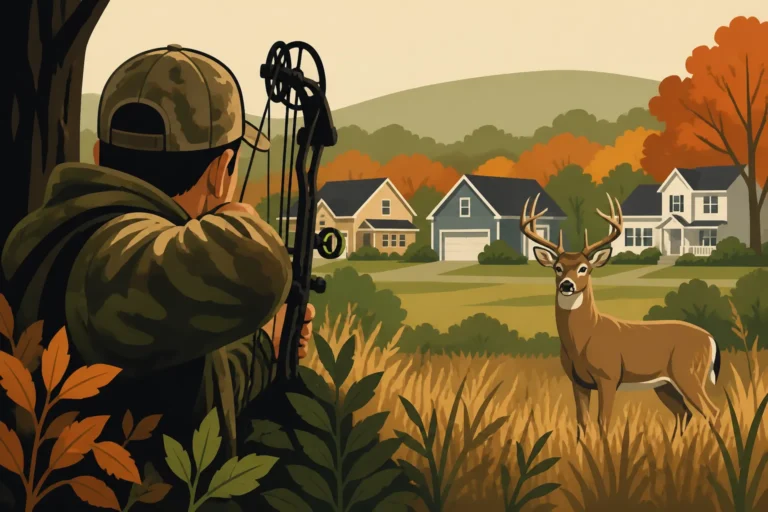
Southern Pennsylvania, particularly areas surrounding cities like Lancaster, York, and Harrisburg, is experiencing continuous development. This means more houses, more roads, and often, more fragmented hunting opportunities. Hunting along suburban edges brings its own unique set of considerations, from increased human activity to stricter safety zone regulations. Deer in these areas often become incredibly nocturnal and adept at using small, overlooked pockets of cover, sometimes even bedding surprisingly close to homes.
The pressure from non-hunting human activity – dog walkers, hikers, children playing – can push deer into extremely tight, dense areas. These deer learn to avoid overt threats, and their flight zones are often much tighter. While this can make them challenging to hunt, it also means that if you find their sanctuary, they might be holding incredibly tight, offering a unique opportunity. You might discover that the thickest, nastiest briar patch behind a housing development holds more deer than a quiet woodlot further away, simply because no one else bothers to walk in there.
It's also crucial to consider public perception. When hunting near residential areas, your actions are often visible to non-hunters. Practicing impeccable ethics, being respectful of property lines, and always adhering to safety zone rules are paramount. A single irresponsible act can reflect negatively on all hunters and jeopardize future access. Our guide on Suburban Deer Hunting in Southeast Pennsylvania delves deeper into these specific challenges.
Essential Scouting Strategies for Farm Country Whitetails
Effective scouting is the bedrock of success in any hunting scenario, but it takes on a critical, almost detective-like importance in Southern Pennsylvania's farm country. You're not just looking for deer sign; you're deciphering how deer use a fragmented landscape.
Pre-Season Aerial Reconnaissance
Before you ever set foot in the woods, spend significant time poring over aerial maps. Tools like GoHunt, OnX Hunt, or even the Pennsylvania Mapping Center are invaluable. These platforms allow you to zoom in and identify key features that might be overlooked from the ground. Look for isolated woodlots, narrow fingers of timber extending into fields, brushy creek bottoms, and any areas of thick, dense cover that might offer security. Identify pinch points where deer are funneled between fields, roads, or natural barriers.
What you're really trying to do is map out the travel corridors. Where do deer cross open fields? Are there ditch lines, fence rows, or overgrown property lines that connect one woodlot to another? How do deer access different food sources? Pay close attention to changes in elevation, even subtle ones. A small ridge or a slight dip in the terrain can offer a deer an advantage against the wind or a hidden route. Use these mapping apps to mark potential stand locations, bedding areas, and high-traffic zones before you ever carry a backpack into the field. This virtual scouting helps you narrow down vast areas into manageable sections for on-the-ground investigation.
During this digital scouting phase, also note potential access points and parking. In farm country, many properties are landlocked or have limited public access. Understanding where you can legally park and enter without disturbing private landowners or violating regulations is just as important as finding deer sign. Some areas might require specific permission, and knowing the property boundaries using GoHunt's layers is crucial. For more on this, check out Reading Aerial Photos for Big Woods Deer, which also applies surprisingly well to understanding fragmented farm country.
Reading Field Edges and Transition Zones
Once you've done your aerial recon, it's time to get boots on the ground, focusing heavily on the edges where fields meet cover. These transition zones are where the action often happens. Look for heavily used deer trails entering and exiting fields, especially where corn or bean fields meet the woods. Deer will often stage just inside the timber, browsing or rubbing, before stepping out into the open to feed. These staging areas, usually 20-50 yards into the woods, are prime spots for morning and evening stand setups.
Don't just walk the obvious trails. Look for smaller, less-defined routes that might indicate a single mature buck using a more clandestine approach. Search for rubs along these edges, especially larger ones on saplings or small trees, which can indicate buck activity. Scrapes, particularly primary scrapes along the edges of woodlots or hedgerows, are also key indicators of rutting activity. These areas often receive repeated visits, signaling a buck’s presence.
Pay attention to what crops are planted and when they were harvested. Fresh sign leading into a standing cornfield in early archery season is gold. Fresh sign leading into a picked bean field in late November is also gold, as deer might be gleaning leftover beans. When the corn is cut, look for new trails leading into the densest remaining cover. The more you understand the current agricultural landscape, the better you can predict where deer will be.
Locating Hidden Bedding and Security Cover
Deer in farm country are experts at finding small, overlooked pockets of security cover. These might not be expansive, thick forests, but dense briar patches, regenerating clearcuts, steep ravines, or even just thick fencerows that offer a visual barrier. These are the places deer will bed during the day, especially under pressure. Don't dismiss a patch of nasty multiflora rose or a small, swampy thicket as "too small" – these are often exactly where a mature buck will choose to lay up.
Walk these areas methodically, looking for actual beds, droppings, and fresh rubs. Accessing these spots without bumping deer is crucial, so scout during midday or on windy days when deer are less likely to notice your intrusion. The deer you're after are likely using these spots precisely because they are overlooked or difficult for other hunters to access. Often, these bedding areas are surprisingly close to human activity but just out of sight.
Consider thermal cover as well, especially in late season. Small stands of pines or cedars, or even thick south-facing slopes, will offer deer protection from harsh winter winds. These areas become prime bedding sites when temperatures drop. Remember, in fragmented landscapes, security isn't about vastness; it's about density and seclusion, even if it's only a few acres.
Archery Season Tactics in Southern PA Farmlands
Archery season in southern Pennsylvania's farm country offers some of the best opportunities, primarily because deer are still heavily patterned around food and rutting activity hasn't yet reached its peak. Success hinges on being adaptable and understanding the seasonal shifts in deer behavior.
Targeting Early Season Food Sources
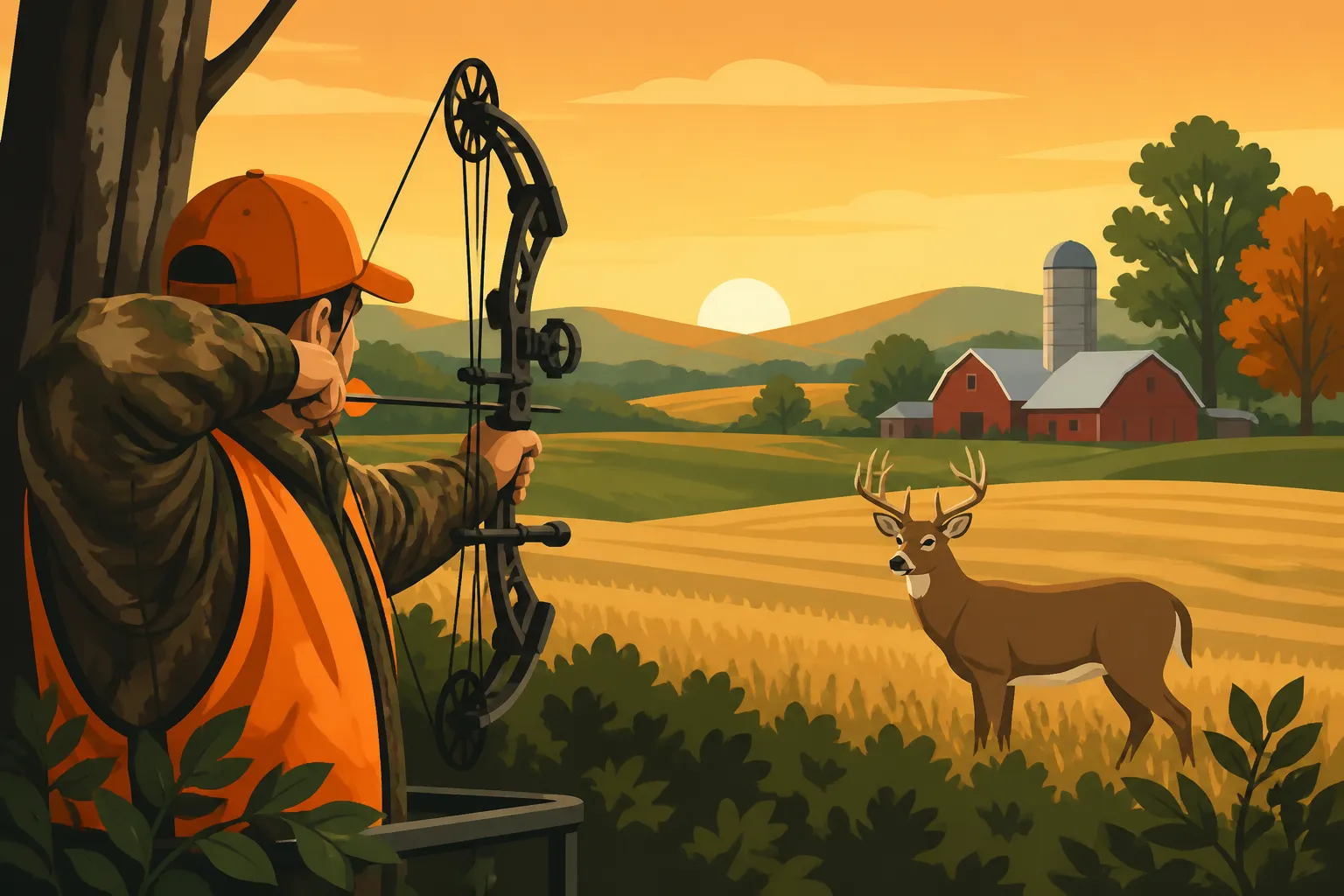
When Pennsylvania's archery season opens, often in late September, deer in farm country are typically still in their summer patterns: focused intensely on food and water. For many areas, this means targeting alfalfa fields, clover plots, or standing soybean fields. These high-protein food sources are incredibly attractive to deer, especially in the late afternoons and evenings. Set your stands on the downwind edge of the woods bordering these fields, paying close attention to the prevailing winds.
Consider how deer enter and exit these fields. They rarely just pop out into the middle. Instead, they’ll use fingers of timber, hedgerows, or ditch lines to stay concealed until the last possible moment. A good strategy is to find a staging area 20-40 yards into the woods where deer often mill about before committing to the open field. Place your stand to catch them in this transition zone, where they are more relaxed and daylight active. Early season also means warmer temperatures, so scent control and quiet entry/exit routes are paramount.
Water sources, while less critical than food, can also be a magnet, especially during dry spells. Small ponds, slow-moving creeks, or even persistent puddles can draw deer, particularly after they’ve been feeding on dry forage. Setting up near a water source that also offers good cover can be a great early-season option, especially if you can combine it with a travel route to a preferred food source. For more on early season strategies, our guide on Hunting the Early Archery WMUs in September has relevant tips.
The October Lull and Soft Mast
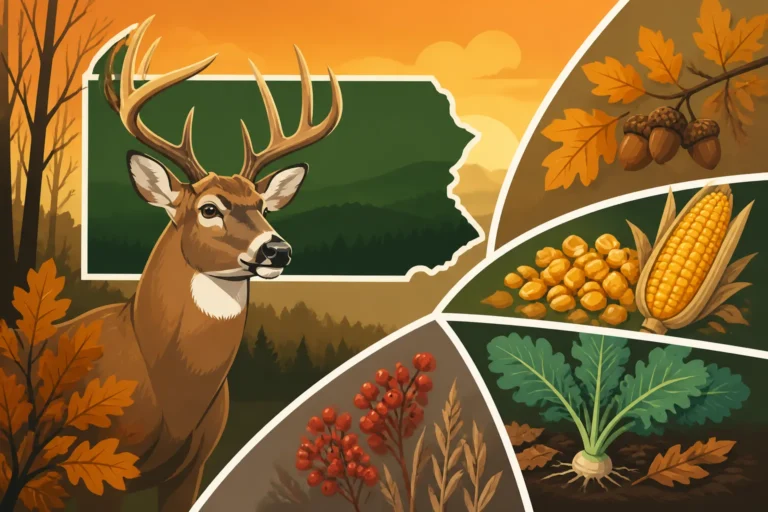
Mid-October often brings what many hunters dread: the "October Lull." Deer activity seems to drop off a cliff, and it can be incredibly frustrating. This period often coincides with a shift in food sources and subtle changes in deer behavior as testosterone levels begin to rise in bucks. Many of the early season food sources like soybeans might have dried up or been harvested. This is when deer transition to hard mast, primarily acorns, and sometimes soft mast like persimmons or wild apples.
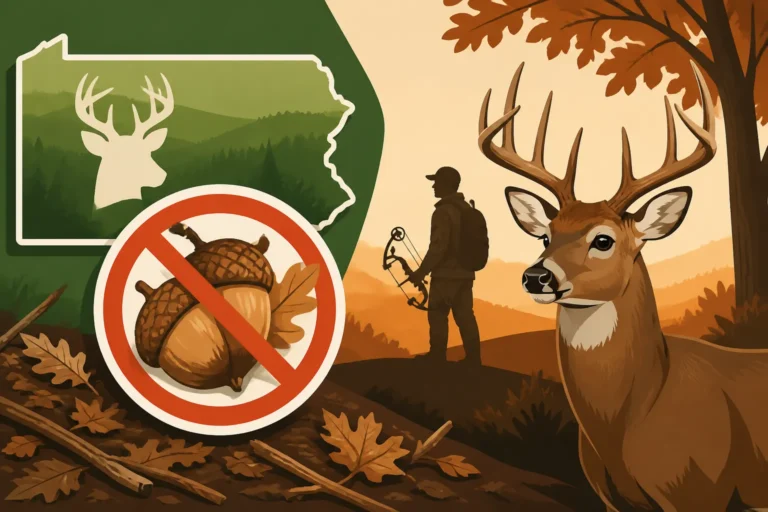
If the acorn crop is good, deer will abandon fields for the woods. Identify stands of white oaks or red oaks, which drop acorns at different times, and scout heavily for fresh sign beneath them. A productive oak flat can hold deer through much of the day. If acorns are scarce, look for other natural food sources. Small, often overlooked patches of wild apples along field edges or in old overgrown pastures can become hot spots.
During the lull, deer may become more nocturnal due to increasing hunting pressure. This requires even more precise stand placement, focusing on bedding-to-feeding routes that deer might use closer to dusk or dawn, or during periods of bad weather. Don't be afraid to pull out and focus on scouting during this time, looking for fresh rubs and scrapes that indicate bucks are starting to get antsy. Our article on Hunting After the Acorn Crop Fails can provide deeper insights if your mast crop isn't producing.
Hunting the Pre-Rut and Peak Rut
As late October transitions into early November, the pre-rut and peak rut kick into high gear, transforming deer hunting in farm country. Bucks, now actively seeking does, become more visible during daylight hours. This is the time to focus on natural funnels and pinch points that force deer movement. A narrow woodlot connecting two larger blocks of timber, a steep hillside that funnels deer along a contour, or a creek bottom that provides cover between fields are all prime locations.
During the rut, bucks will cruise these travel corridors, scent checking for does. This is also when calling tactics, like rattling and grunting, can be incredibly effective. A short, aggressive rattling sequence followed by some tending grunts can draw in curious bucks, especially those covering ground looking for action. Consider setting up near active scrape lines along logging roads or field edges, as bucks will often check these regularly. Our guide to Rattling and Grunting in Pennsylvania offers valuable tips for these calling strategies.
The peak rut also offers opportunities for all-day sits, as bucks can be on their feet at any time. Focus on areas that offer both travel cover and a view of multiple potential deer routes. Don't overlook small, thick draws or ravines; a lovesick buck might follow a doe anywhere. While farm country deer might not cover the same vast distances as big woods deer, their travel through funnels can be incredibly predictable and intense during this period. For comprehensive strategies, refer to Hunting the Pennsylvania Rut in November.
Firearms Season Challenges and Opportunities
The firearms season in Southern Pennsylvania's farm country presents a different set of challenges and opportunities. Hunter numbers typically swell, and deer patterns shift drastically as the landscape changes and pressure mounts.
Post-Harvest Deer Movement
The most significant factor influencing firearms season in farm country is the crop harvest, especially corn. Once those towering fields are cut, deer lose their primary sanctuary and food source, forcing them to adapt quickly. Suddenly, those once-hidden deer are exposed, and they will gravitate towards any remaining thick cover. This often means small woodlots, dense briar patches, steep terrain that's difficult to access, or even surprisingly close to human dwellings where they feel safer from hunting pressure.
Hunters need to adjust their scouting and tactics immediately after harvest. What was a prime stand location during archery season, overlooking a cornfield, might now be a barren spot with no deer activity. Instead, focus on the remaining security cover. Look for fresh tracks leading into the densest parts of woodlots. Deer will often bed very tightly in these areas, sometimes even within sight of open fields, knowing they have limited options.
This transition period can offer excellent hunting, but it requires flexibility. Be prepared to move your stands or set up new ground blinds where deer are concentrated. The goal is to identify these new, temporary sanctuaries and understand the travel routes deer use to move between them and any remaining food sources, such as winter wheat fields or leftover gleanings in harvested fields.
Small Scale Drives and Pushing Cover
Given the fragmented nature of farm country woodlots, small-scale deer drives can be incredibly effective during firearms season. Instead of large, organized drives that cover miles, think about short, strategic pushes through smaller, dense blocks of cover. Two or three hunters can often work together to push a single woodlot or thicket, while one or two blockers position themselves at likely escape routes.
The key to success is knowing the terrain and understanding how deer will try to escape. They will almost always try to use the thickest cover available, or slip out the back door in an unexpected direction. Blockers should anticipate these escape routes: a low spot in a fence, a narrow neck of woods, or a thick gully. The drivers should move slowly, making noise but not running, to gently push deer forward. The goal isn't to blast through the woods, but to encourage deer to move naturally past the blockers.
Effective drives in farm country often involve working against the wind if possible, or using natural barriers like roads or open fields to limit deer escape options. Communication between drivers and blockers is vital for safety and success. Always know where everyone in your party is located. For more detailed strategies on this, our article Deer Drives With Three or Four Hunters is a fantastic resource for these smaller-scale efforts.
Identifying Overlooked Sanctuaries
In heavily hunted farm country, deer quickly learn to avoid pressure. This often leads them to seek refuge in "overlooked sanctuaries" – areas that hunters tend to ignore because they seem too small, too close to houses, or too difficult to access. These can be tiny, dense thickets along a stream, steep, briar-choked hillsides, or even small patches of woods surrounded by housing developments.
Deer that live in these overlooked sanctuaries become incredibly wary and primarily nocturnal. However, during firearms season, when pressure is at its peak, they may hold tight in these spots all day. Scouting these areas during the week before opening day, or during midday lull periods, can reveal hidden gems. Look for fresh tracks, beds, and droppings indicating deer are using these spots for daytime bedding.
Hunting these areas often requires a very stealthy, low-impact approach. Using a ground blind brushed into thick cover or carefully climbing a portable stand into a dense tree can allow you to hunt these deer without alerting them. The advantage is that these deer typically receive very little hunting pressure within their chosen sanctuary, making them potentially more vulnerable if you can get into position undetected.
Late Season Strategies for Farm Country Success
The late season in Southern Pennsylvania can be incredibly challenging, with colder temperatures and often less available food. However, for those willing to brave the elements and adapt, it can also be highly rewarding, offering opportunities for mature deer that have survived the earlier seasons.
Focus on Remaining Food and Thermal Cover
By late season, the vast majority of crops have been harvested, and many natural food sources are depleted. Deer in farm country are now primarily focused on finding any remaining calories and seeking thermal cover to stay warm. This means shifting your focus to fields that might still hold some gleanings, such as cut cornfields where deer can pick up dropped kernels, or fields planted with winter wheat or rye. Even overlooked areas with persistent hard mast, like certain oak or beech groves, can be productive.
More importantly, deer will gravitate towards the best thermal cover available. This often includes thick conifer stands (pines, cedars, hemlocks), dense briar thickets, or deep, south-facing slopes that catch more sunlight and offer protection from harsh winds. These areas provide relief from the cold and snow, allowing deer to conserve energy. Look for clusters of deer tracks leading into these specific types of cover, and be prepared to hunt them tightly.
The coldest days of late season can paradoxically be some of the best hunting. Deer need to feed more frequently to maintain body temperature, and they might move earlier in the afternoon or later in the morning. Combining knowledge of their thermal bedding with predictable late-season food sources is key. Our article on Late-Season Food Sources for Whitetails offers more ideas for identifying these critical late-season hot spots.
Utilizing Post-Rut Buck Behavior
By late December and into January, bucks are typically exhausted from the rut. Their body weight is down, and their primary objective is to replenish fat reserves. This post-rut behavior makes them incredibly vulnerable to predictable food sources. Unlike the rut, where they were cruising for does, now they are driven by hunger.
Focus on the highest calorie food sources still available. This might be browse in dense clearcuts, specific plots of winter brassicas on private land, or those leftover corn kernels mentioned before. Bucks will often become much less cautious when feeding, as their biological imperative to survive overrides some of their innate wariness.
While they might still be mostly nocturnal, scouting for their concentrated feeding patterns can be highly effective. If you can locate a consistent, high-value food source and identify the travel routes leading to it from thermal cover, you might intercept a tired, hungry buck during legal shooting hours. Remember, these bucks are trying to recover, and if you can provide the path of least resistance to a good meal, you'll increase your odds significantly.
Scouting for New Pressure Points
Late season hunting means deer have experienced months of pressure from archery and firearms seasons. They are masters of avoidance, and their patterns will have changed dramatically from early fall. This necessitates continuous, adaptive scouting. What worked in October likely won't work in January.
Look for areas that others aren't hunting. This might mean walking further into dense cover that most hunters avoid, or finding small, overlooked pockets of woods that act as escape routes or bedding areas. Pay attention to fresh snowfalls; they reveal new patterns instantly. If a heavy snowfall pushes deer out of a typical area, where do their tracks lead? What new routes are they using?
Sometimes, deer will move surprisingly close to human activity, like houses or roads, simply because those areas see less hunting pressure. Identify these low-pressure zones and try to understand how deer are using them. Setting up on the downwind side of these hidden sanctuaries, where deer feel safe, can be a game-changer. Flexibility and a willingness to constantly re-evaluate deer behavior are your greatest assets in the late season.
Access, Ethics, and Hunter Relations in Developed Areas
Hunting in Southern Pennsylvania's farm country often involves navigating private land, requiring hunters to be exemplary in their conduct and communication. Building trust and maintaining a positive image are paramount.
Gaining Private Land Permission
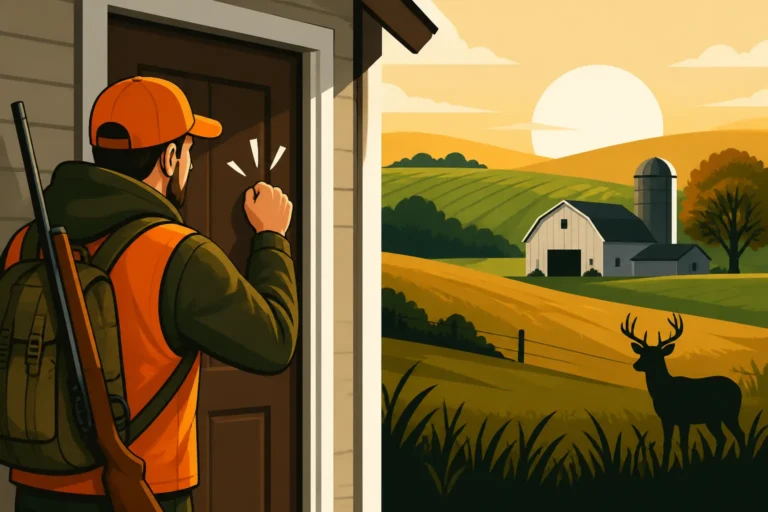
Securing access to private land is often the most critical factor for success in farm country, as public land can be scarce or heavily pressured. The best approach is always direct, respectful, and personal. Start by identifying properties you'd like to hunt using mapping tools like GoHunt or OnX Hunt to find landowner information. Then, approach landowners in person, neatly dressed, and during a time when they're not busy (e.g., not during dinner or peak farming hours).
Be clear about your intentions, explain your hunting ethics, and offer to help with chores in exchange for access. Many farmers appreciate assistance with tasks like mending fences, clearing brush, or even just keeping an eye on their property. Offering to share venison can also go a long way. Always provide your contact information and respect their decision, whether it's a yes or a no. If you get permission, clarify the specific areas you can hunt, parking arrangements, and any special requests they might have (e.g., no hunting near certain barns or livestock).
Building a long-term relationship based on trust is key. Don't just show up when hunting season starts; make an effort to connect with the landowner periodically. A holiday card, a phone call to check in, or an offer of help can solidify your standing. Remember, you are a guest on their land, and their generosity is not to be taken for granted. Our guide on Gaining Private Land Permission in Pennsylvania offers more in-depth advice on this crucial topic.
Respecting Landowners and Property
Once you have permission, respecting the landowner and their property is non-negotiable. Always stick to the agreed-upon areas and rules. Never drive off designated paths, leave gates open, or disturb livestock. Clean up after yourself, leaving no trash, spent casings, or other signs that you were there. If you harvest a deer, retrieve it efficiently and without causing damage to crops or property.
Understanding and adhering to safety zones is particularly vital in farm country. Pennsylvania law requires a 150-yard safety zone around occupied buildings without the occupant's permission. In more developed areas, this means you might be restricted to hunting specific parts of a property or only in certain directions. Always be aware of your surroundings, beyond just deer.
If you bring guests, ensure they are fully aware of all rules and act with the same level of respect. Any infraction by you or your hunting partners could jeopardize your access and potentially the access for other hunters in the future. The golden rule is simple: treat their property as if it were your own, or even better.
Safety Zones and Public Perception
In densely populated areas, public perception of hunting can be mixed, and safety zones are strictly enforced. Beyond the 150-yard rule for buildings, you might encounter local ordinances or unwritten community expectations. Always be aware of where residential areas are, popular hiking trails, or roads with heavy traffic. Your presence as a hunter, especially carrying firearms, is often visible to non-hunters.
Dressing appropriately, acting with decorum, and being an ambassador for hunting are crucial. Avoid walking through visible residential yards with a loaded firearm. If you're dragging a deer, do so discreetly or use a deer cart in areas where you might encounter non-hunters. It's about showing respect and minimizing any potential for alarm or conflict.
Maintaining a positive public image of hunters is critical for the future of hunting, especially in areas where urban and rural environments increasingly overlap. Being seen as responsible, safe, and ethical can help garner support for hunting or at least prevent opposition. Hunters in farm country are often on the front lines of this public interaction, and how we conduct ourselves matters immensely.
Gear Considerations for Farm Country Hunting
Hunting Southern Pennsylvania's farm country requires specific gear choices that cater to the unique environment – from thick cover to open fields, and from close-range encounters to long-distance observation.
Stealth and Scent Control
In farm country, deer often live in close proximity to human activity and are incredibly sensitive to intrusion. This makes meticulous stealth and scent control paramount. Your approach to and from your stand needs to be as quiet as possible, avoiding crunchy leaves, rustling clothing, or unnecessary noise. Using quiet fabrics for your outer layers, such as fleece or wool, can make a huge difference.
Scent control isn't just about sprays; it's a comprehensive regimen. Wash your hunting clothes in scent-free detergent, store them in airtight containers, and dress at your hunting location. Pay attention to hygiene, and use scent-free body products. While no system is 100% foolproof, minimizing your scent signature is crucial in areas where deer have smaller home ranges and are highly attuned to human presence. In many farm settings, deer are within smelling distance of your approach even before you get to your stand.
Wind direction is your ultimate scent control tool. Always hunt with the wind in your favor, positioning yourself so your scent is carried away from known deer travel routes and bedding areas. Even a slight change in wind can ruin a hunt in this fragmented landscape, so portable wind checkers are a must-have. Our article on Scent Control on Small Pennsylvania Tracts offers even more strategies for keeping your presence a secret.
Optics for Field and Edge Observation
Given the mix of open fields and dense cover, a good set of binoculars is indispensable for farm country hunting. An 8x or 10x magnification is generally ideal, offering a wide field of view for scanning large fields while still providing enough detail to pick out deer in distant woodlots or observe subtle movements at the edge of cover. Look for optics with good low-light performance, as deer are most active at dawn and dusk.
A quality rangefinder is also essential, especially when hunting open fields or across varying terrain. Distances can be deceiving, and accurately ranging a target before the shot ensures ethical kills. Modern rangefinders often include incline/decline compensation, which is helpful when shooting from a treestand or across a rolling field. Being able to precisely judge distance in the moment of truth builds confidence and reduces the chance of a missed or poorly placed shot.
Whether you're glassing a distant soybean field for emerging deer or checking a woodlot edge for subtle movement, good optics enhance your ability to spot game before they spot you. They allow you to observe deer behavior without having to move, minimizing your footprint and increasing your chances of success.
Portable Stands and Ground Blinds
The dynamic nature of farm country hunting often means you can't rely on a single, fixed stand location all season. Crops get cut, deer patterns shift, and pressure changes. Therefore, portable treestands (climbing stands, lock-ons with climbing sticks) or ground blinds are often the most versatile options.
A lightweight, portable treestand allows you to quickly adapt to new sign or changing deer patterns. If you scout a hot new travel corridor or a recently harvested field, you can move your setup to capitalize on it. Setting up on an oak bench or a creek bottom requires flexibility. Our guide on Treestand Setups in Pennsylvania Hardwoods can be adapted for smaller woodlots.
Ground blinds are particularly effective in open areas like field edges or fencerows where natural cover might be sparse. They offer excellent concealment, break up your silhouette, and provide a degree of protection from the elements. They are also ideal for youth hunters or those who prefer to hunt from the ground. Be sure to brush in your ground blind well, making it blend seamlessly with the surroundings. Our article Brushing In a Blind on a Field Edge has tips to make your blind disappear. The ability to rapidly deploy and retrieve your chosen stand or blind gives you the agility needed to stay on top of farm country deer.
Seasonal Deer Behavior & Key Food Sources in Southern PA Farm Country
Early Archery (Late Sept – Early Oct) Behavior: Stable summer patterns, focused on abundant food. Often nocturnal, using standing crops for security.
Food: Standing corn, soybeans (green), alfalfa, clover, early acorns.
October Lull (Mid – Late Oct) Behavior: Deer transition as crops are harvested. Bucks begin to rub/scrape. Activity can decrease as food sources shift.
Food: Hard mast (acorns), soft mast (wild apples, persimmons), leftover beans.
Pre-Rut / Peak Rut (Late Oct – Mid Nov) Behavior: Bucks actively seeking does, traveling funnels and pinch points. Increased daylight movement.
Food: Still focusing on hard mast and remaining crops, but less driven by hunger, more by breeding.
Firearms Season (Late Nov – Early Dec) Behavior: Displaced from cut fields, concentrated in remaining thick cover. Highly pressured, often moving nocturnally.
Food: Gleanings in harvested fields, browse, remaining mast.
Late Archery / Flintlock (Mid Dec – Jan) Behavior: Bucks recuperating from rut, all deer focused on survival. Seeking warmest cover and highest calorie foods.
Food: Winter wheat/rye, browse, corn gleanings, thermal cover.
Disclaimer
Hunting is a challenging and rewarding activity that carries inherent risks. Always prioritize safety, understand and follow all Pennsylvania Game Commission regulations, and respect private property. The information provided in this guide is for informational purposes only and should not replace professional instruction or personal judgment. Be sure to check current regulations annually, as they can change.