Prescribed Burns on Pennsylvania Game Lands
It's incredibly frustrating when you're trying to figure out how habitat changes on public land impact your hunting strategy, especially when those changes are intentional and driven by agencies like the Pennsylvania Game Commission. Many hunters see a burned area and immediately assume it's "ruined" for years, but that's often far from the truth. This guide will walk you through what prescribed burns actually mean for Pennsylvania Game Lands, how they affect the game you pursue, and crucially, how you can use this knowledge to your advantage to find more success afield.
Understanding Prescribed Burns on Pennsylvania Game Lands
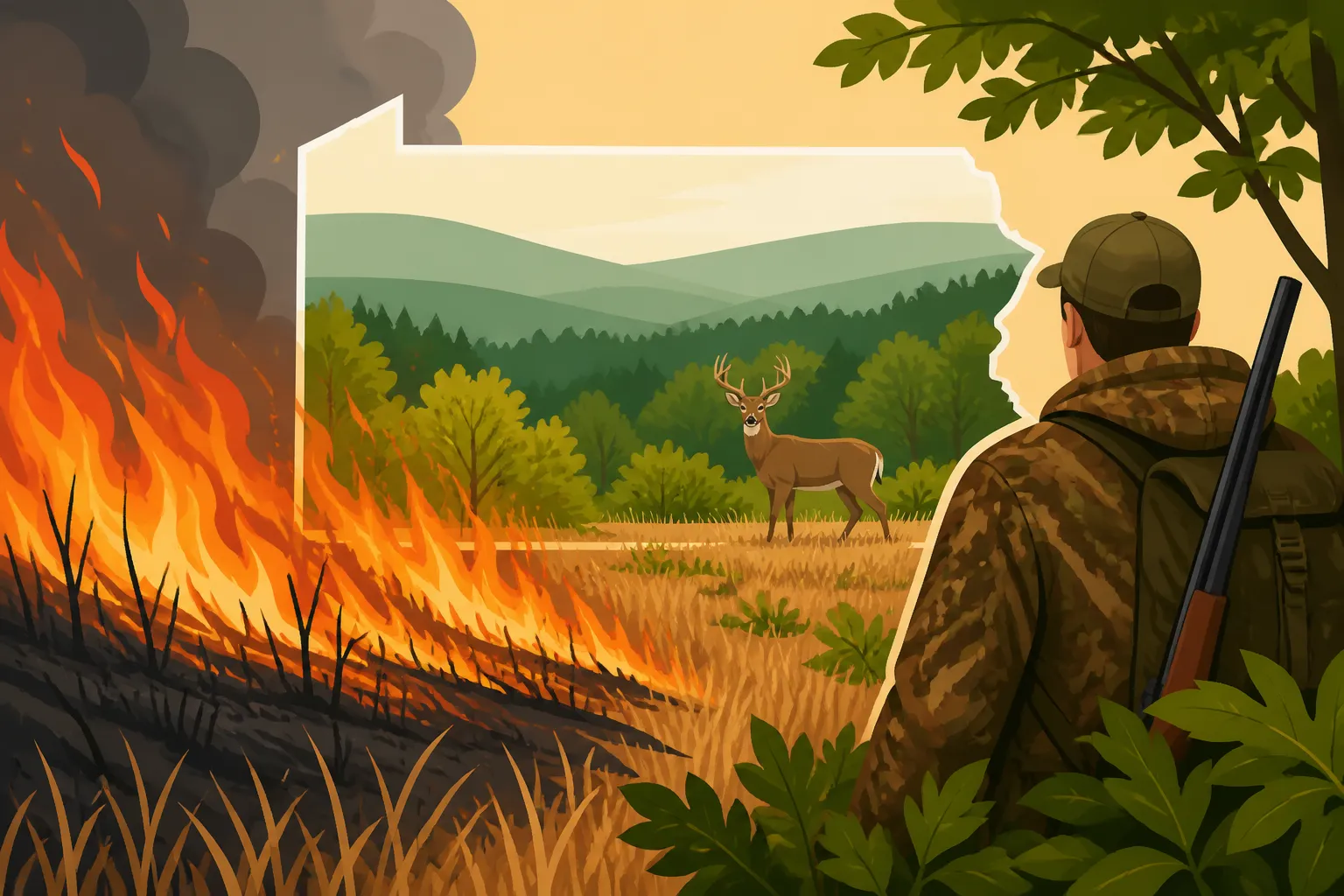
When you hear "burn," your mind might jump to uncontrolled wildfires, the kind that devastate forests. But prescribed burns, also known as controlled burns or planned burns, are a completely different animal. These are deliberate, carefully managed fires set by trained professionals on State Game Lands and other public and private lands across Pennsylvania. The Pennsylvania Game Commission (PGC) uses them as a vital tool in their ongoing habitat management efforts.
The primary goal isn't destruction; it's renewal and manipulation. Think of it like a natural reset button for the forest floor and understory. For decades, the natural fire cycles that shaped Pennsylvania's ecosystems were suppressed, leading to dense, unhealthy forests, thick layers of duff (leaf litter), and a lack of early successional habitat – the young, brushy growth that so many game animals depend on. Prescribed burns aim to mimic these natural processes, restoring ecological balance and creating healthier, more productive hunting grounds for all of us.
The Purpose Behind the Flames
The PGC doesn't just light fires haphazardly. Every prescribed burn has specific, well-thought-out objectives. One major reason is wildfire prevention. By intentionally burning off accumulated fuels like dead leaves, fallen branches, and dense underbrush in controlled conditions, they significantly reduce the risk of catastrophic wildfires later on, especially during dry seasons. It's a proactive measure that protects larger swaths of forest, homes, and critical infrastructure.
Beyond fire prevention, habitat improvement is at the core of these operations. Many of Pennsylvania's game species, from deer and turkey to grouse and rabbits, thrive in diverse habitats that include open woodlands, brushy areas, and forest edges. Prescribed burns help achieve this by clearing out undesirable vegetation, stimulating new growth, and promoting native plant species. This can open up the forest canopy, allowing sunlight to reach the forest floor, which in turn encourages the growth of crucial browse, forbs, and soft mast producers. It's a long-term investment in the health of the land and the wildlife it supports. You might be surprised at how quickly an area can bounce back with tender, nutritious plants after a burn, especially in the spring.
What Happens During a Prescribed Burn
A prescribed burn is a carefully orchestrated event. Before any fire is set, extensive planning takes place. This involves detailed assessments of weather conditions (wind, humidity, temperature), fuel loads (how much combustible material is present), topography, and desired burn intensity. Firebreaks – areas cleared of vegetation – are often established around the perimeter of the burn unit to prevent the fire from spreading outside its designated boundaries.
On the day of the burn, trained crews with specialized equipment are on site. They ignite the fire in a controlled manner, often using drip torches, and constantly monitor its progression. Depending on the objectives, fires might be low-intensity ground fires that creep slowly through the leaf litter, or slightly hotter burns designed to clear out small trees and shrubs. The PGC works closely with other agencies, like the Bureau of Forestry and local fire departments, ensuring safety and efficiency. It's truly a science, aimed at achieving specific ecological benefits without causing harm to the wider environment. It's a lot more controlled than just Timber Cuts and Where Deer Move After or a major storm event.
How Prescribed Burns Influence Game Species and Hunting
The impact of a prescribed burn on wildlife habitat is rarely negative in the long run, and often provides significant benefits that hunters can capitalize on. Understanding these effects is key to transforming a seemingly "burned out" area into a productive hunting spot. Different species react in different ways and at different times after a burn, which means your scouting needs to be tailored to the timing of the burn and the species you're pursuing.
Short-Term Impacts on Forage and Cover
Immediately following a burn, the landscape can look stark. Charred ground, minimal undergrowth, and a reduction in immediate cover might deter some animals temporarily. However, this "destruction" is a necessary part of the renewal process. The fire consumes old, less nutritious vegetation, thick leaf litter, and sometimes invasive species, clearing the way for new life.
Within weeks, especially after spring rains, you'll start to see a flush of fresh, nutrient-rich growth. This new growth – tender shoots, forbs, and grasses – is incredibly attractive to deer. It's like turning an old, tough salad bar into a fresh, organic buffet. While dense cover might be reduced in the immediate area, the sudden abundance of palatable food can draw deer into the edges of the burn or even into the burned-over sections themselves. Turkeys will also move in to scratch for insects and seeds exposed by the fire. This initial phase, despite its appearance, can be a magnet for game, making these areas worth scouting quickly.
| Impact Aspect | Immediate Post-Burn (Weeks/Months) | Long-Term Post-Burn (1-5+ Years) |
|---|---|---|
| Vegetation | Ash layer, exposed soil, rapid flush of new grasses, forbs, and sprouts | Diverse mix of regenerating shrubs, saplings, mature trees, increased native plant biodiversity |
| Deer Forage | Highly attractive, nutrient-rich new browse, exposed seeds, insects | Abundant, diverse browse and mast production, enhanced food plots (if existing) |
| Deer Cover | Reduced dense cover, deer may use edges or unburned pockets for bedding | Regenerating brush and young trees provide excellent thermal and security cover |
| Turkey Forage | Exposed seeds, insects, new green shoots | Diverse insect populations, soft mast (berries), improved nesting cover |
| Turkey Cover | Open areas for strutting, reduced dense cover for roosting | Mix of open areas and regenerating cover for nesting and roosting |
| Grouse Habitat | Temporary reduction in dense cover, promotes new young forest growth | Crucial young forest habitat for drumming, nesting, and brooding |
| Small Game (Rabbit/Squirrel) | Reduced cover, but exposed food; may shift to edges | Increased dense brush for rabbits, improved mast for squirrels (long-term tree health) |
Long-Term Habitat Enhancement
As time progresses, the burned areas evolve into incredibly valuable habitat. The sunlight reaching the forest floor stimulates a wide variety of native plants, leading to a more diverse and resilient ecosystem. Young saplings, berry bushes, and other food sources for wildlife flourish. This creates what biologists call "early successional habitat"—a mosaic of young forests, shrublands, and open areas that are crucial for species like ruffed grouse, cottontail rabbits, and, of course, white-tailed deer. Ruffed Grouse, Pennsylvania's State Bird has seen challenges, and these burns are part of the solution.
For deer, this means an explosion of high-quality browse and a more diverse diet. For turkeys, it provides ideal nesting cover, abundant insects, and clearings for strutting. Grouse and woodcock thrive in the dense, regenerating cover. These areas essentially become natural magnets, drawing game in for both food and cover, depending on how far out the regeneration has progressed. This transformation makes them highly productive hunting spots for many years after the initial burn, often creating better habitat than passively managed, mature forests.
How Different Species React to Burned Areas
While deer are often the primary focus for Pennsylvania hunters, prescribed burns benefit a whole host of species, and understanding these nuances can broaden your hunting opportunities.
- White-tailed Deer: As mentioned, deer are attracted to the flush of new, nutritious growth. They will often browse heavily in burned areas, particularly along the edges where they can quickly dart back into thicker cover. Over time, these areas develop into dense thickets that provide excellent bedding and security cover, especially during the colder months. Learning to identify these patterns can be key to Hunting the Peak Rut Week in Pennsylvania or even the late season.
- Wild Turkeys: Turkeys benefit immensely from prescribed burns. The fire exposes seeds and insects, providing an immediate food source. As vegetation regenerates, it creates ideal nesting cover that is open enough for hens to move through, but dense enough to conceal nests from predators. Openings created by burns can also become prime areas for gobblers to strut and display, making them excellent spots for spring turkey hunting. Wild Turkeys in Pennsylvania often use these disturbed areas.
- Ruffed Grouse: This iconic Pennsylvania game bird relies heavily on young forest habitat. Prescribed burns, along with timber harvests, are critical tools for creating and maintaining the dense, brushy cover that grouse need for nesting, brooding, and escaping predators. A few years after a burn, these areas can become prime grouse cover.
- Small Game (Rabbits, Squirrels): Cottontail rabbits thrive in thick, brushy cover. The regeneration that follows a burn creates exactly this kind of habitat. Squirrels might temporarily leave an area immediately after a burn if it impacts mast-producing trees, but in the long term, healthier forests promoted by burns can lead to better mast crops, supporting healthy squirrel populations. Pennsylvania Small Game and Squirrels depend on diverse forest structure.
Leveraging Prescribed Burn Knowledge for Hunting Success
Knowing that prescribed burns are happening is one thing; using that information to become a more successful hunter is another. It requires a proactive approach to scouting and a keen understanding of how game animals interact with these evolving habitats throughout the year. Don't just drive past a recently burned area and dismiss it – that's where the smart hunters get to work.
Scouting Burned Areas Throughout the Seasons
The timing of your scouting is crucial when it comes to prescribed burns. A burn in the spring will look and act differently by fall.
- Spring/Summer Scouting: This is when you should be on the ground, literally walking the burned areas. Look for the first signs of new growth. Identify what plants are coming back. Are there tender forbs? New sprouts from oak or maple stumps? These are future food sources. Pay attention to deer tracks and droppings indicating where they're entering and exiting the burn. You might find turkeys scratching for insects or hens nesting in the emerging cover. Use mapping tools like onX Hunt or GoHunt to mark areas of new growth and observe how game trails lead into and out of these sections. This intel is invaluable for setting up stands or planning drives later in the year. You can also identify good spots for Hanging a Stand on an Oak Bench if the burn cleared out lower growth but left mature trees.
- Fall/Winter Hunting: By fall, a spring or summer burn will likely have a dense tangle of new growth. This creates fantastic bedding and security cover. Deer will often bed right in these areas, especially if there's good thermal cover. Look for trails running through the thickets and especially along the edges. The burn might also have exposed or stimulated a flush of acorns or other mast, drawing deer in. For turkeys, these areas can provide crucial winter food sources and roosting cover, particularly if it's near an unburned mature timber stand.
Hunting Strategies for Different Post-Burn Stages
Your hunting strategy will need to adapt based on how long it's been since the fire.
- Recently Burned (First few months): Focus on the edges. Deer and turkeys will be drawn to the fresh, green growth along the perimeter, but they'll often be hesitant to venture too far into the open, charred interior if thick cover is nearby. Set up stands or blinds overlooking these edges, especially where game trails lead in. Still-hunting slowly through very lightly burned areas, where some cover remains but food is accessible, can also be effective. You might find success with Still-Hunting Pennsylvania Big Woods tactics, even in areas that aren't traditionally "big woods."
- Mid-Term Regeneration (1-3 years out): This is often the sweet spot. The burned area will be a thick tangle of regenerating shrubs, saplings, and weeds – excellent cover and browse. Deer will bed deeply within these areas and feed on the abundant new growth. This is a perfect scenario for stand hunting along heavy trails, or for organized deer drives. Identifying bottlenecks or natural funnels within or around these thickets becomes critical.
- Long-Term Habitat (3+ years out): By this point, the burn will have created mature early successional habitat. It might be dense enough to be almost impenetrable, providing fantastic security. Focus on the transition zones between this dense cover and more open timber or food sources. These areas will hold deer, turkeys, and grouse consistently. It's a prime example of Habitat Work on Pennsylvania Public Land paying off for hunters.
Reading the Landscape: Where to Focus Your Efforts
When you're looking at a map or walking the ground, pay attention to specific features in relation to a burn.
- Edges and Transition Zones: This is almost always where the action is. The border between a burned area and an unburned section, or between a thick regenerating burn and a mature timber stand, will concentrate game. These are natural travel corridors and feeding areas.
- Pockets of Unburned Cover: Sometimes, not every part of a designated burn unit ignites evenly, or the fire skips certain damp depressions or rock outcroppings. These small, unburned pockets within a larger burn can become temporary sanctuaries for game, offering cover and a sense of security while they feed on the surrounding new growth.
- Water Sources: Deer and other animals need water. If a burn happens near a creek, spring, or pond, these water sources will become even more important as game shifts its patterns.
- Topography: Burns can impact how thermals move and how deer travel. Understand how deer might use benches, saddles, or creek bottoms in conjunction with the new habitat created by the burn. This knowledge is crucial for Wind and Thermals on a Ridge.
Finding and Interpreting Prescribed Burn Information
You don't have to just stumble upon a prescribed burn; the Pennsylvania Game Commission often makes this information publicly available. Being proactive in your research allows you to identify potential hotspots long before hunting season even begins.
Utilizing Pennsylvania Game Commission Resources
The PGC is a great source for information on habitat management activities. They often publish annual reports, management plans, or press releases detailing planned or completed prescribed burns. This information might be found on their official website, in their annual hunting and trapping digest, or through local region offices. Sometimes, game wardens or land managers can provide insights into specific projects in their areas.
Checking PGC publications or even attending local public meetings (if available) can give you a heads-on understanding of where these burns are happening, their objectives, and when they occurred. This knowledge allows you to plan your scouting trips efficiently, focusing on areas with recent habitat improvements. Remember, the PGC manages Pennsylvania State Game Lands for all wildlife, and burns are a key part of that.
Mapping Tools and Data Layers
This is where modern technology really shines. Many popular hunting and outdoor mapping applications now offer features or data layers that can help you identify and interpret prescribed burn information.
- onX Hunt: Tools like onX Hunt often integrate publicly available data, sometimes showing past burn perimeters or specific habitat management units. You can overlay these layers with topography, property boundaries, and aerial imagery to get a comprehensive view of the landscape. Imagine seeing a recent burn on a south-facing slope with a creek bottom nearby – that's valuable information for scouting and stand placement.
- GoHunt: Similar to onX Hunt, GoHunt and other advanced mapping platforms may provide insights or even articles on how to interpret habitat management practices like burns. They can help you visualize the extent of a burn, its proximity to travel corridors or bedding areas, and how it might influence game movement.
- Pennsylvania Mapping Center: While not always showing specific burn dates, the Using the Pennsylvania Mapping Center can help you identify different forest types and habitat features that might be targeted for burns. Combining PGC public announcements with detailed mapping can give you a powerful edge. You can use these tools to identify areas where timber cuts have also happened, as these two forms of habitat manipulation often go hand-in-hand to create diverse ecosystems.
Interpreting Burn Dates and Locations
When you find information about a prescribed burn, pay close attention to the date it occurred.
- Recent Burns (Same Year): A burn that happened in the spring of the current year will be in the early stages of regeneration by fall. Expect highly attractive new growth and potentially reduced cover. This is a great time to focus on edges and transitions.
- Older Burns (1-3 years old): These areas will be thick, dense, and potentially hard to navigate. They will provide excellent bedding and security cover, as well as abundant browse. This is prime habitat for many game species and requires a different approach, perhaps focusing on entry and exit routes or strategically placed drives.
- Very Old Burns (4+ years old): These areas might still be more open than unmanaged forest, or they may have grown into dense young timber. The impact will be less dramatic than newer burns, but they still represent a departure from mature, unmanaged forest and should be considered for their diverse habitat value.
Understanding the size and location of the burn is also key. A small, strategically placed burn might act as a localized food plot, drawing deer in. A large burn might encompass vast tracts of land, creating expansive areas of new cover and forage that will influence game movement over a much larger area. Always consider the surrounding habitat – how does the burn interact with nearby mature timber, agricultural fields, or water sources? This holistic view is what truly unlocks the potential of Scouting Pennsylvania Public Land Before Season.
Disclaimer
This article is for general informational purposes only and does not constitute professional advice. Laws, prices and regulations vary by location and change over time. Consult a qualified professional for guidance on your specific situation.